

In an electrifying turn of events at the Canadian Grand Prix, history was not just written, it was rewritten. Lewis Hamilton, the seasoned maestro of the racetrack, delivered a masterclass performance that sent shockwaves through the paddock, breathing new life into Ferrari’s ambitions. At the Circuit Gilles Villeneuve in Montreal, Hamilton’s second-place finish wasn’t merely a podium spot; it was a declaration of intent and a resurgence of belief within the Scuderia camp.
The race unfolded amidst the usual tension and expectation that defines a Grand Prix weekend. For Ferrari, the stakes were sky-high, laden with the weight of unfulfilled potential. However, what transpired was an unexpected spark of competitiveness, ignited by Hamilton’s bold maneuvering. On lap 61, Hamilton executed a breathtaking overtake on Max Verstappen that was nothing short of surgical. This was not just a race move; it was a statement that he remains a force to be reckoned with, showcasing bravery, precision, and an unyielding spirit.
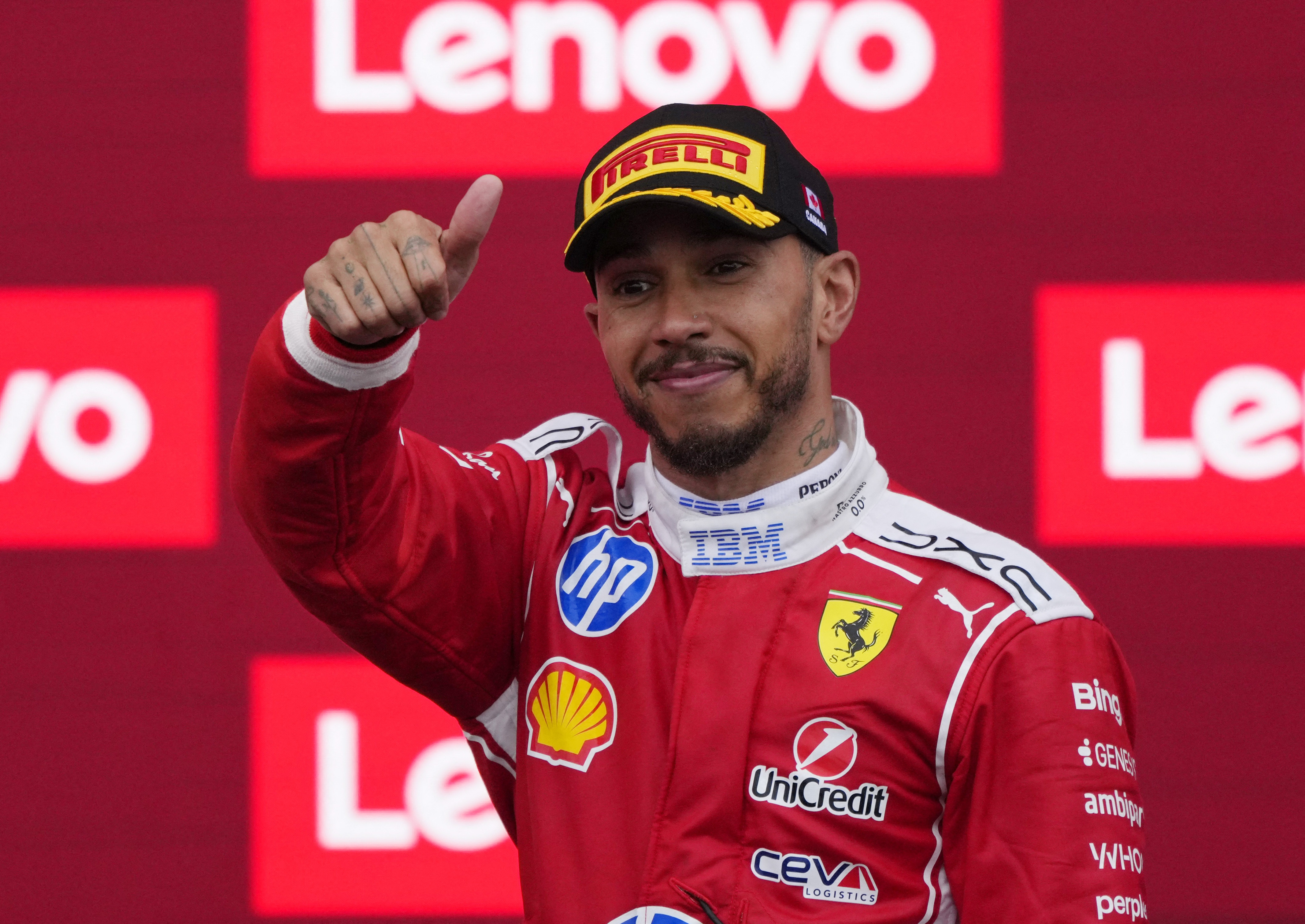
Despite arriving in Montreal without any upgrades to their SF-26 car, Ferrari defied the odds. While rivals like McLaren and Red Bull flaunted their new performance packages, Ferrari brought its tried-and-true setup, raising many eyebrows. Yet, instead of fading into the midfield, the team discovered a pace that had been missing, and it stunned the competition. Frederic Vasseur, Ferrari’s team principal, admitted that the outcome exceeded expectations, highlighting the unexpected prowess of a machine many thought was compromised.
Hamilton’s approach to the weekend was also noteworthy. Choosing to forgo simulator work, he opted for real-world mechanical analysis, a move that many saw as both defiant and instinctual. In an era dominated by digital tools, his decision to lean on tactile feedback from the car illustrated a profound understanding of racing dynamics. His insights revealed a troubling correlation problem within Ferrari, where the numbers from the simulator didn’t align with the car’s performance on track. That moment of clarity provided by Hamilton underscored the importance of driver instinct in a sport increasingly reliant on technology.

As the race progressed, Hamilton encountered his share of challenges, including a mid-race lockup that momentarily threatened his position. However, instead of succumbing to panic, he demonstrated the composure of a true champion, methodically clawing back a six-second deficit to Verstappen without missing a beat. This combination of spectacular overtaking and meticulous recovery painted a picture of a driver who not only understands the complexities of racing but thrives under pressure.
Ferrari has long sought a driver who can transform adversity into opportunity, and Hamilton’s performance delivered on that front. His gratitude towards the factory workers at Maranello was a poignant reminder that success is a collective effort, resonating deeply within the team. This emotional connection made the weekend feel more than just a race; it was a rebirth of spirit for Ferrari, one that hints at a brighter future.
Looking ahead, the implications of this race extend far beyond Canada. With Monaco looming on the horizon, Ferrari carries a newfound confidence and momentum, raising concerns for their competitors. If the team can perform strongly on a power-dependent circuit like Montreal, it’s reasonable to surmise they’ll be formidable on tracks that play to their strengths. Furthermore, developments like a new front wing for Barcelona and potential power unit upgrades for Spa suggest that Ferrari is not merely riding this wave of success; they are building on it.
As the dust settled in Montreal, Hamilton’s heartfelt “grazi” over the radio encapsulated the emotional climax of the weekend. It was a moment filled with relief and gratitude, symbolizing a bond that transcends mere branding. Ferrari has long yearned for a partnership that feels genuine, and Hamilton’s performance hinted at the possibility of just that—a partnership ready to rewrite its own destiny.
For one fleeting afternoon, Ferrari emerged from the shadows of its storied past, not just as a team trapped by history but as one poised to embark on a thrilling new chapter. If Montreal served as a warning to the rest of the grid, it was also a promise to Ferrari itself: the season is far from over, and their dreams are very much alive. They left Canada not just with points but with momentum that could redefine the trajectory of their season.