The rain had been falling for three hours straight when Immani’s car sputtered to a stop on the shoulder of the empty road. Zoe, just five months old, had started crying twenty minutes earlier, and the fever was climbing. Immani tried the engine again, but it only coughed and died. She pressed her forehead against the steering wheel, counted to ten, then unbuckled Zoe and stepped out into the downpour.

That’s when the headlights appeared behind her. A truck slowed, then pulled up ahead. The man who stepped out was tall, broad-shouldered, wearing a work jacket soaked at the sleeves. He looked at the car, then at the baby in her arms, and didn’t ask a single question.
He just said, “Get in. We’ll get you somewhere warm. ”
His name was Elijah. He owned a small farm just outside Cedar Hollow, and he drove them to his house without any talk about why a woman and an infant were stranded alone at night.
Inside, the house was quiet, clean, and clearly lived in by one person. He made tea, found a blanket, and placed a call to the after-hours clinic without being asked. Zoe’s fever was high but not dangerous yet. The operator on the line asked three questions, then stated clearly: “At five months, a fever with unusual fussiness should be checked directly by a doctor, not just monitored.
” Elijah was already standing by the door, still in his wet clothes, because he hadn’t been able to sleep either. He only asked, “Do you want me to call ahead so they know we’re coming, or should I take you both into the ER like everyone else? ”
Immani said, “Like everyone else. I don’t need a separate entrance.
”
They sat together on the plastic chairs in the emergency room, Zoe asleep against her chest. Neither of them said much. Elijah told her his wife had passed away four years ago. He didn’t tell her the rest, that the crib upstairs had never held a child, that he’d built it himself after the funeral and never had the heart to move it.
Immani didn’t ask. She just nodded, and that was enough. The doctor saw Zoe, declared her stable, and sent them home with instructions. Elijah drove them back to the farm because the car wasn’t ready, and there was no one else to call.
Immani spent that first night in the guest bedroom, Zoe in a bassinet he’d found in the attic, cleaned, and wiped down like he’d been expecting someone. Morning came. He made coffee, two cups, not one. She found an old notebook in the desk drawer and started trying to understand his farm’s spending system, not because he asked, but because her hands needed work while her mind needed quiet.
He noticed but didn’t comment. The road was dry by afternoon, but neither one brought up leaving. A week passed. Then two.
Then a month. Elijah bought a baby high chair, the kind that straps to a table. He’d stood in the store for nearly forty minutes comparing brands, reading every safety label twice, asking the salesperson more questions than he’d ever asked anyone about anything. He brought it home in a box and set it on the kitchen table without ceremony.
Immani looked at it, then at him, and said softly, “I don’t know how to accept this. ”
He waited. “Not because I’m not grateful,” she said. “But because accepting help is the one thing I still have complete control over since Andre died.
”
Elijah didn’t push. He just nodded and said, “Then we don’t have to call it help. Call it something else. ”
Neither of them named it.
But the high chair stayed. Then the threat came. A letter from Andre’s family, or rather from his brother Devon: they wanted custody of Zoe. They claimed Immani was unstable, that postpartum anxiety made her unfit, that she couldn’t provide for the child.
And to back it up, they had lawyers. Immani read the letter three times, then set it down on the counter. Elijah was in the doorway, still in his work clothes. She didn’t have to explain.
He said, “We fight it. ”
Not “you fight it. ” *We. *
Devon came to the house on a Tuesday, a suit and a briefcase and a practiced smile.
He stepped inside, looked around at the modest farmhouse, and then addressed Elijah directly, as if Immani weren’t in the room: “I assume you’re the one funding her legal defense. ”
Elijah didn’t move. He just folded his arms and said, “She’s the one fighting for her daughter. I’m just standing beside her.
”
Devon turned to Immani. “You’ll lose. You don’t have the resources. You don’t have the stability.
”
Immani met his eyes. “Before Andre passed, he arranged for his share of the family business to belong to Zoe and me. The paperwork is still in the company’s old accounting office, but I have a right to those documents. If you want to settle this with lawyers, we will.
”
Devon’s smile flickered. He hadn’t expected that. He tried another angle: “And what about your mental health? The records—”
“I have documentation,” Immani said calmly, opening the notebook she’d filled during the past months.
“Postpartum anxiety is not a weakness. I’ve been treated, I’ve been consistent, and I have a full record of every appointment. You don’t get to use my illness as a weapon when I’ve already made it part of my strength. ”
Devon looked at Elijah again, waiting for a threat, an intervention of power that he could use as evidence that she was being controlled.
But Elijah just stood there, calm, beside her, not in front of her. Devon left that day without an agreement. But he didn’t drop the case. The weeks that followed were quiet, tense, and full of small moments that had nothing to do with courtrooms.
Elijah found Immani crying in the kitchen after putting Zoe to sleep, and he didn’t say “talk to me. ” He just sat down across from her and waited until she was ready. She told him about Andre, about the accident, about how her whole world had compressed into a series of survival decisions. He listened.
Then he told her about the crib. “I built it after Maya died,” he said. “I don’t know where I learned to carve. I just needed something to do with my hands while my mind kept replaying the same night.
It never had any child sleep in it. I didn’t think it ever would. ”
Immani understood then that they were the same kind of people, carrying losses in parallel, learning how to stand beside each other without being consumed. The trial date came.
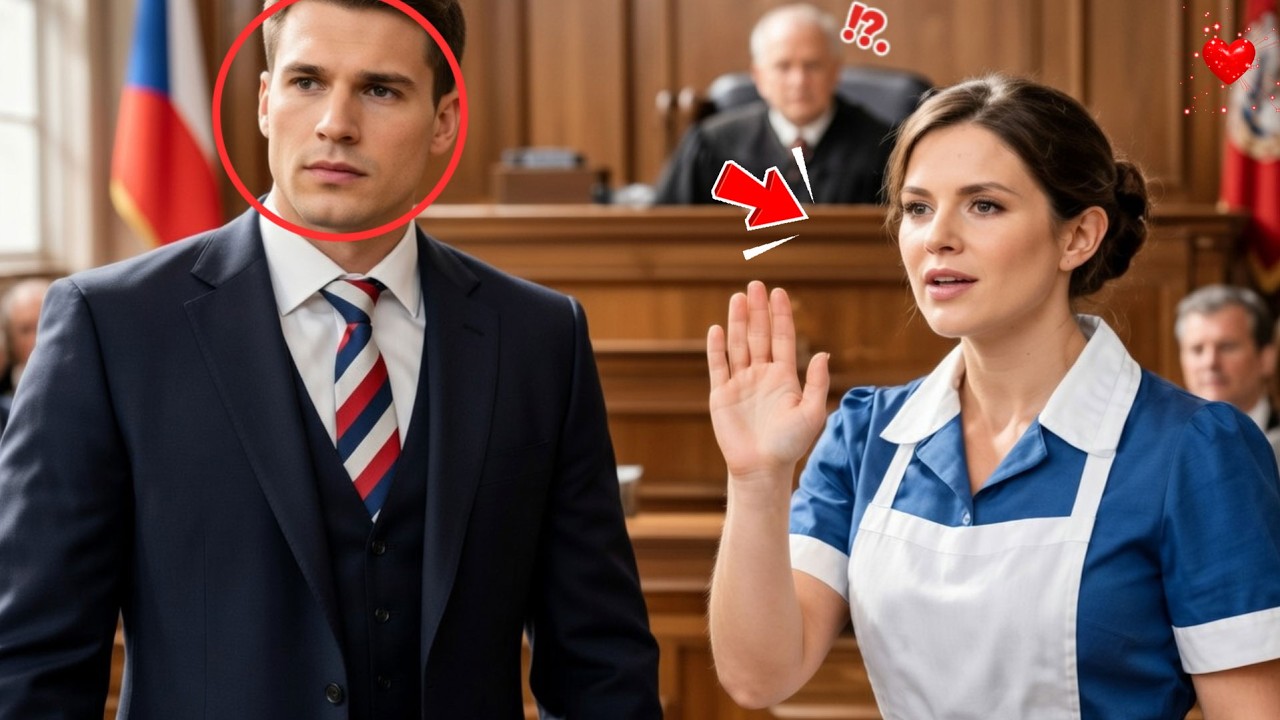
The courtroom was small, the walls climbed with old wood paneling. Devon brought two lawyers; Immani brought a notepad and Elijah. The judge heard both sides. Devon argued instability, lack of resources, a life with no fixed home.
Immani presented her employment record, her housing arrangement, the documented care for Zoe, and she spoke about the family business shares Andre had left her and her daughter. The judge ruled in her favor. Devon gathered his papers and left without a word. Immani sat down, let out a long breath that carried eight months of tension, and Rebecca placed a hand on her shoulder.
Elijah didn’t say anything. He just put his hand on her back, and that was enough. But real life doesn’t end after the climax scene. The months that followed were quiet, filled with days without villains or courts or crises.
Immani found her own rhythm, coordinating remotely from the farm, earning enough to support herself and Zoe if she needed to. Elijah kept working the land, but he came inside early now, not because he had to, but because he didn’t want to miss dinner. One evening in April, on the same porch where Devon had first appeared, Elijah asked her a question. He had waited, not out of uncertainty, but because he wanted this to grow at its own pace.
He asked, “If he had disappeared completely, if no one was threatening you or Zoe anymore, would you still want to stay? ”
She said yes. He proposed that night, not with a ring but with a promise: “I’m not asking you to become someone else. I’m asking you to let me stand beside you while you figure out who you already are.
”
They married in the fall, a small ceremony with no guests except the three of them and the fields that had witnessed everything. Zoe grew up between two people who had each learned that love doesn’t need to compete with loss. The house changed. Two cups of coffee every morning became three.
The crib in the attic came down one weekend, dusted, set up in the nursery, not as a memorial but as a place where a new life could sleep. And on the nights when the rain fell, they sat together on the porch, neither one saying much, because they already knew what the other was thinking. The story of how two strangers met on a rainy road and built a home out of the quiet parts of themselves. No one asked for the reason first.
That was the point.