The first shoe he ever owned cost eleven dollars, and he remembered the exact ache of standing in them for too long. By the time Dalton Moore turned twenty-eight, he had built a construction company from nothing—two busted trucks, a crew of six, and a reputation for never walking off a job. He wasn’t rich in the way the city understood rich. He didn’t wear watches that cost more than cars.
He drove a ten-year-old Ford, and his work boots had more concrete dust in them than leather. But he owned half the commercial buildings on the east side of the river, and the other half he was slowly buying. The worst insult to his life came on a Tuesday afternoon in mid-October, at the opening of the new Riverbend Tower. It was a twenty-floor glass tower that his company had built from the ground up.
He’d poured the foundation. He’d hung the steel. He’d walked those unfinished floors a thousand times, in the dark, in the rain, in the heat, when no one else was around to see the work. The building was supposed to be named for him.
That was the deal. The construction company that put up the tower got the naming rights, and Dalton had signed the papers himself. When the invitations went out, the name on the front was the Graystone Group, the developer who’d financed the project. Dalton’s name was in the fine print on the back, under “General Contracting.
”
He didn’t say anything about it. That was his way. He just put on his best pair of jeans, a clean shirt, and his good suit jacket that didn’t quite fit right at the shoulders, and he drove to the opening. The event was everything he hated.
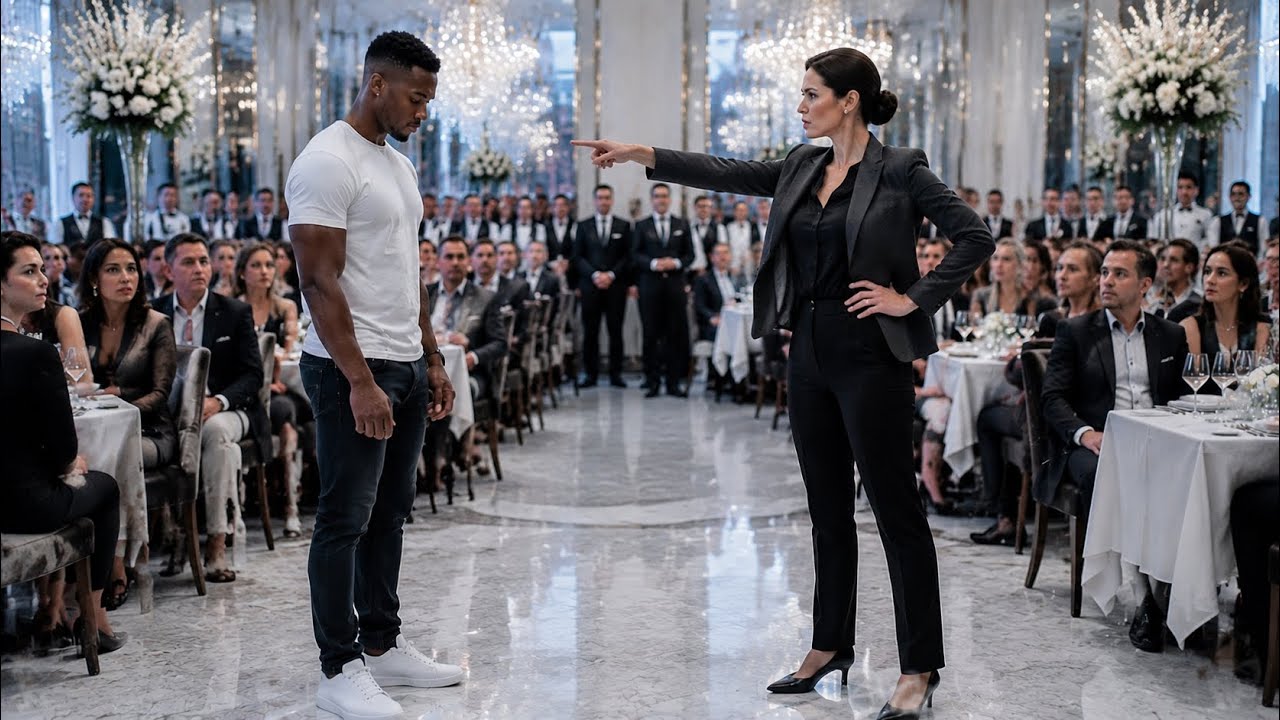
Crystal glasses, cold canapés, women in dresses that cost more than his truck, men who shook hands without looking at you. Dalton stood near the back of the lobby, nursing a glass of water, watching the building he’d built get celebrated by people who’d never held a hammer. That’s when she found him. Liliane Graystone.
The developer’s daughter. She was thirty-one, sharp-boned, dressed in white, and she looked at him the way people look at a stain on a clean counter. “You’re the contractor,” she said. It wasn’t a question.
“Dalton Moore,” he said, and held out his hand. She didn’t take it. “You’re not on the guest list. ”
“I built this building,” he said.
“I know what you did,” she said. “This event is for the people who made it possible. ” She smiled, but it didn’t reach her eyes. “The investors.
The partners. The people with a stake in this project. ”
“I have a stake,” Dalton said quietly. “You have a subcontract,” she said.
She looked him over, slowly, from his boots to his jacket that didn’t fit. “This is a formal gathering. You don’t belong here. ”
Dalton felt a slow heat climb up the back of his neck.
He didn’t say anything. He just looked at her for a long moment, then set his glass down on a nearby table, turned, and walked out. He heard her laugh behind him. It was light and careless, the laugh of someone who had never been told no in her life.
He walked past the valet stand, past the crowd of guests, past the people who looked at him like he was a delivery driver who’d wandered in by mistake. He got in his truck and sat there for a moment, engine off, hands on the wheel. Then he drove home. For three weeks, he didn’t say a word to anyone about it.
He went to work. He poured concrete. He checked schedules. He signed paychecks.
He smiled at his crew like nothing was wrong. But at night, he sat at his kitchen table with a yellow legal pad and a pen, and he wrote numbers. Not the numbers of the job he was doing now. The numbers of the whole deal.
The financing, the land, the permits, the partnership structure. He read the contract he’d signed with Graystone, line by line, until he knew every clause by heart. Then he made some calls. The call that mattered came four weeks later.
Dalton sat in a conference room at the bank, across from a loan officer named Marcus Reed. Marcus had known Dalton for eight years, had watched him build a company from nothing, and he’d never seen that look on Dalton’s face before. Not anger. Something colder.
“I need a number,” Dalton said. “You know the number,” Marcus said. “The question is why. ”
“I’m buying the building.
”
Marcus didn’t laugh. He knew Dalton well enough to know that Dalton didn’t joke about money. “Riverbend Tower? The Graystone building?
”
“That’s the one. ”
“That building isn’t for sale. ”
“Everything’s for sale,” Dalton said. “The question is always just whether you can find the price.
”
Marcus leaned back in his chair. “You’re talking about the developer’s flagship asset. They’re not going to sell to the general contractor who built it. They’d see it as an insult.
”
“Maybe they would,” Dalton said. “That would be their problem. ”
Two weeks later, Graystone Development hit a wall. A loan they’d been counting on got restructured.
A key tenant pulled out of the tower’s lower floors, and a second tenant dropped their letter of intent a week after that. The market was shifting, and Graystone’s cash flow was suddenly thin. Dalton watched the news from his office, saying nothing. When the first quiet offer came in for the building—a modest offer, through a third party, no names attached—Graystone’s CEO, Liliane’s father, rejected it out of hand.
The second offer came with a deadline. The third offer was higher. And then Dalton made it personal. He drove to the Graystone office building in the middle of the day, in his work clothes, and asked to see Liliane.
The receptionist looked at him like he was carrying a complaint about a parking ticket. “Do you have an appointment? ”
“No,” Dalton said. “Tell her it’s the contractor.
”
Five minutes later, he was standing in Liliane’s office. She was behind a large desk, her white-blond hair pulled back, her eyes cold. She didn’t stand up. “You have a lot of nerve,” she said.
“I always did,” Dalton said. He sat down without being asked. “I’m here to give you a chance. ”
“A chance at what?
”
“A chance to say it to my face,” he said. “The thing you said about me at the opening. That I don’t belong. That I’m not one of you.
” He paused. “I want to watch you say it to my face. ”
Liliane’s jaw tightened. “I don’t know what you’re talking about.
”
“You called me a subcontractor,” Dalton said. “You told me I didn’t have a stake. You laughed when I walked out. ” He tilted his head.
“I built that building, Liliane. From the dirt up. I know every weld, every bolt, every floor of it. And you couldn’t hold a hammer straight enough to hang a picture frame.
”
Her face went red. “Get out of my office. ”
“I’m not here to fight,” Dalton said quietly. “I’m here to make you a deal.
Sell me the building. ”
She laughed, but it was thinner than before. “You can’t afford that building. ”
“I can,” Dalton said.
“And you need the money more than you need the building. ”
Liliane stood up. “I will never sell to you. Not for any amount.
I’d burn it down first. ”
Dalton looked at her for a long moment, then stood up. He put his hands in his pockets and walked to the door. He stopped and turned.
“There’s something you should know,” he said. “What? ”
“The loan you’re trying to refinance,” he said. “The one that fell through.
I own that paper. I bought it at a discount three weeks ago. ”
Liliane went still. “You owe me,” Dalton said.
“Not the bank. Me. And I’m calling it due. ”
Silence.
“You can’t do that,” she said, but her voice had lost all its edge. “I already did,” Dalton said. He walked out. The meeting that ended it happened in the same conference room where the partnership had been signed a year before.
Graystone’s lawyers were there, Dalton’s lawyer too. Liliane sat at one end of the table with her father, both of them gray-faced. Dalton sat at the other end. The papers were already drawn up.
The building transferred to Dalton Moore’s company. The debt was settled at a number Graystone couldn’t argue with. They signed with their own pens, in their own ink, and they didn’t speak while they did it. When it was done, Dalton stood up.
He looked at Liliane one more time. “You were right about one thing,” he said. “The building was full of formal people with expensive suits and fancy titles. ”
He paused at the door.
“But the only person in that room who actually had a stake in it was the one you threw out. You just didn’t know it. ”
Liliane said nothing. She just watched him walk out with the deed to the building in his pocket.
A month later, the sign over the entrance of Riverbend Tower was changed. Where “GRAYSTONE” had been engraved in gold letters, a new name was mounted above the glass doors. “MOORE & SONS. ”
On a Friday afternoon, Dalton stood on the sidewalk outside the building, looking up at that sign.
His father, who had spent his whole life working construction, who had taught Dalton everything he knew, stood beside him. “You did it,” his father said. “No,” Dalton said. “We did it.
”
The old man looked at the building, at the name in the sunlight, and something in his face went soft. “They built that tower to show everyone how high the Graystones could rise,” Dalton said. “Looks like the name on the outside matters less than the work on the inside.
”
His father laughed, and they stood there a while longer, two men in work boots, watching the building that would carry their name into the city’s skyline for as long as it stood.