The plastic T-Rex was green and scratched from three years of hard use. The kind of toy that lives at the bottom of a backpack and gets pulled out during long car rides. My grandson held it out with both hands, the way he held most things that mattered. “Mama hid something inside it,” he said.
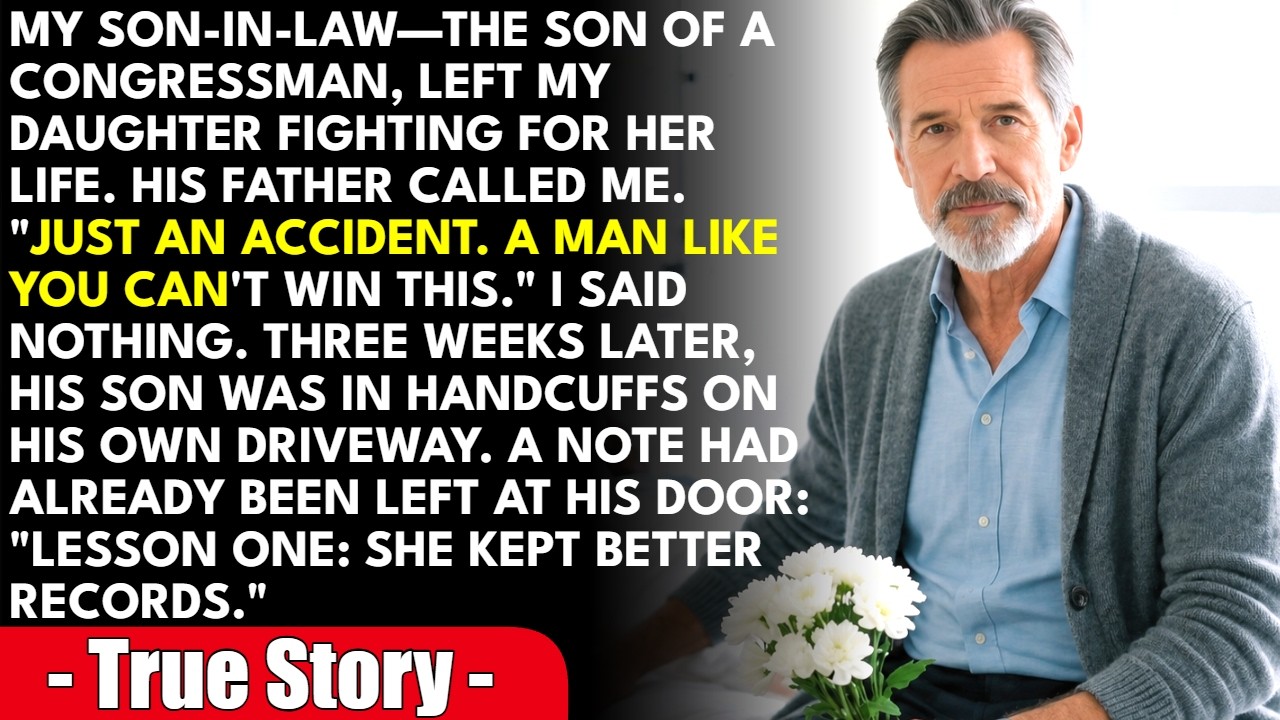
His voice dropped. “She said, ‘Only give it to you, Grandpa. Nobody else. ’” Then, quieter still: “She said, ‘Especially not, Dad.
’”
That sentence landed in the center of my chest and spread outward like something breaking. I’m sixty-three years old. I live in a two-bedroom house in Knoxville, Tennessee, and I drive a 2009 Camry that needs new tires. My neighbor once told my sister I was the most unremarkable man on the street, and she said it the way you say something that is both true and kind.
She wasn’t wrong. She just didn’t have all the information. For twenty-two years, between the ages of thirty-four and fifty-six, I worked as a special agent for the IRS criminal investigation division. I spent those years inside the financial networks that powerful people build to move money in ways the law isn’t supposed to see.
Shell companies. Offshore accounts. Real estate schemes dressed in the right paperwork. I learned to read a wire transfer the way other men read a box score.
I retired three years early. People thought it was my back. It wasn’t. My daughter, Gemma, had just turned thirty and moved to Nashville with her husband, Knox.
I had spent too many years being the kind of father who was present in theory but not in practice. I wanted to be a two-hour drive away, not a two-day absence. So I became the most unremarkable man on the street in Knoxville. For almost three years, that had been enough.
The phone call came on a Thursday evening in October. The screen read: University Medical Center. I had received difficult calls before. In twenty-two years, I had heard the kind of news that tells you an operation collapsed or a contact was compromised.
This was worse than all of them. The voice on the other end was calm and professional. “Your daughter has been in a serious accident, sir. She’s in emergency surgery.
You need to come to Nashville. ”
I set down the spoon. I asked two questions. I wrote nothing down because I didn’t need to.
I drove to Nashville in two hours and forty minutes, my hands at ten and two, my eyes perfectly dry because I had somewhere to be. Knox was at the hospital when I arrived, standing with his father. I had met the father once before, at a Christmas dinner two years ago. Congressman Thaddius Alderman of Tennessee.
Twenty years in the House. Tall, silver-haired, a handshake calibrated by decades of practice. He shook my hand, told me how deeply sorry he was, and said his family would take care of everything. He said the word “family” the way a person says a word they have rehearsed.
Knox told me the brakes gave out. Said Gemma had been complaining about the car pulling to the left for two weeks. Said he had offered to take it in. Said it all happened so fast.
I had spent twenty-two years listening to explanations that had been constructed rather than remembered. Knox’s account had three tells in the first ninety seconds. He described the sound of the impact with a precision you only have if you were nearby when it happened. He mentioned the service records before I asked, unprompted, anticipatory.
And when I asked what road she had been on, his jaw moved in a way that was not grief. It was calculation. I gave him nothing. I said, “Thank you for being here.
”
Dr. Mitchell found me in the hallway forty minutes later and asked to speak privately. She told me the airbag had failed to deploy on the driver’s side, that the deceleration injury pattern was inconsistent with ordinary brake failure. A mechanic the hospital retains for exactly these situations had examined the vehicle and found the brake line had been compromised in a way that would take three to five minutes with the right tools.
She had already filed a mandatory report with Metro Nashville Police. My face stayed where it needed to stay. Inside, something had gone perfectly and terribly still. My grandson arrived just before midnight.
My sister had been watching him at Gemma’s house. He came in wearing a Dallas Cowboys jersey and sneakers put on in a hurry, left shoe on the right foot. He had his old Thomas the Tank Engine backpack, and he was holding the straps with both hands so tight his knuckles were pale. Cade.
Nine years old and small for his age, with Gemma’s dark eyes and a jaw set with the particular stubbornness of a child who has decided he is going to hold himself together until he completes an assignment. I crossed the waiting room and crouched down in front of him. His chin wobbled immediately, but he pressed his lips together hard. He had a job.
He was going to finish it first. “Grandpa,” he said quietly. “Mama gave me something. ”
He reached into the front pocket of the backpack with careful, deliberate hands and pulled out the T-Rex.
He held it out with both hands like something that must not be dropped. “She said it’s inside. Only give it to you. ” His voice dropped lower.
“Especially not, Dad. ”
I took the dinosaur. My hands were steady. Twenty-two years of habit does not disappear overnight.
I turned it over. The base was hollow. A small strip of electrical tape sealed it. Inside, wrapped in a piece of notebook paper with my name written in Gemma’s handwriting, was a USB drive.
I looked at Cade carefully. “Did anyone see you bring this? ”
He shook his head with absolute certainty. “Mama put it in my bag herself before she took the car.
”
“She said, ‘If anything ever happened to her, give this to you. You’d know what to do. ’”
His chin wobbled harder. “Grandpa, is mama going to—?
”
I put my hand on his shoulder. “You did perfectly, Cade. Exactly right. I’m so proud of you.
”
That was when he broke. He pitched forward and I caught him, and he sobbed against my collar with his whole body shaking. I held him and pressed my hand against the back of his head. Across the waiting room, Congressman Alderman watched us from his chair with an expression of practiced sympathy that did not reach his eyes at all.
Later, my sister took Cade to the family room. I slipped the USB drive into my inside jacket pocket and walked out into the Nashville night. I stood in the ambulance bay and thought about a thirty-two-year-old woman who had found something in her husband’s files, copied it carefully onto a small piece of hardware, hidden it inside a toy dinosaur, and handed it to a nine-year-old boy with instructions so clear he carried them across three days and two breakdowns without failing once. She had known something might happen.
She had made a plan. She had chosen who to trust. She had chosen me. I found a cash motel off Murfreesboro Road, sat on the edge of the bed, and plugged the drive into my laptop.
There were four folders. Gemma had organized them by entity name, then by date, then by transaction type. She was a better investigator than most of the analysts I had worked with in my career. Screenshots taken over several weeks.
Wire transfers. LLC registration filings. Tax elections under the federal qualified opportunity zone program, which allows investors to defer and reduce capital gains taxes by investing in designated low-income communities. Seven LLCs.
Four states. Properties in three rural Tennessee counties that had been designated as opportunity zones after Congressman Alderman himself lobbied for their inclusion in the 2017 federal rollout. I sat with the third folder open for a long time. The money had flowed in—$28 million across four years from investors who believed they were funding rural development, housing rehabilitation, economic revitalization.
The money had flowed back out within sixty to ninety days each time, before a single foundation was poured, through a chain of sub-entities that ended at two offshore accounts in the Cayman Islands. The properties sat empty. The federal tax benefits were claimed. The communities saw nothing.
At the bottom of the fourth folder was a file labeled “Read This. ” I opened it. A voice memo. Gemma’s voice, recorded in a low, careful tone.
The voice of someone speaking in a room where they are not supposed to be heard. She described what she had found, when she had found it, and how. She listed the entity names in order. She explained the scheme clearly enough that any federal prosecutor could follow it without a guide.
She ended by saying, “Dad, if you’re hearing this, you know what to do. I love you. Don’t let them make this go away. ”
I pressed my fist against the nightstand and held it there until my knuckles went white.
Then I picked up the prepaid phone I had kept in my glove compartment since the day I retired. Old habit. I called the number I hadn’t dialed in two years. Garvey picked up on the second ring.
Fifty-eight years old. Nineteen years as an IRS forensic accountant before opening a small private practice in Atlanta. No website. Every client a referral.
He listened without interrupting for four minutes. When I finished, he said, “How long do you need? ”
“Three days. ”
“I’ll be there by morning.
”
The congressman’s lawyer arrived at the hospital Friday morning carrying a leather portfolio and a settlement agreement thirty-one pages long, prepared before I had been in Nashville twenty-four hours. Full medical coverage. Rehabilitation costs. No stated cap.
It prohibited public statements about Gemma’s accident and about the Alderman family. It required me to refrain from making representations about Knox to third parties. It said nothing about cooperating with a federal grand jury. It said nothing about responding to an IRS summons.
In American law, a private settlement agreement cannot obstruct a federal investigation. The moment it attempts to, it becomes unenforceable. I signed all thirty-one pages. The lawyer relaxed by visible degrees and smiled the smile of a man who has handled a situation before lunch.
My ex-wife, Jean, grabbed my arm the moment he was gone. “Saul, why did you just sign that? ”
I watched the lawyer disappear toward the elevators. “Because it doesn’t say what he thinks it says.
”
She stared at me for a long moment. Something shifted in her expression. She nodded once. “Fix it.
”
That afternoon, the congressman cornered me in the corridor outside the family waiting room. He said he wanted to speak plainly, man to man. Said a man in my position—he paused on the word “position”—should understand the value of letting healing be private. That outside attention had a way of complicating things for everyone.
“I appreciate you sharing that,” I said. He studied my face, searching for something he could work with. I gave him a tired, grateful expression and nothing else. He walked away satisfied.
I reached inside my jacket and confirmed that the small voice-activated recorder, another old habit, had been running the entire time. Garvey called at seven that evening. Gemma’s notary commission number appeared on seven fraudulent property deeds. She had been a licensed Tennessee notary for three years as a professional courtesy to her accounting clients.
Knox had used her notary seal, kept in a drawer in the home office, to authenticate documents she had never seen. Forging a notarial certificate to transfer real property in Tennessee is a Class C felony. Gemma had spent three years building a professional reputation she had earned carefully and honestly. Knox had picked it up the way you pick up a tool from a drawer, used it, put it back, and never considered the weight of it.
My hands went still on my knees. I made myself open them. Then I went to work. Metro Nashville Police had assigned Gemma’s case to a detective named Lara Sims.
Eleven years on the force. Her initial report had been filed within hours of the mechanic’s assessment—thorough, specific. Two days after that report, the case was reclassified from active investigation to pending review. A city councilman with long-standing ties to the Alderman family had called the precinct captain the morning of the reclassification.
The timing was in the precinct’s own phone logs, which are public record in Tennessee. I waited outside the precinct on Saturday morning until Sims came out alone. I stepped into her path. “Detective Sims.
” I said her name, then my daughter’s name, and watched her face move through three things in three seconds. Recognition. Caution. And something harder underneath both.
“How did you find me? ”
“Your name is on the initial report. ”
I held out an envelope. Three pages, organized the way an IRS agent organizes a summary.
Statutes at the top. Evidence in order of strength. Nothing speculative. “Twenty-two years.
IRS criminal investigation division. I’m not here to cause problems for you. I’m here because my daughter is in a medically induced coma, and the people responsible know how to make a case file go quiet over a weekend. ”
She took the envelope.
Didn’t open it. “Take forty-eight hours. Read it at home, not in that building. Then decide.
”
She nodded once and walked to her car. The black Tahoe had been with me since day two. Two men, rotating shifts, private security contracted through a firm that traced back to Alderman Enterprises. Someone had told them to find out what I had.
I let them watch. I bought coffee every morning from the same cart. I sat with Gemma every afternoon. I called Cade at seven every evening and listened to him tell me about his science project.
Eyes on me meant eyes off Cade. Sims called on Monday. We met at a diner on CharlotteAvenue, corner booth, her back to the wall. She told me about a woman named Porche.
Three yearsage, Porche had filed a formal complaint against Knox following an incident at a private event inFranklin. The complaint was detailed and corroborated. Withdraen twelve days after filing. Porche retained a private attorney she couldn’t have afforded on her own and relocated toAcheville, NorthCarolina within the month.
“It’s not insufficient evidence,”Sims said. Her voice was flat and certain. “It’s a paid withdrawal dressed in paperwork. ”
Tharee years.
Porche had been carrying that stone all the way toAcheville, and my daughter had not known, and Knox had done it again. “Is she willing to talk? ”
“I called her last night. She said she’s been waiting.
She said she knew something like this would happen eventually. That kind of man doesn’t stop because you leave. He stops because someone makes him stop. ”A pause.
“She’s willing to testify. She said she’s been willing for three years. She just needed someone to ask the right way. ”
My throat tightened.
I looked at the far wall of the diner. “Tell her thank you. ” My voice came out rougher than I intended. On day twelve, Garvey and I submitted the package.
Encrypted digital submission to IRScriminal investigation division, and a parallel submission to the FBIFinancial CrimesUnit in theNashville field office. Cover document, eight sections, cited federal statutes, evidence in descending order of strength. The voice memo. Gemma’s organized USB files.
The financial flowcharts Garvey had built over nine days. The recording of the congressman’s corridor conversation. The timeline of the case reclassification in the councilman’s phone log. We did it from a laptop Garvey had bought with cash.
When the submission went through, we sat in the motel room with the particular feeling of having set something in motion that cannot be recalled. “Now we wait,” Garvey said. That night, the Tahoe moved. I was four blocks from the motel when it cut across the lane in front of me, and a second vehicle came up fast on my left.
A man got out, large, mid-forties, a jacket that didn’t quite conceal the holster on his right hip. He came to my window with the unhurried confidence of someone who has done this before. He said my last name. “We need whatever your daughter gave you.
”
“I don’t know what you’re referring to. ”
He leaned down. His voice dropped half a register. “This doesn’t have to be complicated.
”
Behind him, forty feet back, Garvey’s rental car idled with its hazard lights on. And in my side mirror, the headlights of an unmarkedImpala had turned onto the street, moving toward us with a purpose that was not casual. Detective Simsput her light bar on, red and blue strobing offthe buildings on both sides of the street, and hit the siren once. One sharp burst.
The large man’s head turned. That half-second of distraction was all I needed. I was already out of the car. She had backup staged two blocks north.
Both men were in restraints within five minutes. Both phones were bagged as evidence—the part that mattered most. The texts on those phones were not complicated. Messages from Knox’s family attorney to the private security firm.
Six of them. The last sent at 9:47 that evening: “He leaves the hospital at 10:00. Don’t come back without it. ”
The attorney was arrested on conspiracy and witness tampering charges before midnight.
Men like that flip the moment they understand that loyalty to a client is not a defense to a felony. He was cooperating before sunrise. The morning after the arrest, Garvey’s people left an envelope at Knox’s house in Brentwood. One page.
A printed summary of the scheme in Gemma’s handwriting, her voice memo transcribed word for word, and at the bottom, in block letters: “She kept better records than you knew. ”
Congressman Thaddius Alderman called my cell phone at 5:42 in the morning from his personal number. “Who are you? ” Not a question.
Three words stripped of everything that had always made him formidable. I looked through the windshield at the hospital parking structure. Fourth floor, room 412. Yellow daisies on the nightstand.
Gemma’s favorite since she was seven. “You only need to know what your son did,” I said. Silence. Not the silence of a man selecting his words with care.
The silence of a man whose words had simply stopped arriving. “Don’t call this number again. ”
I ended the call, set the phone on the passenger seat, and sat there while the Nashville morning assembled itself around me. The IRS executed search warrants on Alderman Enterprises six days later.
Federal agents in blue windbreakers moved through the lobby of a glass office building on Commerce Street while a news crew filmed from the sidewalk. Garvey called while I was watching from the hospital cafeteria. “Every account is frozen. All seven LLCs.
The Cayman accounts are flagged. They can’t move a dollar. ”
Knox was arrested at his Brentwood home on a Tuesday morning. Gemma’s forged notarizations were among the charges.
Forgery. Fraud. Wire fraud. Conspiracy.
When the first LLC manager walked into the FBI field office three days earlier with a lawyer and a prepared statement, the rest had followed. Nobody wants to be the last one holding when the music stops. Congressman Thaddius Alderman resigned from Congress on a Thursday morning. The statement was four sentences.
He cited health. He thanked the people of Tennessee for the privilege of service. He did not mention the federal investigation, the grand jury, or the $28 million that had moved through seven companies over four years while rural counties sat on empty lots. Twenty years.
Four sentences. Porsche drove herself from Asheville to testify before the grand jury. She didn’t need to be asked twice. On day forty-one, Dr.
Mitchell stopped me in the hallway outside Gemma’s room. Her responsiveness scores had increased. Her intracranial pressure had held within normal range for eight consecutive days. “I’m not telling you she will wake up tomorrow,” Dr.
Mitchell said. “I’m telling you the numbers are moving in a direction I didn’t expect them to move this quickly. Keep doing what you’re doing. Keep reading to her.
Keep coming. ”
Day forty-four, a Thursday morning. I was sitting next to Gemma’s bed, reading from the Tennessee Department of Revenue’s annual report—the most exhaustively tedious document produced by any state government in the preceding calendar year—in the same flat, unhurried voice I had been using for forty-four days. Her hand moved.
Her right hand, resting on the blanket. The fingers curled, then uncurled, then were still. My heart stopped. I leaned forward.
“Gemma. Hey. I’m right here. ”
Her eyes opened slowly.
The ceiling. The window. Then, with the effort of someone relearning something that used to be automatic, they found me. Recognition came back in pieces, assembling itself.
Her lips moved. “Did Cade give you the dinosaur? ”
Her voice was cracked and dry and the best thing I had heard in sixty-three years. My throat closed completely.
I had to look at the ceiling and breathe slowly through my nose before I could answer. “He did. ”
Her eyes closed briefly. When they opened again, something had settled in them.
The specific settling of a person who has been holding one fear for a very long time and has just been given permission to put it down. “Good boy,” she whispered. Then: “What did you do, Dad? ”
I took her hand in both of mine carefully.
The way you hold something you came very close to losing. “What fathers do,” I said. The door opened. Small feet on linoleum, quick and certain.
Cade came around the end of the bed and stopped when he saw his mother’s open eyes. His hands went to his mouth. Then he climbed up beside her carefully, trying so hard to be gentle, and lay down with his head on her shoulder. “Hi, mama.
”
Gemma’s arm came up slowly and settled around him. “Hibaby. ”
Jeanappeared in the doorway behind him. She made a sound I won’t try to describe.
She crossed the room, took Gemma’s free hand, pressed it against her face, and her shoulders shook with something she didn’t try to control. Istood up and walked to the window, pressed one hand flat against the glass. I had spent twenty-two years being very good at disappearing, at leaving rooms so cleanl they didn’t know they’d been changed. But some rooms you walk into and you do not leave.
The work is staying. Gemmisaid my name. I turned around. She was looking at me from the bed, Jean holding her hand, Cade at her side.
“Thank you,” she said. “You did the hard part. You kept the records. ”
She shook her head, slow and deliberate.
“You stayed. ”
I pulled the chair back to the bedside and sat down. And I stayed. I watched Knox walk out in handcuffs from across the street the following week.
Detective Sims was at the door. She saw me and gave a single nod. Knox saw me a moment later, and he stopped. Just one step’s worth.
The look of a man whose understanding of a situation is rearranging itself in real time, and he doesn’t like where the pieces are landing. “Youwere IRS this whole time. ” His voice came out stripped of everything that had always been his instrument. The ease.
The warmth. The casual confidence. I thought about a nine-year-old boy in a Dallas Cowboys jersey with his shoes on the wrong feet, standing in a hospital waiting room at midnight, holding a plastic T-Rex out with both hands. I thought about a woman who had spent weeks quietly photographing documents in a home office while her husband watched television in the next room, who had made a plan before anything happened and trusted her son with the most important part of it.
“No,” I said. “I was just her father. ”
They put him in the vehicle. I watched it go.
People ask me what I learned from all of this. I learned that betrayal does not always arrive with a warning. Sometimes it moves in with the furniture. Sometimes it sits across from you at Christmas dinner with a calibrated handshake and spends years waiting for you to stop paying attention.
I spent twenty-two years protecting strangers and told myself that was service enough. It wasn’t. Don’t make my mistake. Don’t wait until the fire is already burning before you decide to show up.
Show up now, when it’s quiet. When nothing is broken yet, when the people you love still have time to feel it. Every family has a version of this underneath it. Someone who stayed when staying was the hardest thing.
Be that person before you’re called to be. The moment you start waiting for the right time is the moment you’ve already waited too long.