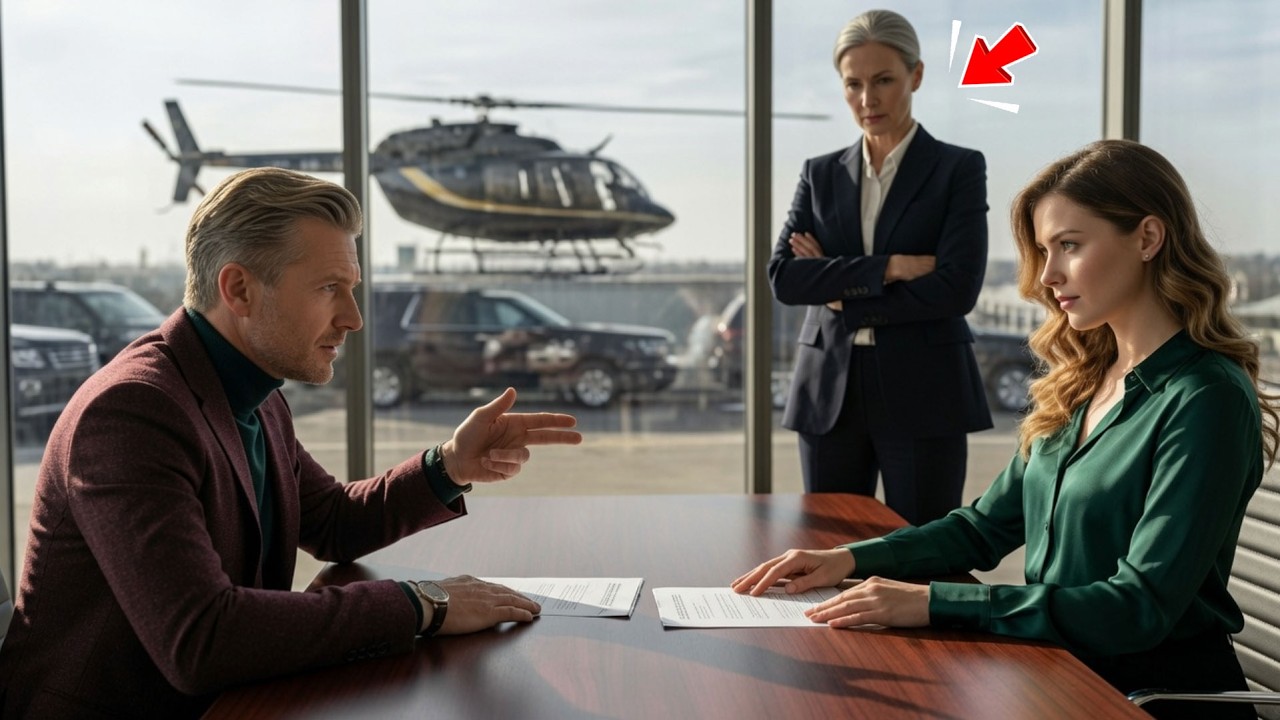
I walked into the strategy meeting twenty minutes late and found my chair gone. The table was full. Chad, the new director, was at the head, gesturing with a pen he clearly didn’t know how to refill, while the CEO nodded along to a slide deck full of buzzwords like synergy and velocity. “Oh, Joanne,” Chad said, stopping mid-sentence.

He didn’t stand up. He didn’t apologize. He smiled the way you smile at a waitress who brought you tap water instead of sparkling. “We actually pivoted the agenda to blue sky strategy this morning.
Didn’t think we needed the compliance police for the ideation phase. You can grab a coffee if you want, though. ”
The room went dead silent. The CFO, a man I’d known for twelve years, looked down at his notepad.
The general counsel suddenly found a fascinating scratch on the mahogany table. “Governance isn’t policing, Chad,” I said, keeping my voice level. “It’s structural engineering. You don’t build the penthouse before you check the foundation.
”
“Right, right. ” He waved his hand as if swatting a fly. “But we’re flying the plane while we build it, Joanne. New era.
We need speed, not guardrails. We’ll loop you in when we need someone to check the spelling on the press release. ”
A few junior VPs snickered. I didn’t argue.
I didn’t demand a seat. I simply nodded, turned on my heel, and walked out. I’ve spent twenty years translating the quiet signals of capital for boards who think a quarterly projection is holy scripture. My name is Joanne.
I’m a fund trust liaison and investor governance adviser in New York. I make sure the people who own the money trust the people spending it. I don’t shout. I operate in the quiet zones—the sidebars of board meetings, the clauses of governance docs, the handshake lines at galas.
For a decade, I was the invisible glue holding a very expensive portfolio together. Chad was hired straight from the CEO’s alma mater to disrupt “legacy thinking. ” In corporate speak, that usually means basic arithmetic. He walked in radiating the specific confidence of a man who has never been told no by anyone other than a bartender at last call.
I sat at my desk afterward, the cold burn of professional insult settling in my chest. It wasn’t just the rudeness. It was the stupidity. Chad didn’t understand what I did.
He saw me as a speed bump. He didn’t realize I wasn’t there to protect the company from the investors. I was there because the investors wanted me there to watch the company. My phone blinked.
A text from the CEO: Don’t take it personal. He’s just shaking things up. We need his energy for the Series E round. Energy.
I called it liability. That afternoon, the first subtle cut came. I tried to access the shared drive for an acquisition due diligence I’d been leading for six months. Access denied.
I called IT. “Uh, hey Joanne,” Kevin stammered. Kevin was twenty-four and terrified of everyone. “The request came from the director’s office.
They’re moving all M&A files to a secure strategic silo. Access is limited to the core growth team. ”
“I see. And I’m not on the core growth team.
”
“I don’t see your name on the list, Joanne. Sorry. ”
“It’s fine, Kevin. Don’t worry about it.
”
I hung up and stared at the locked files. Most people would have stormed into the CEO’s office. Most people would have sent a scathing email copying HR. Instead, I opened a different drawer—the one that locked with a physical key—and pulled out a fresh legal pad.
Chad thought removing my access removed my power. What men like him always fail to grasp is that power isn’t about having the login password. Power is about knowing who actually owns the server. I opened my calendar.
The next quarterly investor call was six weeks away. Six weeks is a long time in corporate America. Enough time to launch a product. Enough time to ruin a merger.
And if you’re patient, exactly enough time to let a man hang himself with his own synergy. I opened a blank document on my personal laptop—never the company machine for this part—and typed a single header: Governance log, unsanctioned blocks. I wasn’t the compliance police anymore. I was the crime scene photographer.
The next move came two weeks later. An automated notification from the finance system: Q3 budget adjustment. Department 4004. New allocation: minus sixty percent.
A sixty percent cut wasn’t a trim. It was an amputation. They’d left me enough to buy paper clips, but they’d stripped the funds for the external audit on the upcoming acquisition. I walked down to the finance floor.
Sarah, the controller, looked like she wanted to crawl under her desk when she saw me coming. “Sarah,” I said softly. “Sixty percent. ”
She took off her glasses.
“I fought it, Joanne. Chad came in with the lean operations initiative. His exact quote: ‘Why are we paying outsiders to tell us we’re doing a good job? If we trust our team, we don’t need babysitters.
’ He reallocated your audit budget to marketing spend for the rebranding launch. ”
A cold laugh bubbled in my throat. He was taking the money used to ensure the numbers were real and using it to buy billboards saying the numbers were great. Ponzi logic applied to a billion-dollar equity fund.
“Thanks, Sarah. I know it wasn’t you. ”
“He’s dangerous, Joanne,” she whispered, glancing at the hallway. “He’s approving expenses that… let’s just say the documentation is thin.
”
Noted. Three days later, the calendar invite for a pitch with the Trident Group—a London firm I’d spent four years cultivating—simply vanished. I walked past the main boardroom. The glass was frosted now, a new addition so legacy employees couldn’t see the future happening without them.
The door was cracked open. I heard Chad’s voice booming: “Don’t worry about the oversight committee. We’ve streamlined the process. Less red tape, more green lights.
We’re focused on the what-ifs. ”
I saw our London contact in the reflection of a monitor. He looked uncomfortable. He was looking around the room, presumably for me.
Later that afternoon, Marcus, a junior analyst fresh out of Wharton, closed my door and looked like he was about to confess to murder. “Joanne,” he said, voice shaking. “I shouldn’t be telling you this. ”
“Sit down, Marcus.
Breathe. ”
They’d had a pre-meeting strategy session without me. Chad told the team I was rigid, that I killed momentum, that they shouldn’t CC me on the draft term sheets for the acquisition. “Did he put that in writing?
” I asked. “No. He said it in the huddle. But…” Marcus reached into his pocket and pulled out a crumpled piece of paper.
“He made notes on the whiteboard. I took a picture before they erased it. ”
He slid the paper across my desk. Under a box labeled “governance review,” Chad had drawn a big red X and written “bypass—speed too close.
”
“You didn’t get this from me,” Marcus said. “Get what from you? ” I smiled. “We were just discussing your performance review.
You’re doing excellent work. ”
He left. I looked at the photo. “Bypass.
” The anger had crystallized into something harder. This wasn’t office politics anymore. This was negligence. Fiduciary breach.
The kind of thing that triggers SEC investigations. I unlocked my bottom drawer and took out a portable encrypted hard drive—my own, not company property. I began the export. Emails.
Calendar logs showing canceled invites. Budget revision history. I scanned the crumpled photo. Then I went deeper.
Chad didn’t know history. Five years ago, during a restructuring, the fund filed specific governance covenants with our major institutional investors—pension funds, endowments, family offices. These weren’t just company policy. They were binding legal contracts attached to the capital.
I pulled up the 2019 filings. Section 4. 2: Trust liaison protocols. There it was in black and white.
“To ensure continuity of oversight, the fund designates Joanne as the primary governance liaison. Any removal, replacement, or significant alteration of the liaison’s duties must be preceded by a formal 30-day notice to the investor committee and ratified by a majority vote of the limited partners. ”
They hadn’t just insulted me. They were actively breaching the contract that allowed them to access the money in the first place.
I printed the page. I didn’t highlight it. I placed it in a manila folder labeled “insurance policy. ”
Three weeks into the Chad regime, the all-hands town hall arrived.
“Future Forward. ” The graphic design looked like a rave flyer. Chad stood on a stage wearing a headset microphone like he was teaching spin class, talking about trimming the fat and unleashing potential. Then a slide popped up behind him—a new org chart.
At the top, the growth vectors: sales, marketing, product, all leading directly to him. Off to the side, in a gray dotted-line box that looked like a graveyard, was a section labeled “legacy support services. ” And there was my name. “We need to honor where we came from,” Chad said, dripping with faux sincerity.
“But we can’t let the past weigh us down. Our legacy team will be transitioning to an advisory capacity. ”
He pointed at my name. Two hundred people turned to look at me.
I took a sip of lukewarm coffee, looked Chad directly in the eye, and offered a small, polite smile. The next morning, the email from HR arrived. Subject: Voluntary Transition Opportunity. Six months’ severance, continued healthcare, and a non-disparagement agreement so watertight it probably forbade me from frowning at the company logo.
The kicker was the deadline: sign by Friday close of business to secure the package. They were trying to buy me out before the quarterly call. I printed the offer. I didn’t sign it.
I put it in the folder with the whiteboard photo and the 2019 filing. Then I did something that would have confused them deeply. I started doing exactly what they asked. I stopped attending meetings I wasn’t invited to.
I stopped sending corrections on their memos. I became a ghost. When people passed my glass walls, they saw me typing furiously. They assumed I was updating my resume.
What they didn’t see was what I was actually typing—a master index. Document 001: timestamp of denied server access. Document 002: transcript of the town hall recording. Document 003: the severance offer implying constructive dismissal.
Document 004: comparison of current acquisition diligence versus 2021 standards—a forty percent reduction in risk assessment steps. I wasn’t building a defense. I was building a weapon. On Thursday, Chad stopped by.
He leaned on the doorframe, chewing gum. “Hey, J-team,” he said. He had started calling me J-team. “Did you get that doc from HR?
Pretty sweet deal, right? We want you to enjoy some downtime. Maybe travel. Eat, pray, love style.
”
“It’s very generous, Chad,” I said, looking up from my screen. “I’m reviewing the fine print. You know me. I like to be thorough.
”
“Don’t overthink it. Paralysis by analysis, right? That’s the old way. Just sign it, take the check, hit the beach.
”
“I’ll have an answer for you soon. ”
He slapped the doorframe and walked away whistling. He thought he’d cleared the deck for his victory lap. He had no idea he’d just admitted to my face that he was bypassing governance protocols.
I opened my private email. A draft sat there—not to HR, not to the CEO. It was to the encrypted account of the general counsel for the sovereign wealth fund that held forty percent of our equity. I didn’t send it yet.
Premature execution is sloppy. You wait until the enemy is fully committed to the mistake. New York runs on dinners. I was at Le Bernardin on a Tuesday night for a friend’s birthday when I spotted Robert, a senior partner at Highland Capital, three tables away.
We’d worked together for eight years. He waved. I nodded. I knew he’d come over.
“Joanne,” he said, kissing both cheeks. “I haven’t seen a report from you in weeks. I assumed you were on vacation. ”
I paused.
A deliberate three-second pause. “Vacation? ” I arched an eyebrow. “Is that what they told you?
”
His smile faltered. “Well, the monthly governance summary came from the new guy, Chad. He said you were focusing on high-level strategy and delegated the reporting. ”
“That’s interesting phrasing,” I said.
“I haven’t seen the monthly summary, Robert. I’ve been removed from the distribution list. ”
The air shifted. He leaned in closer.
“Removed? Joanne, you’re the designated liaison. We have a clause. You know we have a clause.
”
“I know we have a clause. I’m not sure the current board has read it. Or if they have, they consider it legacy thinking. ”
“You’re telling me you aren’t overseeing the diligence on the tech core acquisition?
”
“I’m telling you that my access to the data room was revoked three weeks ago, and my budget for external audit was reallocated to marketing. I’m sure Chad has it under control. He talks a lot about velocity. Apparently I’m too rigid.
”
Robert wasn’t smiling anymore. “Velocity? We don’t pay for velocity, Joanne. We pay for stability.
If you aren’t looking at those books…” He let the sentence hang. “I can’t confirm or deny what I can’t see,” I said, offering him an out. “Maybe everything is fine. But if I were you, I’d wonder why they don’t want me checking them.
”
He straightened and buttoned his jacket. “I need to make a call. ” He walked straight past his dinner companions, phone already to his ear. Two days later, my phone rang.
Robert, no pleasantries. “I asked for the raw diligence files. Chad sent me a summary deck. He said the raw files are proprietary internal work product.
”
“Since when do we not get the raw files? ”
“Since never. I asked if you had signed off on the risk assessment. He said, quote, ‘Joanne is transitioning to a new role.
We handled this at the executive level. ’”
“I see. ”
“Are you? ” Robert asked.
“Transisioning? ”
“I have a severance package on my desk they’d very much like me to sign by Friday. They characterize my departure as voluntary. ”
Silence on the line.
Heavy, expensive silence. “Do not sign it,” Robert commanded. “I wasn’t planning to. ”
“Joanne, if you are removed without our vote, that’s a breach of the 2019 LP agreement.
Section 4. 2. ”
“I know, Robert. I wrote section 4.
2. ”
“I’m going to send a formal inquiry to the board. Rattle some cages. ”
“No,” I said quickly.
“Not yet. ”
“Why? ”
“Because if you rattle now, they’ll scramble. They’ll fake the logs.
They’ll backdate approvals. They’ll claim it was a misunderstanding and restore my access just long enough to hide the mess. ”
“So what do we do? ”
“Wait for the quarterly call.
Let them go on record. Let Chad present the numbers to the entire investor pool. Let him claim, on a recorded line, that governance is sound. ”
“That’s risky, Joanne.
”
“It’s not risky if you know the truth. Let him put his neck in the noose, Robert. Then you can kick the chair. ”
He laughed, dry and sharp.
“Remind me never to piss you off, Joanne. ”
“Too late for some. ”
The trap was primed. Now I just needed the ammunition ready.
The office at nine p. m. is a different beast. The air conditioning hums lower.
The motion sensor lights click off, leaving islands of illumination. I was in my office finishing the package for Robert’s legal team when I heard a sound that warms the heart of any forensic auditor: the industrial shredder, running—chunk, chunk, chunk—down the hall in the executive wing. I walked silently in stocking feet. Chad’s door was ajar.
He was pulling staples out of thick documents, feeding them into the machine. He wasn’t shredding junk mail. He was shredding the redline drafts of the acquisition agreement—the ones with handwritten notes. I didn’t stop him.
I didn’t film him. That would be amateur hour. I walked back to my desk. I knew something Chad didn’t.
Our multifunction printers have a hard drive. Every document scanned or copied in the last thirty days is stored in a temporary cache. Chad, being the lazy disruptor he was, had copied those documents before realizing he needed to destroy the originals. I logged into the admin panel for the executive printer.
I still had the password—IT gave me the master key two years ago and never changed it. Legacy access. I found the logs. User: C.
Preston. Job: “act_draft_v3_internal_only. ” Time: 09:42 a. m.
I downloaded the PDF. It was beautiful. On page forty-five, next to a clause about a pending lawsuit against the target company—a lawsuit that could bankrupt them—was a handwritten note in blue ink, Chad’s handwriting: “Don’t disclose to INV. Quiet.
Deal killer. We fix post-clo. Fraud. ”
Pure, premeditated fraud.
He was in his office right now shredding the paper that contained that note, thinking he was erasing evidence. He didn’t realize he was just destroying the souvenir. I had the digital negative. I went back to my email draft to Robert’s lawyer and attached the PDF.
Message: “Please find the unredated draft of the acquisition agreement retrieved from internal logs. Please note the handwritten annotation on page 45 regarding undisclosed litigation. I am currently witnessing the physical destruction of the original hard copy by the director. Do not act until the call.
”
I hit send. Down the hall, the shredder stopped. I heard Chad sigh—heavy, exhausted. He probably felt safe.
I walked past his office on my way to the elevators. Hejumped when he saw me. “Joanne. Jesus, you’re still here.
”
“Late night. Just wrapping up some loose ends. You know how it is. Cleaning house.
”
“Yeah, exactly. ” He laughed nervously, glancing at the full shredder bin. “Spring cleaning in October. Gotta stay lean.
”
“Good night, Chad. ”
“Night, Joanne. Hey—did you sign that HR paperwork yet? ”
I pressed the elevator button.
The doors opened. “I’m bringing it to the meeting on Wednesday. ”
“Great. Perfect.
See you then. ”
The doors closed. I checked my pulse. Seventy-two beats per minute.
Steady. I had the smoking gun. Now I just needed him to stand in front of the firing squad. Wednesday morning, the day of the quarterly investor call, the office was vibrating.
Junior analysts sprinted between cubicles. In the war room, the executive team huddled. I sat at my desk, organizing desktop icons. I wasn’t invited.
Around ten a. m. , Kevin from IT ran toward the conference room, panicked. A moment later, the CFO’s assistant came out pale.
First domino fallen. I checked my private email. A letter from Highland Capital’s legal team had just arrived, blind-copied: “Urgent: pause on capital dispersements, effective immediately. Highland Capital is freezing all pending tranches of funding for the Series E round and the acquisition facility.
We require an immediate internal review of governance compliance regarding the tech core diligence process. ”
They didn’t know what Highland knew. They just knew the money tap had been turned off. Through the glass, I saw the CEO shouting at a speaker phone.
Chad waving his arms. They were scrambling. Chad looked out the window, scanning the floor. His eyes landed on me.
I was watering the peace lily on my desk. He stormed out and marched toward my office. He didn’t knock. “Did you talk to Highland?
” His face was blotchy. “Good morning, Chad. Talk to them about what? ”
“About the funding.
They just froze the wire transfer. They’re citing governance issues. ”
“That’s odd. I thought we pivoted away from governance.
Didn’t we decide it was a legacy bottleneck? ”
He slammed his hand on my desk. “Don’t play games with me, Joanne. Did you call Robert?
”
“I haven’t spoken to Robert in a professional capacity in weeks,” I said, which was technically true. Our dinner was social. “I don’t have access to the diligence files, remember? How could I flag an issue if I can’t see the data?
”
He stared, searching for a crack. I’ve sat across from federal regulators and hostile auditors. Chad was a golden retriever compared to them. “We need you on the call,” he said suddenly.
“We need a united front. You need to tell them our oversight is robust. ”
He wanted a human shield. He wanted me to lie on record so if it blew up later, he could blame the legacy liaison.
“I can join the call. But I won’t lie, Chad. I’ll answer questions truthfully. ”
“Just stick to the script.
If they ask about governance, you say we are fully aligned. Be in the boardroom at one fifty-five. ”
He ran back. I sat back down.
I opened my purse, checked my phone was fully charged. I opened the voice recorder app. Then I opened the folder labeled “final archive. ” I dragged three files into an email draft: the 2019 trust protocols, the logs of my access denial, the PDF of the fraudulent note.
I entered the email addresses of the entire investor committee—twelve high-net-worth individuals and fund managers. I didn’t hit send. Not yet. I walked to the break room and made a cup of Earl Grey tea.
I wanted to be fully caffeinated for the performance. The boardroom smelled like stale coffee and fear. At two p. m.
, we were live. The Polycom phone glowed green. On the screen, the participant list scrolled: Highland Capital, BlackRock, Teachers Pension Fund, Sovereign Wealth. Billions of dollars of listening ears.
Chad sat at the head. The CEO to his right. I was at the far end near the door. The united front.
Chad pitched. He spun a tale of explosive growth, synergy, a new era of agility. “Optimization” eleven times in four minutes. “Regarding the acquisition, we completed rigorous diligence.
We found zero red flags. We are ready to close and integrate within thirty days. ”
He looked at me. A warning glare.
The line was silent. Then Robert’s voice, clear and sharp: “Chad, this is Robert from Highland. Quick question. We received a notification about a pending lawsuit against the target company—patent infringement that could wipe out their IP.
Did your diligence team catch that? ”
The air left the room. Chad froze. “Robert.
We looked into all litigation. We deemed everything non-material. Nuisance suits. Standard stuff.
”
“Non-material. So you have a record of it? ”
Chad muted the mic. The light went red.
“Joanne,” he hissed down the table. “Do we have a record of it? ”
“I don’t know, Chad. I don’t have access to the files.
”
“Make something up. Nod. Do something. ” He unmuted.
“Yes, Robert. Our governance liaison, Joanne, has reviewed it personally and signed off. It’s a non-issue. ”
He pointed at me.
Smile, his eyes said. Nod. I didn’t smile. I leaned forward toward the microphone.
“Actually, Robert—”
Chad’s hand slammed the mute button. Beep. Red light. “Shut up.
You are done. Get out. ”
“You wanted me on the call. ”
“I wanted a team player, not a saboteur.
God, you legacy people. It’s not us. It’s you. You’re done here.
Get out of my boardroom. ”
He pointed to the door. I stood up. I picked up my notebook.
I looked at the CEO. He looked away. I walked to the door. As I reached for the handle, I heard a sound that made my blood sing: “Excuse me.
” Robert’s voice, from the speaker. Chad looked down. The light on the phone was green. He hadn’t hit mute hard enough.
Or in his panic, he’d double-tapped it. “Excuse me,” Robert repeated, icy. “Did the director just fire the fund’s trust liaison, live on an investor call? ”
The silence was the silence of a heart stopping.
Chad stared at the green light. His face went gray. “Robert, we were having an internal sidebar. ”
“Internal sidebar.
You just admitted that Joanne reviewed the litigation, then told her to shut up when she tried to speak, then fired her. ”
“She’s been obstructing the process,” Chad yelled. “She’s not a team player! ”
Another voice piped up, from the Teachers Pension Fund: “Is Joanne still in the room?
”
I walked back to the table. I didn’t sit. I stood directly over the speaker phone. “I’m here.
”
Robert: “Joanne, did you review the litigation and sign off on it as non-material? ”
I looked at Chad. He was begging with his eyes. “No,” I said.
“I did not review it. My access to the diligence room was revoked on September twelfth. My audit budget was zeroed out on September fifteenth. And as of this morning, I witnessed the director shredding documents related to that litigation.
”
Using my phone, I hit send on the email draft. “I have just emailed the full documentation to the entire board and investor committee, including the logs of the destroyed files. ”
The chaos from the speaker phone was indescribable. Three lawyers shouted at once.
The CEO put his head in his hands. Chad sat there, mouth open, staring at the phone as if it were a bomb that had just detonated in his lap—which, essentially, it was. Robert took command. “This call is terminated.
All funding is suspended pending a forensic audit. Board members stay on the line. Executive management, disconnect immediately. ”
The click of the line going dead was the loudest sound I’ve ever heard.
For ten seconds, nobody moved. Then the CEO walked over to Chad. He didn’t scream. He whispered, terrifyingly audible: “You shredded documents.
Is that true? ”
“They were draft notes. Internal thoughts. Not official.
”
“You lied to the capital. You lied to me. ”
“I was protecting the deal! I was doing what needed to be done to get the velocity up.
Joanne is the problem. She leaked it. ”
The CEO turned to me. I stood calmly.
“I adhered to section 4. 2 of the LP agreement, specifically the whistleblower protection clause regarding fiduciary breach. Would you like a copy? I have it here.
” I tapped the manila folder on the table. “Get out,” the CEO said. But he wasn’t looking at me. He was looking at Chad.
I left the room. Back at my desk, the fallout was instantaneous. My inbox exploded with automated bank alerts: dispersal account frozen. Payroll account pending review.
M&A escrow locked. The investors hadn’t just paused the deal. They’d invoked the right to seize operational control of the accounts. News hit the wires within the hour.
The stock price on the lobby TV took a nosedive. Chad’s velocity had finally arrived—he’d driven the company off a cliff at record speed. At four p. m.
, security came up. They walked past my office. They went to the corner office. I watched through the glass as Chad threw things into a box—his pen, his framed degree—arguing with the guard.
Mike, the guard I always made sure got a holiday bonus, wasn’t having it. He took Chad’s badge. Chad looked at me as he passed. There was no arrogance left.
Just shock. The look of a child who had touched the stove after being told it was hot. I didn’t smile. I didn’t wave.
I went back to typing. The CEO came by ten minutes later. He looked ten years older. “Joanne.
Highland just called. They’re demanding an interim governance audit. ”
“That sounds prudent. ”
“They said they won’t release payroll until the audit is started.
We have three hundred employees, Joanne. ”
“Then you should probably start the audit. ”
“They want you to run it. ”
I stopped typing.
“I’m afraid I can’t do that. I’m currently reviewing a voluntary transition package. According to HR, I’m legacy talent. ”
He winced.
“We can tear that up. We can discuss a retention bonus. ”
“I don’t want a bonus, David. I want the 2019 protocols reinstated.
I want a formal apology read into the minutes of the next board meeting. And I want my budget restored—with a twenty percent increase for inflation and stress. ”
He stared at me. He knew he had no choice.
The capital had spoken, and the capital trusted only one person in the building. “Fine. Done. ”
“One more thing.
”
“What? ”
“I want that glass wall in the boardroom unfrosted. I like to see what’s going on. ”
He nodded and walked away.
It’s been a week since the call. The office is quieter. The growth vectors team dissolved. The marketing billboards cancelled.
Chad is gone. Word travels fast: you can fail at a startup and be a hero, but you can’t lie to a pension fund and survive. That’s a permanent mark. The board tried to suggest a replacement for the director role.
Robert sent a one-line email: “We will work through our existing liaison. No additional layers required. ”
So now I’m not just the governance liaison. I am the de facto gatekeeper.
Nothing moves—not a wire transfer, not a press release, not a hire—without my initial on the digital routing slip. I walked into the boardroom this morning. The glass was clear. The view of the Hudson was gray and steel-hard, just the way I like it.
There was a chair at the head of the table. It was empty. The CEO sat to the side. The CFO nodded at me respectfully.
The general counsel gave me a nervous smile. “Joanne,” the CEO said. “Shall we begin? ”
I sat down—not at the head.
That’s for people who need to feel important. I sat in my usual spot near the door, where I can see everything. “Let’s look at the foundation,” I said. I opened my laptop.
The 2019 protocols were up on the screen. They say revenge is a dish best served cold. I disagree. Revenge is unprofessional.
This wasn’t revenge. This was a correction. Chad thought power was noise—velocity and buzzwords and disruption. He didn’t understand that in the world of high finance, the most powerful person in the room isn’t the one shouting.
It’s the one holding the kill switch. I took a sip of my tea. Earl Grey, hot. “Page one.
”
And for the first time in months, everyone in the room started taking notes.