The soft, slurred notes of “God Bless America” drifted through the operating room, a fragile melody that masked the grotesque horror unfolding beneath the surgical lights. On the table lay Rosemary Kennedy, 23 years old, her dark hair matted, her eyes wide with a sedative-induced haze. She was awake, as the doctors required.
They needed her conscious, needed her voice as their guide. As a surgeon’s blade sliced into the top of her skull and drew a thin, precise line through the frontal lobe of her brain, they asked her to count, to pray, to sing. And she did.
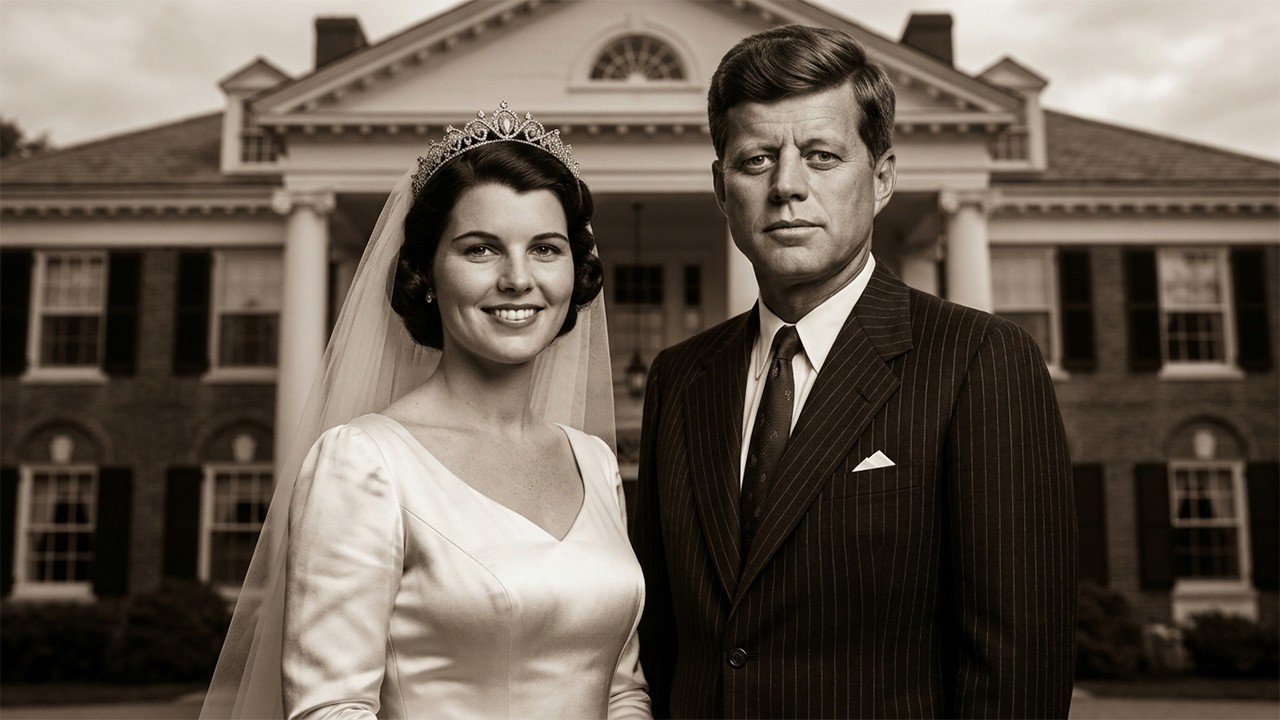 She sang until the words began to disintegrate, turning from coherent language into guttural sounds, a linguistic soup that signaled the destruction of her very self. The procedure continued until the girl who had been singing was no longer present in the room. The instrument stopped only when the melody died into silence.
The year was 1941, and the man who had authorized this brutal, irreversible act of psychic demolition was not a stranger, but her own father, Joseph P. Kennedy, the patriarch of America’s most ambitious dynasty.
The tragedy of Rosemary Kennedy did not begin on that November afternoon in Washington D. C. , but on a September day in 1918, in a brick house in Brookline, Massachusetts.
The city was in the grip of the Spanish influenza pandemic, and doctors were stretched dangerously thin. When Rose Fitzgerald Kennedy went into labor, the family physician was delayed. The attending nurse, lacking the authority to deliver the child without the doctor present and mindful of a strict fee structure, made a catastrophic decision.
She instructed the laboring Rose to keep her legs closed. As the infant’s head began to crown, the nurse physically held it back, pressing it against the birth canal to wait for the physician. For nearly two hours, the baby was trapped, starved of oxygen in the birth canal.
By the time the doctor arrived, the damage was done, a silent, permanent injury sealed into the developing brain of a child who had not yet taken her first breath. They named her Rosemary, and for a time, the family did not understand the depth of the harm that had been inflicted.
The Kennedys were Irish Catholic in a Boston that still bristled with old Protestant prejudice. Joseph Kennedy, a ruthless financier who had amassed a fortune in banking, stocks, and liquor, viewed the world as a battlefield. He was determined to conquer it, and he raised his children to be soldiers in that conquest.
The boys were groomed for brilliance and victory; the girls were to be beautiful, poised, and married well. The unspoken rule of the household was simple: keep up. Coming in second was treated as a moral failing.
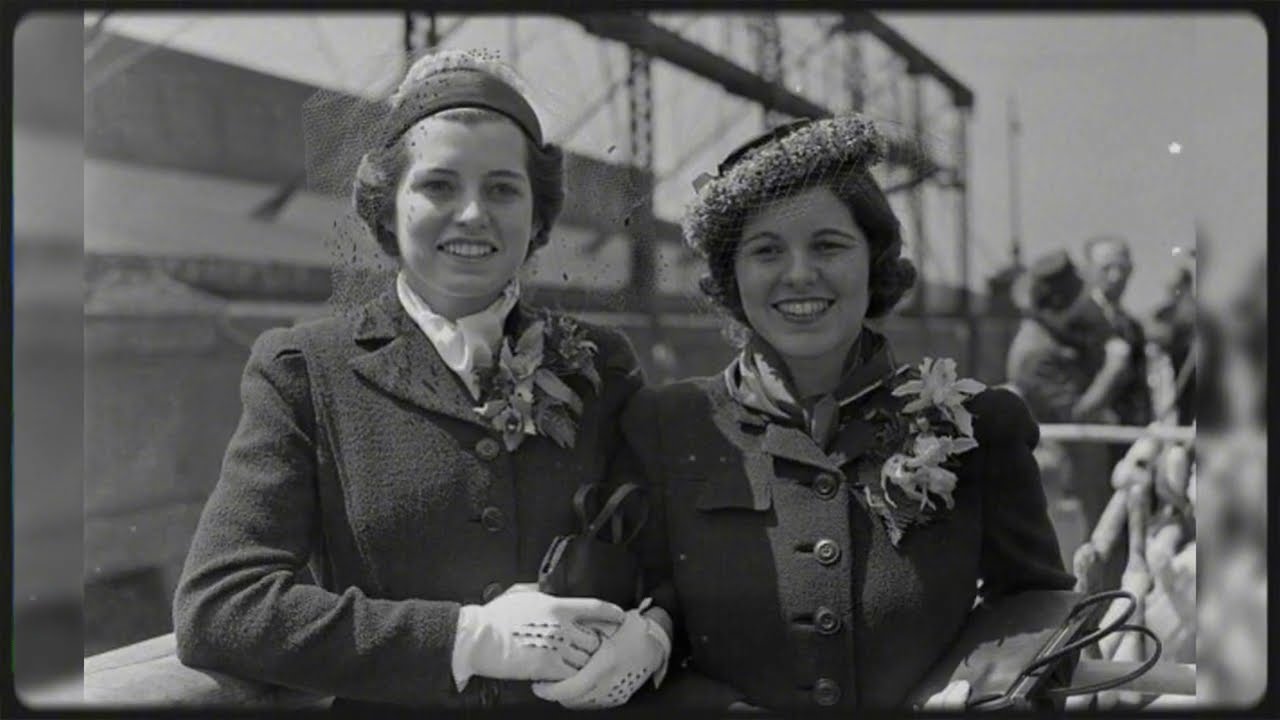
Rosemary could not keep up. She was the loveliest of the daughters, with a warm smile that drew strangers’ gazes, but reading came slowly, writing was a struggle, and the sharp, competitive quickness of her brothers was entirely absent. She was held back, tutored, and sent from school to school, falling further behind her younger sister, Kick.
The cruelty of her early life was that she understood the family’s standards just well enough to feel herself failing them every single day.
Her letters, preserved in the family archive, reveal a girl desperate for approval. Written in a large, looping, almost childish hand, they report small triumphs—finished lessons, things seen—and ask in a hundred small ways if she has done well. She signed them with a pleading flourish: “Lots of love and kisses.”
She was a girl forever holding out a page, waiting to see if it would be enough. It almost never was. The reason had a name: Joseph Kennedy.
He was not a simply cold man; he loved his children with a ferocity that manifested as pressure. Toward Rosemary, he showed a strange and genuine devotion. He researched specialists, paid for tutors, and wrote her encouraging letters.
For most of her childhood, he was the family member most determined to fix her, to make her fit the mold. The tragedy was that the same ferocious will that built the dynasty, the refusal to accept any outcome but the one he wanted, would eventually turn against his daughter. As long as her difference looked like a solvable problem, he poured himself into solving it.
The danger lay in what he would do when he decided it could not be solved and had instead become a threat to his ambitions.
In the spring of 1938, the world seemed to open for Rosemary. Her father had been appointed U. S.
 Ambassador to the Court of St. James’s in London, and the family crossed the Atlantic. Rosemary, then 19, was enrolled at a convent school called Bellemont House, run by nuns who taught the Montessori method.
For the first time in her life, she was placed in an environment built for her rather than against her. The sisters were patient, giving her tasks she could complete and praising her for them. She was trained to assist in a classroom of small children, work that fit her innate warmth.
Those who saw her described a young woman transformed—calmer, steadier, settled. Her diaries from that period are filled with ordinary delights: trips to the opera, tea dances, fittings for new dresses. She wrote home that she was content, a phrase she had almost never used before.
In May of 1938, she reached the apex of her social life when she and her sister Kathleen were presented at the court of King George VI and Queen Elizabeth at Buckingham Palace. It was a terrifying test. Rosemary practiced the deep, sweeping court curtsy for hours.
She wore a gown of white tulle and silver embroidery. As she approached the throne, she faltered, a small stumble, a near-fall. The court gave no sign, the King and Queen smiled, and the line moved on.
The newspapers called her exquisite, and her mother recorded the presentation as a complete success, never mentioning the stumble again. She had been dressed and drilled and pointed at a throne, less a daughter than an exhibit proving the Kennedys belonged among kings.
The joy of those years was real, but it did not last. In the spring of 1940, the German army swept into France, and the European world the Kennedys had built their lives around folded. Joseph Kennedy’s career folded with it.
His blunt conviction that Britain was finished and America must stay out of the war cost him his standing, and he resigned the ambassadorship in disgrace. His hopes for the presidency died with it, and his ferocious ambition narrowed and concentrated onto his sons. The family came home, and Rosemary came home to the life she had escaped.
There was no Bellemont House, no patient sisters, no structure built around what she could do. There was only the old house full of brilliant, competitive Kennedys moving fast, and a young woman of 22 who could not move with them. Without the thing that had steadied her, she came apart.
Her sister Eunice watched it happen at close range. Rosemary was not holding steady; she seemed to be sliding backward, growing irritable and difficult. She began to suffer convulsions and flew into sudden rages, lashing out at people near her, sometimes injuring herself.
The family moved her from place to place, finally placing her in a convent school in Washington, D. C. , where the nuns were paid to watch her.
It was there that Rosemary did the one thing in her life that was entirely her own. She began to climb out at night. When the convent slept, she slipped through the doors and out into the warm Washington streets, looking for what any young woman her age might want: music, a drink, conversation, someone to dance with.
The nuns grew frightened and told her parents that she was meeting men, that she might fall pregnant, that she might bring back a disease. The record cannot tell us what actually happened on those nights—whether she was taken advantage of or simply walking and talking and dancing. But the guesses were enough.
In the America of 1940, an intellectual disability inside a prominent family was treated as a stain to be buried. Rich families lived in genuine dread of scandal. Set that against a father who was grooming his two oldest boys for careers that could not survive a single whispered family secret.
In that arithmetic, a daughter wandering the night was not a person in distress; she was a liability with a deadline.
 And then someone offered him a cure. In those years, a new operation on the brain’s frontal lobes was moving through American medicine like a fashion. Its great American champion was a Washington doctor named Walter Freeman, a showman who would later tour the country performing a quicker version of the procedure with an ice pick and a hammer.
Freeman worked with a trained neurosurgeon, James Watts, and together they told the anxious father that the operation could calm his daughter, soften her moods, and end the dangerous restlessness for good. It was offered to him not as ruin but as repair. Whether Joseph Kennedy understood that he was authorizing the permanent unmaking of his daughter’s mind, or whether he simply believed the salesman, is a question that has never been settled.
What we know is that the father chose to believe the man without doubts. In November of 1941, Joseph Kennedy made the decision alone. He did not tell his wife, who would insist for the rest of her life that she knew nothing until it was already done.
He arranged for Rosemary to be brought to Freeman and Watts in Washington.
On that day, 23 years old and with no real understanding of what was about to be done to her, she was laid on the table. They gave her something to keep her calm, and they opened her skull while she was awake. They kept her talking so they could gauge their progress by the sound of her—counting, praying, singing.
They went on cutting until the words came apart into noise, and the voice that had been a person’s voice was simply gone. That was their signal to stop. It was clear almost immediately that something had gone catastrophically wrong.
The operation did not calm Rosemary; it erased her. The young woman who had danced at Buckingham Palace, who had trained to teach small children, who had crept out into the dark to find a little ordinary happiness, did not come back. In her place was someone who could not walk, who could not speak so as to be understood, who could not control her own body.
Her mind had been reduced to roughly that of a small child. She was 23 years old, and she would be that way for the next 63 years.
Then the family did the second terrible thing: they made her vanish. She was taken quietly to Craig House, a private psychiatric hospital north of New York City, and the door was closed on her so completely that for the next 20 years, most of her own brothers and sisters did not know where she was. To the world, the Kennedys offered a story and then another—she was studying to be a kindergarten teacher, she was shy and reclusive.
The lies were maintained with enormous care for decades. Somewhere in the family archive, the letters simply stop. The pages in that large looping hand, the eager reports of finished lessons and changed planes, the closings that asked over and over to be loved—they end in 1941 and never resume.
She lived another 63 years, but she never wrote another one. The hand that had filled all those pages, pleading only to know whether she had finally done well enough, had been taken from her in a single afternoon by the one man she had spent her whole short life trying to please.
For eight years, she remained at the hospital north of New York. Then, in 1949, her father moved her one final time to a Catholic institution in the small town of Jefferson, Wisconsin. St.
Coletta was a sprawling home for hundreds of people with disabilities, far from anyone the Kennedys knew. Joe Kennedy had a private house built for her on the grounds, set apart from the main campus. The nuns came to call it the Kennedy cottage.
It was comfortable. It was also, in every way that mattered, the end of the road. She lived there for more than half a century, looked after by two nuns.
She was capable of contentment in small, plain things—a walk, a drive, the routines of an ordinary day stripped of every demand the Kennedy world had ever placed on her. Her father never came. Not once in all the years she lived in the house he built did Joseph Kennedy visit his daughter.
 Her mother did not come either, not for 20 years. The family carried on its long, careful fiction. When her brother John ran for Senate in 1958, the explanation was that Rosemary was occupied quietly with work among disabled children.
The truth was a locked door in Wisconsin.
In December of 1961, Joseph Kennedy suffered a massive stroke. It left him paralyzed and unable to speak—the architect of his daughter’s silence, silenced. It was only then, with the father finally beyond the power to forbid it, that Rosemary’s brothers and sisters were at last told plainly where she was.
The family had publicly acknowledged her disability the year before, after John reached the White House, though they confessed only to an intellectual deficit and said nothing of the surgery. The full truth would not surface for the public until 1987, almost half a century after the fact. When the visits finally came, they did not always go gently.
On at least one occasion, after years apart, Rosemary was brought into her mother’s presence and flew into a sudden physical fury, striking at Rose’s chest—a wordless storm out of a woman who had been left without the words to say anything else. Whatever cognition the surgery had spared her, something in her remembered something new.
After Joseph Kennedy died in 1969, the door slowly opened. The surviving siblings began to bring Rosemary back into the family’s private life—to Florida, to Washington, to the old house on Cape Cod. By then she had relearned to walk, though with a limp, and she never again spoke so as to be clearly understood.
Out of all of it came one strange and genuine good. Her sister Eunice, the one who had watched her slide, built a life around children and adults like her sister, and in 1968 founded the Special Olympics. Her brother John, as president, signed landmark law to build community mental health centers across the country.
The family that had hidden Rosemary spent the decades after quietly trying in its way to atone—not to her, who could not receive it, but to everyone who came after her. She died on the 7th of January 2005, in a hospital in Fort Atkinson, Wisconsin, of natural causes at the age of 86. Her surviving brothers and sisters were at her bedside.
She had outlived nearly all of them—the assassinated president, the assassinated senator, the sister killed in a plane, the brother killed in the war. She, the one they had erased first, was very nearly the last to go.
The question a life like Rosemary’s eventually puts to anyone willing to sit with it is whether or not it is ever said aloud. It is the question of what we are actually asking of the people we say we love, and what we will do to them when they cannot give it. The Kennedys demanded that their children be exceptional.
It was in its way a kind of love—fierce, total, and conditional to the bone. The cost of a love like that is paid first and most completely by the one child who simply cannot meet its terms. Rosemary spent her whole conscious life reaching for an approval that was always held one inch beyond her hand.
She reached for it in the only way she knew, with all those letters, the large looping hand crossing the page, the same closing every time: “Lots of love and kisses.” She was not asking for much. She was asking the oldest question there is: Do I do well?
Am I enough? The pages stop in 1941. The question in them was never answered because the people she was asking had decided that the answer did not matter as much as the family name.
What her life leaves behind is not a lesson about cruelty, exactly. It is something quieter and harder. It is the reminder that the people most easily erased are the ones who only ever wanted to be kept, and that we are capable of doing the erasing in the name of love itself.
All she had ever wanted was to be heard.