The discovery was made by a road crew just after 8 a. m. in a thickly wooded area off a main roadway in Greenwich, Connecticut, roughly ten miles from where the young woman had lived.
A discarded red-orange suitcase, lying several meters from the asphalt, caught the attention of a worker whose curiosity overpowered his better judgment. When he unzipped the luggage, a putrid stench immediately overwhelmed him, and he knew instantly that this was no ordinary piece of abandoned property. Inside, folded into the confined space, was the body of a young woman, her limbs bound with tape and her face wrapped in multiple layers of duct tape, her skull fractured and her features battered beyond easy recognition.
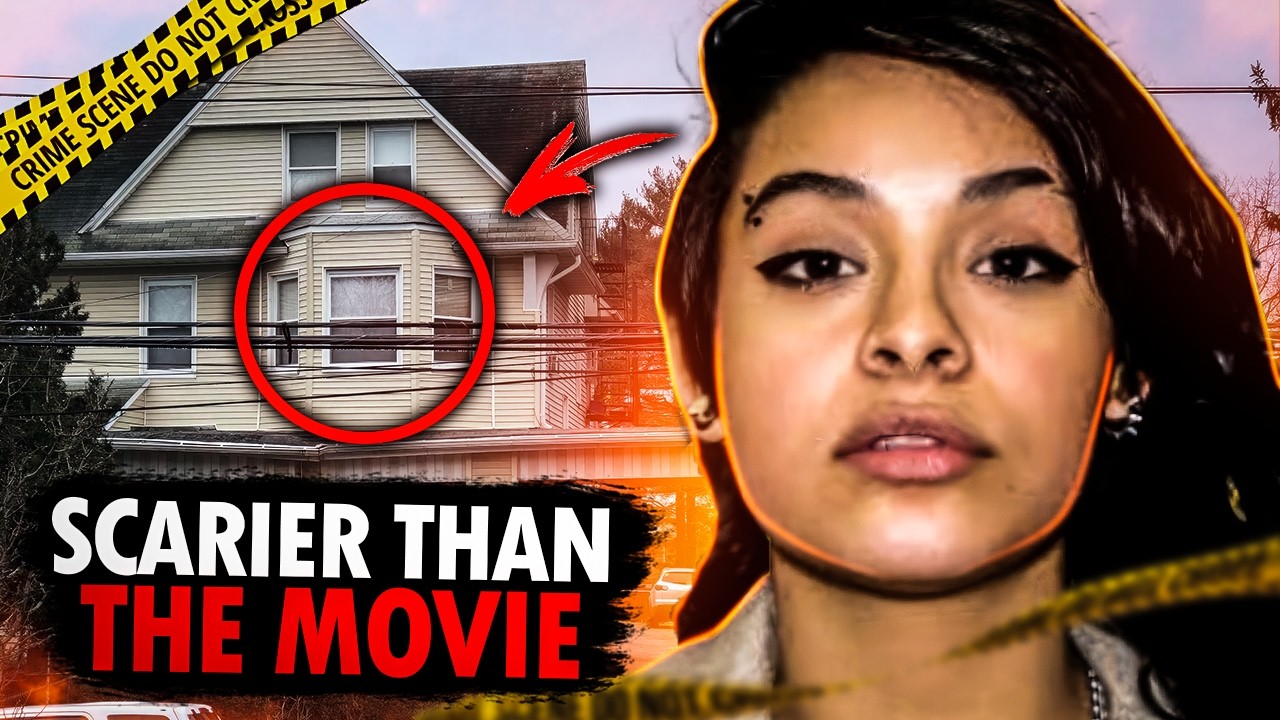 The brutality of the scene was so stark that even seasoned investigators would later describe it as unlike anything they had encountered in their careers, a visceral testament to the rage that had preceded the final, suffocating moments of Valerie Reyes’s life.
The victim was identified the following day as Valerie Reyes, a 24-year-old aspiring tattoo artist from New Rochelle, New York, who had been reported missing just one week prior. Her father and older brother were called to the morgue to confirm the identity, a task the male members of the family insisted on undertaking to shield Norma, Valerie’s mother, from the horrific sight. The injuries were so extensive that recognition was difficult, but there was no doubt in the men’s minds that the broken body before them belonged to their beloved Valerie.
The case, which had begun as a perplexing missing person investigation, had suddenly spiraled into a nightmare of violence and depravity, leaving detectives grappling with a question that would haunt them throughout the investigation: how could a gentle, artistic soul, a girl who had predicted her own demise just hours before vanishing, have met such a savage end?
Valerie Reyes was born on April 1, 1994, in New Rochelle, the only daughter in a tight-knit family that included an older brother and two younger siblings. She shared a particularly close bond with her mother, Norma, who nurtured Valerie’s passionate love for all things artistic. From childhood, Valerie was described as homely and gentle, preferring the company of close friends and family over wild parties, and finding solace in reading extensively and creating art.
She worked at a bookstore in East Chester, where she delighted in recommending literature to customers, and she harbored a dream of one day opening her own tattoo parlor, a goal she pursued with tireless dedication. Her personality was marked by compassion and selflessness, but beneath her positive exterior, she periodically struggled with bouts of anxiety and depression, using creativity as a means to overcome these dark states. In January 2018, Valerie met a young man named Javier Enrique Da Silva Rojas on a dating website, and they entered into a relationship that would ultimately cost her her life.
The romance was brief, lasting only about three months before Valerie, sensing no future in the union, ended things in April 2018. She had confided in friends that Javier was far more invested in the relationship than she was, and she saw no reason to prolong what she felt was a short-term romance. Javier, however, was unwilling to accept the breakup, and he continued to call and write to her, devising various reasons to maintain contact.
In September 2018, several months after the split, he messaged Valerie claiming he needed to reimburse money allegedly taken from her card, an apparent accidental use of her debit card information for an online purchase. Valerie, weary of his constant attempts to communicate, planned to send a friend to handle the money issue, hoping to avoid giving her ex-boyfriend any unnecessary opportunities for contact. After that incident, Javier seemed to finally understand that everything was over between them, and he went quiet for several months, leaving Valerie to believe she was finally free of his persistent attention.
By January 2019, Valerie had turned 24 and was living alone in a rented basement apartment in New Rochelle. The solitude, which she had once managed, began to weigh heavily on her, and her anxiety and panic attacks returned with increasing frequency. She had recently broken up with yet another boyfriend, just five days prior, and the emotional turmoil was clearly taking a toll.
On Monday, January 28th, 2019, Valerie called her mother in a state of palpable panic, claiming she felt like she was going to die soon, that her life would be taken. Norma, alarmed by the sudden shift in her daughter’s mood, tried to calm her, inviting her to come stay at the family home if she felt so lonely. Valerie, however, without properly explaining anything, hastened to end the conversation, sending her mother a message later that evening wishing her a good night and reassuring her that she was feeling better.
She also texted with her best friend, Jeffrey Anderson, telling him about her worries, but after talking it out, she seemed to gain a boost in energy and mood, and she went to bed, needing to get up for work in the morning. That night, unbeknownst to her family, would be her last alive.
On Tuesday, January 29th, Norma planned to meet her daughter in the afternoon, but Valerie did not respond to calls or messages. Initially, the mother assumed her daughter had simply fallen asleep after her anxious night, perhaps turning off her phone to avoid disturbance. But when Valerie failed to show up for work at the bookstore that day, and missed another shift on Wednesday, Norma’s concern escalated into genuine fear.
 Valerie’s colleagues at the bookstore, knowing that skipping work without explanation was entirely out of character for her, also thoroughly tried to reach her. When Norma learned her daughter had not been seen for two days, she remembered Valerie’s strange anxiety about her own life and became genuinely frightened. The parents promptly reported Valerie’s disappearance to the New Rochelle Police Department, and photographs of the girl were distributed throughout the area.
The police’s first visit to Valerie’s apartment revealed no signs of a struggle or break-in, but they noticed random tiny specks of blood on the pillowcases, in the toilet, and on the bathroom floor, which they initially dismissed as minor splatters from a small cut or perhaps a nosebleed. What alerted them was what was missing: Valerie’s phone, iPad, wallet, some of her clothes, and a small pillow were all gone from the apartment.
The initial theory was that Valerie had run away, perhaps involved in something criminal or hiding from someone, but her parents categorically rejected this notion, insisting she would never have left without notifying them. Norma told police about her daughter’s anxious thoughts before her disappearance, the girl’s belief that someone wanted her dead. Valerie’s ex-boyfriend, whom she had broken up with just days earlier, was the first to come under suspicion, but he was soon excluded from the list because he actively participated in the search for his girlfriend and had an alibi.
Over the next few days, police, along with the Reyes family and friends, turned to social media for help, and the response was immediate, though ultimately fruitless. One friend reported seeing Valerie near the New Rochelle train station, wearing a dark green coat, black jeans, and black shoes, but police checked each lead and found none of these statements to be true. To understand where the young girl could have gone, detectives decided to track activity on her bank account, soon discovering that money had been withdrawn from her debit card at several ATMs in New Rochelle, totaling over $10,000.
Surveillance camera footage from one of the ATMs showed a man dressed in black pants and a black hooded sweatshirt, completely covering his face, withdrawing the money. The ATM camera also captured his vehicle, and using the license plate number, detectives were able to track down the owner of the car. It turned out that the Honda vehicle had been rented for only two days, January 28th and 29th, and it was rented by none other than Valerie’s ex-boyfriend, Javier Enrique Da Silva Rojas, whom she had dated for only three months and had broken up with last year.
Over the next few days after Valerie’s disappearance, Javier made several more cash withdrawals from her bank card. The investigation now had a clear suspect, but the motive remained shrouded in mystery.
Javier Enrique Da Silva Rojas was born on January 3rd, 1995, originally from Venezuela, holding dual citizenship with Portugal. In 2017, he moved to the United States using a special document that allowed residents from a very small list of countries to stay in the US for 90 days without an official visa. At that time, Venezuela was in a state of economic and financial crisis, leading to hyperinflation, shortage of vital goods, and rising unemployment.
Javier was one of the refugees who decided to radically change his life, but when the 90 days of visa-free residence expired, he did not want to return to his homeland, so he remained in the country illegally. He lived in Flushing, New York, and frequently changed his fields of activity, working first for a cleaning company, then as a barista, and then as a cook and waiter in a fast food restaurant. Throughout his time in the US, Javier kept a low profile and tried not to draw attention to himself, with friends considering him a kind, thoughtful guy always ready to help.
In January 2018, Javier unexpectedly fell in love with a girl from a dating site, Valerie Reyes, and he did everything to make her notice him. When it happened, he was ready to shout about his feelings to the whole world, writing a lot about Valerie on social media, and from the first meeting, he was prepared never to part with his beloved again. But it turned out that Valerie was not ready for a serious relationship, and when Javier suggested that the girl moved in together to live as one family, he only pushed her away from him.
Valerie understood that her boyfriend wanted much more from this relationship, but she herself was in no hurry to tie her life to a man, having huge plans for the future. She quickly grew tired of Javier’s constant presence and decided to end the relationship, but the guy was not going to give up his beloved so easily, continuing to call several times a day and send dozens of text messages. Valerie even had to block his access in all messengers and social networks
 Norma, Valerie’s mother, knew about her daughter’s relationship with Javier, and she got the impression that the guy liked to control everything and, if desired, could easily stoop to manipulation. Once, he used the death of his mother from cancer to make Valerie feel sorry for him and agree to a meeting, though the mother’s illness was never confirmed. Javier did not take no for an answer, and their actual relationship lasted less time than the period he pursued Valerie, using a variety of methods for meetings.
The guy made the last attempt in September 2018, when he once again tried to contact Valerie about using her debit card data, but Valerie directly told him she did not want to have anything to do with him and sent her friend to meet him. After this incident, Javier did not appear in Valerie’s life, but was it the calm before the storm? On February 11th, 2019, Javier was arrested at his rented apartment in Flushing, New York.
During interrogation, he gave several reasons why he used Valerie’s debit card and withdrew money, first claiming he found her wallet on a street in Manhattan, inside were cards and a piece of paper with the PIN code. Javier insisted he had not seen Valerie for about a year and was not even in the area where she lived, but when police provided evidence that he had rented a car and its location was easy to determine, he immediately changed his story, claiming he was near his ex-girlfriend’s house but did not see her. He was forced to confess by the photographs of Valerie’s body in the suitcase shown by the investigator, apparently still having some warm feelings for her, but his story was still far from the truth
Javier claimed that on the evening of January 28th, he was communicating with Valerie, went to her apartment, and committed the last act of passion. Although they had not seen each other for several months before that, the meeting was very stormy, and they were having such a good time together that they didn’t notice how they fell off the bed, Valerie falling to the floor and hitting her head so hard that she stopped reacting to anything at all. At first, Javier tried to bring the girl to her senses, but she did not regain consciousness in any way, and he panicked.
Then he taped her mouth shut so that Valerie would not start screaming at the most inopportune moment, tied her hands and feet, and stuffed her into a suitcase, after which he got rid of it by throwing it into a wooded area. The police took Javier’s DNA and were able to match it with a DNA sample found on the suitcase handle, as well as with a substance found under the girl’s fingernails. However, the ex-boyfriend’s story did not match the evidence that detectives had discovered.
Firstly, all of Valerie’s acquaintances and friends unanimously assured that Valerie did not want to have anything to do with Javier, so she would never have voluntarily made love to him. Secondly, forensic examination showed that the girl died of suffocation inside the suitcase due to several layers of tape wrapped around her face. If Javier’s story had been true, and the guy was really scared, then it is unclear why it was necessary to tie up the dead body as he claimed, and then cold-bloodedly take the bank cards and withdraw all the accumulated funds
Javier explained his behavior by saying that he deliberately made himself visible on the ATM camera recordings so that the police would catch him sooner, after what happened he could not forgive himself and was waiting for retribution. A legitimate question arose as to why not just go to the police and confess, given Valerie’s mental state and the last conversation with her mother, it was unlikely that the girl would have wanted to make love with Javier when he suddenly appeared in her apartment that night. Why did she have multiple injuries on her face that could not be obtained from a fall?
All these facts completely refuted Javier’s version, but detectives could not determine the motive that forced him to deliberately take the life of the girl whose affection he had sought for so long. In the end, investigators came up with a possible motive for Javier’s actions. On January 24th, 2019, about a week before Valerie disappeared, the guy sent a text message to his new girlfriend, complaining that he caught her in his own bed with a neighbor, but this was not true, as Valerie would never have gone to Javier’s house on her own.
Most likely, Javier found out that Valerie had a new boyfriend, and he stalked Valerie, considering her his own property, and the appearance of a rival on the horizon infuriated the young man
The evidence pieced together the events of that night. On the evening of January 28th, 2019, Javier rented a Honda car in Flushing, New York, where he lived, and headed to his ex’s apartment in New Rochelle. He arrived there early in the morning, parked the car near Valerie’s house, and put his phone in airplane mode.
 Police pinged his phone, and cell towers showed that Javier was within 300 feet of Valerie’s home that morning, and then the phone signal disappeared. It is unknown whether Valerie led him into the apartment or if he forced his way inside, but soon after, an argument broke out between them. Javier’s DNA was found in swabs taken from Valerie’s chest and genitals, this DNA along with the sample extracted from under the victim’s fingernails, indicated intimate contact, sexual intercourse did indeed take place between them, but apparently it was not completed by mutual consent as Javier claimed.
Most likely, Valerie resisted as much as she could, and as a result of the struggle, scratched the attacker. The violent argument and resistance led to the girl sustaining a head injury, numerous bruises on her face, and a broken nose. When she lost consciousness from the pain, Javier wrapped her mouth and chin with several layers of tape, tied her legs and hands, and then stuffed her into a red-orange suitcase, one they had bought for a joint trip when they first started dating.
Valerie was still alive when the rejected boyfriend decided to get rid of her, she suffocated from the multiple layers of tape around her mouth and chin, her nose broken as a result of the attack, so she simply had nothing to breathe with. After the suitcase was moved to the trunk of the rented car, Javier returned to the girl’s apartment and cleaned up as best he could, which is why police found so little evidence there. Driving away from the house, he unlocked Val’s phone with her fingerprint, checked all the records he was interested in, who she had been communicating with after breaking up with him, but even more, he needed her bank card information.
Valerie, deprived of the remaining oxygen, could no longer resist. Upon reaching Greenwich, Connecticut, Javier threw the suitcase in a secluded section of the highway, hidden from prying eyes by trees, without even knowing whether Valerie was alive or dead. On the way back home, he used the girl’s phone to access her banking information, then disposed of it by throwing it off a bridge into a river.
Then Javier stopped at several different ATMs to withdraw money, in addition to Valerie’s mobile phone, he took her iPad and one of the pillows, later exchanging the tablet for a new monitor for his computer. Judging by Javier’s actions after committing the crime, he was not tormented by remorse
On February 12th, 2019, Javier Enrique Da Silva Rojas was charged with kidnapping resulting in death, a crime for which he faced the death penalty or life imprisonment. It took some time to bring the case to trial, as Javier’s defense tried to portray him as a victim, hoping that the judge would remove the death penalty from the agenda. The lawyers argued that this was the guy’s first crime, committed out of jealousy, prior to this, he had a reputation as a decent person with no previous criminal record.
His refugee status also played into the hands of the defense team, as he had to leave a country that was falling apart, abandon college, and flee Venezuela, arriving in the US with only $600 in his pocket. He experienced depression due to separation from loved ones, got involved with illegal substances, and was a broken man who sincerely regretted his actions and understood the horrifying nature of his behavior. Fortunately for him, the lawyers reached a plea agreement, and on February 5th, 2020, Javier Enrique Da Silva Rojas pleaded guilty to kidnapping Valerie Reyes and actions that led to the girl’s death.
In court, he fully repented, saying that he would never forgive himself for what he had done, and he did not even dare to beg the Reyes family for forgiveness, knowing that he did not deserve it. When Norma, Valerie’s mother, took the floor and expressed in words the pain she felt at losing her daughter in her prime, Javier could not hold back his tears, quietly sobbing in the defendant’s dock. On September 23rd, 2021, 26-year-old Javier Enrique Da Silva Rojas was sentenced to 30 years in prison for kidnapping resulting in death, due to the fact that he was in the United States illegally, he will be deported back to Venezuela as soon as his sentence expires
Valerie Reyes brought joy and happiness to everyone around her, and the tragic death of this girl caused a wave of outrage throughout the community in which she lived. Her short life was marked by creativity, kindness, and a gentle spirit, a stark contrast to the brutal violence that ended it. Jealousy, cruelty, greed for money, all the criminal’s actions do not seem accidental, committed under the influence of emotions, they were calculated too precisely.
Javier knew he was going to harm Valerie even before he entered her apartment, stealing from a person he had just taken the life of shows that he had no remorse, and all his tears in the defendant’s dock were nothing more than another manipulation. The case of Valerie Reyes serves as a chilling reminder of the darkness that can lurk beneath the surface of a seemingly ordinary relationship, and of the devastating consequences when obsession spirals into deadly violence.