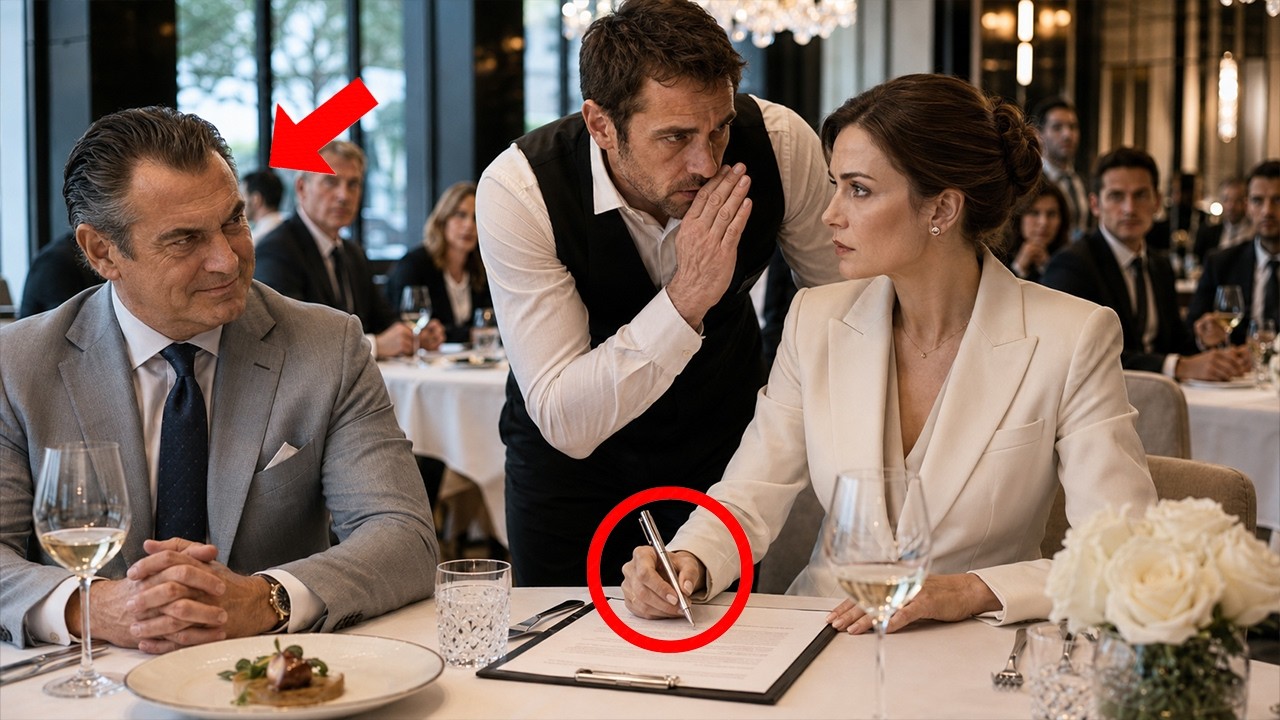
“You look beautiful tonight, sweetheart. ” My mother straightened the collar of my blouse and smiled at me with so much warmth I almost believed it. She didn’t know I’d found the prenuptial agreement hidden in Derek’s gym bag three days ago. She didn’t know the man she handpicked to marry me had accidentally left his phone unlocked on my nightstand, or that I’d read every single text between them going back fourteen months.

She thought tonight’s engagement party was the beginning of her payday. She didn’t realize it was the end. If you met my family at a barbecue, you’d think we were a cereal commercial. My father grilling burgers with a beer in hand, laughing too loud at his own jokes.
My mother refilling everyone’s lemonade, touching shoulders, remembering names. And my little sister Brooke floating around like some kind of social butterfly. But behind the white picket fence, we ran on a very simple economy. I earned, they spent.
I was fifteen when I got my first job bussing tables at a diner on Route 9. Not because I wanted pocket money, but because my father had bounced the electric bill again, and my mother told me, very calmly, that if I didn’t want to do homework by candlelight, I should probably figure it out. I figured it out. I always figured it out.
By seventeen I was working two jobs. By twenty I was putting myself through college on a cocktail of scholarships, night shifts, and four hours of sleep. By twenty-five I had my real estate license. By twenty-seven I owned my own brokerage.
Small, just me and three agents, but it was mine. Every single dollar was earned on my own time, with my own hands, in my own name. My family watched me build it the way you watch someone construct a house you plan to move into. They didn’t help carry a single brick, but they sure had opinions about the furniture.
Brooke, on the other hand, never needed to work. She was the showpiece, the one with the Instagram following and the rotating roster of rich boyfriends. When Brooke needed a car at eighteen, my mother called me. When Brooke’s credit card got declined, my mother called me.
When Brooke needed a deposit for her apartment in the city, three guesses who got the call. I paid because I loved my sister. I paid because my mother had a way of making refusal feel like cruelty. “She’s your blood, Mara.
You’d let your own sister struggle when you have plenty? ”
Plenty. As if plenty meant infinite. As if plenty meant I owed them a percentage just for being born into a family that treated me like a vending machine.
The thing about being the family ATM is that you start to believe the transactions are love. Every thank you feels like a hug. Every “I don’t know what we’d do without you” feels like an “I love you. ” So you keep swiping, keep giving, keep draining your own account, because the alternative—the silence, the coldness, the empty chair at Thanksgiving—terrifies you more than poverty.
That was me for twenty-seven years. Then Derek showed up. He appeared at an open house I was hosting. A three-bedroom colonial in Ridgewood with original hardwood and a kitchen that practically sold itself.
He walked in wearing a navy blazer and a smile that belonged on a toothpaste commercial. He asked about the crown molding. He asked about the school district. Then he asked if I wanted to get coffee.
I said no. Not because I wasn’t interested, but because I’d learned to be suspicious of anything that came too easy. He came back the next week, and the week after. He bought me a book about architecture because I’d mentioned I liked old buildings.
He remembered the name of my dog. He remembered that I drank my coffee black with one sugar. He was patient and persistent and impossibly attentive. Three months later I let my guard down.
Six months later he moved in. Twelve months later he proposed on the rooftop of our favorite restaurant with the skyline glowing behind him, and I said yes because I thought, for the first time in my life, someone was choosing me. Not my money, not my ability to solve problems—me. I was wrong.
The crack in the fairy tale appeared on a Tuesday. Derek was in the shower, and his phone buzzed on the nightstand. I wouldn’t normally look. I’m not that person.
But the preview on the lock screen showed a text from a contact saved as “Coach Mike. ” The message read, “She suspects anything yet? ”
That’s not a question a fitness coach asks. I picked up the phone.
His passcode was my birthday. I might have found that sweet once. I scrolled. Fourteen months of messages.
Not between Derek and a coach—between Derek and my mother. I’ll spare you the full archive, but here’s what I pieced together in the twenty minutes he spent conditioning his hair. My mother met Derek at a charity gala two months before he wandered into my open house. She vetted him like a casting director.
Good-looking, charming, no real assets, a pile of student debt from a law degree he never finished. Perfect raw material. She offered him a deal. Marry Mara.
Stay married for two years. Then file for divorce in a no-fault state and claim equitable distribution of the business, the condo, the savings—everything I’d built. My mother would get forty percent. Derek would keep sixty.
Split clean, no drama. Her texts were clinical. She coached him on what to say, what to wear, how to act. She told him I liked old buildings so he could buy that architecture book.
She told him I took my coffee black with one sugar. She told him about my dog. Every detail I thought he’d noticed, every gesture I thought was genuine—it was a line fed to him through a screen by the woman who raised me. The last text, sent that morning, was about tonight’s engagement party.
My mother wrote: “After the party, start suggesting a joint bank account. She trusts you now. Move the timeline up. I need this done before she files next year’s taxes or the valuation gets too complicated.
”
I put the phone down. I sat on the edge of the bed. I didn’t cry. I think I was past that.
There’s a kind of grief that skips the tears and goes straight to architecture. My brain didn’t collapse. It started building. I had seventy-two hours before the engagement party.
First, I drove to my accountant’s office on Wednesday morning and asked him to run a full asset protection audit. I moved every liquid asset into a trust. The brokerage, my personal savings, the condo—all of it was restructured under an entity that couldn’t be touched in a divorce proceeding without my explicit consent. My accountant asked why.
I told him it was just good business hygiene. He didn’t push. Second, I called a private investigator. Not a dramatic one from a movie.
A quiet woman named Sandra who worked out of a shared office space in Hackensack. I gave her Derek’s full name and asked for a background check within forty-eight hours. What she found was both pathetic and clarifying. Derek had done this before.
Not exactly the same con, but close. He dated a woman in Connecticut for eight months, proposed, then disappeared with eleven thousand dollars from a joint account they’d opened three weeks before the wedding. She never pressed charges because she was too embarrassed. The woman before that was in Pennsylvania.
Same pattern. Shorter timeline, smaller amount. Derek wasn’t a con man in any cinematic sense. He was a low-level grifter who’d finally found a producer with a bigger vision.
My mother gave him ambition. Third, I went to see a family attorney named Ruth. I sat in her office with the printed text messages, Sandra’s report, and my restructured asset documents. I laid everything on her desk like a hand of cards.
Ruth looked at it all, took off her glasses, and said, “What do you want to happen? ”
I told her exactly what I wanted. Thursday, I acted normal. I kissed Derek good morning.
I confirmed the catering order for the party. I called my mother to discuss the seating chart. She wanted Brooke at the head table. Of course she did.
I said yes to everything. I was agreeable. I was warm. I was the version of me they’d always relied on—the one who says yes, who smooths things over, who writes the check and asks no questions.
That night Derek and I had dinner at home. He made pasta. He poured wine. He looked at me across the table and said, “I can’t wait for everyone to celebrate us tomorrow.
”
I almost admired the performance. Almost. Friday arrived. The engagement party.
My mother had insisted on hosting it at their house—the house I’d paid to keep from foreclosure twice. She wanted the backdrop of that home to serve as the set for her long con. I let her have it. I showed up early to help decorate.
Brooke was already there, arranging flowers she’d ordered on my credit card. My father was setting up a bar in the backyard, whistling, oblivious as always. He existed in this family the way furniture exists in a room—present, functional, and completely incapable of independent thought. He’d married a woman who would never let him contradict her, and he’d spent thirty years proving her right.
The guests arrived at seven. Neighbors, friends from work, a few of my clients, Derek’s college buddies who high-fived him at the door like he’d won a championship. My mother moved through the room like a campaign manager, touching elbows, steering conversations, making sure everyone saw the ring, heard the love story, bought the brand. I watched her and felt something I hadn’t expected.
Not rage, not sadness. Clarity. The dinner was catered. Lemon chicken, roasted vegetables, a salad with pomegranate seeds.
My mother had ordered a custom cake with our names piped in gold frosting. Derek sat beside me, his hand on my knee, his thumb tracing small circles on my skin like a reflex he’d rehearsed. At 8:15, my mother tapped her glass with a fork. She stood at the head of the table and gave a speech.
She talked about how proud she was. How she’d always known I’d find someone special. How Derek was the son she never had. She cried—actual tears—and I realized with quiet horror that she might actually believe her own mythology.
She might actually think this was love. That taking everything from me was somehow an act of maternal devotion. She sat down to applause. Then she looked at me and said, “Your turn, sweetheart.
”
I stood up slowly. I smoothed the front of my dress. I looked around the table at forty-three people who had come to celebrate a lie. I reached into my clutch and pulled out a single folded piece of paper.
“Thank you all for coming tonight. Before I talk about Derek and me, I want to talk about my mother. ”
The room softened. People leaned in.
They expected sentiment. My mother beamed. “My mother taught me something very important growing up. She taught me that love is transactional.
That the people closest to you will always find a way to assign a dollar value to your existence. And that if you’re not careful, you’ll spend your entire life paying a debt you never owed. ”
The beam faltered. My mother’s smile twitched at the edges.
She glanced at my father. He didn’t notice. He was buttering a roll. “Fourteen months ago, my mother met a man at a charity gala and decided he was the perfect tool to dismantle my life.
”
Silence. Not the comfortable kind. The kind that presses on your eardrums. I unfolded the paper.
“I’m holding a printed text message, sent from my mother’s phone to the man sitting next to me. It reads, and I’ll paraphrase: ‘Marry her, stay two years, file for divorce, take sixty percent, send me the rest. ’”
Derek’s hand left my knee like it had been burned. His face went the color of skim milk.
My mother stood up. “Mara, stop this. You’re embarrassing yourself. ”
“Sit down.
” Not loud. Not angry. Just final. She sat.
I kept going. “Derek approached me at an open house last year. He knew I liked old buildings because my mother told him. He knew how I take my coffee because she coached him.
He knew my dog’s name because she briefed him. Every romantic gesture, every thoughtful detail, every moment I believed was real was a script written by the woman who just cried real tears telling you how proud she is of me. ”
I looked at Derek. He was frozen.
His jaw working but nothing coming out. “Derek has done this before,” I said calmly. “A woman in Connecticut lost eleven thousand dollars. Another in Pennsylvania lost less, but still enough to wreck her savings.
I have the investigator’s report. I have the text messages going back fourteen months. And I have a family attorney who has already restructured every asset I own into a protected trust that neither of you can touch if you spent ten years trying. ”
My mother’s composure cracked.
It didn’t break clean. It crumbled in stages. First the smile, then the posture, then the voice. “You ungrateful little—” she started.
“Careful,” I said. “There are forty-three witnesses. ”
She stopped. My father finally looked up from his bread.
He looked at my mother. He looked at me. He looked at Derek. Then he reached for his wine and drank deeply, because that’s what he’s always done when the house catches fire.
He drinks and waits for someone else to call 911. Brooke was the one I didn’t expect. She stood up from her chair so fast it scraped against the floor. “Wait,” she said, and her voice was shaking.
“Mom, is this true? ”
My mother didn’t answer. She was staring at me with an expression I’d never seen before. It wasn’t guilt.
It was recalculation. She was running numbers in real time, trying to find a new angle. “Mom. ” Brooke’s voice cracked.
“Did you set this up? ”
“Brooke, sit down. This is a misunderstanding. ”
“It’s not a misunderstanding,” I said.
I reached into my clutch again and pulled out my phone. I opened the screenshot folder. Fourteen months of texts organized chronologically. Every message between my mother and Derek laid out like a court exhibit.
I handed the phone to Brooke. She scrolled. Her thumb moved slowly. Her face changed with every swipe.
From confusion to disbelief to something raw and wounded that I recognized because I’d worn it my entire life. It was the face of someone realizing they were never loved for who they are. “She talks about me in here,” Brooke whispered. She looked up at our mother.
“You call me the distraction. You told him to take me shopping so Mara wouldn’t notice you were meeting with a lawyer. ”
My mother reached for Brooke’s arm. “That’s out of context.
”
Brooke pulled away. “You used me. You used both of us. ”
That was the moment I hadn’t planned for.
In all my preparation, in all my strategy, I hadn’t accounted for the possibility that Brooke would see herself in the wreckage. I’d spent years believing she was the ornament and I was the tool. But looking at her face in that dining room, I understood something I’d missed. She wasn’t the favorite.
She was the other product. I was the one who generated revenue. She was the one who generated access, connections, visibility—the appearance of a perfect family that my mother could weaponize for social capital. Brooke wasn’t loved either.
She was deployed. Derek stood up. He didn’t look at me. He didn’t look at my mother.
He looked at the door. “I should go,” he mumbled. “Yes,” I said. “You should.
And you should know that Sandra, the investigator, has already contacted the woman in Connecticut. She’s considering filing charges now that she knows there’s a pattern. You might want to call a real lawyer this time. ”
He walked out.
No speech. No apology. No dramatic exit. He just left the way grifters do when the lights come on.
He took his jacket from the hook by the front door and disappeared into the suburban night like he’d never existed. Which, in a sense, he hadn’t. The man I’d loved was a character. The actor had just exited the stage.
The guests began to leave in the awkward shuffling way people leave a scene they weren’t supposed to witness. Quiet goodbyes. Averted eyes. A few people squeezed my hand on the way out.
One of my clients paused at the door and said, “You’re braver than you think. ”
I nodded, but I didn’t feel brave. I felt like someone who’d just performed surgery on herself without anesthesia. Necessary, precise, and absolutely devastating.
When the room was empty except for family, my mother tried one last play. She always had one more card. “Mara,” she said, and her voice had gone soft and careful—the voice she used when she needed me to pay something. “You have to understand.
The house is underwater. Your father’s business is gone. We were desperate. I did this because I love you.
I knew Derek would take care of you even if he started out pretending. Sometimes arranged relationships become real. ”
I stared at her. “You took out a credit line against this house, didn’t you?
”
She blinked. “You used the equity I paid for to secure a loan you spent on Brooke’s apartment, your car, Dad’s gambling debts. And you can’t make the payments. ”
Her silence was the loudest thing in the room.
“That’s why you needed the con to work before next tax season,” I said. “Because when the bank audits the lien, they’ll find out you forged my name as co-signer. The same way you forged it on the credit line application. ”
My mother’s lips parted, but nothing came out.
My father set down his wine glass. For the first time in his life, he looked fully present in the room—and he looked terrified. “How long have you known? ” he asked.
It was the first complete sentence he’d spoken all evening. “Long enough. The question isn’t how long I’ve known. The question is what I’m going to do about it.
”
I reached into my clutch one final time and placed a business card on the table. “That’s my attorney. Her name is Ruth. She’s expecting your call on Monday.
You have two options. Option one: you cooperate. You disclose every financial document, every forged signature, every account you’ve drained. Ruth negotiates a repayment plan.
You sell the house, cover the debts, and we handle this privately. No police. No prosecution. No public record.
Option two: you stall, or you lie, or you try to manipulate your way out, and I hand everything—the texts, the investigator’s report, the forged credit application—to the county prosecutor. They won’t treat it as a family misunderstanding. They’ll treat it as fraud, identity theft, and conspiracy. ”
My father nodded immediately.
He didn’t argue. He didn’t negotiate. He simply folded the way he’d folded on every decision my mother had ever made. My mother sat very still.
Her hands flat on the table. Her eyes locked on mine. I watched something shift behind her expression. It wasn’t surrender.
It was recognition. She was seeing me clearly for the first time. Not as the utility child. Not as the revenue stream.
Not as the quiet agreeable daughter who always wrote the check. She was seeing the person I’d become while she was busy spending what I earned. “You planned all of this,” she said quietly. “No,” I said.
“You planned all of this. I just read the blueprint. ”
I walked out of that house at 9:47 on a Friday night. The porch light was on.
The lawn was trimmed. The neighbors’ houses glowed soft and warm and domestic. It looked like every other street in every other suburb where families perform normalcy while the foundation rots from the inside. Brooke caught up with me at my car.
She was crying, mascara streaking down her cheek, still holding my phone. “I didn’t know,” she said. “I swear I didn’t know. ”
“I believe you.
”
“What do I do now? ”
I looked at my little sister. For twenty-four years I’d resented her for being the favorite. For never working.
For skating on charm while I ground myself into dust. But standing there in the driveway watching her world reorganize itself around a truth she couldn’t unlearn, I realized the difference between us wasn’t talent or work ethic. It was information. She’d been lied to just as thoroughly as I had.
She’d just been lied to in the other direction. “You start by paying your own rent,” I said. “And then you figure out who you are when nobody’s managing you. ”
She laughed.
It was wet and sad and honest. “That’s terrifying. ”
“Yeah,” I said. “It is.
”
I drove home to my condo. The one I bought with my own commission checks. The one with the mortgage solely in my name. I fed my dog.
I poured a glass of water. I sat on the couch and stared at the wall for a very long time. I didn’t feel victorious. I didn’t feel righteous.
I felt like someone who had just amputated a limb to save the body. Necessary, survivable, and irreversibly painful. Monday morning Ruth called me. My parents had retained counsel.
They were cooperating. The house would be listed. The forged documents would be disclosed to the lender. Ruth was cautiously optimistic about avoiding criminal charges, assuming full cooperation.
Derek had vanished. No forwarding address. Sandra tracked him to a motel in Delaware, but lost the trail after that. The woman in Connecticut decided not to press charges.
She said she just wanted to forget. I understood that. I respected it. I didn’t share it.
Three weeks later, Brooke texted me. It was the first time she’d initiated contact since the party. It was a photo of a pay stub from a coffee shop downtown. Minimum wage.
Twenty-two hours a week. She’d captioned it, “It’s not much, but it’s mine. ”
I stared at that photo for a long time. Then I typed back, “That’s everything.
”
I still haven’t spoken to my parents. I don’t know if I will. My father sent me one email that simply said, “I’m sorry I never stood up. ” I read it.
I didn’t respond. Not because I’m angry—because I don’t know what forgiveness looks like yet, and I refuse to fake it. My mother has not reached out. I think she’s waiting for me to need her, because in her mind, I always come back.
I always pay. I always fix. She’s waiting for the cycle to restart. She’ll be waiting a long time.
I changed my number last week. I changed the locks on my condo. I took Derek’s name off the emergency contact at my office and replaced it with Brooke’s. Not because I trust her completely, but because trust isn’t a switch.
It’s a muscle, and you have to start somewhere. People tell me I should have handled it privately. That airing family business in front of forty-three guests was cruel. Maybe they’re right.
Maybe there was a version of this where I pulled my mother aside, whispered the truth, and let her save face. But here’s what those people don’t understand. Shame only works as a deterrent when it’s witnessed. My mother had spent thirty years manipulating me in private, behind closed doors, in whispered phone calls, in guilt trips disguised as love.
The only language she feared was exposure. So I spoke it fluently. And if I’m being completely honest, there was a moment, right before I stood up to give that toast, when I almost didn’t do it. I almost swallowed it.
I almost smiled and said something warm and generic and let the evening play out the way she’d choreographed it. Because that’s what utility children do. We absorb. We accommodate.
We survive by disappearing. But I looked at the ring on my finger—the ring she picked out—and I thought about the next two years. Two years of performing love with a man who was performing a role. Two years of building a life on a lie so she could strip it for parts.
And I decided that the most expensive thing I’d ever paid for was silence. So I stopped paying.