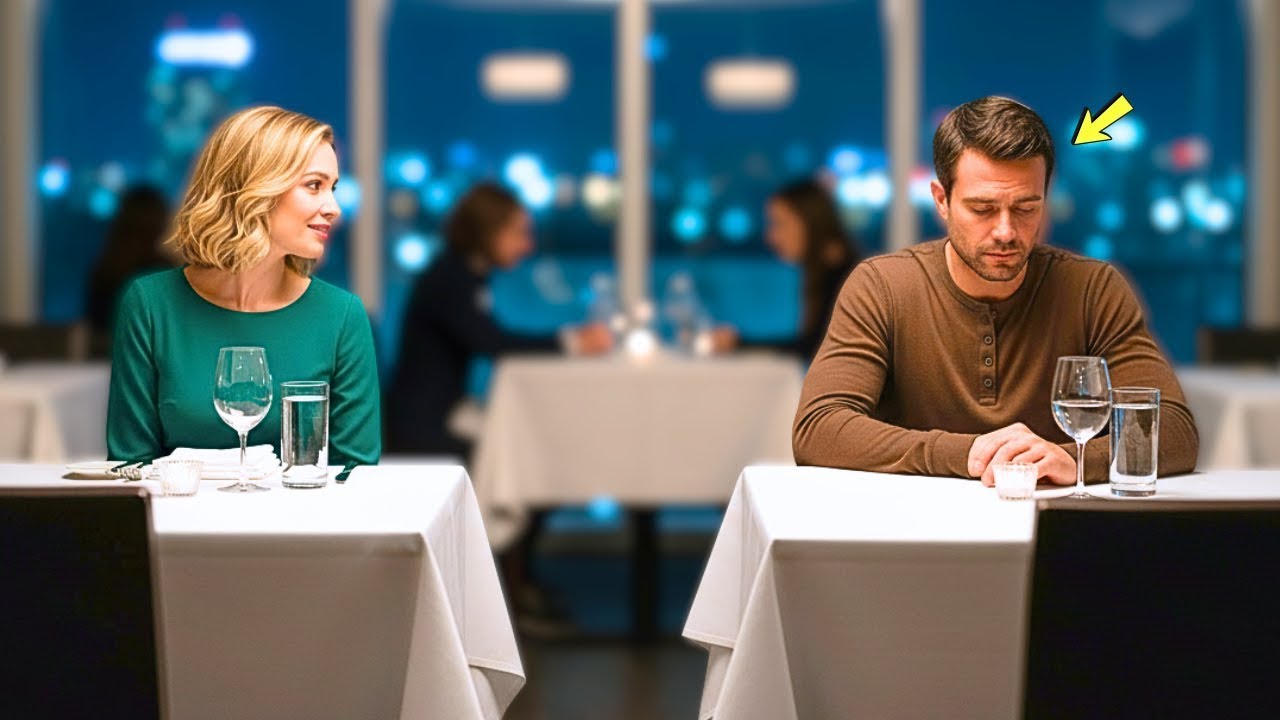
I should be home by now, but I’m not. It’s 11:00 on a Tuesday night, and I’m walking the same streets I’ve walked a thousand times, feeling nothing. I have an email drafted on my phone—my resignation from the architecture firm—and I’ve already looked up one-way tickets to San Antonio, where my sister lives. I’m thirty-four years old, starting over, and I don’t even care anymore.

I’m not depressed; that’s what I tell myself. I’m just empty. Then I see him. A man, maybe sixty, standing under a streetlight, wearing an expensive but worn gray coat.
He’s looking directly at me. Not glancing. Looking. He holds my gaze for a moment, then turns and walks down a narrow street I’ve passed for three years but never really noticed.
I should go home. I should ignore this. But something in me—the part that hasn’t given up yet—makes me follow. He doesn’t look back.
He walks with purpose, like he knows exactly where he’s going, like he knows I’m there. He turns into an alley between two buildings. It’s usually just a gap with a dumpster, but tonight it looks longer, darker, like it leads somewhere instead of ending at a brick wall. At the end of the alley, he stops at a wooden door.
I never knew there was a door here. It has no sign, no number, just a brass handle worn smooth. He opens it, steps inside, and the door starts to close. I could turn around.
I could go home and send my emails and pack my life into boxes. Instead, I run. I catch the door before it closes and step through. The first thing I notice is the smell.
Not food, not exactly. Something deeper, like memory made tangible. Like being seven years old at my grandmother’s house on Christmas morning. The second thing is the silence—not quiet, but intimate, like being underwater and able to breathe.
A woman appears beside me. Auburn hair, simple black dress, smiling like she knows me. “Good evening. ”
“I followed someone.
A man. Gray coat. ”
“Yes. He said you would come.
”
“How do you know my name? ”
“We’ve been expecting you, Adrian. Your table is ready. ”
“I didn’t make a reservation.
”
“You didn’t have to. ”
Her name is Isabel. She leads me through a hallway into a small dining room with maybe ten tables, all occupied. Candles burn steady, not flickering.
The walls seem to shift with patterns that look like maps or constellations. Everyone eats in silence. Some are crying. Some are smiling.
At my table, set for one, I tell Isabel I don’t have my wallet. “There’s no charge tonight. ”
“Why not? ”
“Because you needed to be here.
”
A young waiter brings me a leather folder. Inside is a single card with handwritten calligraphy. It’s not a menu. It’s a question:
*What would your life taste like if you’d chosen differently?
*
“I don’t understand,” I say. “You will. ”
He brings the first course. A clear broth.
Steam rises in patterns that look deliberate. “What is this? ”
“Remembrance. ”
The moment the soup touches my lips, I’m no longer in the restaurant.
I’m seven years old, sitting at my grandmother’s kitchen table while she teaches me to draw. “Son, you have a gift. Don’t waste it. ”
I loved drawing then.
I dreamed of being an artist. Ten years later, I chose architecture instead. Profitable. Safe.
I stopped drawing for joy and started drawing for clients, for money, for approval. When the memory fades, I’m back at the table. The soup is half gone, and I’m crying. The second course is pasta, simple, with olive oil and herbs.
The waiter calls it “Possibility. ”
I bite into it, and I’m twenty-four, graduating from architecture school. My girlfriend Rachel wants to move to Jacksonville. She has a job offer, her family’s there.
I have an offer in New York—better firm, better money. “Come with me,” she says. “This opportunity is more important than us. ”
In reality, I chose New York, and we broke up.
I told myself it was for the best. But the pasta shows me the other timeline—the one where I chose Jacksonville, where we stayed together, got married, had kids, built a life that felt full instead of impressive. I’m sobbing openly now. A woman at the next table reaches over and squeezes my hand.
She’s crying too. We’re all eating our regrets. The third course is meat. Sweet and bitter and rich.
The waiter whispers, “Forgiveness. ”
And I’m thirty-three, and my wife Julia is telling me she’s leaving. “You’re not here, Adrian. Even when you’re home, you’re not here.
You’re married to your career, not to me. ”
That’s not fair, I said then. In the memory, I see myself through her eyes—distant, checked out, working late not because I had to, but because I didn’t want to go home. I see the dates I canceled, the conversations I didn’t engage in, years of slow erosion.
“I’m sorry,” I say out loud, to the memory, to Julia, who isn’t here. And the me in the memory looks back at me and says, “I know. But you need to forgive yourself. ”
“How?
”
“By choosing differently. ”
When the plate is empty, I’m not crying anymore. Something inside me has shifted. The weight I’ve been carrying—guilt, regret, self-hatred—is lighter.
Not gone, but lighter. The waiter returns. “Dessert? ”
“I don’t think I can handle more.
”
“This one is different. This one is hope. ”
It’s a small slice of chocolate cake with a single raspberry on top. I take a bite, and I see tomorrow.
Not the tomorrow I planned—where I quit, run away, start over somewhere else carrying the same emptiness with me. A different tomorrow. Where I wake up and draw something, not for work, for joy. Where I call Julia to apologize, really apologize.
Where I choose one small thing differently. Then another. Then another. Until my life stops being a rehearsal for future happiness and starts being lived.
When I finish, the waiter asks if I want anything else. “I want to know what this is. How is this possible? ”
“Some experiences can’t be explained.
Only lived. ”
“I need to come back. ”
“Perhaps. The threshold appears when needed, not when wanted.
”
Isabel appears. “Adrian, it’s time. ”
“The man I followed. Who is he?
”
“Someone who walked your path once. Who found us when he needed to. Who guides others now. ”
I step through the door and I’m back in the alley.
It looks normal now—short, ordinary, a brick wall at the end. I turn around. The door is gone. Just brick.
No seams, no handle, nothing. I check my phone. It powers on, battery at sixty percent, same as before. But it’s 11:47.
I entered at 11:15. I was inside for hours. Only thirty-two minutes passed. The next morning, I don’t send the email.
I sit at my desk, open my sketchbook for the first time in years, and draw. Just shapes, light, shadow, the way the morning sun hits my coffee cup. It feels rusty, but right. My boss walks by and says, “Looks good.
You should do that more. ”
At lunch, I call Julia. She’s surprised, guarded. “I wanted to apologize.
Really apologize. You were right. I wasn’t present. I was so focused on achieving something that I forgot to actually live.
”
Silence. Then: “Thank you. That means a lot. ”
“I don’t expect anything.
I just needed you to know. ”
“Adrian, I hope you’re okay. ”
“I’m getting there. ”
I go back to the alley that night.
The door isn’t there. I go back every night for a week. Nothing. Two weeks later, I’m eating lunch at a park near the office when a woman sits beside me.
She’s my age, holding takeout, staring into space with that empty look I know too well. “Rough day? ” I ask. “Rough year.
”
We talk. Her name is Naomi. She’s a burned-out lawyer, thinking about quitting. “Don’t,” I say.
“Or do. But don’t run from yourself. You’ll just bring the emptiness with you. ”
“That’s oddly specific advice.
”
“I learned it the hard way. ”
Three months later, I’ve changed jobs. Smaller firm, more creative work. I draw every morning.
I’m dating someone, slowly, carefully, actually present this time. Life isn’t perfect, but it’s lived. I didn’t move to San Antonio. I’m walking home the same route I always walk, and I see her—a woman, maybe thirty, standing under a streetlight.
Lost. Desperate. Like she’s about to give up. I recognize that look.
I know that look. Without thinking, I start walking down the street I’ve passed a thousand times but never really noticed, into an alley that seems longer than it should be, to a door that wasn’t there yesterday. I open it and step inside. The smell hits me—memory made tangible.
Isabel appears. “Welcome back. ”
“I didn’t think I needed to return to eat. To understand.
”
“Understand what? ”
“Your purpose. Why you found us. ”
She leads me to the kitchen.
A chef stands at the stove—older, calm, familiar. The man in the gray coat. “You,” I breathe. He turns and smiles.
“Hello, Adrian. ”
“You knew, that night, that I’d follow. ”
“I knew you needed to. Just as I once followed someone.
Just as you’ll guide someone today. ”
“What are you talking about? ”
“The woman outside. She needs this.
She needs to taste what you tasted, to see what you saw, to change. ”
“But I don’t know how. ”
“You don’t need to know. You just need to guide her here.
The threshold does the rest. ”
“Why me? ”
“Because you remember what it’s like to be lost. And because you chose to change.
That’s the only qualification. ”
Isabel touches my arm. “She’s waiting. Go.
”
I walk back through the hallway, out the door. The woman is still under the streetlight, checking her phone. Lost. “Excuse me.
”
She looks up, guarded. “I know this sounds strange, but I think you need to follow me. ”
“What? ”
“There’s a door just down this street.
And inside is something that might help. ”
“Help with what? ”
“Whatever you’re running from. ”
She stares at me, suspicious, but also curious.
Desperate enough to consider it. “This is crazy,” she says. “I know. But do it anyway.
”
She hesitates, then: “Okay. ”
I lead her to the alley, to the door. “Just go inside. They’re expecting you.
”
“You’re not coming? ”
“I already did. This is your turn. ”
She opens the door, looks back once, then steps through.
The door closes. I stand alone in the alley, and I understand. The threshold finds you when you need it. Changes you when you’re ready.
And when you’ve changed, you help others find it. It’s a cycle. A gift that keeps giving itself away.
I walk home, smiling, because I’m not lost anymore.