Albert K. Bender had spent countless hours in the Bridgeport Public Library, feeding an obsession that was quickly taking over his life. By May of 1952, he had turned that obsession into something concrete: the International Flying Saucer Bureau, or IFSB. The organization grew fast.
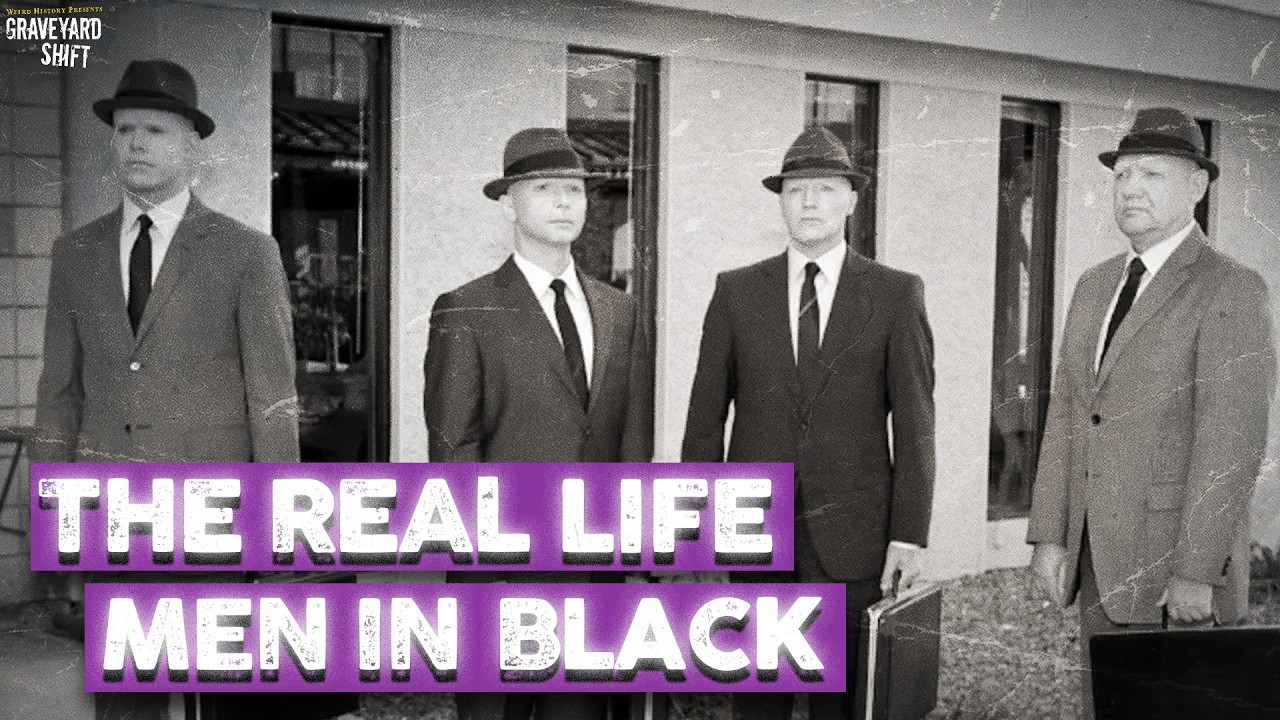
Within five months, they had branches in six countries, from Mexico to Italy to Australia. They published a magazine called *Space Review*, filled with reports of the strange lights and crafts appearing with increasing frequency in the skies over Washington, D. C. But Bender suspected he was being watched.
He had a plan, though. In his magazine, he published a bold invitation: “Calling occupants of interplanetary craft that have been observing Earth. We of IFSB wish to make contact with you. We are your friends.
”
He asked every reader to send a telepathic message to the skies on a specific date. He called it Contact Day. It was a declaration of intent, and it got him a response he never expected. On the appointed day, Bender began his mental message.
Instead of a warm greeting from the cosmos, his head exploded with pain. Blue lights swirled around the room, and the air filled with the stench of rotten eggs. Then a voice spoke, cold and clear: “We have been watching you and your activities. Please be advised to discontinue delving into the mysteries of the universe.
We will make an appearance if you disobey. ”
Shaken but stubborn, Bender published the strange encounter anyway. For days, he felt eyes on him. He came home to small changes in his belongings, as if someone had gone through his UFO files.
Then the visitors arrived. In his 1962 book, *Flying Saucers and the Three Men*, Bender documented what he saw that day: three beings in black suits, black fedoras, and sunglasses. They communicated telepathically. They showed him visions of a planet destroyed by marauders from a distant star system.
The message was unmistakable: they had destroyed one world, and they could easily do it again. According to Bender, they were on Earth to mine a valuable chemical from the ocean, and they would not tolerate interference. Then they showed him their true form. Bender described it as a hideous monster, more horrifying than anything he had seen in science fiction art.
He was terrified. In October 1953, just a year after launching *Space Review*, Bender shut it down. In his final issue, he wrote a cryptic warning: “We would like to print the full story in Space Review, but because of the nature of the information, we are sorry that we have been advised in the negative. We advise those engaged in saucer work to please be very cautious.
”
The International Flying Saucer Bureau was finished. Even publishing his book nine years later couldn’t revive the same hysteria. Whatever happened in that room had silenced the loudest voice in UFO research. Five years before Bender’s nightmare, Harold Dahl was out on Puget Sound, Washington, on a conservation mission with his son and their dog.
That’s when he spotted six donut-shaped crafts hovering half a mile above his boat. One of them dropped, raining down metallic debris. The fragments injured his son and killed his dog. Dahl managed to snap a few photos before the crafts disappeared.
He showed them to his supervisor, Fred Crisman. Though skeptical, Crisman went to the site himself and saw one of the strange crafts with his own eyes. The next morning, a man in a black suit appeared at Dahl’s door. He knew details about the encounter that no one could have known.
Then came the warning: keep quiet about the incident, or bad things would happen. In his 1956 book, *They Knew Too Much About Flying Saucers*, Gray Barker quoted the man in black: “What I have said is proof to you that I know a great deal more about this experience of yours than you will want to believe. ”
The pair later claimed the whole thing was a hoax. But for many, the confession felt forced, a desperate cover-up born from fear.
And the photos? They were too blurred to prove anything. Those who believed in the men in black suspected another intervention. Before the confession, Dahl and Crisman had contacted a Chicago newspaper.
Two military officers from Army A-2 Intelligence came to investigate the site. The next day, the B-25 plane they were flying home in caught fire and crashed. Both officers were killed. Coincidence, or a brutal message?
Half a century later, in 2008, Shane Sewar and a hotel security officer in Niagara Falls claimed they spotted a UFO from the hotel where they both worked. Not long after, two men in black arrived at the hotel, looking for them. The security footage captured their visit. Hotel staff described the pair as hairless, without even eyebrows.
They were enormous, ominous, and serious. The footage couldn’t explain who they were or how they knew the men were there. Forty years before that, in 1968, UFO researcher Jack Robinson was stalked by a man in black who stood outside his New Jersey apartment for three consecutive days. Robinson and his wife came home to find their apartment had been rummaged through.
A friend managed to snap a single photo of the stalker: a figure in a black trench coat and hat, standing ominously in a doorway. Other victims described similar features: no eyebrows, no eyelashes. Pale, cold skin. A blank, businesslike expression.
Some reported seeing lipstick and mouths that were barely slits. They didn’t seem human at all, and they only ever appeared to people who had seen or researched UFOs. Dan Aykroyd knows that terror well. While filming a TV series about alien encounters in New York City, he stepped out for a break.
Across the street, a black car pulled up. A tall man in a black suit stepped out and glared at him. Aykroyd looked away for less than three seconds. When he looked back, the car was gone.
Two hours later, the producers told him the series was canceled. None of the episodes, including the ones already shot, would ever be shown to the public. What happened in those two hours to convince the network to kill the show? Some believe the men in black have abilities beyond human understanding.
They materialize and vanish at will. They plant fear with a single glance. In 1997, Hollywood turned them into comedians in the hit movie *Men in Black*, where Agent K and Agent J fight aliens as a secret government agency. In the film, their sunglasses protect them from the memory-erasing neuralyzer.
The question remains: is there a truth behind the fiction? Dr. Herbert Hopkins, a respected family physician from Maine, encountered the men in black in 1978. He described them as bald as an egg, with no eyebrows or eyelashes.
He said their skin was smooth like a doll’s, but dead white, and they spoke in a flat, mechanical monotone, as if a machine were talking. Theories abound. John Keel, author of *The Mothman Prophecies*, speculated they were androids or robots of a highly advanced society. In the end, we’re left with more questions than answers.
Are we being observed, and are the observers discouraging us from learning the truth? Is it our own government keeping secrets, or are extraterrestrials silencing anyone who gets too close? If two men in black approached you about your alien research, would you feel safe?
Or would you panic, knowing the truth is out there, and they already know what you’ve seen?