The seeds of a monstrous future were sown in the quiet, devout home of a Catholic family in the peaceful town of Rheydt, where a boy born with a physical deformity would forge a weapon of words so potent it would help plunge the world into its darkest chapter. Joseph Goebbels, the man who would become the master of Nazi propaganda, was born on October 29, 1897, into a world that would first humiliate him, then fuel an insatiable drive for power and recognition. His father, Friedrich, a meticulous accountant, and his mother, Maria Oldenhausen, provided a stable, religious upbringing, but a cruel twist of fate at the age of four would forever mark his body and soul.
Stricken with osteomyelitis, a severe bone infection that afflicted his right leg, the young Goebbels was left with a permanent limp, a physical stigma that became a crucible of shame and isolation. This lameness, coupled with his diminutive stature, earned him the cruel nickname “Unab Shum Gaman,” a taunt that translated to “unbleached shrunken German,” a label that seared into his psyche and drove him to seek refuge in the depths of his own home.
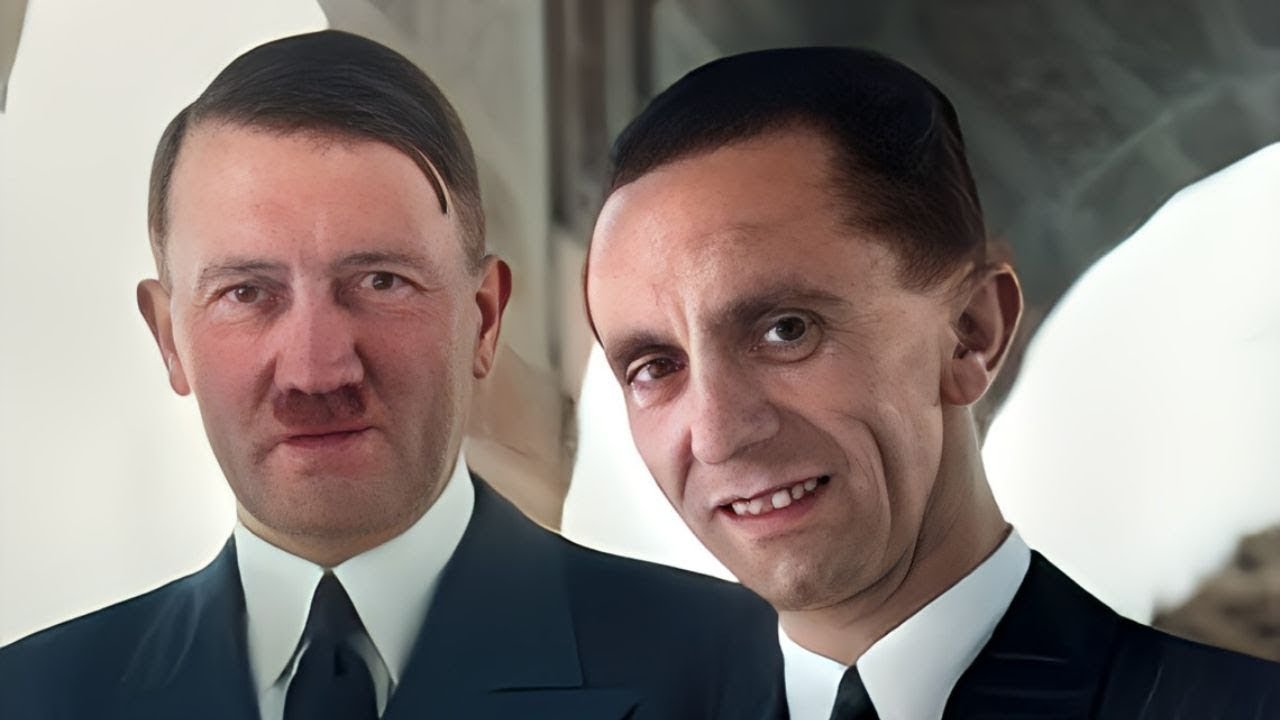 In the confines of his basement, away from the mocking eyes of his peers, the boy found solace not in play, but in the pages of old books and encyclopedias. This forced isolation, a direct result of his physical affliction, became the forge for his intellect, a sanctuary where he could escape the humiliation of his body. The asymmetry of his legs required him to wear orthopedic shoes, a constant reminder of his difference, but his mind proved to be a weapon of a different caliber.
He excelled academically, emerging as the top of his class upon completing high school in 1917, a testament to a tenacity that would later define his political ruthlessness. Yet, the outbreak of World War I in 1914 presented a new form of torment. His burning desire to serve in the Imperial German Army was cruelly thwarted by his physical condition, leaving him to witness helplessly the misfortune that befell Germany.
This period of impotence and frustration left a profound mark, a deep-seated resentment that would later find its outlet in the radical nationalism of the Nazi Party.
His parents, concerned about his future, suggested he pursue the path of the priesthood, a traditional route for a bright Catholic boy. Goebbels initially agreed, enrolling in the Albertus Magnus Society under the guidance of Johannes Mollen. However, his heart was not in ecclesiastical studies.
In a turn that contradicted his family’s expectations, he abandoned this path, seeking his true academic vocation. This transition was not without financial challenges. The family requested a loan of 964 marks from the society, a commitment supported by Mollen’s glowing praise, who stated that Goebbels was “the son of good Catholic parents, and his religion and morality make him worthy of every recommendation.”
This shift from the seminary to the university marked the beginning of a trajectory that would lead him to the very heart of the 20th century’s most tumultuous events. Racing through the upper echelons of academia, Goebbels, a scholarship recipient, left his mark on eight universities before graduating with distinction from the University of Berlin in 1921.
That same year, he completed his university journey by earning a doctorate at the University of Heidelberg, presenting a masterful thesis on Wilhelm von Schütz under the guidance of scholar Friedrich von Waldberg. His university journey was not just a series of academic successes; it was a period of passionate commitment to philology and German literature. Immersed in the works of great literary masters, Goebbels displayed an innate ability to analyze and contextualize the complexities of language and narrative.
This academic fervor became the cradle of his skill in verbal manipulation, a talent that would play a central role in his future as Minister of Propaganda of the Reich. However, beyond academic achievements, the political circumstances of the time left an indelible mark on his university experience. Witnessing the tumultuous aftermath of the war and the political unrest in Germany, Goebbels found himself immersed in a cauldron of ideological fervor.
These political upheavals fertilized the seeds of his radical beliefs, forming the foundation of his later commitment to extreme nationalism. His active participation in nationalist student circles and his enthusiasm for the racial theories popular at the time foreshadowed his adherence to Nazi ideology.
After his time in university classrooms, Joseph Goebbels immersed himself in the fabric of working life, first working as a tutor in Cologne and later as an industrial securities trader on the stock exchange. However, his heart beat with a passion that transcended numbers and financial transactions. What truly ignited his soul was the art of words and oratory.
From an early age, Goebbels channeled his love for letters and eloquence through writing, penning fervent articles and dramas that he sent with hope to newspapers and publishers. But the door to artistic success remained closed. Persistent in his quest for expression and recognition, Goebbels extended his literary reach by proposing himself as an editor for the prestigious Berliner Tageblatt.
However, fortune did not smile on these projects, leaving a trail of disappointment in his path. It was at this moment of disillusionment that fate led him towards a new path: politics. By chance, Goebbels came across pamphlets of the National Socialist German Workers Party, the NSDAP, which he eagerly absorbed and shared with his comrades.
This casual encounter marked the beginning of his immersion in the tumultuous waters of German nationalism, a journey that would lead him to the heights of power in the years to come.
The 1920s in Germany were a hotbed for the rise of radical political movements, and in this context, Goebbels found fertile ground for the flourishing of his extremist beliefs. Inspired by the promise of national rebirth, he fervently joined the ranks of the Nazi party. This period of transformation marked not only his entry into politics but also the beginning of a symbiotic relationship with Adolf Hitler, who soon recognized in Goebbels a shrewd and persuasive individual.
In his early years of active participation in the NSDAP, Goebbels stood out for his eloquence and oratory skills, quickly becoming a passionate spokesperson and defender of the Nazi cause. His incendiary speeches resonated in the hearts of his followers, catapulting him to a position of prominence within the movement. In the early days of January 1924, Joseph Goebbels found himself embroiled in a decisive political debate that transcended the divisions between socialists and national socialists.
In a pivotal moment, he was invited to ascend the platform and address the audience with a voice that resonated like a call to history.
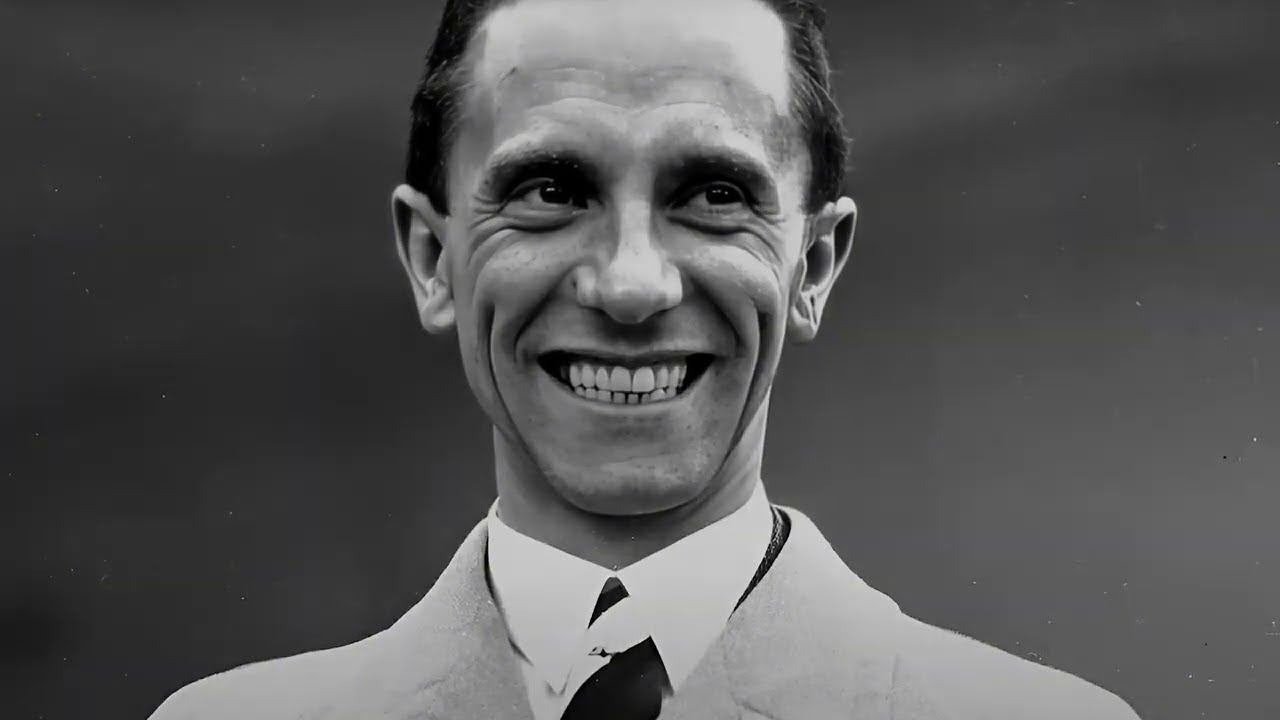 Goebbels began his speech with the immortal words, “My dear German compatriots,” but the mere hint of his National Socialist affiliation sparked the fury of the socialists present, who amid boos and insults accused him of being a capitalist and an exploiter. Faced with this challenging situation, Goebbels, undeterred, pointed defiantly at his detractors and proclaimed, “That gentleman over there who calls me a capitalist, come forward please and show as I do the money you have on you. Let’s see who has more.”
In a theatrical gesture, he revealed an almost empty wallet, a symbolic act that resonated with the audience. The thunderous applause that followed was the effusive response of those who recognized in Goebbels a brave rhetorical warrior. This episode, more than a mere anecdote, marked the culminating moment that led Goebbels into the ranks of the National Socialist German Workers Party.
Goebbels formalized his entry into the party with membership number 8,762, a symbol of his newly forged commitment to the doctrines and aspirations of national socialism.
The providential encounter with Adolf Hitler in 1924 marked a milestone in Goebbels’ life. Both masters of oratory were mutually impressed. Hitler, newly released from prison after the failed Munich Putsch, saw in Goebbels a vital tool for his political struggle.
This alliance would resonate significantly in the years to come. In 1926, Hitler entrusted Goebbels with an apparently insurmountable task: to be sent to Berlin, the most challenging stronghold for a National Socialist. Berlin, a city that showed a preference for conservative, monarchist, or leftist parties, represented hostile territory for the NSDAP.
Goebbels, armed with the book Mein Kampf under his arm, arrived at Potsdamer Bahnhof station, facing adversity with determination. As the leader of the NSDAP in Berlin, Goebbels undertook the titanic task of imposing order and discipline among the party’s followers in the capital. His strategies ranged from economic measures, such as imposing a monthly fee and selling tickets to rallies, to reorganizing the brown-shirted SA militias under the leadership of Kurt Daluege.
Additionally, he launched a local newspaper titled Der Angriff (The Attack) and displayed striking posters with fiery red letters, challenging public opinion with slogans like “Lenin or Hitler? Or the Kaiser of America speaks in Berlin.” These bold measures had a clear purpose: to generate controversy and conversation about the party.
Goebbels, aware of the power of notoriety, expressed his intention with forceful words: “Berliners must insult us, slander us, fight us, beat us, but they have to talk about us.” In the crucible of Berlin’s hostility, Goebbels forged his reputation as a tireless strategist and skilled manipulator of public perception, whose tactics would reverberate throughout the tumultuous political history of interwar Germany. “In propaganda as in love, everything is permitted,” Goebbels proclaimed.
“A lie repeated a thousand times becomes the truth.” These slogans, infused with the fervor of NSDAP propaganda, also encapsulate Goebbels’ rhetorical astuteness and mastery. His legacy, however, is tainted by the manipulation of truth and the promotion of dangerous narratives that contributed to the propaganda machinery of an infamous regime.
Joseph Goebbels’ speeches became authentic spectacles that no one wanted to miss, displaying an oratory endowed with an unparalleled magnetism and energy that mobilized the masses with an almost hypnotic force. Before each speech, the microphone genius would ask his collaborators, “What record do we play today?” thus marking the beginning of an unprecedented propaganda experience.
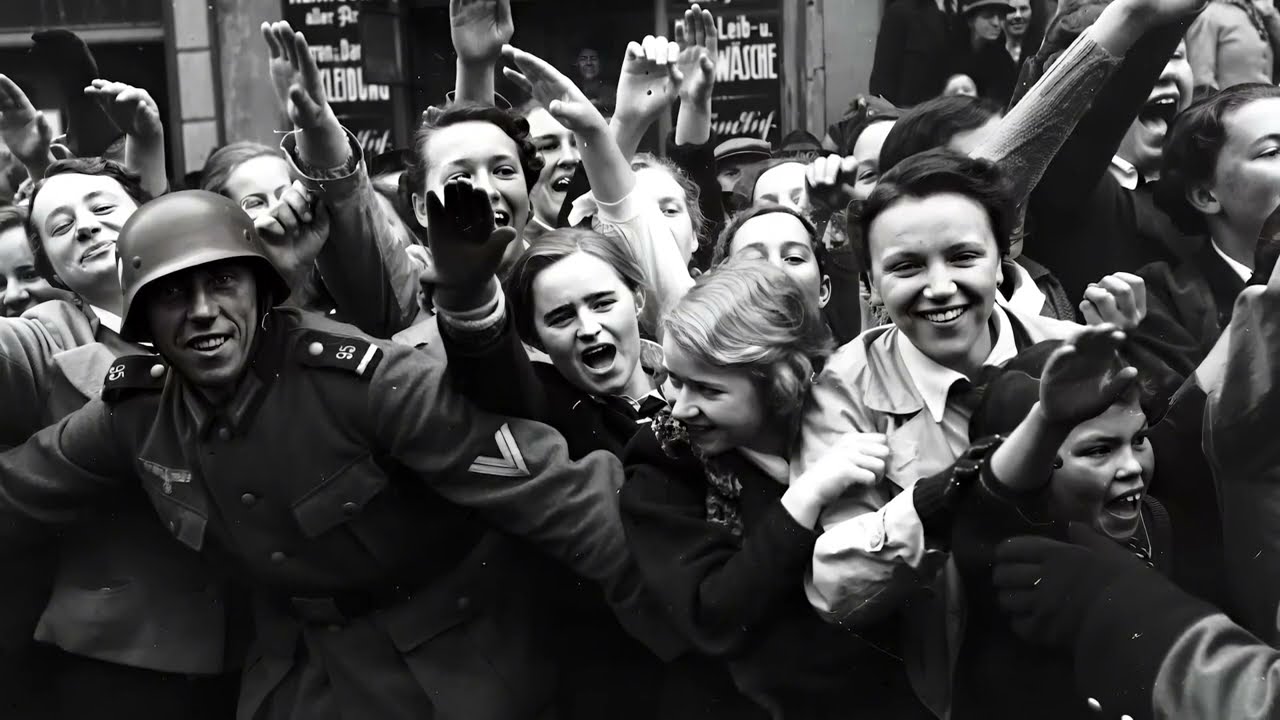
Each of Goebbels’ speeches became an event laden with symbolism, accompanied by marches, parades, flag waving, chants, and choirs that amplified the fervent atmosphere.
Punctuality was not his virtue; he was aware that the delay added palpable tension among the audience, anticipating the climax of the wait. Goebbels’ rallies, inflamed by his fiery temperament, often led to violent disturbances when Communists attempted to boycott the national socialists. These confrontations, fraught with tensions, sometimes resulted in injuries on both sides.
However, Goebbels, a skillful manipulator of public perception, turned his injured supporters into martyrs, elevating them to the status of heroes in the public eye. Nevertheless, the violence at these events sometimes led to police intervention and the suspension of NSDAP meetings for public order reasons. Quickly, Goebbels would adapt the purpose of the rally, transforming it into a sports or tourist event, demonstrating a strategic versatility that marked his dominance in the art of propaganda.
Following the historic victory of the NSDAP in the 1933 elections, which granted the party 107 seats in the Reichstag, Joseph Goebbels rose to the status of Deputy. This new role not only provided him with a broader political platform but also offered the opportunity to intensify the party’s propaganda machinery through innovative tactics and more effective means.
Goebbels, a skillful propaganda strategist, deployed an unprecedented range of advertising tactics. Broadcasting his speeches over the radio carried his message to the remotest corners of Germany, while the massive distribution of 50,000 phonograph records amplified his auditory presence throughout the country. Additionally, the projection of documentary films in various venues, from halls to sports centers, public gardens, cafes, and restaurants, ensured his message resonated across multiple layers of society.
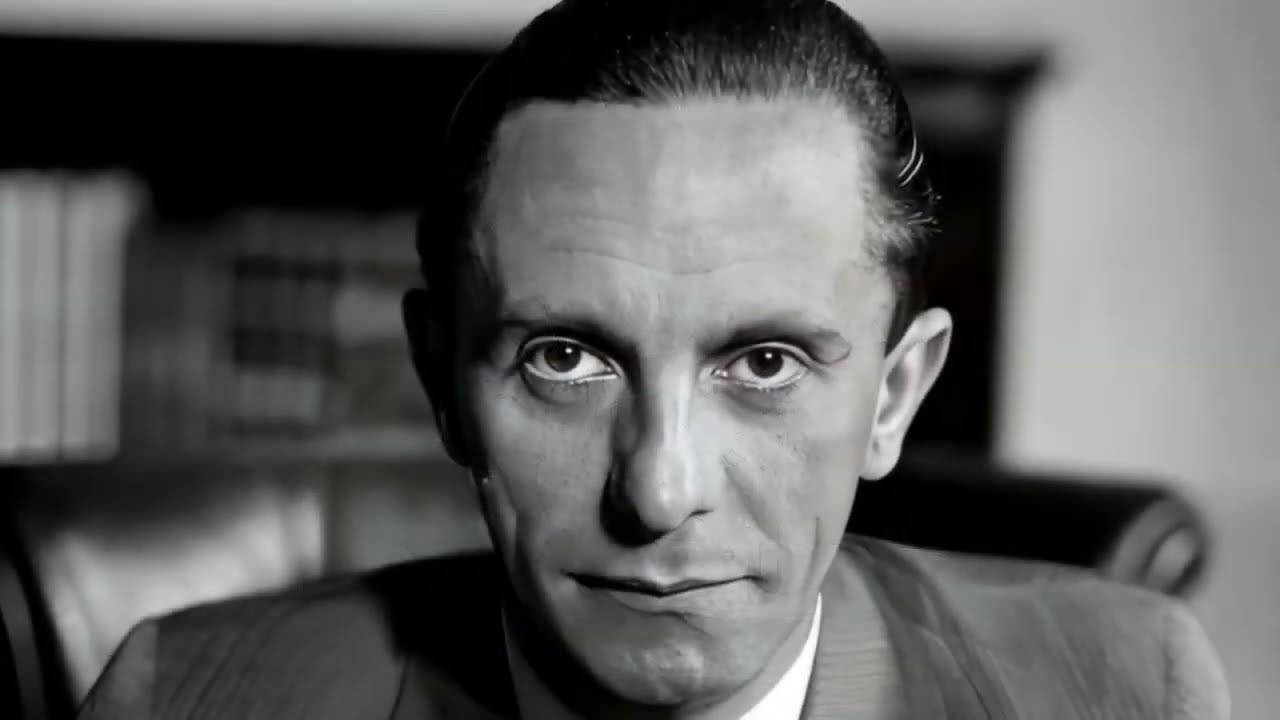 Even beyond conventional limits, Goebbels demonstrated his ingenuity by hiring planes to drop leaflets from the sky, carrying the impactful message, “The Führer arrives from the sky.” These bold tactics reflected his ability to adapt to modern media and his relentless determination to spread National Socialist ideology. The heart of Joseph Goebbels found its fullest expression in his love 𝒶𝒻𝒻𝒶𝒾𝓇 with Magda Quandt, a relationship that culminated in marriage.
Magda found love with Goebbels while working as a secretary in the NSDAP archives. The connection was instantaneous, and on December 12, 1931, with Adolf Hitler as best man, Joseph Goebbels and Magda were married. This love bore fruit in a family that led the initiative to honor Hitler, naming their six children with the letter “H.”
Additionally, Goebbels assumed the role of stepfather to Harald, Magda’s 10-year-old son from her previous marriage, who would eventually become a Luftwaffe pilot. This family bond strengthened the intertwining of Goebbels’ and Magda’s lives, marking a connection that would persist through the tumultuous years ahead.
The intensity and aggressiveness of Joseph Goebbels’ speeches in the Reichstag reached such a level that in February 1932, Parliament expelled him and withdrew his Deputy seat for insulting President Paul von Hindenburg. This critical moment threatened to turn Goebbels into a political outcast, as in April he faced accusations of high treason by the Reichstag. However, Goebbels’ fortune took a radical turn in January 1933 when the NSDAP came to power after the elections and Adolf Hitler rose as Führer of the Third Reich.
This change of events restored Goebbels’ lost prestige and placed him once again at the center of the political scene. On March 13, 1933, Joseph Goebbels was appointed Minister of Propaganda of the Third Reich and simultaneously assumed the position of Governor (Gauleiter) of Berlin. These responsibilities, which he would hold until the end of his life, consolidated his position as a central figure in the Nazi regime’s propaganda apparatus.
Until that date, Goebbels’ entire journey in the struggle for power was documented in two personal memoirs he wrote under the titles The Battle for Berlin and Kampf um Berlin, reflecting his unique perspective on the events that led him from the fringes of political ostracism to the high echelons of the Nazi regime.
One of Joseph Goebbels’ first machinations as Minister of Propaganda was collaborating in the construction of a deceptive narrative designed to consolidate Adolf Hitler’s position in power. This intrigue took shape in the creation of a falsehood designed to attribute the Reichstag fire to the Communists. The masterful execution of this strategy proved to be a resounding success, allowing the national socialists to persuade President von Hindenburg to decree the banning of political parties, trade unions, and associations, thus consolidating the regime’s authoritarian control.
The following year, 1934, Goebbels played a crucial role in another scheme aimed at discrediting and purging the SA (Sturmabteilung). He fabricated a supposed betrayal within this paramilitary militia, leading to a brutal purge known as the Night of the Long Knives. In this operation, the SS, led by Heinrich Himmler, carried out summary executions, including that of SA leader Ernst Röhm.
By contributing to this masterful maneuver of political manipulation, Goebbels further solidified the positions of Hitler and the SS within the fabric of the Third Reich. During his tenure as Minister of Propaganda of the Third Reich, Joseph Goebbels set out to completely appropriate German culture, forging a narrative that reflected Pan-Germanic values and the virtues of national socialism.
Deploying strategic mastery, he quickly consolidated his control over the press, radio, and all media. But his greatest conquest was the film industry. Goebbels secured his dominance over the Universum Film AG (UFA) studios, turning them into a powerful propaganda tool to project films that exalted Nazi ideology.
Among his notable achievements was the hiring of filmmaker Leni Riefenstahl, responsible for the acclaimed documentaries Olympia and The Triumph of the Will. These works, internationally praised, premiered in conjunction with the 1936 Berlin Olympics, serving as cinematic vehicles for the projection of the regime’s grandeur on the international stage. Goebbels catapulted to fame through the Transoceanic Press Agency, a political network that wove an extensive web of journalists across the globe.
This network, comprising 83 experts in London alone and a myriad of collaborators in other countries, edited 300 newspapers of National Socialist ideology and contributed articles to another 350 publications. The propaganda machinery of Goebbels extended globally, consolidating the presence of Nazism in the international media sphere. While Joseph Goebbels promoted National Socialist culture, he spared no effort in neutralizing and silencing opposition voices.
His first victim was the expropriation of Ullstein House, the same publisher that had rejected one of his works when he had just left university. Swiftly, he created a blacklist that included newspapers, magazines, and publishers deemed unpatriotic, while also pursuing books and publications by writers suspected of being communists, Freemasons, or Jews. Among them were figures such as Karl Marx, Stefan Zweig, Erich Kästner, Heinrich Heine, and Sigmund Freud.
These works were condemned to fire in large public pyres, in a symbolic act of cultural repression. Demonstrating propagandistic ingenuity, Goebbels even organized an exhibition of “degenerate art” to denigrate works by renowned artists such as Pierre-Auguste Renoir, Vincent van Gogh, and Paul Gauguin. Outside the political realm, Goebbels’ wealth grew considerably thanks to his salary, the 4,000 Reichsmarks he received for each article in the newspaper Das Reich, and the profits from his book Bolshevism in Theory and Practice.
This prosperous income stream allowed him to acquire several estates in places like Schwanenwerder, Lanke, and Bogen. Additionally, he owned a luxurious armored Mercedes car, a gift from Hitler, equipped with an 8mm bulletproof and bomb-resistant body.
 Goebbels’ personal life was also marked by opulence and 𝒔𝒄𝒂𝓃𝒹𝒶𝓁. His constant income flow allowed him to enjoy numerous mistresses, usually secretaries, young NSDAP members, or actresses. In 1938, his marriage to Magda was on the verge of collapse when she discovered his 𝒶𝒻𝒻𝒶𝒾𝓇 with the Czech actress Lída Baarová, a neighbor at the Schwanenwerder estate.
Hitler’s intervention, who expelled the Czech lover from the country, prevented the divorce and preserved the appearance of stability in the Goebbels marriage. Three days after the start of World War II, on September 3, 1939, the German submarine U-30 sank the British liner SS Athenia, claiming the lives of 112 passengers, including several American citizens. Goebbels immediately seized on this tragic event to weave a masterful lie.
Through the newspaper Völkischer Beobachter, in an article, he claimed that the British themselves had sunk the Athenia to blame the Third Reich and force the United States into the conflict. This incident, along with others manipulated throughout the war, illustrates Goebbels’ mastery of propaganda manipulation. One of Goebbels’ most notorious schemes was accepting the surrender of France in 1940 in the same railway carriage where the Armistice of Compiègne had been signed after Germany’s capitulation in World War I.
This humiliation endured by the French, two decades after inflicting it on the Germans, was an astute idea by Goebbels to consolidate the German victory.
In 1941, with the invasion of the Soviet Union, Goebbels excelled in broadcasting victories over the Red Army through radio, accompanied by fanfares and Richard Wagner’s music. In his relentless persecution of Jews, he justified isolation in Polish ghettos through films like Jew Süss, The Eternal Jew, and The Rothschilds. Goebbels not only managed propaganda on the home front but also provided a platform on Radio Hamburg to William Joyce, an Englishman from the British Union of Fascists, to broadcast propaganda against England and recruit volunteers for the British Free Corps of the SS.
Additionally, Goebbels played the role of astrologer alongside Hitler, exploring horoscopes and Nostradamus’s prophecies to foresee battlefield events. On February 13, 1943, just 11 days after the defeat at the Battle of Stalingrad, Goebbels declared Total War in a rally at the Berlin Sports Palace. From that moment on, he mobilized the German population, including children and the elderly, within the Volkssturm, known as The People’s Army.
In early 1945, in a desperate attempt to resist the unstoppable advance of the Red Army from the East and the Allies from the West, Hitler appointed Goebbels as the Defender of Berlin. From radio microphones, Goebbels issued orders to implement the scorched earth tactic, urging Germans to destroy everything in their path and leave only ashes for the approaching enemy. In a chilling twist, he denounced the Geneva Convention, encouraging the defenders of the capital to execute any American and British pilots who might have parachuted after being shot down.
During the final days of the war, Goebbels did not abandon his belief in astrology or miraculous signs. For instance, he interpreted the death of US President Franklin Delano Roosevelt as a stroke of luck provided by astrological forces, assuring Hitler of this in a phone call. These final moments mark the culmination of Goebbels’ career as a National Socialist propaganda strategist, taking his tactics to brutal extremes and demonstrating unwavering loyalty to Hitler even in the most desperate times.
Coinciding with Hitler’s 56th birthday, Goebbels moved to the bunker beneath the Chancellery to share the same fate as him. He brought along his wife Magda and their six children, who sheltered underground to avoid being hit by bombs and Soviet artillery shells. They spent 10 days there, with the Goebbels witnessing Hitler’s wedding to Eva Braun and the Führer’s announcement of his intention to end everything.
Magda, unable to be restrained by her husband, pleaded with Hitler not to do so, but to no avail. The dark fate loomed over the regime with the Führer’s death on April 30, just a day after his marriage to Eva Braun. A day after Hitler’s suicide, on May 1, 1945, both Goebbels and Magda decided to meet the same fate to avoid falling into Soviet hands.
Both agreed to eliminate their children first. When Magda pronounced the following words, “My children are too beautiful to live in a world without National Socialism,” it was then that Magda put her six little ones to sleep with a sleeping pill and then poisoned them with cyanide. Only Harald, Magda’s son from her previous marriage, survived, as he was a prisoner in Great Britain due to his role as a pilot.
Just hours later, at 6:15 p. m. , the couple ascended to the Chancellery courtyard arm-in-arm.
First, Goebbels raised his pistol and shot Magda in the heart. Then he swallowed a cyanide pill and immediately shot himself in the head. After completing the grim ritual, SS guards transported the bodies to a shell crater and incinerated them with gasoline.
With Joseph Goebbels’ ashes, the words of one of the main leaders of the Third Reich dissolved into the air forever. This key figure in the historical triumph of National Socialism was considered the best propagandist of the 20th century, a master of persuasion whose legacy is forever stained by the manipulation of truth and the orchestration of a regime of terror. His rise from a crippled, ostracized boy to the Reich Minister of Propaganda is a chilling testament to the power of words, the seduction of ideology, and the depths of human depravity.
The world now remembers him not as a scholar or a writer, but as the architect of the lies that fueled the Holocaust and the Second World War, a man whose name is synonymous with the perversion of truth for the sake of absolute power.