The neighbors were woken just after five in the morning by a man screaming for help. “She’s falling down the stairs. She’s falling down the stairs. Help me.
I need help. ”
They ran into the flat and found Claire Les, partially clothed, lying in her bedroom, barely alive. Her injuries were catastrophic. Her parents were woken that same morning to the news no parent should ever receive.
When Fiona Les shouted at the first policeman she saw, “Is she alive? ” he answered, “She was five minutes ago. ”
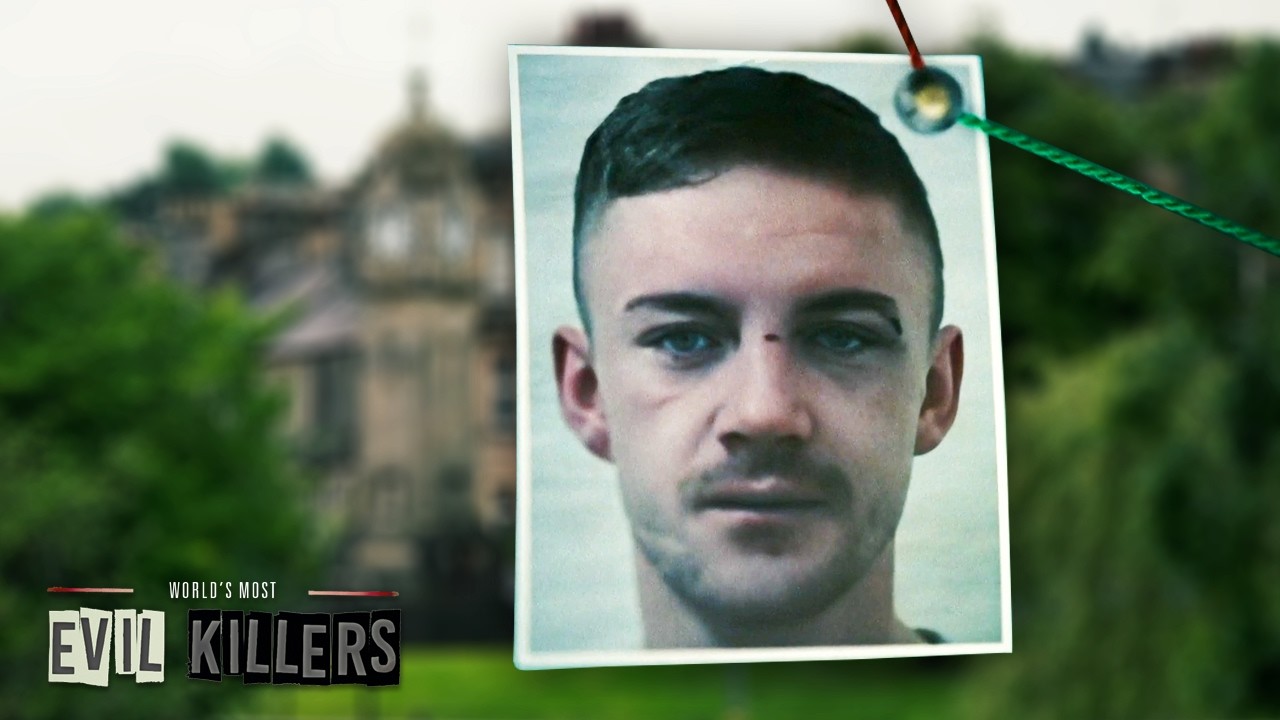
Her boyfriend, twenty-six-year-old Christopher McGowan, claimed it was a tragic accident. She fell down the stairs, he said.
But falling down the stairs does not concentrate every injury on the skull. It does not leave signs of strangulation. It does not end with a wet wipe stuffed down someone’s throat. McGowan was lying, and the truth would expose him as one of the most evil killers the country had ever seen.
He was known locally as Kicky McGowan, a nickname earned through years of violence. He had his first conviction at fourteen and never stopped. Over the years, he collected thirty-nine convictions for offenses ranging from carrying a knife and dealing heroin to domestic assault, robbery, and attacking a police officer with a blade. He was lawless.
He used violence like it was his first language. Claire Les was his opposite in every way. She was born and raised in the same small city, a bubbly, fun-loving girl who didn’t have a bad bone in her body. She studied childminding, dreamed of a good life, and became a devoted mother to her son, Robbie, born in 2014.
When Robbie’s father died in a road accident a few years later, Claire and her son rebuilt their lives with the help of her parents, Ian and Fiona, who adored them both. Claire was quiet, kind, and loved deeply. She met Christopher McGowan in the summer of 2021. He shouted at her across the street, his leg strapped up from an injury, and she mentioned it to her mother later.
Fiona recognized the name immediately. “Kicky McGowan,” she said. Claire laughed it off. But it wasn’t a joke.
Within weeks, Claire announced she was in a relationship with him. Her parents were horrified. They knew his history of domestic violence, his drink and drug abuse, his violent reputation. They pleaded with her, but Claire believed she could change him.
He was homeless, and she had a big heart. She thought she could bring him into her little family and save him. Instead, she became trapped. McGowan moved in and began taking control.
Claire became quieter, more withdrawn, less like herself. She bought him gifts she couldn’t afford and ran up debts to keep him happy. She asked her mother for money again and again, always twenty-five pounds. Fiona eventually realized that was exactly what a bag of Valium cost.
She confronted her daughter, and Claire swore she would never ask again. As Claire walked back to her flat, Fiona looked up and saw McGowan watching from the window. Claire turned and shouted, “Keep your money. I’m not interested.
” Fiona knew then her daughter was being controlled. On the night of November 27, 2021, Claire and McGowan went out drinking in town. He was already in breach of his bail conditions and curfew. A taxi driver picked them up and watched McGowan verbally abuse Claire the whole way home.
Later, CCTV showed Claire going into a shop to buy alcohol—items McGowan wanted. Those were the last images of her alive. At five in the morning, McGowan knocked on a neighbor’s door and said, “I think I’ve killed Claire. ” Two neighbors ran to the flat.
They found her in her bedroom, beaten beyond recognition. The scene didn’t match his story. There was blood on the walls, the ceiling, the fridge. Her acrylic nails were scattered on the floor, evidence she had fought for her life.
When emergency services arrived, McGowan changed his story and claimed she had taken an overdose. Claire was pronounced dead at 5:41 that morning. She was twenty-eight years old, a mother to a seven-year-old boy who would never see her again. McGowan was arrested and charged with murder.
In his police interview, he claimed he was only trying to save her life. He gave several different accounts—a fall, an overdose—but none made sense. A post-mortem revealed the horrific truth: Claire had suffered seventy-six individual injuries. There was almost no part of her body that wasn’t damaged.
She had burn marks on her fingertips, her nose, and her ears. She had small puncture wounds that may have been caused by a screwdriver. The attack was sustained, prolonged, and sadistic. The message was clear.
Her killer was determined that she would not walk away alive. Her family had to tell Robbie that his mother was gone. After they broke the news, the little boy ran to his room, slammed the door, and broke down. McGowan’s trial finally began in September 2023, almost two years later.
On the third day, he turned up intoxicated, having doubled his anxiety medication and possibly taken drugs while in prison. The trial was adjourned. He showed no remorse. He wore a designer watch in the dock—a gift Claire had given him.
The defense first claimed self-defense, suggesting that Claire, smaller and weaker, had attacked him. Then they dropped that theory and instead blamed his childhood. McGowan tried to argue that he had turned to alcohol and drugs to cope with the abuse he suffered growing up. It was another attempt to avoid blame.
The jury took just two hours to find him guilty of murder. When he was sentenced to life with a minimum of twenty-three years, McGowan shuddered. For the first time, the reality seemed to hit him. Claire’s family watched and felt a small measure of justice, but it didn’t bring her back.
They have been left with many questions. Why was a violent repeat offender bailed to a vulnerable young mother’s home? Why wasn’t a proper risk assessment done? Social services had raised concerns about McGowan living with Claire six weeks before her murder, but no action was taken.
The family now campaigns for an independent inquiry, a review of bail conditions, and a domestic abuse register to stop another family from suffering the same fate. Fiona still wonders if she could have done more. She says she did exactly what McGowan wanted—she drew back, hoping Claire would see the truth. Instead, he isolated Claire completely and took everything from her, including her life.
Now Fiona sits on a memorial bench by the Riverside, facing the Wallace Monument, where she and Claire used to picnic. Cherry blossoms line either side. She goes there to find a little peace and to remember that her daughter is finally at peace. Because Christopher McGowan is now behind bars, a violent man removed from the streets.
For Claire’s family, that is the only comfort they have left.