The first doctor to properly describe the condition watched Napoleon’s soldiers lose their feet in weather so mild they could not see their own breath, and more than two centuries later, the same horror is eating through the trenches of Ukraine. Trench foot does not come from the enemy. It comes from your own body trying to save itself.
When your feet sit in cold water, your body decides that keeping your heart, lungs, and brain warm matters more than keeping your feet alive. The blood vessels clamp shut, and your feet are left running on almost nothing. Tissue that gets no blood gets no oxygen, and it slowly starts to die.
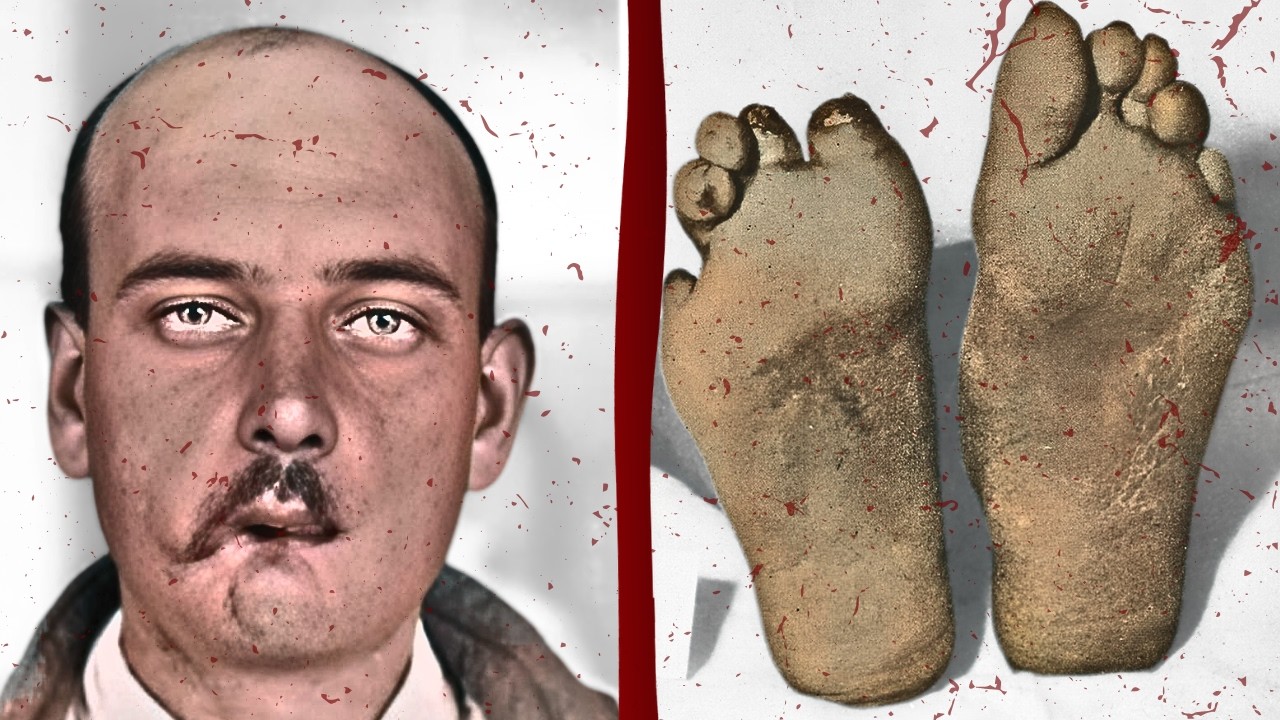 The nerves go first, which is why the feet go numb, and then the skin and everything deeper follows. Water pulls heat out of your body roughly 25 times faster than air does, so a wet foot keeps draining warmth even when the weather is mild. Standing still makes it worse because moving muscles pump blood back up out of your feet.
Tight boots make it worse again since they squeeze off what little circulation you had left. Cold water, standing still, and tight boots all working on the same two feet for days is the whole weapon.
This is not frostbite under a different name. Frostbite requires temperatures below zero, with ice forming inside the tissue. Trench foot needs no ice whatsoever.
It happens above freezing. It has been recorded in weather as mild as 16 degrees Celsius, about 60 degrees Fahrenheit, and it does not need weeks. Ten to 14 hours of cold, wet feet can be enough to start the damage.
That is exactly why armies kept walking into it over and over, because nobody expects to lose men’s feet in weather where you cannot even see your own breath. The first doctor to properly describe this thing was Dominique Jean Larrey, Napoleon’s chief surgeon, the man who invented the horse-drawn battlefield ambulance. He wrote the first clinical description in 1812 during Napoleon’s retreat from Russia.
While the army was falling apart and men’s feet were turning black, Larrey had already noticed something strange years earlier near Eylau in 1807, where his soldiers spent days in hard frost and barely anyone complained about their feet. Then the weather suddenly thawed, and men’s feet gave out all at once. Pain, numbness, toes going black.
From that, he worked out something way ahead of his time. The cold sets the injury up, but the worst damage arrives with sudden heat. The men who crowded around campfires with numb feet got gangrene the fastest.
So Larrey ordered numbed limbs rubbed with snow or camphorated brandy instead of being warmed at a fire. Slow, careful rewarming is still the treatment today, over two centuries later.
For the next 100 years, the condition kept showing up wherever soldiers stood in cold water, and it never even got its own name. Army doctors just kept logging it as frostbite, even when the weather was clearly above freezing. In the Crimean War, in the winter of 1854 to 55, the British Army outside Sevastopol recorded 1,924 cases of frostbite, and 457 of those men died, roughly one in four.
The surgeons noted that most of the damage happened at 40 to 50 degrees Fahrenheit to men standing in knee-deep mud in badly fitting boots. The next winter, with better food, shelter, and some basic prevention, the same army had 474 cases and six deaths. The answer already existed in 1856.
The same story then rolled through the American Civil War, the Franco-Prussian War, the Russo-Turkish War, and the Balkan Wars just before World War I, where Turkish soldiers outside Constantinople developed rot climbing from the toes toward the knee in air averaging around 5 degrees Celsius. The numbers from these older wars are approximate, but the pattern never changed. Wet feet above freezing, and men losing their feet or their lives without a single wound on them.
Now it is the autumn of 1914. The German advance gets stopped at the Marne. The war of movement dies, and by November there is a continuous line of trenches running from the Swiss border to the North Sea.
The worst possible place to dig on that entire line was Flanders, where much of the British sector sat. That land lies barely above sea level in the basin of the River Lys, with clay under the topsoil that water cannot pass through. Dig down two or three feet and you hit water.
Then the rains came. The Lys rose about seven feet over its banks, and whole stretches of trench were simply abandoned to the water. Some flooded sections were blocked at both ends, bailed out with buckets and held like islands.
No duckboards yet, no proper dugouts, and parapets of soaked earth that just dissolved. Men stood in water to the knee, in places to the waist, in leather boots that soaked through and stayed soaked for days at a time, with nowhere to dry anything. In the worst stretches, men had to be relieved twice a day because nobody could physically last longer.
 One British soldier, Arnold Ridley, wrote that men got so worn down that lying out in the open under fire felt better than staying in the flooded trench because death only meant sleep.
By January 1915, sickness in the British First Army alone was averaging around 2,144 men per day. The epidemic arrived in the army’s own medical returns month by month. August 1914, one recorded case of cold injury in France.
September, one. October, 11. November, 1,555.
December, 4,823. By the end of that first winter, over 20,000 British soldiers had been treated for it, and one battalion lost 400 men in just two days, plenty of those cases ending in amputation. At first, nobody even knew what to call this thing.
The newspapers back home reported it as an epidemic of frostbite, and names like waterbite, mudbite, and trench frostbite got tried before everyone settled on the one that stuck, trench foot. The doctors noticed something that confirmed water, not cold, was the real enemy because cases peaked in the wet months of October and November, dropped when December froze the water solid, and rose again with the thaw. The freeze was actually the safer weather.
Here is what it did to a man stage by stage. First, the feet go cold, then numb, and the numbness is the trap because you stop feeling that anything is wrong at all. Sergeant Harry Roberts described feet so dead that in his words, you could stick a bayonet into them and not feel a thing.
Then comes the swelling. Feet blew up to two or three times their normal size, so swollen that boots could not be pulled off and had to be cut away. Once a man’s boots were off, he usually could not get them back on, so now he is standing barefoot in a flooded trench in the middle of winter.
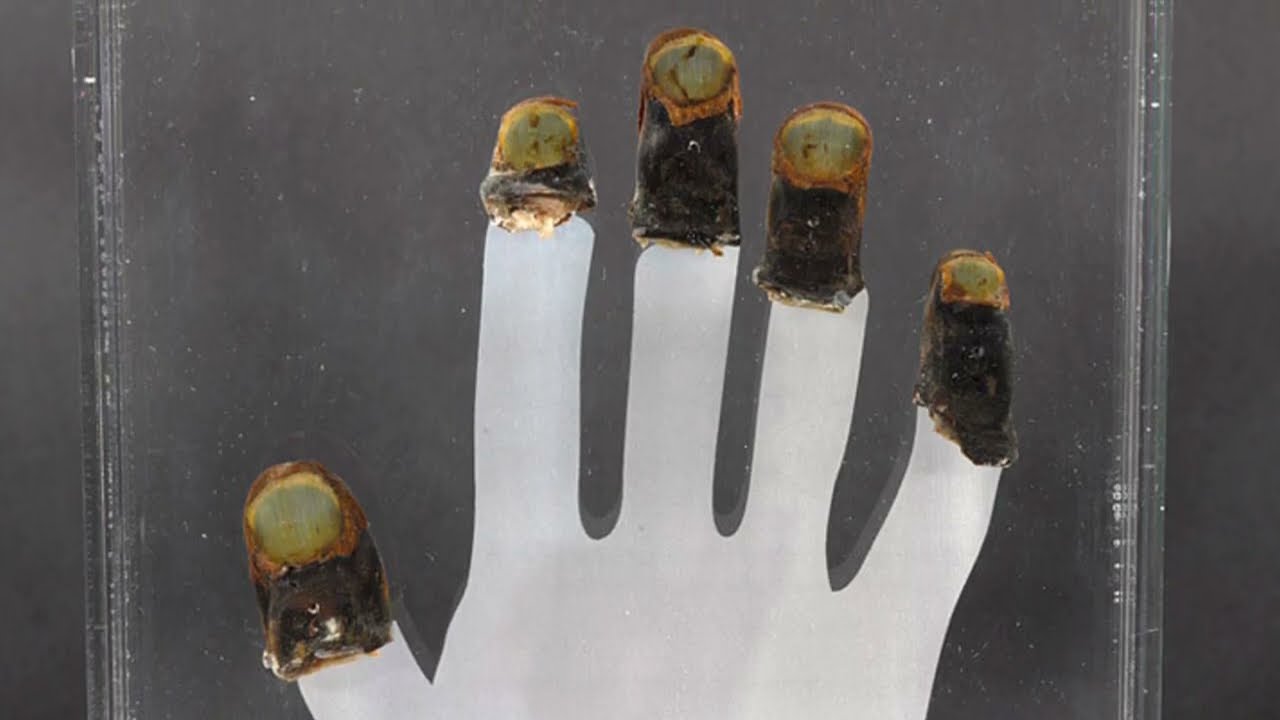
The skin goes red, then blue, then in the worst cases black as the tissue dies. Blisters and open sores follow, and in advanced cases the flesh starts rotting while the man is still alive. That is gangrene, dead tissue decomposing while it is still attached to you, and it has a smell.
Men in the trenches could smell it on each other. Once it got that far, there was nothing the doctors could really do. There was no cure, and there still is not one.
Treatment was rest, feet up, slow drying, and time, because warming the feet quickly made everything worse, which is Larrey’s campfire lesson all over again 100 years later. The cruelest part came with recovery because when the blood finally crawled back into those deadened nerves, the numbness flipped into extreme pain. Accounts from the casualty stations describe whole wards of trench foot cases where men screamed through the night as the feeling returned.
For the worst cases, the end of the line was the surgeon. Arthur Savage, a British veteran, remembered men sobbing, not from the pain, but because their trench foot had gone gangrenous and they knew they were about to lose a leg. The luckier ones got months in a hospital in England, and many were never fit for the front again.
The miserable thing is, for the men in the line that first winter, it was close to unavoidable. You held a flooded trench for days, there was nowhere to dry socks or boots, nowhere dry to even sit down. The uniform itself joined in against them.
Puttees, those long wool strips wound tightly around the leg from ankle to knee, worked like a soft tourniquet. When they got wet, the wool shrank and squeezed even tighter, strangling circulation in feet already starved of blood. Exhausted men stood dead still on sentry duty for hours, and standing still was exactly what the condition needed to do its work.
The army’s first serious answer was not medicine, it was discipline. Trench foot got officially declared preventable, so getting it became a failure, either yours or your officer’s. Units with high numbers were investigated and their commanders held answerable.
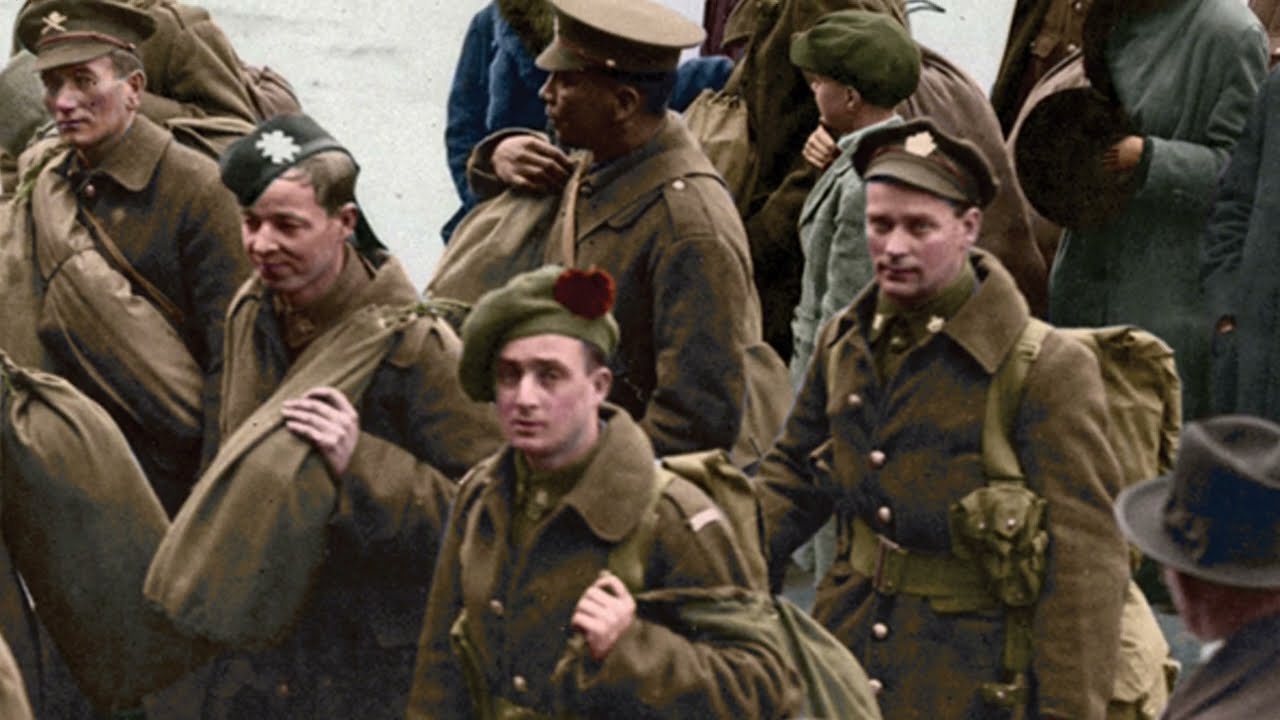 This stayed policy for years, because as late as June 1917, Fourth Army Standing Order Number 595 stated that losses from trench foot indicated faulty discipline. Some men were punished directly for their own rotting feet. One private got seven days punishment for having trench foot, which meant extra dangerous and dirty jobs, including work out in no man’s land, all while still standing knee deep in the exact mud and water that caused his condition in the first place.
His feet got worse with every round of punishment, and the punishments only stopped when the man was effectively crippled.
Part of the army suspicion came from the fact that a bad case meant evacuation to England, so to some officers, trench foot looked like a ticket home that a man might quietly let himself earn. But treating a disease as a crime achieved nothing except men hiding their rotting feet until they could not walk anymore. What actually worked came in alongside the punishments, a package that turned foot care into a military duty.
Feet inspected daily. Men paired up in a buddy system, each man made responsible for his partner’s feet, drying them and rubbing them with grease because the army figured out that a man will happily neglect his own feet, but he will not let his mate lose his. The grease was whale oil, with a single battalion in the line burning through around 10 gallons of it a day, so the trenches now smelled of fish.
Every man carried three pairs of socks and changed into dry ones at least twice a day, with fresh socks coming up to the front every night with the rations in waterproof bags. Boots got ordered a size large and laced loose. The puttees eventually got banned in the trenches altogether, and rubber thigh waders were issued for the wettest sectors.
They rebuilt the trenches themselves to get men out of the water with duckboards, pumps and drainage sumps pulling the water down, braziers and drying rooms behind the lines, and time in the worst flooded stretches capped at 24 to 36 hours. None of this cured anything. It just kept feet drier for more hours of the day, but that was enough.
By the winter of 1917 to 18, cases were down to a fraction of the first winter’s flood, even though the army in France was many times bigger. The commonly quoted British bill for the whole war is around 75,000 men hospitalized for trench foot and frostbite on the Western Front, the great majority from the first two winters.
By 1918, the problem was solved. The answer was written down in orders and manuals, and every army on Earth could read it. Keep that in mind for what comes next, because 25 years later, the US Army had to learn the whole thing again from zero.
May 1943, the island of Attu, out in the Aleutians off Alaska, where American troops landed to take the island back from the Japanese. The fight lasted under three weeks in fog, rain, winds reaching 120 miles per hour, and freezing wet tundra, and the troops went in wearing standard leather boots that soaked straight through. The Japanese killed 549 Americans and wounded 1,148.
The weather took out over 2,100, including around 1,200 severe cold injuries, most of it trench foot. The weather out-fought the enemy garrison, and it got bad enough that some men stripped clothing off dead Japanese soldiers because it was better than what they had been issued. One American captain summed up the whole disease in one line, saying the ones who suffered were the ones who did not keep moving, who stayed in their holes with wet feet.
The lesson was investigated on the spot, and then it went precisely nowhere, because that same autumn, when US troops in Italy started going down with trench foot in the mountain rains, and the Fifth Army logged more than 5,700 cases in six months, the medical office there still had no information about what happened on Attu. The reports written in Italy then traveled so slowly through the system that they reached the command in northern Europe about a year later, just in time to be useless.
This brings us to the biggest trench foot disaster of the 20th century. Autumn 1944, the American Army’s push toward Germany ran into the wettest and coldest European winter in 30 years, and they ran into it unprepared. This time the cause was a bet made at the top.
The supply lines from Normandy were overloaded, so General Omar Bradley chose to haul ammunition and fuel forward instead of winter clothing, gambling that the war would end before winter. He later called it a calculated risk. The German front held, the rain kept falling, and the bill landed on the rifleman.
The first trench foot cases were reported on November 9th, 1944, and by March the US Army in Europe had recorded roughly 71,000 cold injury casualties, divisions worth of men, about one in every 20 medical admissions. The gear existed, the shoe pack, a rubber bottomed boot with a leather top that actually worked, was ordered too late and in too few numbers. Of 2 million sleeping bags promised for the winter, 57,000 had arrived by mid-September.
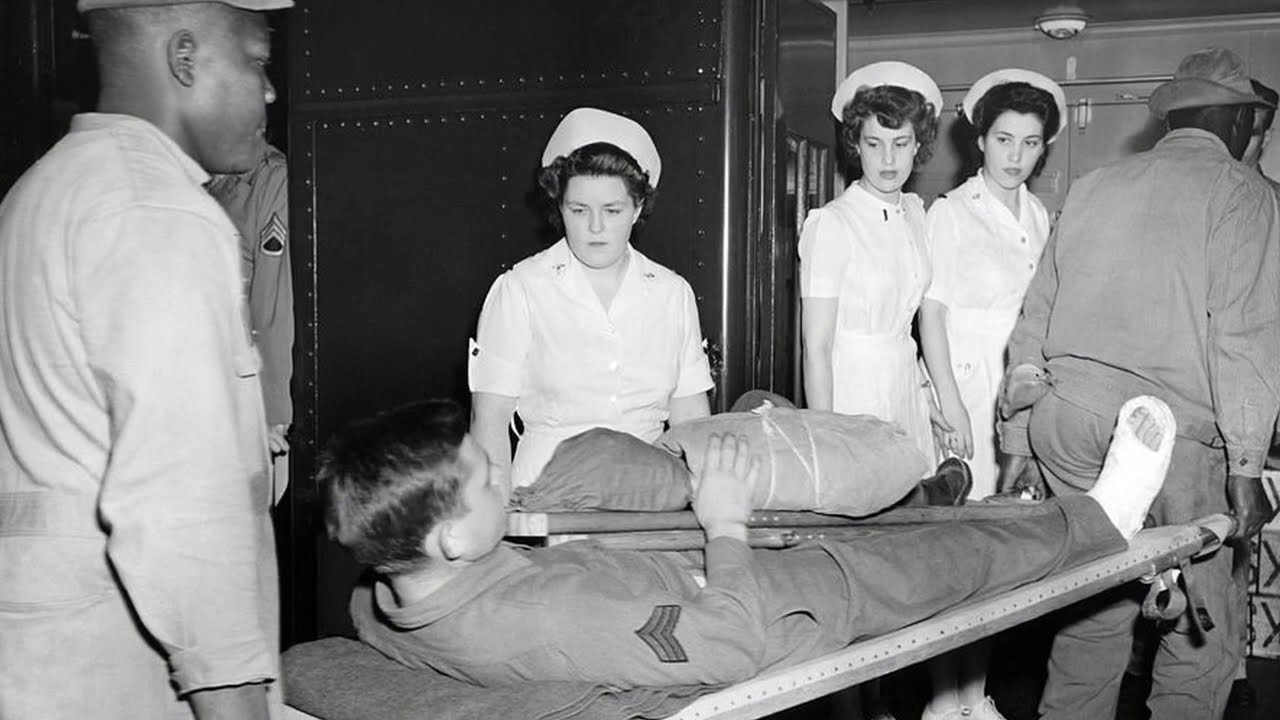 A survey in one hospital during the Battle of the Bulge found that 38 percent of the cold injury patients had never even been issued overshoes. Nine out of 10 victims were frontline riflemen, the one kind of soldier you cannot quickly replace. In Patton’s Third Army that November, for every 100 battle casualties evacuated, another 60 men went down with cold injuries.
In at least one regiment, trench foot losses passed battle losses.
What did they do? They dusted off the British playbook from 1915, pretty much line by line. On November 9th, the same day the first cases were reported, Patton issued a directive declaring that the most serious menace his army faced was not the enemy, but the weather.
Dry socks started going forward with the daily rations, exactly like in Flanders. Foot inspections came back, men got rotated out to dry off, and in January 1945, cold injury prevention was formally made a command responsibility, and cases fell again. But for the men already hit, the numbers were ugly.
The average trench foot casualty needed 83 days of recovery, and most who came back were only fit for limited duty, so their fighting war was over. Then came the insult on top of it. Most of them were denied the Purple Heart, the medal for wounds suffered in action, because trench foot was ruled a preventable condition rather than a wound.
Preventable by men who were ordered to hold a flooded line and not allowed to leave it, while the boots that would have prevented it sat in warehouses. The riflemen paid for that decision twice.
You might think that by the 1980s, with modern boots and modern gear, this story would be over. In 1982, the Falklands War took the British about 25 days to prove otherwise. The land campaign to retake the islands ran through the South Atlantic autumn with temperatures averaging around half a degree above zero on ground that was pretty much one continuous waterlogged peat bog.
The force lost most of its transport helicopters when the ship carrying them was sunk, so the Royal Marines and the Paras crossed the island on foot hauling loads of around 100 pounds, soaked from the landing onwards, sheltering from shell fire in half flooded holes dug into the peat. A study later surveyed the roughly 3,000 Royal Marines who landed, and 64 percent of those who answered reported cold injury symptoms in their feet. In the infantry units it was 76 percent, three men out of four.
Between them, those men wore 46 different types of boot, and not one of them made a difference. Months after the war, tests found damaged nerve function in over a third of the men examined and lingering cold sensitivity in most, including men who thought they were completely fine. By then the condition had its modern medical name, non-freezing cold injury, but the new name did not come with a cure.
What it came with decades later was lawsuits. A serious case leaves permanent nerve damage, feet that burn or stay numb for the rest of your life, a body that cannot handle cold anymore, and along with that, lost careers and depression. The British Ministry of Defence has been sued over these injuries by hundreds of its own soldiers in recent years, with individual payouts reported in the hundreds of thousands of pounds.
The claims fall heaviest on one group, because the MOD has acknowledged research indicating that soldiers of African and Caribbean descent are around 30 times more likely to suffer a non-freezing cold injury than white personnel. At least 450 Commonwealth soldiers were reported injured this way in a single decade, many of them medically discharged or restricted to serving in warm climates. The researchers say it plainly that the condition is still poorly understood and there is still no definitive test to even diagnose it.
Then the trenches themselves came back. After Russia invaded Ukraine in 2022, the front in the Donbas froze into static lines of trenches and dugouts. By the first winter of the war, journalists at the front were reporting trench foot among Ukrainian soldiers.
The descriptions could have been written in 1914. Constant rain and snow, roads turned to mud, men whose boots were never dry, one soldier saying his unit literally lived in a marsh. Volunteers ran warm clothes and dry socks up to the front line units.
More than 200 years after Larrey watched Napoleon’s soldiers rot around the campfires, there is still no cure for trench foot. There is only the same defense there ever was, dry feet and dry socks.