Poor James only went missing from his mother for a matter of seconds—and then he was gone. Police set up a temporary base in the shopping center, warning parents that other children could be vulnerable. Hundreds of officers combed Liverpool, but James had already been dragged and pulled two and a half miles from Bootle to Walton. Inch by inch, they searched the railway line where two-year-old James Bulger’s body was found.
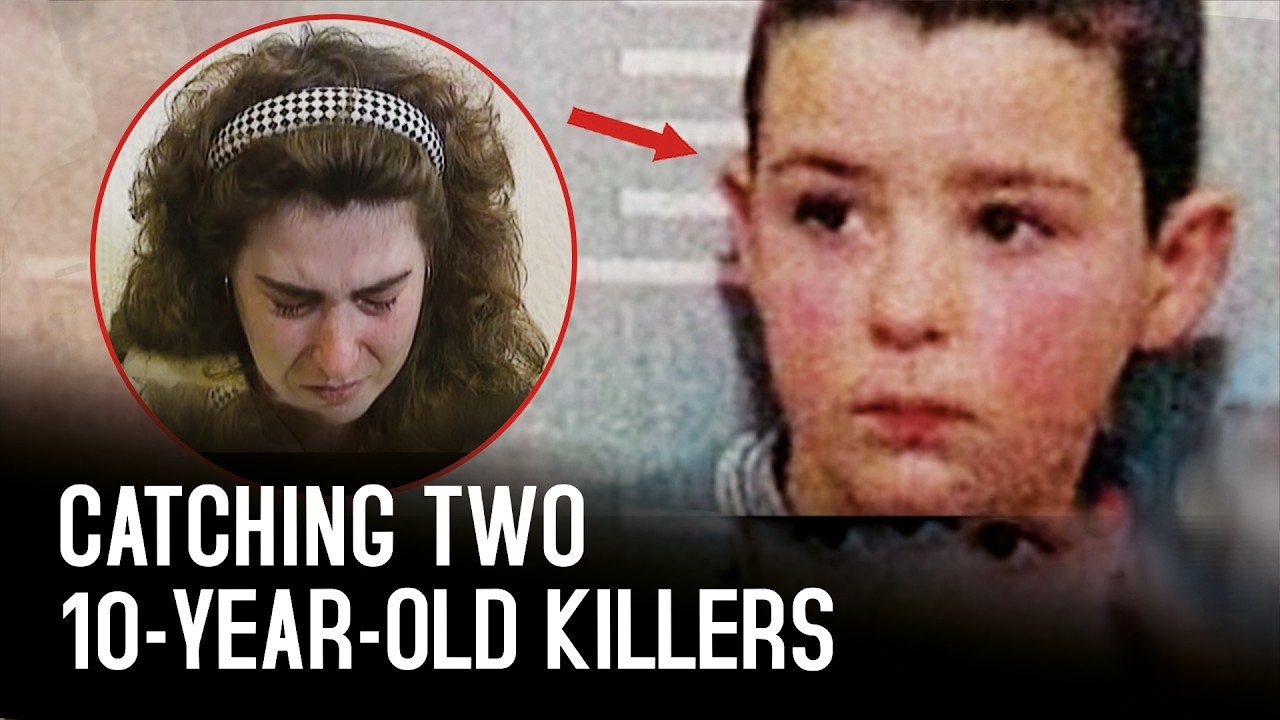
Two boys were seen with James. Both were local. One from Walton, the other from Norris Green. The coroner called it the most dreadful and shocking murder he had dealt with in 25 years.
Publicity was incessant. Public feeling was so high that the trial had to be moved from Liverpool. In two separate police vans, the youngest defendants to face murder charges this century arrived at Preston Crown Court. I remember arriving and being amazed by the amount of technology in the caravans outside for the news reports.
The press were there in the hundreds from all over the world. The scene was electric. Absolutely electric. The air in the room disappeared within about ten minutes.
The judge ordered the boys to be brought into court. Robert Thompson and Jon Venables. They were like circus animals coming in. A massive sigh came from the jury, a few shouts from people who knew the children.
It was noisy until the judge quieted them. They were well-dressed and clean, and I think that shocked everyone. They were expecting some scruffy little kids off the road. In my head, they were monsters.
I pictured them as much bigger than they were. But they were primary school kids. They were small. Surreal is the only way to put it.
The judge asked, “Which of you is Robert Thompson? ” Thompson raised his hand. “Which of you is Jon Venables? ” Venables raised his hand.
The prosecution opened: James Bulger was two years and eleven months old when he died. He was the only child of Ralph and Denise Bulger, and they lived in Kirkby. On Friday the 12th of February, these two defendants abducted James from his mother in a shopping precinct in Bootle. James was taken to the railway line, where he was subjected to a prolonged and violent attack.
Bricks, stones, and a piece of metal were thrown at him. He sustained many fractures to the skull. Death resulted from multiple blunt force injuries to the head. The prosecution argued they were equally complicit.
Two people in it together throughout. The defense was cutthroat. Each boy blamed the other. Literally cutting each other’s throat.
From our point of view, we were blaming Jon Venables. The defense was a cutthroat defense—one defendant blaming the other, and the other blaming back. The dock had to be raised eighteen inches because the boys were too short. But it had the reverse effect—it put them on show.
They were in the center of the room, and everyone could look at them and study them. I remember Venables a lot because he had a pretty little face. He looked like he was going to cry all the time. So afraid.
And then the other boy, in contrast, had this really harsh buzz cut, like he was going into prison or something. It made him look like a tough little boy, and he behaved like a tough little boy too. Bored. You felt uncomfortable watching them, but you couldn’t help but watch, trying to see inside their minds.
What were they thinking? Witnesses came from Liverpool to give their accounts of seeing the defendants in the Strand Shopping Centre on the day of James’s disappearance. They were emotional. A lot of them struggled to speak, were quite upset.
The prosecution needed each account to go toward the issue of participation—so the jury could decide what happened on the railway line. “Do you want to tell us what you actually saw happen? ”
“These two boys had the baby and swung him up high above their shoulders. The boy in the black suit let go, and the other whipped him up off his feet.
I shouted and I shouted. The baby was distressed. I shouted on the bus, ‘What the hell are those kids doing with that poor child? ‘”
The defense tried to work out which of the two defendants each witness was talking about, because each boy was blaming the other.
Was it one boy doing everything, with the other tagging along, playing no part, showing no interest? That would matter when the jury decided what happened at the crucial time. Denise Bulger did not come to court to give evidence in person. Her statement was read aloud.
It was long, very detailed. It started with everyday matters—going to exchange items in a shop. Four of them walked into the Strand via Woolworth. James and another child had a ride on a seesaw.
Then the mother lost sight of the child for a few moments, and the child was gone. Years later, the mother herself said she could not read the statement again: “I don’t think I’ll be able to read that. I’ve described James in it. It’s been thirty years since I’ve last seen this.
I just can’t do it. His brown blonde hair, which is straight, is ready for cutting at the moment. I don’t want to go back there because I know for a fact it’ll play on my mind. It’ll just destroy me.
It’s took me all this time to come to terms with it. ”
You could hear a pin drop in court. This was the mother who had lost her child, and the detail mattered to people. The abduction was captured on CCTV.
The scene on the railway line was witnessed by nobody. The key violence, the violence that killed James, happened there. The most difficult part for the defense was the pathologist’s evidence. It made everything more terrible and real.
I think I blotted out the memory of the injuries. But one has to hear it, one has to know it. The pathologist catalogued forty-two external injuries. The attack was ghastly and long, many blows with objects, mainly bricks.
The jury was distressed, upset. A fish plate was used. That’s what killed him. The judge held it in his hands so the jury could see its weight and size.
It looked very heavy, and obviously that was the point—so they understood what Jon Venables and Robert Thompson had done. There was blood on Jon’s shoes. It was almost unequivocal—a one in a thousand million chance that the blood was not James’s. The blood on Robert’s shoes was less convincing.
There wasn’t enough to do full DNA profiling. So it was desperate to find something else to supplement that evidence. The forensic scientist examined marks on James’s face. The marks had been produced by a process called capillary fragmentation.
When tissue is impacted, blood is pushed sideways, and the hemorrhages faithfully reproduce the shape of the implement. Robert Thompson’s black school shoes had laces running through D-rings instead of eyelets. The degree of impact was powerful enough to record not only the D-rings but also the laces, seen as chevrons. The evidence effectively established that Robert Thompson had kicked James Bulger in the face.
It was very difficult to refute. The defense tried to present it in an alternative way—that instead of the foot coming into contact with the face, the face had come into contact with the foot. “If the head, for example, fell on the shoe, that would be a light impact. ”
“The degree of impact brought to mind by your suggestion does not immediately strike accord with my thoughts on the matter.
”
They tried to build a picture that James was lying on the floor and Robert Thompson tripped over him. I cringed, really. It was such a desperate piece of defense. The marking was more consistent with a dynamic occurrence—the shoe striking the face, which in general parlance will be described as a kick.
It felt inevitable that they would be found guilty. The only uncertainty was whether it would be murder or manslaughter. The boys did not give evidence in their own defense. Instead, the jury heard their police interview tapes.
The prosecution was keen to show exactly the process by which the boys lied, fabricated, and eventually came around to some recognition of what they’d done. It was a very long process, many hours of tape. “He grabbed his hand and walked up the Strand. ”
“And he said that you took him by the hand and led him out of the Strand shops.
”
“He’s a liar. ”
“Calm down. Don’t get angry. ”
The police drip-fed new material to them, tripping them up, interview by interview, showing that what had been said previously was lies.
The boys sometimes raised their voices, then started crying. Crocodile tears. But at other points, it was the realization of what they’d done, and that they were going to be found out. “I’m going to end up getting all the blame, and I’ve got blood on me.
”
“We’re asking you, son, and we want you to tell us the truth. That’s all. ”
One of the most difficult moments came when Jon’s parents were taken into a room and told, “We think John wants to say more. You may be inhibiting him.
If you tell him that you love him, no matter what he’s done, that may help. ” They embraced him, and he began to cry. Then he said, “I did kill him. ”
And while still crying: “What about his mom?
Will you tell her I’m sorry? ”
It was a very powerful, frankly distressing moment. The jury understood the case better than reading it out ever could have done. The prosecution closed: “If ever a crime was committed jointly and together, then this was that crime.
Together they took James from his mother and from the Strand. Together they took him to the canal bank, and together they took him away across Stanley Road. Together they led him, or pulled him, carried him, dragged him, injured. Together they abused James.
Thompson delivered a persuasive kick whilst Venables chose to shake him. They were clearly both together as James sustained his terrible injuries. It was a joint enterprise. ”
The jury came back into court at 5:13.
The tension was unbelievable. You could cut it with a knife. I was told that if I was to show anything or say anything that could jeopardize the case, I just needed to sit on my hands and keep my mouth shut. That was very hard for me to do.
The clerk charged the jury: “Have you reached a verdict upon which you are all agreed? ”
“Yes. ”
“Do you find him guilty or not guilty? ”
“Guilty.
”
Robert Thompson sat there, not knowing which way to look. Jon Venables burst into tears. Reporters flocked out, fighting to get to the phones. It was worldwide.
I remember the officer who led the investigation jumping up and going to hug Denise Bulger. A shout came from one of the uncles: “How do you feel now, you little bastards? ”
I remember sitting further back from them, thinking that if I took a good few paces, I could have grabbed one of them. But I wasn’t there for that.
What was I going to achieve? It would have been me locked up. I felt tearful. I went downstairs and met Robert.
There were a lot of tears. There was also the sense that we had reached an end. The judge was severe, quite strong. He told them they would spend very many years in prison.
I thought, “We’ve got justice at last. ” When the sentencing came, people were shocked. “Very many years” turned out to be less than eight years. I was disgusted.
Absolutely disgusted. What they did was an adult crime, and they should serve as adults. There was no way James’s life was worth a lot more years than that. There were never going to be any winners in this case.
It’s not a case you ever get the opportunity to forget about. It’s a constant. I probably think about it most days on one level or another. I had nightmares for years.
I couldn’t get it out of my mind. About ten years ago, I had a case in an adjoining court at the same building. I wanted to see what it was like inside the courtroom where the trial had been. I opened the door, and it was empty.
I walked in, looked around, saw the same gargoyles, the same furnishings, the same painting. And I burst into tears. Horrified. Even now, I find it moving.
God knows what it must have been like for those kids.