A mother’s tearful courtroom testimony on Tuesday painted a harrowing portrait of a daughter she described as a devoted parent who descended into a paranoid and medication-induced fog before allegedly killing her three young children in their Massachusetts home. Robin Clancy, the mother of Lindsay Clancy, took the stand in Plymouth Superior Court, offering the first detailed public account of her daughter’s mental state in the months leading up to the January 2023 deaths of five-year-old Cora, three-year-old Dawson, and eight-month-old Callan.
Robin Clancy, her voice trembling, told jurors that her daughter was “a very loving mother” who had always wanted a large family and cherished her children. “She was dedicated to her children. She was a fun mother.
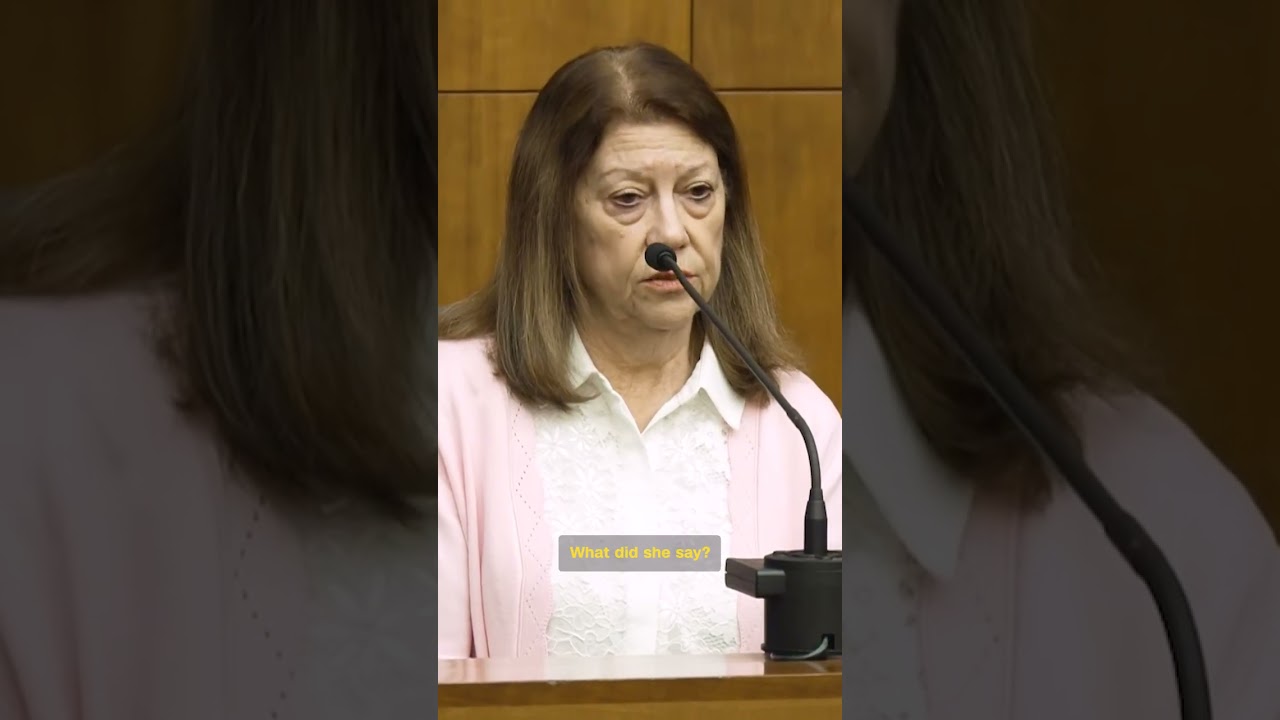 She was always doing things for her kids,” Robin Clancy testified, her words punctuated by sobs. “I felt it was the best thing that ever happened to her, and she would do anything for her children. She was just a loving mother.”
The testimony came as Lindsay Clancy, 33, faces three counts of first-degree murder for the deaths of her children. The case has drawn national attention, with prosecutors arguing she planned the killings, while her defense team contends she was suffering from severe postpartum psychosis and a medication-induced breakdown. The mother’s words provided a rare window into the accused’s deteriorating mental health.
Robin Clancy detailed alarming changes she observed in her daughter during the months before the tragedy. “Lindsay had lost a lot of weight. She had become, during this whole time, paranoid about different things that really she shouldn’t have, you know, really weren’t logical to become paranoid about,” the grandmother testified.
She added that Lindsay would repeatedly say, “This isn’t me, I’ve never been like this before.”
The mother described a pivotal conversation in December 2022, when Lindsay was in the kitchen with her husband, Patrick Clancy, and Robin. With visible distress, the witness recalled her daughter saying, “I just have to tell you guys something.” She then revealed that she had “thoughts of harming the children.”
The courtroom fell silent as Robin Clancy recounted the statement, her voice barely above a whisper.
Further testimony centered on Lindsay’s claims about the medications she was taking. “She said that she couldn’t remember anything. It was pretty much just destroying her mind and it wasn’t her,” Robin Clancy testified.
“She said, ‘This isn’t me. I just want to feel better and enjoy my kids again.’” The mother emphasized that her daughter had never exhibited such behavior before the postpartum period.
The prosecution has sought to undermine the defense’s narrative of psychosis, pointing to evidence that Lindsay Clancy allegedly researched methods of killing children and searched for information on how to survive a murder-suicide. But Robin Clancy’s testimony undercuts that argument, portraying a woman who was acutely aware of her own deteriorating mental state and sought help.
 “I loved my grandchildren with all my heart,” Robin Clancy told the jury, her voice breaking. “You never know what it’s like to love a grandchild until you become a grandmother. And it was the most beautiful thing.”
She described her granddaughter Cora as a bright child and her grandson Dawson as a joyful boy, and baby Callan as “the sweetest thing.”
The defense team is expected to call additional medical experts to testify about the impact of postpartum psychosis, which can cause hallucinations, delusions, and suicidal or homicidal thoughts. Lindsay Clancy was reportedly prescribed multiple medications, including antidepressants and antipsychotics, in the months leading up to the incident.
On the day of the killings, January 24, 2023, police responded to the Clancy home in Duxbury after Patrick Clancy arrived to find his children unresponsive. Lindsay Clancy was found with self-inflicted injuries and later survived after being hospitalized. She has been held without bail since her arrest.
 Robin Clancy’s testimony also touched on the couple’s relationship, noting that Patrick Clancy was supportive even as his wife struggled. “He was always there for her,” she said. The mother expressed sorrow that her daughter’s mental health crisis was not caught in time, despite family and medical interventions.
The trial, which is expected to last several weeks, continues to draw intense scrutiny. Legal experts say the testimony from the mother could be a double-edged sword: it humanizes the defendant while also providing evidence of her awareness of dangerous thoughts, potentially complicating the insanity defense.
As Robin Clancy left the stand, she wiped her eyes and avoided looking at her daughter. Lindsay Clancy, seated at the defense table, appeared to be crying silently. The courtroom, packed with family members and reporters, remained still for a long moment after the mother’s testimony concluded.
The case has reignited debates about mental health care for new mothers and the availability of postpartum support services. Advocates have called for better screening and treatment protocols to prevent such tragedies. In Massachusetts, lawmakers have proposed legislation to expand access to perinatal mental health care, but the bill remains pending.
The prosecution is expected to continue its case with testimony from medical examiners and law enforcement officials. The defense will likely argue that Lindsay Clancy was not criminally responsible due to her mental state. The jury will have to decide whether she acted with malice or was a victim of her own broken mind.
For Robin Clancy, the tragedy is a lifelong wound. “She was a loving mother,” she said again, as if trying to hold onto a memory that now feels impossibly distant. The trial is scheduled to resume Wednesday morning.