The hunt for Aileen Wuornos, the woman who would become known as America’s first female serial killer, reached its climax in a gritty biker bar in Port Orange, Florida, after a year-long investigation that stretched from stolen cars to blood-soaked crime scenes. Undercover officers posing as bikers named Bucket and Drums had finally cornered their prey—but the final 24 hours before her capture were a chaotic dance of near-misses, drunken confessions, and a surveillance operation teetering on the brink of collapse.

For months, investigators had been chasing a ghost. The clues began piling up on July 4, 1990, when a gray Pontiac Sunbird veered off a highway near Orange Springs. Ronda Bailey watched from her porch as two women climbed from the wreckage.
One, a blonde with a bleeding arm, begged her not to call the police, claiming her father lived nearby. Despite a smashed windshield, they drove the car a short distance, then abandoned it, vanishing into the woods. Responding deputies found blood stains, a bloody palm print, and missing license plates inside the vehicle.
A VIN check revealed the car belonged to Peter Siems, a man reported missing the month before.
That was no isolated incident. Across Florida, witnesses had seen the same two women driving stolen cars and pawning belongings of other missing men. Investigators quickly identified one of them as Tyria Moore, but the other woman was elusive.
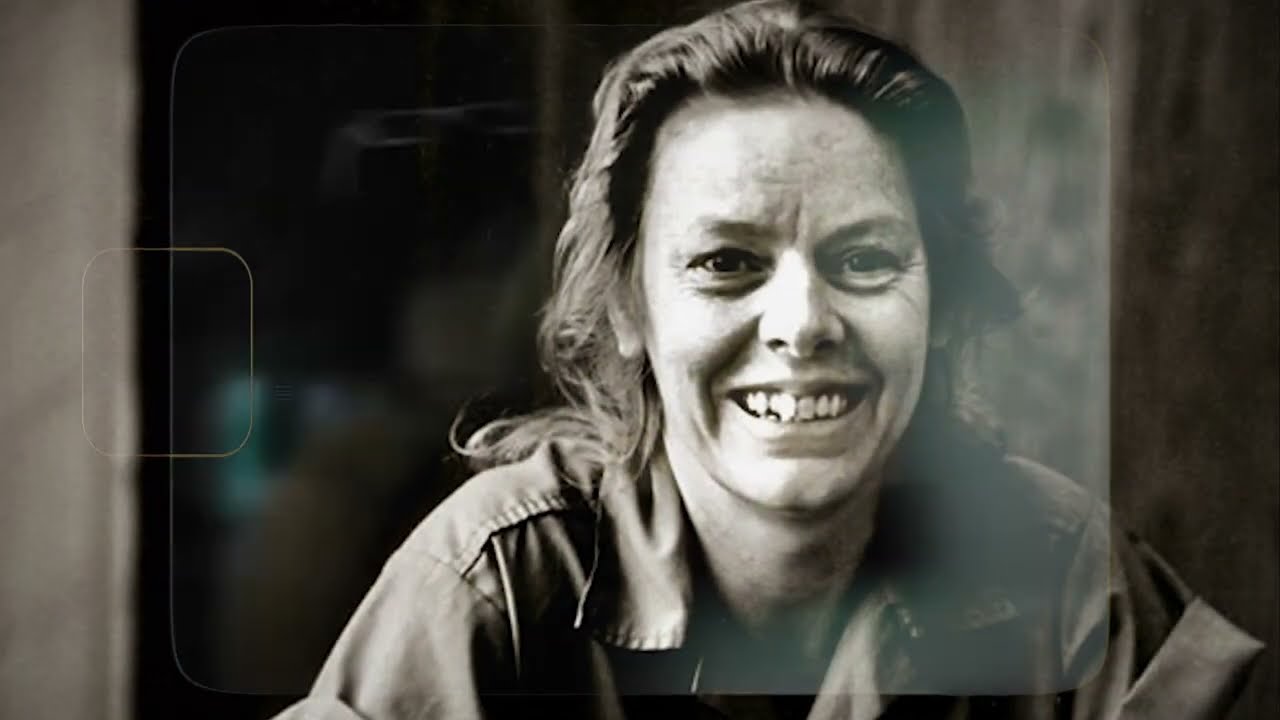
She used a trail of aliases: Cammy Marsh Green, Susan Blov, Lorie Gordon, and others. The breakthrough came when deputies matched fingerprints from pawn receipts to the bloody prints in the abandoned car. Those prints belonged to someone already in the system: Aileen Carol Wuornos.
The hunt for the so-called “damsel of death” was on.
On January 8, 1991, undercover officers Mike Joiner and Dick Martin, posing as bikers named Bucket and Drums, finally caught a break. For weeks, investigators had been chasing leads pointing to the Port Orange area, where pawn shop records and witness sightings placed Wuornos. The pressure was mounting, and time was running out.
But that night, they spotted her inside the Port Orange Pub. Wuornos stood alone by the jukebox, sipping her beer. Bucket and Drums watched from their parked Jeep.
They knew her face—the scars on her forehead matched witness descriptions perfectly.
Bucket entered the bar first, blending into the dim, smoky atmosphere. He approached Wuornos casually, fed quarters into the jukebox, and struck up a conversation. Then he invited her to dance.
She accepted. As they swayed to the music, Drums sat quietly at the bar, watching everything unfold. They had her attention.
Now they just had to keep her close.
As Wuornos danced with Bucket inside the pub, Drums stepped outside and radioed the command center at Pirates Cove. Lead investigator Jerry Thompson got the update: they had her. The location was confirmed, and the operation was on track.
But just ten minutes later, the operation took a dangerous turn. Two Port Orange officers, completely unaware of the undercover sting, pulled Wuornos out of the bar. They began questioning her about a stolen vehicle.
This wasn’t supposed to happen yet.
Drums’ voice crackled over the line to Thompson: “Port Orange cops just pulled her outside. What the heck is going on?” The secrecy of the operation was backfiring.
Even local law enforcement had been kept in the dark, making such incidents inevitable. Acting quickly, Thompson called a supervisor, who intervened and ordered the officers to stand down. By then, Wuornos’s identity under the alias Cammy Green had already been confirmed in the system.
 But with no choice, the officers complied, letting her go on a flimsy excuse.
Wuornos re-entered the bar, where Bucket waited, giving her a questioning glance. “What the hell was all that about?” She leaned back, shaking her head.
“They thought I was that serial killer, you know, the one shooting all those guys. Then they started hassling me because I don’t have a place to stay in cops.” Bucket played along, waving her over and offering to buy her a beer, shaking his head in disbelief.
She introduced herself as Lee Bovich but admitted to giving the cops a 𝒻𝒶𝓀𝑒 name: Cammy Marsh Green. It was obvious to Joiner that she’d been drinking long before he and Drums arrived.
As the beers kept coming, Wuornos grew louder and far more talkative. “Look at this,” she said, shoving up her sleeve to reveal a scar. “Got that in a wreck.”
Before anyone could react, she yanked up the front of her blouse, exposing her stomach, casually mentioning how she’d been shot with a . 22. She finished her beer and suddenly stood up, grabbing her suitcase.
“I got to get going, just down the way,” she said, brushing off Bucket’s offer for a ride. She gave a brief nod and walked out the door.
Bucket and Drums said nothing, silently watching her vanish into the night. Wuornos walked south along Ridgewood Avenue. Behind her, a beige late-model car crept forward, its headlights off, matching her pace.
At the surveillance command, frustration boiled over. Two agents had taken it upon themselves to tail her in plain sight, breaking every rule of surveillance. If Wuornos hadn’t been drunk, she would have noticed immediately.
An angry call went out, and the agents were ordered off the street and pulled from the operation within minutes. It was the second close call of the night, and the team’s tension was stretched to its breaking point.
Meanwhile, at exactly 10:10 p. m. , Wuornos pushed through the doors of The Last Resort, unaware of the chaos around her.
The Last Resort, a gritty biker bar on the west side of Ridgewood, stood as a fortress of Harley-Davidson pride. Its parking lot overflowed with pickups and motorcycles, while inside, low ceilings, buzzing pool tables, and walls plastered with memorabilia set the scene. The hard-edged regulars paid little attention as two undercover officers slipped in quietly at 10:30 p.
m. Bucket and Drums, still posing as bikers, waved to Wuornos and handed her a beer, keeping their movements casual.
Across town, the lead investigator weighed the team’s next steps in a tense phone call with a supervisor. Allowing the undercover officers to drive Wuornos home was immediately ruled out—she was too dangerous, and sending in unwired officers was a risk no one was willing to take. But what if she left with someone else?
Could they afford to let her out of sight? The operation was balanced on a knife’s edge. Without Tyria Moore or the murder weapon, it still wasn’t time to move in.
 Outside, five surveillance units covered every exit. A senior officer parked nearby with a clear view knew the place well: fenced in with only two exits at the front and minimal cover in the back. For now, Wuornos was surrounded, but the situation felt fragile.
One wrong move and the entire operation could collapse.
January 9 had already arrived. The Last Resort had closed at 2 a. m.
, and Bucket and Drums had left. Yet at 3 a. m.
, there was still no sign of Wuornos leaving. She had likely bedded down in one of the old trailers behind the bar. At dawn, Bucket and Drums would be wired for another encounter.
Engaging Wuornos without letting her slip away to an unknown destination remained a priority. With Tyria Moore still missing and too many unknowns about Wuornos’s methods, the focus was on gathering information.
Nearby, a state-of-the-art surveillance van equipped with the latest cameras, recorders, and wireless receivers stood ready near the tattoo parlor north of the bar. Two units held their positions at the front and back of The Last Resort, while the rest of the team regrouped, preparing for what daylight would bring.
By late morning, the surveillance team caught their first sign of movement. Wuornos was finally up, moving around the bar. It was her first activity all day, and for the investigators watching closely, the tension began to rise.
By midafternoon, the surveillance operation at The Last Resort was in full swing. From the cramped surveillance van nearby, backup officers monitored the scene, listening to bar chatter, jukebox music, and clinking glasses picked up by the tiny microphones hidden on Bucket and Drums.
Inside, Wuornos swayed drunkenly to the sound of Randy Travis echoing through the bar. Her voice rose as she sang along with the jukebox: “I’m Digging Up Bones, Digging Up Bones, exhuming things better left alone.” The bartender, a burly man nicknamed Cannonball, sneered at her erratic performance, muttering something dismissive under his breath.
Wuornos snapped back with slurred defiance, brushing back her hair and jabbing at the air with her chin.
Bucket leaned in, cutting through her rant. “Take it easy,” he said casually, dangling a motel key in front of her. Wuornos paused, eyeing the key, weighing its promise.
Bucket and Drums, supposed dealers she’d met the day before, seemed to offer her something—maybe a chance at business, maybe just a place to rest after a night spent on a beat-up car seat. Any opportunity seemed worth chasing.
Drums stood up, signaling to Bucket that he’d be back. “Make sure Lee’s set,” he said casually. Wuornos leaned at the bar, her eyes glinting with a mix of weariness and expectation as the room buzzed around her.
Drums stepped out of The Last Resort. He moved quickly toward the Jeep parked at the edge of the lot, speaking into his mic: “The pig roast kicks off after dark. More bikers are showing up.
 It’s going to get packed. We need to move soon.”
The chaos they’d anticipated was building fast. A yard surrounded by fences, nine old Hondas dangling from an oak tree like strange ornaments, a bonfire waiting to blaze, booze, narcotics, and a crowd of rowdy bikers—the result would be a volatile, uncontrollable scene. From the command center came a firm warning: “If she gets on a bike and rides out, we’ll lose her.
This ends now. Take her.”
Bucket suggested she ride with them, clean up, and then come back for the party. Wuornos agreed, finishing her beer and grabbing her worn jacket. The trio walked toward the parking lot across the street.
The surveillance team stood ready. A voice crackled over the radio: “Move in.”
A sleek 280 ZX screeched into the lot, cutting off their path. Doors flew open. Two plainclothes officers stepped out, badges flashing in the dim light.
From the other side, a marked sheriff’s car pulled in, backup swarming like a closing net. Within seconds, five officers surrounded them.
One officer stepped forward, his voice firm: “Under arrest for what? For a warrant for what? Warrant?”
Wuornos froze but kept her composure. Her expression was unreadable as her mind raced. She showed no panic, stammering a few words, claiming the car and gun weren’t hers, feigning confusion to buy time and keep control of the situation.
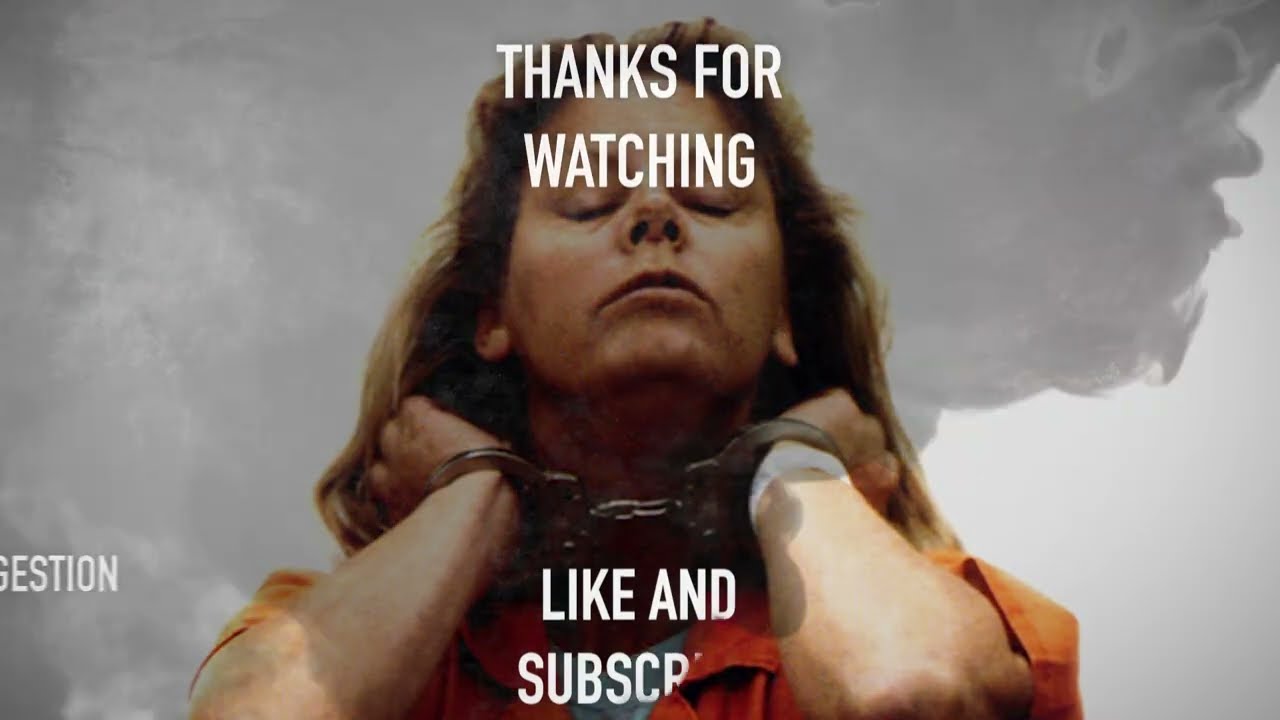
The cuffs locked around her wrists with a cold finality.
From the bar, Cannonball yelled, asking if they wanted her things. Wuornos didn’t flinch. She barely blinked as the scene played out around her.
In her mind, she stayed untouchable. “They’ve got nothing. No prints, no witnesses.
Lock me up. You’ll never figure it out.” But they had.
The hunt for Aileen Wuornos had ended not with a bang, but with the quiet snap of handcuffs in a biker bar parking lot, ending a 24-hour cat-and-mouse game that would forever change the face of American crime.