The man who terrorized America for years with a campaign of racial hatred finally met his end in a sterile Missouri execution chamber, offering no apology, no final words, and no visible emotion as the lethal drugs began to flow. Joseph Paul Franklin, 63, was pronounced dead at 6:17 a. m.

on November 20, 2013, inside Potosi Correctional Center, ending a 33-year wait on death row for a spree of racially motivated murders that left at least 22 people dead across the country.
Franklin’s last hours were marked by silence and isolation. Placed on death watch the day before, he was monitored around the clock by two officers, with lights kept on and cameras recording every move. He refused a special last meal, instead receiving the standard prison tray of meatloaf, mashed potatoes, and vegetables, which he barely touched.
No family members called, no visitors arrived, and no letters came. He did not ask for a priest, a lawyer, or a final phone call. The man who had once bragged about his killings simply sat in his cell, staring into the emptiness.
When asked for his final words just before the execution began, Franklin said nothing. Witnesses reported that he blinked several times as the pentobarbital entered his veins, then took a deep breath. His chest rose and fell slower and slower until his eyes closed and his lips parted slightly.
At 6:17 a. m. , he was gone.
The warden drew the curtains, and the room emptied. There were no riots, no vigils, no final message from behind bars.
 Franklin’s path to that cold chamber began decades earlier. Born James Clayton Vaughn Jr. in Mobile, Alabama, in 1950, he grew up in a broken home with an alcoholic father and an unstable mother.
By his early twenties, he had embraced white supremacist ideology, eventually changing his name to Joseph Paul Franklin to honor Nazi propagandist Paul Joseph Goebbels and founding father Benjamin Franklin. He began a cross-country killing spree in 1977, targeting interracial couples, Jewish synagogues, and black individuals.
His first known attack was a firebombing of Beth Shalom Synagogue in Chattanooga, Tennessee, in July 1977, which caused minimal damage. A month later, he murdered an interracial couple in Madison, Wisconsin, shooting them in a mall parking lot. Over the next three years, he struck in St.
Louis, Cincinnati, Fort Wayne, Johnstown, and Falls Church, among other cities. He killed a black Taco Bell manager in Doraville, Georgia, and two young black boys in Cincinnati, mistaking them for part of an interracial group. He wounded civil rights leader Vernon Jordan in Fort Wayne, though he was acquitted of that charge at trial.
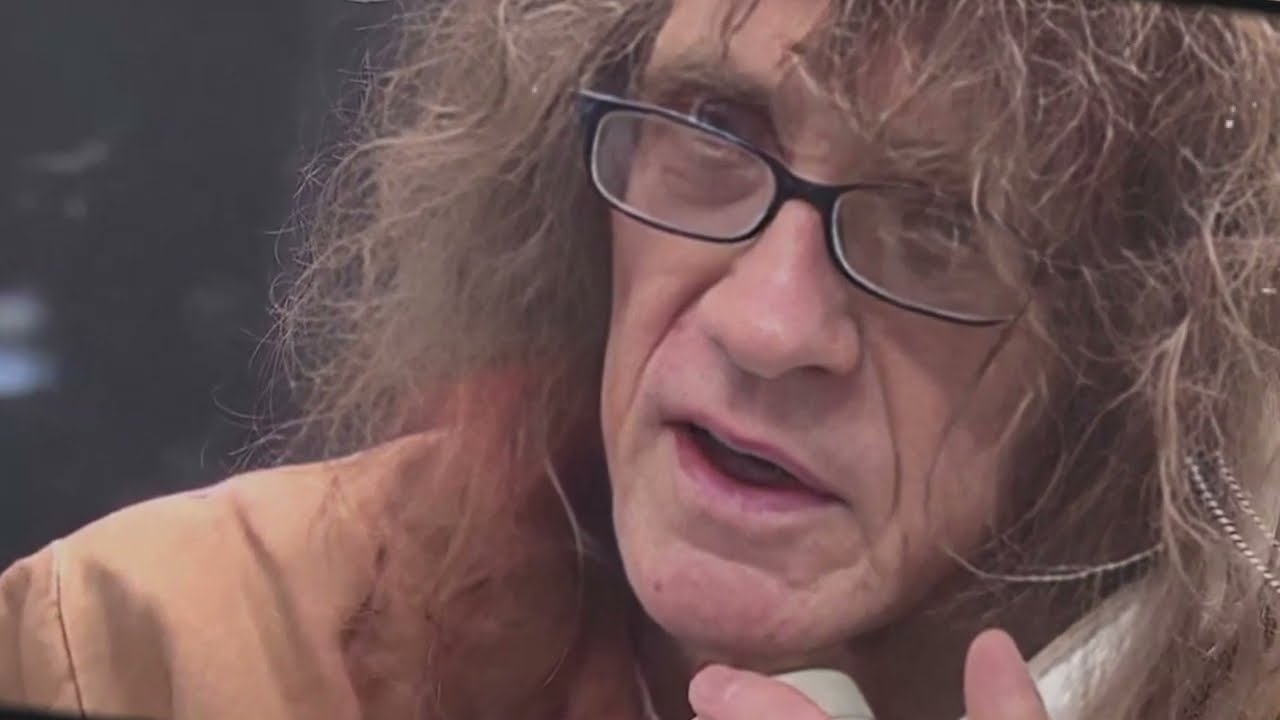 Franklin was finally arrested in 1980 after a botched pawn shop robbery in Lakeland, Florida. Fingerprints and ballistics linked him to multiple murders. He confessed proudly, describing his crimes in chilling detail without emotion.
In 1997, Missouri convicted him for the murder of Gerald Gordon, a Jewish man gunned down outside a St. Louis synagogue. The sentence was death by lethal injection.
For years, Franklin fought the execution with appeals, lawsuits, and claims that lethal injection was unconstitutional. He told journalists he had found religion and no longer believed in white supremacy, but the families of his victims saw no genuine remorse. In a jailhouse interview, when asked how many people he had killed, he replied, “I’d rather not mention it,” then acknowledged approximately 22.
He said he wished he could go back and change things but could not, adding, “Being locked up in here on death row with an execution date a week away, I can’t really do a whole lot for them.”
 On the morning of the execution, a federal judge briefly issued a temporary stay, questioning the source of Missouri’s pentobarbital and whether it could cause unnecessary suffering. The 8th U. S.
Circuit Court of Appeals overturned the stay within hours, clearing the way for the execution to proceed. Franklin showed no reaction to the legal twist. He simply waited.
Missouri Governor Jay Nixon released a statement after the execution: “The cowardly and calculated shootings committed by Joseph Paul Franklin were fueled by racial and religious hate. Today, justice has been served.” But for the families of his victims, the pain did not end with his final breath.
Some expressed relief; others said nothing, knowing that no sentence could bring back what he took.
Franklin’s death marked the end of a shadow that had haunted America for decades. He was one of the most prolific domestic terrorists in U. S.
history, a man who believed he was carrying out a twisted mission of racial purity. In the end, he died alone, broken, and empty, without a single word of farewell. The execution chamber fell silent, and the country moved on, but the scars of his hatred remain.