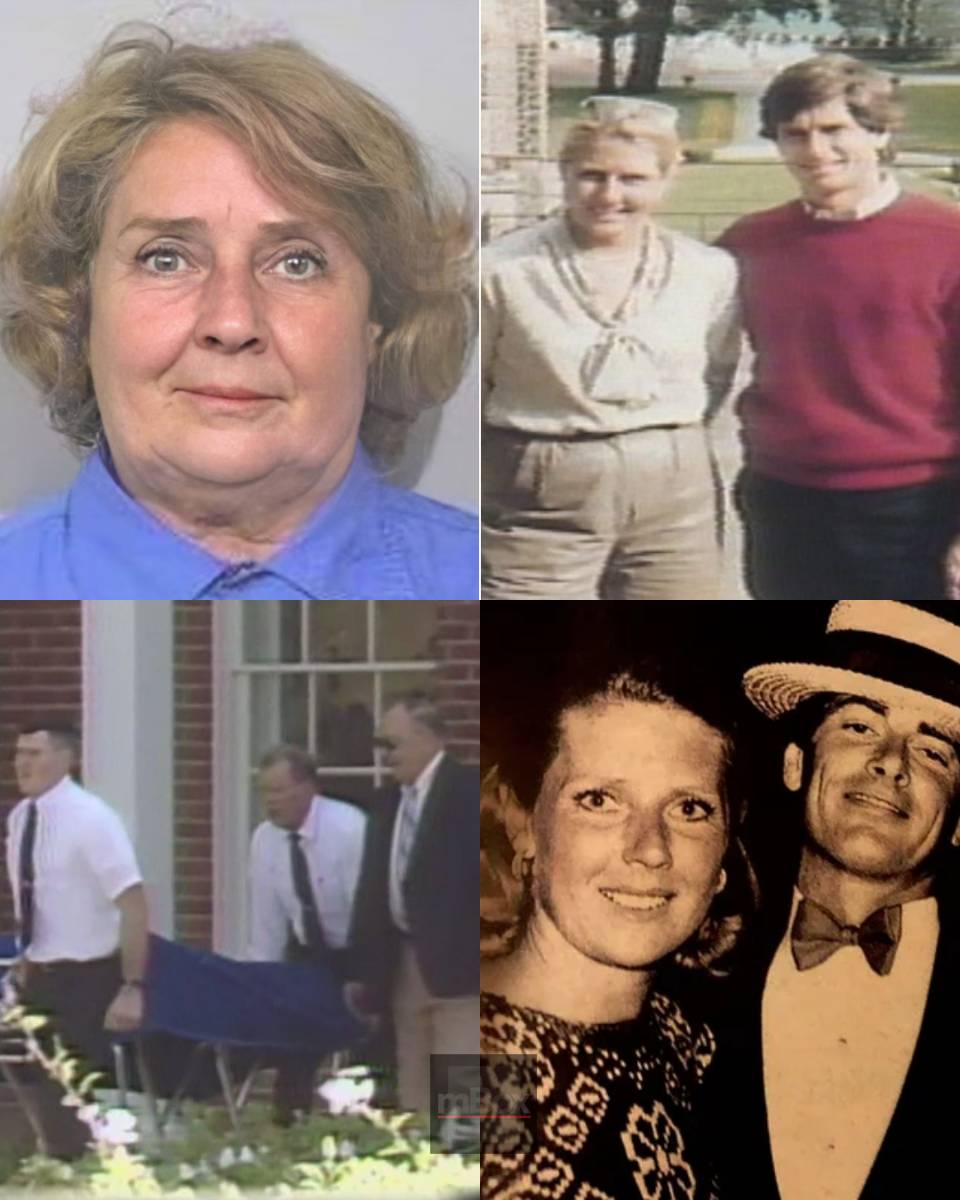
FORT LEAVENWORTH, Kansas — After more than four decades of legal battles, two death sentences, one acquittal, and a DNA match so precise it defies statistical language, U. S. Army Master Sgt.
 Timothy B. Hennis is now facing execution for the 1985 murders of Kathryn Eastburn and her two young daughters, Kara and Erin. The Trump administration’s Department of Justice has moved to clear the legal pathway for resuming federal military executions, and Hennis, 67, is among the first in line.
Hennis has been on military death row at the United States Disciplinary Barracks at Fort Leavenworth since 2010, when a military panel convicted him for the second time in the brutal stabbing deaths inside the Eastburn home at 367 Summerhill Road in Fayetteville, North Carolina. The case has become a legal and forensic labyrinth, with no clean answers and a letter from a self-confessed killer that was never investigated.
“I did not 𝓀𝒾𝓁𝓁 these people,” Hennis told investigators in 1985, shortly after walking voluntarily into the Cumberland County Sheriff’s Office.
“I have a daughter of my own. I could not hurt any children at all.” That statement, recorded in the early hours of the investigation, now stands in stark contrast to the scientific evidence that prosecutors say leaves no doubt.
The Eastburn murders shook the military community at Fort Bragg, echoing the 1970 MacDonald family killings just 15 years earlier. On May 9, 1985, while Captain Gary Eastburn was away on a training course, someone entered the home and stabbed Kathryn, 32, and her daughters Kara, 5, and Erin, 3, a total of 35 times. The youngest daughter, Jana, then 22 months old, was found alive in her crib, within hours of death from dehydration.
Hennis, a parachute rigger stationed less than a mile away, had visited the home two days earlier to adopt the family dog, an English setter named Dixie. Prosecutors argued that visit was reconnaissance. Hennis insisted it was routine.
He was arrested on May 15, 1985, after a neighbor identified him in a photo lineup that critics say was tainted by a prior in-person viewing.
The first trial in 1986 ended in a guilty verdict and a death sentence. But on the same day, a letter arrived at the sheriff’s office and at the prison: “I’m passing through Fayetteville on my way to New Jersey.
 I murdered the Eastburns. I did the crime. Hennis is doing the time.
Thanks again, Mr. X. No fingerprints.
No return address.” The letter was never forensically analyzed. The sender has never been identified.
In 1988, the North Carolina Supreme Court overturned the conviction, ruling that prosecutors had shown the jury 90 minutes of gruesome crime scene photos, making a fair verdict impossible. At the retrial in 1989, defense attorney Gerald Beaver dismantled the state’s case. He proved the key eyewitness, Patrick Cone, had seen a different man—a neighbor named John Raupach who matched the composite sketch and walked the street at night.
The jury acquitted Hennis on all counts.
Hennis re-enlisted, served in Somalia, and retired as a master sergeant in 2004. He moved to Lakewood, Washington, and appeared to have left the nightmare behind.
But in 2005, a detective attending a training seminar learned that a biological sample from Kathryn Eastburn’s autopsy had been preserved. DNA testing, unavailable in 1985, was now routine.
The result came back in June 2006: the DNA profile was 1.
2 quadrillion times more likely to belong to Hennis than to any other white male. That is not a probability; it is a scientific certainty at the outer limit of statistical language. The Army recalled Hennis to active duty under Article 3 of the Uniform Code of Military Justice, and in 2010, a military court-martial convicted him again.
 He was sentenced to death for the second time.
But the case is far from settled. Defense attorney Frank Spinner argued at the court-martial that the DNA match only proved contact, not murder.
He pointed to a critical piece of evidence that has never been explained: male DNA was recovered from beneath the fingernails of all three victims. It matches no one in any database. No known individual has ever been linked to it.
The unidentified DNA places someone else at the scene.
“All the evidence points squarely at the accused,” Captain Matthew Scott told the military panel in his closing argument. The panel deliberated for less than three hours before returning a unanimous guilty verdict.
But the questions remain. The letter from Mr. X was never traced.
The unidentified DNA was never submitted to the national database. And Hennis’s daughter, Christina Maury, testified that her father was her hero.
Every appeal has been denied.
The Army Court of Criminal Appeals upheld the conviction. The United States Court of Appeals for the Armed Forces confirmed the ruling in February 2020. The Supreme Court declined to hear the case in January 2021.
Hennis has exhausted every legal avenue. He is one of four men on military death row at Fort Leavenworth.
 The United States military has not carried out an execution since 1961.
But that may change. The Trump administration’s Department of Justice has moved to clear the legal pathway for resuming federal executions, including military ones. Yale Law School military justice lecturer Eugene Fidell said, “If I were on death row, I would consider this a very bad sign.”
Scott Wisnant, the journalist who has covered the case for four decades, continues to call for testing of the unidentified DNA. It has not happened. Jana Eastburn, now in her early 40s, has never spoken publicly about the night that took her mother and two sisters.
Gary Eastburn, who relocated to England with Jana in 1988 and later settled in Washington state, said upon hearing the DNA result, “I started crying. Just hit with this wave of emotion. I get one more shot to see this man get justice.”
But justice, in this case, has never been clean. Timothy Hennis is the only person in United States history tried for his life three times, after both guilty and not guilty verdicts. The DNA placed him at the scene beyond any statistical doubt.
Unidentified DNA beneath all three victims’ fingernails placed someone else there too. The letter signed by Mr. X arrived on the day of the first death sentence and was never traced.
As the execution date approaches, the question remains: Is a DNA match alone enough to sentence a man to death twice? The legal system has answered yes. But the evidence, the investigations, and the unresolved details leave a case that will not sit comfortably with anyone.
The next move belongs to the Department of Justice—and to history.