The clock on the wall in Huntsville Unit’s holding cell ticked past 6 p. m. on February 3, 1998, and Karla Faye Tucker, freshly showered and dressed in white prison clothing, her hair still damp, walked without hesitation into the execution chamber.
 She climbed onto the gurney without assistance, her arms strapped to boards, catheters inserted into her veins. In the witness room sat her husband, her sister, a close friend, and Ronald Carlson, the brother of the woman she had killed with a pickaxe 15 years earlier. In a separate room, Deborah Thornton’s husband and children watched.
Outside, 1,200 people and 200 reporters waited. Tucker’s final words were a plea for forgiveness and a declaration of faith: “I am going to be face-to-face with Jesus now. I love all of you very much.
I will see you all when you get there. I will wait for you.” At 6:45 p.
m. Central Standard Time, she was pronounced dead. She was 38 years old, the first woman executed in Texas in 134 years, and the first in the United States since 1984.
The final 24 hours of Karla Faye Tucker’s life began on Monday, February 2, 1998, when the Texas Board of Pardons and Paroles voted 16 to 0 against clemency, with two abstentions. The decision was consistent with the board’s record: it had denied all 76 clemency requests from condemned inmates since 1993. Under Texas law, Governor George W.
Bush could not grant clemency without a board recommendation; his only remaining power was a 30-day reprieve. That same day, Tucker was transported 160 miles from the Mountain View Unit in Gatesville to the Huntsville Unit, the site of the execution chamber. She knew exactly where the journey would end.
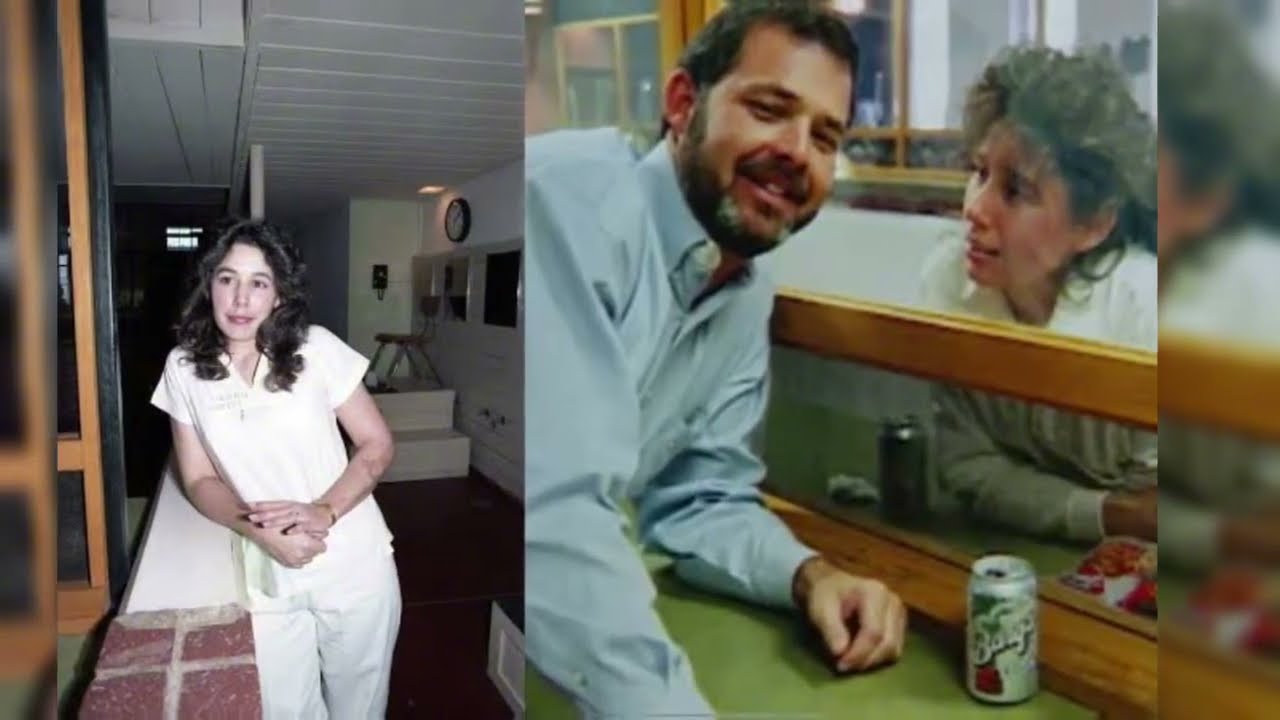
Tucker had been fasting for days as spiritual preparation. On the morning of February 3, she initially skipped breakfast, eating only after her husband, Dana Brown, gently urged her to take a few crackers and something to drink during their final visit. That visit, with her husband, her father, and her sister, stretched across roughly four emotional hours and ended around noon.
Prison officials described her as remaining largely upbeat throughout, even as the reality of what was coming pressed in closer. A prison spokesman later called the farewell heart-wrenching, noting that Tucker held onto a visible sense of peace that unsettled and moved the people around her in equal measure.
In the early afternoon, Tucker was moved from her holding area to a cell closer to the death chamber under heightened security protocol reserved for execution day.
There, she was offered a final meal. She chose simply a banana, a peach, and a tossed salad with ranch dressing. After days of fasting, her appetite for anything more elaborate had disappeared.
What she ate was less about the meal itself and more about the quiet ritual of it. As the afternoon wore into evening, witnesses and staff who interacted with her consistently described the same thing: a woman who was calm, composed, and resolute. She was offered a sedative before the procedure and turned it down, choosing to face her final moments with a clear mind.
While Tucker waited, her legal team made one last push. Her attorneys argued before the courts that the very process the Texas Parole Board had used to deny her clemency was unconstitutional. The Fifth Circuit Court of Appeals rejected the challenge.
Shortly after, with less than an hour before the scheduled execution, the United States Supreme Court turned down her final appeal. That left only Governor Bush. In a televised statement that aired just before the execution, Bush confirmed he would not intervene.
“Like many touched by this case, I have sought guidance through prayer,” he said. “I have concluded that judgments about the heart and soul of an individual on death row are best left to a higher authority.” He closed with, “May God bless Karla Faye Tucker, and God bless her victims and their families.”
With that, the last possible avenue to save her life was gone.
The story of Karla Faye Tucker did not begin in that final day. It began on June 13, 1983, in a rundown apartment in Houston, Texas, when 23-year-old Tucker and her boyfriend Daniel Garrett broke in to steal motorcycle parts from a man named Jerry Lynn Dean.
They did not know that a woman named Deborah Thornton was asleep beside him. By sunrise, both were dead, killed with a hammer and a pickaxe in an attack so violent that the weapon was left buried in Thornton’s chest. Tucker later admitted to swinging the pickaxe 28 times into Dean and then into Thornton, and she described the violence as giving her a rush she could only describe as sexual.
That statement would haunt her for the rest of her life.
Tucker was arrested weeks later, convicted, and sentenced to death. But in her cell, something changed.
She found religion. She found remorse. Over the next 14 years, she became one of the most talked-about death row inmates in American history.
Her case pulled in the Pope, televangelists, foreign governments, and even a member of one victim’s own family who begged Texas to let her live. Ronald Carlson, Deborah Thornton’s brother, after his own religious conversion, became one of Tucker’s most vocal supporters, publicly opposing her execution and eventually asking to witness it himself, not out of vengeance, but in his words, out of love and forgiveness.
Not everyone was convinced.
Deborah Thornton’s husband, Richard Thornton, felt sidelined throughout the process, saying he was never properly informed of when the trial was taking place. Critics of the clemency campaign, including commentator Cal Thomas, warned that sparing Tucker because of her faith would set a dangerous precedent. The debate split families, split churches, and split the country.
At the center sat Governor George W. Bush, who had built a reputation of never commuting or delaying a death sentence. Fifty-nine condemned men had already gone to their deaths under his watch without exception.
Tucker’s case would test that record more publicly than any before it.
Tucker’s transformation began roughly four months after her arrest, while awaiting trial. She picked up a Bible left behind by a prison ministry volunteer.
She later described that moment as the turning point of her life. “I didn’t know what I was reading,” she said. “Before I knew it, I was in the middle of my cell floor on my knees.
 I was just asking God to forgive me.” She converted to Christianity in October 1983, before she was even sentenced. What followed over the next 14 years was a transformation that even skeptics inside the system found difficult to dismiss.
The detective who had arrested her, the prosecutor who had convicted her, prison guards who watched her daily—many of them became, in some form, allies to her cause.
She got sober for the first time since childhood. She led Bible studies for other inmates.
She became a source of comfort and stability for women on a wing of the prison built entirely around waiting to die. In 1995, she married Dana Lane Brown, a prison minister, in a proxy ceremony recognized under Texas law even though the two could never touch, never live together, never be alone in a room without bars between them. As her case moved through appeals through the late 1980s and into the 1990s, and as denial after denial came back from the courts, Tucker’s story began to reach far beyond Texas.
In June 1992, she formally petitioned for clemency, arguing that she had been so consumed by 𝒹𝓇𝓊𝑔 addiction on the night of the murders that she was, in a very real sense, not herself, and that the woman appealing for her life more than eight years later bore almost no resemblance to the 23-year-old who had swung that pickaxe. Her plea for mercy pulled in an extraordinary range of supporters. Pope John Paul II personally appealed to the governor of Texas on her behalf.
The European Parliament passed a resolution urging clemency. Italy’s prime minister spoke out. Televangelist Pat Robertson, one of the most prominent public defenders of capital punishment in America, broke with his usual position and lobbied for her life to be spared, as did fellow evangelical leader Jerry Falwell.
Newt Gingrich weighed in. International media outlets picked up her story, turning a Texas death row inmate into a global conversation about redemption, forgiveness, and whether transformation should ever be enough to outweigh punishment.
To understand what happened on June 13, 1983, you have to understand who Karla Faye Tucker was before that night.
She was born on November 18, 1959, in Houston, Texas, into a home that offered her no shelter from the world. By the time other children her age were learning multiplication tables, Karla was already being introduced to drugs by her own mother. Multiple accounts describe her using heroin by the age of 10.
By 13, she had dropped out of school and was working as a prostitute alongside her sisters, moving through a haze of addiction that would define the next decade of her life. By her early 20s, she was, by her own later admission, someone who had lost any real sense of who she was outside of the drugs running through her system.
In 1983, Karla was living with her boyfriend, 37-year-old Daniel Ryan Garrett, a man with his own long history of 𝒹𝓇𝓊𝑔 use and violence.
Their circle included Karla’s close friend, a woman named Shawn Dean, who was married to Jerry Lynn Dean. The marriage had fallen apart, and according to those close to the situation, Jerry had grown abusive toward Shawn during their separation. Karla, fiercely protective of her friend, had already clashed with Jerry once before.
She had, by some accounts, struck him hard enough during a previous argument to send him to a hospital. There was also a dispute over motorcycle parts and belongings that Jerry had allegedly refused to return. By June of 1983, resentment toward Jerry Dean had been building for weeks inside Karla and Danny’s small, chaotic world.
On the night of June 12, that resentment turned into a plan. Karla, Danny Garrett, and a third acquaintance named Jerry LeBrant would break into Dean’s apartment. The plan, at least at first, was theft: take his motorcycle, take his belongings, maybe scare him.
What they did not know was that Jerry Dean was not alone that night. Earlier that evening, Dean had been at a pool party where he crossed paths with 32-year-old Deborah Ruth Thornton. Thornton was married, but she and her husband had argued the day before and she had left the house upset.
She and Dean hit it off at the party, and by the early hours of the morning, she had gone home with him—a decision that would cost her life within hours.
At around 3 a. m.
on June 13, using a key stolen from Shawn, Karla Tucker and Danny Garrett let themselves into Jerry Dean’s apartment. Karla climbed onto Dean as he slept. He woke instantly, fighting for his life, and Garrett moved in with a hammer, striking him repeatedly, but it wasn’t enough to stop him.
In the chaos of the room, Karla found a pickaxe. What followed was one of the most brutal killings in modern Texas history. Karla later admitted to swinging the pickaxe into Jerry Dean’s body roughly 28 times.
It was only after Dean stopped moving that Karla noticed movement under the covers on the far side of the bed. Deborah Thornton, the woman no one in that apartment even knew was there, had been hiding, terrified, hoping to be overlooked. She wasn’t.
Karla struck her as well. Thornton fought back, and for a moment the two women struggled until Garrett pulled them apart. What happened next would go on to define how the public understood Karla Faye Tucker for the rest of her life.
She raised the pickaxe again and drove it into Deborah Thornton’s chest, where it remained buried, still standing upright when the bodies were found the next morning. In testimony and later interviews, Tucker made a statement that would haunt her case for the next 15 years. She said that with every blow of the pickaxe, she experienced a rush of pleasure, one she described in explicitly sexual terms.
She would later try to walk the statement back, framing it as something said while high, confused, and desperate to seem tough in front of investigators. But the words were out, and they became inseparable from her name.
The next morning, a co-worker of Jerry Dean’s, a man named Gregory Scott Traver, grew worried when Dean failed to show up for a scheduled ride to work.
Traver went to the apartment, found the door ajar, and noticed immediately that something was wrong. The television had been moved. Dean’s motorcycle was gone.
He searched room by room until he found Dean’s body in a back bedroom. Beside him was Deborah Thornton, a three-foot pickaxe still standing out of her chest. The discovery set off a homicide investigation that would take Houston police roughly five weeks to close.
 Detectives worked the physical evidence at the scene, cross-referenced the stolen property from the apartment, and followed the trail back through Jerry Dean’s personal life, his estranged wife, her friends, and the ongoing feud over his belongings. That trail led directly to Karla Faye Tucker and Daniel Garrett.
On July 20, 1983, both were taken into custody.
During questioning, Tucker did something that few violent offenders ever do: she talked. She described the events of that night in graphic detail, including her own actions with the pickaxe, and made the statement about the sensations she said she felt during the killing. It was a moment prosecutors would use in court, and one that later true crime coverage would return to again and again, because it painted a picture so far removed from the composed, soft-spoken woman the world would eventually come to know on death row.
Karla and Danny were charged with capital murder. A third man connected to the events of that night, Jerry LeBrant, was not convicted of the killings themselves.
Karla Faye Tucker and Daniel Garrett were tried separately.
Prosecutors built their case around the physical evidence from the scene, the forensic connections tying Tucker directly to the crime, and perhaps most damning of all in front of a jury, her own recorded admissions, including the statements about enjoying the violence. Jurors who spoke afterward pointed to something beyond just the brutality of the crime itself. It was Tucker’s demeanor in the courtroom—a perceived coldness, a lack of visible remorse—that many said weighed heavily on their decision.
This was before her transformation. The woman on trial in 1984 was not the woman the world would meet years later. At the end of 1984, Karla Faye Tucker was convicted of capital murder and sentenced to death.
Daniel Garrett received the same sentence, though he would never reach the execution chamber. He died of liver disease in 1993, still on death row, waiting.
Tucker was sent to serve her sentence at the Mountain View Unit in Gatesville, Texas, sharing space on the state’s small death row for women with other condemned inmates, including Pam Perillo, whose own sentence would later be commuted to life in prison.
For a 24-year-old who had never known sobriety, structure, or safety, death row, of all places, became the first stable environment of her adult life. And it was there, locked in a cell with nothing left to lose, that something in her began, slowly, to change. Roughly four months after her arrest, while awaiting trial, Karla picked up a Bible left behind by a prison ministry volunteer.
She later described that moment as the turning point of her life. “I didn’t know what I was reading,” she said. “Before I knew it, I was in the middle of my cell floor on my knees.
I was just asking God to forgive me.” She converted to Christianity in October of 1983, before she was even sentenced.
What followed, over the next 14 years, was a transformation that even skeptics inside the system found difficult to dismiss.
The detective who had arrested her, the prosecutor who had convicted her, prison guards who watched her daily—many of them became, in some form, allies to her cause. She got sober for the first time since childhood. She led Bible studies for other inmates.
She became a source of comfort and stability for women on a wing of the prison built entirely around waiting to die. In 1995, she married Dana Lane Brown, a prison minister, in a proxy ceremony, a marriage recognized under Texas law even though the two could never touch, never live together, never be alone in a room without bars between them.
As her case moved through appeals through the late 1980s and into the 1990s, and as denial after denial came back from the courts, Karla’s story began to reach far beyond Texas.
In June of 1992, she formally petitioned for clemency, arguing that she had been so consumed by 𝒹𝓇𝓊𝑔 addiction on the night of the murders that she was, in a very real sense, not herself, and that the woman appealing for her life more than eight years later bore almost no resemblance to the 23-year-old who had swung that pickaxe. Her plea for mercy pulled in an extraordinary range of supporters. Pope John Paul II personally appealed to the governor of Texas on her behalf.
The European Parliament passed a resolution urging clemency. Italy’s prime minister spoke out. Televangelist Pat Robertson, one of the most prominent public defenders of capital punishment in America, broke with his usual position and lobbied for her life to be spared, as did fellow evangelical leader Jerry Falwell.
Newt Gingrich weighed in. International media outlets picked up her story, turning a Texas death row inmate into a global conversation about redemption, forgiveness, and whether transformation should ever be enough to outweigh punishment.
And then there was Ronald Carlson.
Ronald was the brother of Deborah Thornton, the woman found hidden under the covers, the woman Karla killed second. By any measure, he had every reason in the world to want Karla Faye Tucker dead. Instead, after his own religious conversion years after his sister’s murder, Ronald Carlson became one of Tucker’s most vocal and unlikely supporters, publicly opposing her execution and eventually asking to witness it himself, not out of vengeance, but in his words, out of love and forgiveness.
Not everyone was convinced. Deborah Thornton’s husband, Richard Thornton, felt sidelined and dismissed throughout the entire process. He later said he was never even properly informed of when the trial was taking place, that he’d been made to feel like an outsider in the case of his own wife’s murder.
Critics of the clemency campaign, including commentators like Cal Thomas, warned publicly that sparing Tucker because of her faith would set a dangerous precedent, asking pointedly whether the same supporters would fight just as hard for an inmate who converted to a different religion.
The debate split families, split churches, and split the country. At the center of it all sat the man with the actual power to stop it: Texas Governor George W.
Bush. Bush had his own well-documented personal journey toward Christianity, and he now found himself facing enormous pressure from fellow people of faith to grant Karla Faye Tucker mercy. But Bush had also built a reputation, since taking office roughly three years earlier, of never once commuting or delaying a death sentence.
Fifty-nine condemned men had already gone to their deaths under his watch without exception. Karla Faye Tucker’s case would test that record, more publicly than any before it.
By early February of 1998, every legal option available to Karla Faye Tucker had nearly run its course.
What remained was a final vote from the Texas Board of Pardons and Paroles, and one last decision resting entirely with the governor. On Monday, February 2, 1998, the Texas Board of Pardons and Paroles cast its verdict on whether to recommend that Karla’s death sentence be commuted to life in prison. The result was not close.
The board voted 16 to nothing against clemency, with two members abstaining. It was consistent with the board’s record. It had denied all 76 clemency requests brought by condemned inmates since 1993.
 Under Texas law, the governor could not grant clemency on his own. Without a recommendation from the board, his only remaining power was to issue a 30-day reprieve, delaying the execution but not stopping it outright.
That same day, Karla was transported roughly 160 miles from the Mountain View Unit in Gatesville, the place she had called home for nearly 14 years, to the Huntsville Unit, the site of Texas’s execution chamber.
It was, quite literally, the final journey of her life, and she made it knowing exactly where it would end. Tucker had been fasting in the days leading up to her execution, an act she described as spiritual preparation. On the morning of February 3, she initially skipped breakfast, eating only after her husband, Dana Brown, gently urged her to take a few crackers and something to drink during their final visit together.
That visit, with her husband, her father, and her sister, stretched across roughly four emotional hours and ended around noon. Prison officials who observed her that day described her as remaining largely upbeat throughout, even as the reality of what was coming pressed in closer with every hour. A prison spokesman would later call the farewell heart-wrenching, noting that even in her final hours, Tucker held onto a visible sense of peace that unsettled and moved the people around her in equal measure.
In the early afternoon, Tucker was moved from her holding area to a cell closer to the death chamber under the heightened security protocol reserved for execution day. There, she was offered a final meal. She chose simply a banana, a peach, and a tossed salad with ranch dressing.
After days of fasting, her appetite for anything more elaborate had all but disappeared. What she ate was less about the meal itself and more about the quiet ritual of it. As the afternoon wore into evening, witnesses and staff who interacted with her that day consistently described the same thing: a woman who was calm, composed, and resolute.
She was offered a sedative before the procedure and turned it down, choosing to face her final moments with a clear mind.
While Tucker waited, her legal team was making one last push. Her attorneys argued before the courts that the very process the Texas Parole Board had used to deny her clemency was unconstitutional.
The Fifth Circuit Court of Appeals rejected the challenge. Shortly after, with less than an hour before the scheduled execution, the United States Supreme Court turned down her final appeal. That left only Governor Bush.
In a televised statement that aired just before the execution, Bush confirmed he would not intervene. “Like many touched by this case, I have sought guidance through prayer,” he said. “I have concluded that judgments about the heart and soul of an individual on death row are best left to a higher authority.”
He closed with the words, “May God bless Karla Faye Tucker, and God bless her victims and their families.” With that, the last possible avenue to save her life was gone.
Shortly after 6 p.
m. that evening, Karla Faye Tucker, freshly showered, dressed in white prison clothing, her hair still damp, walked into the execution chamber and climbed onto the gurney without needing assistance. She was strapped across her body and legs, her arms secured to boards on either side, and two catheters were inserted into her veins to administer the lethal drugs.
She had chosen four people to witness her death: her sister, her husband Dana Brown, a close friend, and Ronald Carlson, the brother of Deborah Thornton, the very woman she had killed almost 15 years earlier, now standing in the room as one of her supporters. In a separate viewing area sat Deborah Thornton’s husband, Richard, along with her son and stepdaughter, there to see the sentence finally carried out. Outside the prison walls, roughly 1,200 people and 200 reporters had gathered.
Some held signs opposing the execution. Others held signs mocking the method of the killings themselves.
When asked if she had any final words, Tucker turned toward the small witness window.
“Yes, sir,” she said. “I would like to say to all of you, the Thornton family and Jerry Dean’s family, that I am so sorry. I hope God will give you peace with this.”
She spoke to her husband directly, telling him she loved him, and thanked the warden for how she had been treated. Her final recorded words were, “I am going to be face-to-face with Jesus now. I love all of you very much.
I will see you all when you get there. I will wait for you.” The lethal injection began shortly after 6:30 p.
m. Within minutes, witnesses reported she took a couple of deep breaths, followed by a groan, and then stillness. At 6:45 p.
m. Central Standard Time, Karla Faye Tucker was pronounced dead. She was 38 years old.
She was the first woman executed in the state of Texas since 1863, since a woman named Chepita Rodriguez, more than 130 years earlier, and the first woman executed anywhere in the United States since 1984. Outside the prison that night, the crowd’s reaction was not united in grief. Some people who had gathered broke into celebratory chants the moment her death was announced.
Inside, a man whose sister she had murdered stood as one of the people mourning her. That contradiction is, in many ways, the entire story of Karla Faye Tucker. To some, she remained forever the 23-year-old who buried a pickaxe in a stranger’s chest and admitted to feeling pleasure doing it.
To others, she became proof that even the worst among us can become someone unrecognizable from who they once were—a Bible student, a mentor, a wife, a woman capable of being forgiven by her own victim’s brother.
Texas Governor George Bush let the execution proceed, just as he had for every single case before hers. Whether that was justice being applied without exception, or a state refusing to reckon with genuine human change, is a question that has never really been settled, and maybe it never will be.
The final 24 hours of Karla Faye Tucker’s life ended with a banana, a peach, a salad, and a smile. But the debate over whether a monster can stop being one—and whether the state of Texas was willing to find out—continues to echo through the halls of justice and the hearts of those who watched her die.