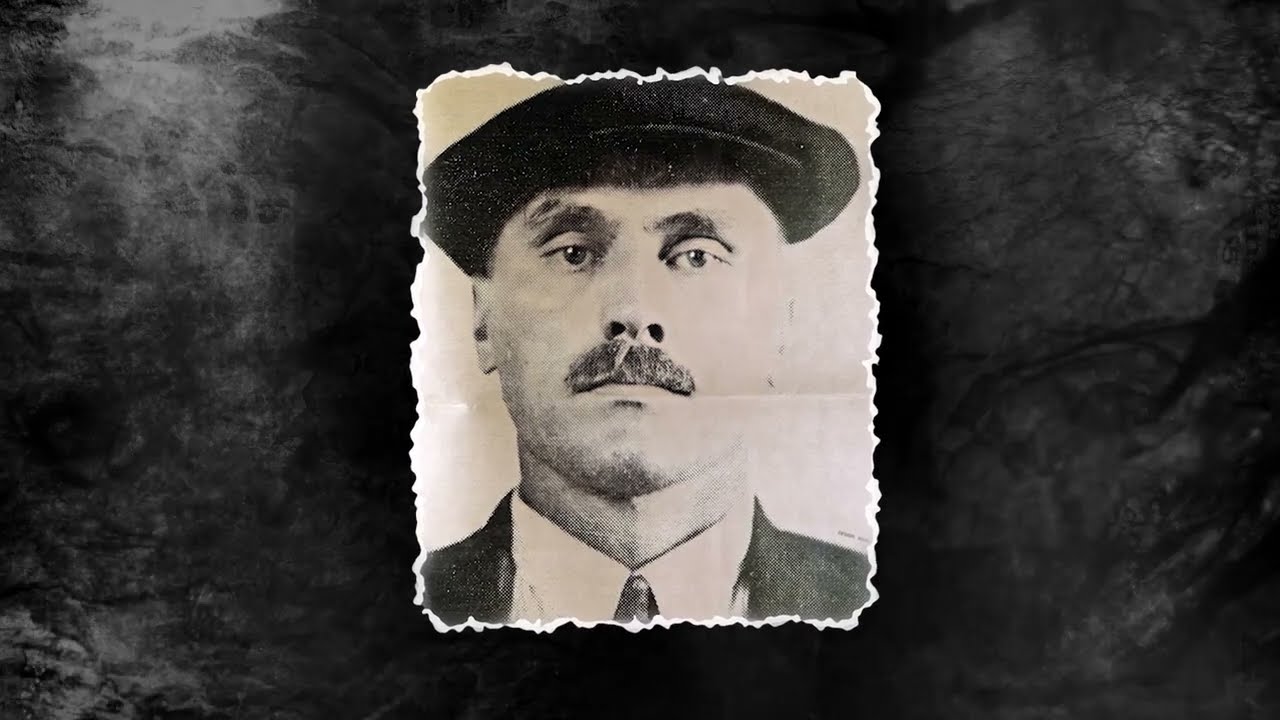
The condemned man stretched his arm through the cold iron bars and signaled the guard with a flick of his wrist, a gesture that launched the final countdown of one of America’s most remorseless killers. Carl August Panzram knew the exact hour his life would end, and he intended to control every second leading up to it. It was September 4th, 1930, almost precisely twenty-four hours before the noose would claim him inside the walls of Leavenworth Penitentiary in Kansas, and the man who had confessed to murdering twenty-one human beings was about to make his last calculated move.

The moment the guard arrived at his cell, Panzram handed him a small folded piece of paper. Inside were two razor blade shards, carefully concealed and wrapped with almost surgical precision. The guard’s eyes widened as he inspected the package.
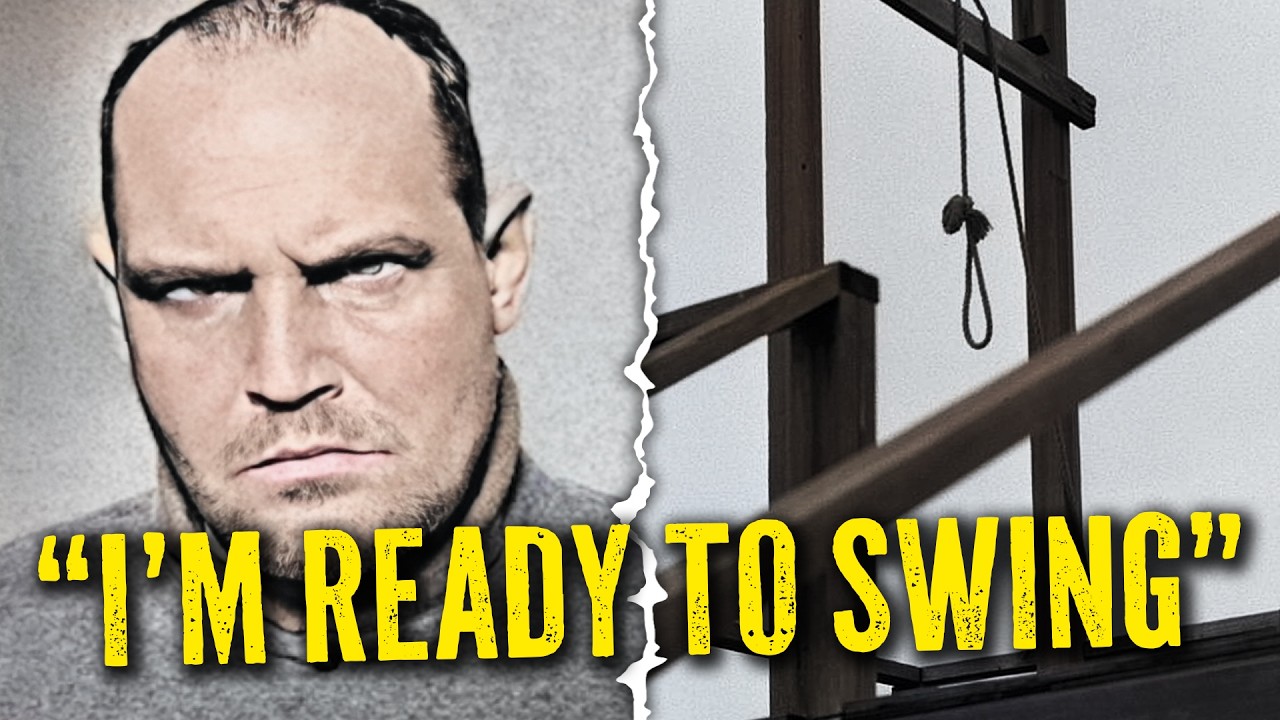 Where did you get these, he demanded, his voice sharp with alarm. None of your damned business, Panzram shot back, a thin, mocking smile curling across his face.
The tiny package had been delivered two weeks earlier, slipped into his cell during meal service when no one was watching. The mastermind behind the delivery was Robert Stroud, the infamous Birdman of Alcatraz and Panzram’s neighbor in solitary confinement on Leavenworth’s death row. Stroud had broken a new razor blade in half, wrapped it in paper with detailed instructions on how to use them, and disguised the package with gray watercolor so it would blend into the concrete floor.
It was an act of remarkable cunning from a man who had already earned his own place in American criminal history.
Stroud’s motivations were complex but clear. Having once been sentenced to death, only to have his sentence later commuted to life in prison, he had become a passionate opponent of capital punishment. He did not want executions to take place at Leavenworth, a facility where no execution had ever occurred.
Stroud was determined to prevent that precedent from being set, and from his cell he had watched the gallows being constructed, each hammer blow strengthening his resolve that Panzram should take matters into his own hands rather than submit to the state.
For days, Panzram kept the razor blades hidden in his cell, giving Stroud hope that his scheme would succeed. But on the day before his execution, with his final twenty-four hours ticking away, Panzram handed the blades over without hesitation. The truth was that Carl Panzram never had the intention of dying on anyone’s terms but his own.
I’m not going to die like that, he had said earlier. But that declaration did not mean he feared death. In fact, he welcomed it with an eagerness that unsettled even the guards who had seen every kind of criminal pass through their halls.
On April 14th of that same year, Carl Panzram had been formally sentenced to death. The judge’s words were final and carried the full weight of the federal justice system. On the 5th day of September, 1930, between the hours of 6:00 to 9:00 in the morning, you shall be taken to a suitable place within the confines of the penitentiary and hanged by the neck until dead, the judge had declared.
Panzram seemed almost relieved by the pronouncement, and a huge grin spread across his face as he delivered his reply: I look forward to dancing at the end of a rope, just like some folks do for their wedding night.
He had long accepted his fate with a philosophical detachment that confounded those around him. I prefer to die, and if I have a soul, and if that soul should burn in hell for a million years, still, I prefer that to a lingering, agonizing death in some prison dungeon or a padded cell in a mad house, he had written. But despite his explicit wish to face the gallows without interference, some groups still attempted to stop the execution.
Even in the 1930s, several national organizations opposed the death penalty on moral grounds, and one of these groups petitioned the governor for a pardon or commutation of his sentence.
The effort infuriated Panzram beyond measure. In response, he wrote a scathing letter to the organization, declaring, The only thanks you and your kind will ever get from me for your efforts on my behalf is that I wish you all had one neck and that I had my hands on it. He even wrote directly to President Herbert Hoover and to the judge who had sentenced him, expressing his deep concerns about any changes to his sentencing.
He absolutely refused to accept any form of clemency, stating plainly, I want to die and I want the whole world to know it. I hate the whole damn human race, including myself.
From noon onward on that final day, Panzram spent his hours in his cell reading. But it was not books he turned to in his last hours, it was magazines. He spent hours flipping through the pages, indulging in a small comfort that seemed almost mundane for a man facing execution.
This seemingly ordinary act of distraction was made possible by an unlikely ally, a 26-year-old rookie guard named Henry Philip Lesser. He would become the closest thing Carl Panzram ever had to a friend, offering him money for small comforts, something Panzram would later describe as the most extreme act of kindness he had ever received in his entire life.
As the two men grew closer during Panzram’s time on death row, he began to trust Lesser. Eventually, he agreed to share the details of his miserable life, dictating his story while the young guard listened in stunned silence. Over the next few weeks, Panzram wrote down the grim story of his existence.
There were no apologies, no regrets, no hints of remorse. He made that clear in the very first words he wrote: In my lifetime, I have murdered 21 human beings. I have committed thousands of burglaries, robberies, larcenies, arson, and last but not least, I have committed sodomy on more than 1,000 male human beings.
For all these things, I am not in the least bit sorry. I have no conscience, so that does not worry me.
 The confession was staggering in its brutal honesty and complete absence of moral reflection. Panzram spent most of his life behind bars, but when he was free, he robbed, burned, and killed his way across the globe in a spree unlike anything law enforcement had ever seen before. His crimes took him from the United States to Africa, from Angola to the high seas, leaving a trail of devastation that authorities were only beginning to fully understand as his execution approached.
On November 12th, 1928, he had been sentenced to ten and fifteen years to be served consecutively, totaling twenty-five years at Leavenworth, Kansas.
It was not those crimes that ultimately led him to the gallows, however. It was what happened within the prison walls that sealed his fate. As soon as Panzram arrived at Leavenworth, he announced his intentions to the warden with characteristic bluntness: I’ll 𝓀𝒾𝓁𝓁 the first man that bothers me.
And that is exactly what he did. On June 20th, 1929, while working in the prison laundry room, Panzram took the life of his supervisor, Robert Warnke, a small, balding civilian employee notorious for abusing his position of authority over the inmates.
Without warning, Panzram grabbed a four-foot-long iron bar and struck with savage force. He then went on a rampage, chasing terrified inmates around the room, shouting, cursing, and swinging the heavy iron bar with murderous intent. Guards rushed in to stop him, and after dropping the bar, Panzram walked quietly back to his cell, sat down on his bunk, and said nothing.
The murder was premeditated, brutal, and utterly without justification, and it transformed his twenty-five-year sentence into an appointment with the hangman. The federal government decided that this time, Carl Panzram would not leave prison alive.
Several reporters had arrived at Leavenworth on the evening of September 4th for an orientation ahead of the following morning’s execution. They were scheduled to witness the hanging and were preparing their coverage of the event. But that evening, two of them managed to talk their way into seeing Panzram, despite the strict security protocols surrounding death row.
The guards warned them that the condemned man was unlikely to speak, but the reporters were persistent, sensing the story of a lifetime waiting behind those bars.
Inside his cell, Panzram barely acknowledged their presence. He lay stretched out on his mattress, casually flipping through a magazine, cigarette smoke curling in the air above him. The reporters fired off their questions, but he ignored them completely, treating their presence as an inconvenience rather than a momentous occasion.
One of the guards, growing impatient with the spectacle, scoffed and said, He just wants to die. Why don’t you leave him alone? But the reporters would not be put off so easily.
They were there to write a feature on the man set to die the next morning, and they had traveled a long distance for this story. They turned to the guard for more information, asking about the rehearsal, referring to the recent practice sessions conducted on the gallows to ensure the execution would proceed without complications. Before the guard could reply, Panzram’s voice cut through the conversation with sudden sharpness.
Don’t bother me with that stuff, he said. My part of the performance isn’t ready yet, but I’ll prance up those 13 steps like a blooded stallion. You sure the scaffold is strong enough to hold me?
The reporter scribbled furiously in his notebook, capturing the condemned man’s defiant words. Then came the inevitable question, the one every journalist asks of every condemned prisoner: Any regrets? Panzram let out a short, dry chuckle.
Yeah, he said. I regret I won’t get to finish this magazine story. It’s continued next issue.
There was nothing more to ask after that. The reporters glanced around at the dimly lit row of cages, taking in the harsh reality of death row, the cold stone walls, the shadows that seemed to swallow all hope, and they left without another word.
Throughout his time on death row, Panzram had maintained a steady correspondence with Henry Lesser, the young guard who had become his unlikely friend and confidant. In his letters, Panzram often complained about the lack of reading material but praised the quality of the food, a small irony for a man who had spent his life in and out of institutions. So when the time came for his last meal, Panzram made no special requests.
At 7:15 p. m. on September 4th, he ate the standard prison dinner, a plate of beans, bread, boiled potatoes, and a cup of coffee, before opting for more cigarettes to pass the remaining hours.
 As the hours dragged on through his final night, Panzram paced the confines of his cell, softly singing a little tune of his own creation. Though neither its melody nor its lyrics were particularly distinguished, the song nevertheless expressed in unabashed terms the deepest longing of his soul. Its refrain, Oh, how I love my round eye, echoed repeatedly through the corridor until sleep finally claimed him, granting him a few hours of rest before the dawn that would bring his death.
He was awake for hours before the execution party arrived. The distant echo of footsteps reached his ears, and though it was not quite six o’clock yet, he stood in his cell waiting, a figure of coiled tension and anticipation. The steel door clanked open, revealing a procession of guards, reporters, and the executioner.
Panzram met them with a hostile glare, his eyes scanning through the wire mesh that separated him from the men who had come to witness his final moments. Then his gaze fixed on two men in clerical robes lingering at the edge of the group, and his face twisted with pure contempt.
Are there any Bible-backed hypocrites in here? he yelled, his voice full of venom. The warden stepped forward, trying to reason with him.
I thought you might change your mind, he said. These men came a long way to offer you comfort. Panzram’s anger flared with terrifying intensity.
Get them out, he roared. I don’t mind being hanged, but I don’t need any Bible hypocrites around me. Run them off or you’re going to have one hell of a time getting me out of this cell.
Every man I get my hands on is going to the hospital. The unwelcome priests were swiftly ushered away, their offer of spiritual comfort rejected with the same contempt Panzram had shown every institution of society throughout his life.
Panzram exhaled sharply, shaking off the tension that had gripped his body. All right, let’s get going, he said, his voice calm again. What the hell are we waiting for?
On September 5th, 1930, a Friday morning described by witnesses as cold and dusty, Carl Panzram was taken from his cell and escorted to the gallows that had been constructed within the prison walls. Here they come, someone yelled from the crowd that had gathered to witness the historic moment, the first execution ever to take place at Leavenworth Penitentiary.
Panzram’s demeanor was rebellious as always. He cursed his own mother for bringing him into this world and cursed the whole damned human race as he walked his final steps. He ran happily up the gallows steps, teeth clenched, defiantly facing the crowd of officials, reporters, and guards who had assembled to watch him die.
When the noose was placed around his neck, he allegedly spat in the executioner’s face and roared, I wish all mankind had one neck so I could choke it. The words echoed through the execution chamber, a final declaration of the hatred that had defined his existence.
When asked if he had any last words, Panzram barked, Yes, hurry it up, you hoosier bastard. I could 𝓀𝒾𝓁𝓁 ten men while you’re fooling around. With the black hood secured over his head and the noose tightened around his throat, the marshals stepped back.
Without hesitation, the trap doors sprung open with a heavy thud, and Carl Panzram dropped into eternity. At exactly 6:18 a. m.
, he was pronounced dead by the attending physician, his reign of terror finally brought to an end by the justice system he had so thoroughly despised.
His unclaimed body was buried later that day in row number six, grave number 24 of the prison cemetery, forever resting in the shadow of Leavenworth’s ominous walls. No family members came forward to claim his remains. No mourners gathered to pay their respects.
The man who had confessed to twenty-one murders across three continents was laid to rest in an unmarked grave on prison grounds, his final resting place known only to the institution that had executed him.
The story of Carl Panzram’s final twenty-four hours reveals a man utterly committed to his own destruction, yet absolutely determined to control the manner of his death. He rejected the razor blades that would have allowed him to cheat the hangman. He rejected the comfort of clergy.
 He rejected the efforts of abolitionists who sought to save his life. In the end, he walked willingly to the gallows, not as a man broken by the system, but as one who had chosen his fate on his own terms.
The execution at Leavenworth set the precedent that Robert Stroud had feared. It was the first and it would not be the last. And Stroud, the Birdman of Alcatraz, would spend the rest of his life in prison, his own death sentence commuted, his opposition to capital punishment cemented by the death of the man who had been his neighbor in solitary confinement.
The razor blades he had smuggled to Panzram were never used, but they remain a footnote in the strange, dark relationship between two of America’s most notorious prisoners.
Henry Lesser, the young guard who had shown kindness to the condemned killer, carried the story of Carl Panzram with him for the rest of his life. He had received something no one else had ever gotten from the murderer, his story, his confession, his truth. The autobiography that Panzram wrote at Lesser’s encouragement would eventually be published, becoming a chilling document of a life devoted to violence and destruction, a testament to the darkest possibilities of human nature.
Panzram’s own words from that autobiography serve as his most fitting epitaph. I have no desire to reform, he wrote. I am sure that I never will reform.
I have always noticed that the people who are the most anxious to reform others are the ones who most need reforming themselves. And so, with those words echoing in the minds of those who study his life, Carl Panzram was hanged at Leavenworth, a man who died exactly as he had lived, defiant, hateful, and utterly without remorse.
The guards who witnessed the execution reported that his body swung for the required twenty minutes before the physician pronounced him dead. The prison chaplain, who had been barred from offering final rites, stood at a distance and watched in silence. The reporters who had covered the event filed their stories with details that would shock a nation already accustomed to violence and crime.
And in the prison cemetery, the grave diggers worked quickly, covering the plain wooden coffin with Kansas soil before the morning sun had fully risen.
Carl Panzram was forty-one years old when he died, but he packed more violence into those four decades than most armies do in a century of warfare. His victims included men, women, and children, though he showed a particular preference for targeting adult males. His confession to more than one thousand acts of sexual violence against men made him one of the most prolific predators in American criminal history.
His arson attacks destroyed property valued in the hundreds of thousands of dollars. His burglaries were numbered in the thousands.
The federal government had pursued his execution with determination, recognizing that this was a man beyond rehabilitation, beyond redemption, beyond any hope of reformation. The judge who sentenced him called him a menace to society, and even Panzram agreed with that assessment. What the courts do with men like me, he once said, is a matter of complete indifference to me.
I have no respect for the law or for the men who administer it. I have only contempt for the whole system of so-called justice.
As the sun set on September 5th, 1930, the execution of Carl Panzram faded from the headlines, replaced by the news of the day, the Depression deepening, political scandals brewing, the world moving on. But the story of his final hours would endure, a grim reminder of the capacity for evil that exists in the human heart. The gallows at Leavenworth were dismantled and never used again for another federal execution.
The prison cemetery, with its numbered graves and unmarked markers, holds the remains of Carl Panzram along with countless other forgotten men. But his name lives on in the annals of criminal history, a cautionary tale of a life wholly surrendered to darkness. His own words, preserved in the autobiography he gave to Henry Lesser, continue to chill readers decades later, offering an unfiltered look into a mind that found pleasure only in destruction.
In the end, Carl Panzram got exactly what he wanted. He died on the gallows, defiant to the last, his hatred for humanity intact. He denied the executioners the satisfaction of seeing him broken.
He refused the consolation of religion. He rejected the mercy of those who would have spared him. And as the trap door opened beneath his feet, he achieved the only goal he ever truly pursued with consistency, his own death, on his own terms, without apology, without regret, and without a single ounce of fear.