The 36-year-old school music teacher and assistant coach had just finished earning his master’s degree three weeks earlier, and on the night of May 25, 2026, he drove with his wife to pick up her 9-month-old daughter from the child’s biological father in Northeast Harris County, Texas. Instead of a routine handoff, Gary Davis ran out of the house with a gun and opened fire, killing Marlon Saunders in front of his wife and infant daughter on a quiet residential street.
The shooting occurred shortly before midnight on Blue Timbers Court, a residential block not far from the intersection of Southeast King Parkway and East Little York Road. Marlon Saunders, a music teacher at Lucian Adams Elementary School for more than seven years and a coach at Memorial High School, had agreed to raise another man’s child after reconciling with his wife, Halynn, following a separation.
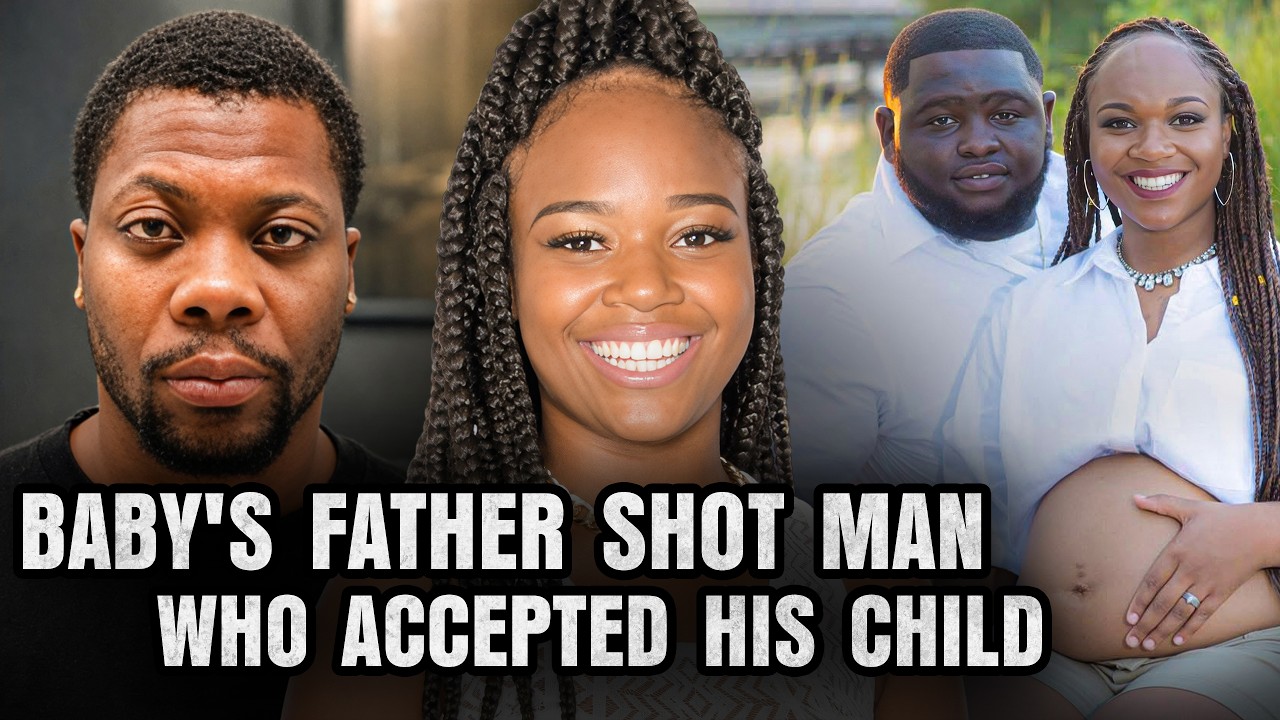 During that period of separation, Halynn had entered a relationship with Gary Davis, which produced a baby girl now nine months old. When Marlon and Halynn reconciled, they made the decision to allow Davis to remain involved in his daughter’s life, a choice that would prove fatal.
The arrangement had been working for months, with Halynn periodically bringing the baby to Davis’s home for visitation. On the night of the shooting, the couple followed their established routine, driving to Davis’s house to bring the child back home to Port Arthur.
According to court records, threatening text messages began arriving on Halynn’s phone while the couple was already en route. Davis wrote that he was in a certain kind of mood, amounting to a direct threat that he would not hand the baby back. Despite these warnings, Halynn continued driving toward the house.
When the couple arrived close to midnight, Marlon stayed by his truck on the street while Halynn approached the house. Davis’s mother carried the baby out and handed her to Halynn on the doorstep. As Halynn turned back toward the car with her daughter in her arms, Davis shouted from inside, asking who was with her.
Halynn did not answer, and Davis came out of the house with a gun. He shoved his own mother out of his way as she stood in his path and ran toward Saunders’s truck. Marlon tried to dodge and use the truck as a barrier, but the distance was too short.
Davis fired two shots, with at least one hitting its mark. A neighbor, Amber Howard, was watching television upstairs when she heard a woman screaming, Gary, give me my baby. Then two gunshots rang out, sounding like fireworks.
After the shots, the same woman’s voice started screaming, You shot my husband. Howard looked out her window and saw Halynn bent over her husband’s body, trying to give him CPR right there on the pavement.
 Marlon Saunders was pronounced dead at the hospital. The baby was not hurt, and Halynn sustained no physical injuries. Davis fled the scene in his car, leaving behind his mother, a bleeding Marlon, and Halynn screaming into the street.
A short time later, Davis called Halynn’s phone. By that point, she was already with a responding deputy, and she handed him the phone. Hearing the deputy’s voice instead of his ex-partner’s, Davis hung up immediately.
He made several more attempts to reach Halynn from different numbers, but she did not answer.
Harris County homicide detectives, the sheriff’s office violent crimes apprehension team, K9 units, and air support were deployed to track down Davis. He was caught that same day, though exactly how investigators pinpointed his location remains unclear.
Davis was booked into the Harris County Jail and formally charged with first-degree murder. Prosecutors filed a motion to deny bail entirely, though some outlets reported bail was set at $200,000. A hearing was scheduled for May 28, 2026.
Marlon Saunders was born on May 23, 1990, and by 2026 had worked as a music teacher at Lucian Adams Elementary School for more than seven years. Beyond his main job, he was part of the coaching staff at Memorial High School, helping run football, baseball, and track programs.
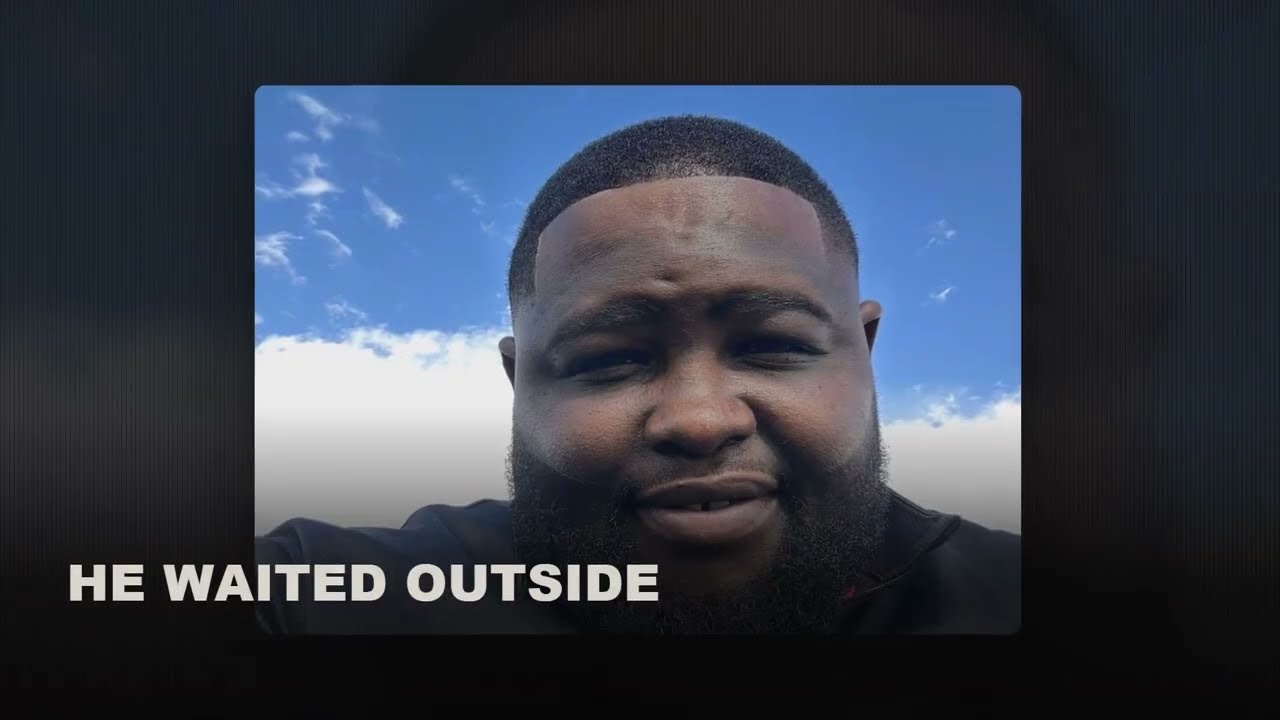 On May 2, 2026, three weeks before his death, he earned a master’s degree in higher education administration. In his off hours, he worked as a DJ under the name DJ Monty Mar. Coworkers called him a big teddy bear and the school’s number one hype man, the guy who would put music on in the locker room before every game to get the team fired up.
Dr. Shalonda Faylor, principal of Lucian Adams Elementary, said his care for the kids was genuine, not performative, that he had a huge heart devoted to education. Andre Bevil, the school district’s athletic director, called his death a surreal moment, someone he had coached side-by-side with.
Gary Davis was born on January 26, 1988, and lived in Houston. Nothing about his professional life, education, or career survives in public records. One neighbor, Jasmine Nicholson, later told reporters plainly, We knew that guy had a lot of anger issues.
The Port Arthur School District responded within a day of Saunders’s death. Coworkers gathered at Lucian Adams Elementary to share memories, listen to music, and lean on each other. The district’s official statement listed multiple roles for Saunders, teacher, coach, singer, DJ, musician, an indirect sign of how much his presence was felt beyond any one job title.
A public visitation was held on Saturday from 8 to 10 in the morning at Cathedral of Faith Missionary Baptist Church in Beaumont, followed by the memorial service. Volunteers from an organization called the Nehemiah Brigade brought more than 20 bright garden containers with young plants onto the school grounds, relaunching a project called the Garden of Hope.
The project, an educational space that had existed at the school before Hurricane Harvey and sat abandoned in the years since, is now meant to serve as a hands-on learning space for all 663 students at the school. For a school that had just lost one of its most visible staff members, the arrival of a learning space designed to serve hundreds of kids for years to come became a practical way of answering the tragedy with something that would outlast the initial wave of grief.
 The case drew significant coverage across several regional media outlets, including Houston television stations ABC 13 and Fox 26, along with outlets in Port Arthur and Beaumont. Part of the reason it drew this much attention is that Saunders was a public figure in several roles at once, educator, coach, DJ, someone who died at the height of his career.
The case also drew a wider public conversation centered on violence that can arise from informal arrangements over access to children. Unlike a legally documented custody schedule backed by a court order, the arrangement between Davis, Halynn, and Marlon rested entirely on a verbal agreement between the parties.
People who argue for formalizing arrangements like this through the courts point out that an official visitation schedule typically requires a neutral location for the handoff or the presence of a third party, exactly the safeguards missing in this case. The opposing view holds that the vast majority of informal arrangements between former partners work fine for years without a single incident.
Several threads in this case remain open. It is unclear exactly how Davis was located after he fled. There are conflicting reports about his bail status, and there is no information available about the outcome of the scheduled hearing.
Halynn Ward Sanders was left a widow with four children. The family released an official statement that read, With great sadness, we announce the death of our husband, father, son, and brother, Marlon Heron Sanders Sr. During this difficult time, we ask that our privacy be respected and that we be given the chance to grieve together.
The child at the center of this entire story, a nine-month-old girl, will grow up in a family where one of her parents is under investigation for murder, and the man who cared for her like his own daughter died trying to bring her home. How this story will eventually be explained to her, once she is old enough to understand, is something no source can know.
Neighbors knew about Davis’s temper long before that night. In his own messages to Halynn, sent while she was still on the way to his house, there was already a direct threat in writing. The question worth asking at the end of this story is about exactly that gap between what people already knew and what actually happened, whether those who had heard about Davis’s anger issues knew that the threat in his messages would become reality that very night.