HUNTSVILLE, Texas — The man who murdered Halloween slipped into death with a yawn, a gasp, and a whisper of scripture, his lips turning dusky purple as the poison he once weaponized against his own son coursed through his veins. Ronald Clark O’Bryan, 39, was pronounced dead at 12:40 a. m.

Monday, eight years to the day after he fed 8-year-old Timothy O’Bryan a cyanide-laced Pixie Stik.
He would not be mourned. He would not be missed.
In nine years inside the Texas prison system, Ronald O’Bryan had not made a single friend. Even the worst of the worst kept their distance, not from fear but from disgust. He was hated so deeply that his fellow inmates filed a formal request, an official petition to celebrate his death.
The man who killed Halloween had earned a distinction no other condemned prisoner could claim: he was the only one among them who had murdered his own child.
The mask of grief fooled a nation. In October 1974, sympathy poured in from across the country for a grieving father, a murdered child, an urban legend made real.
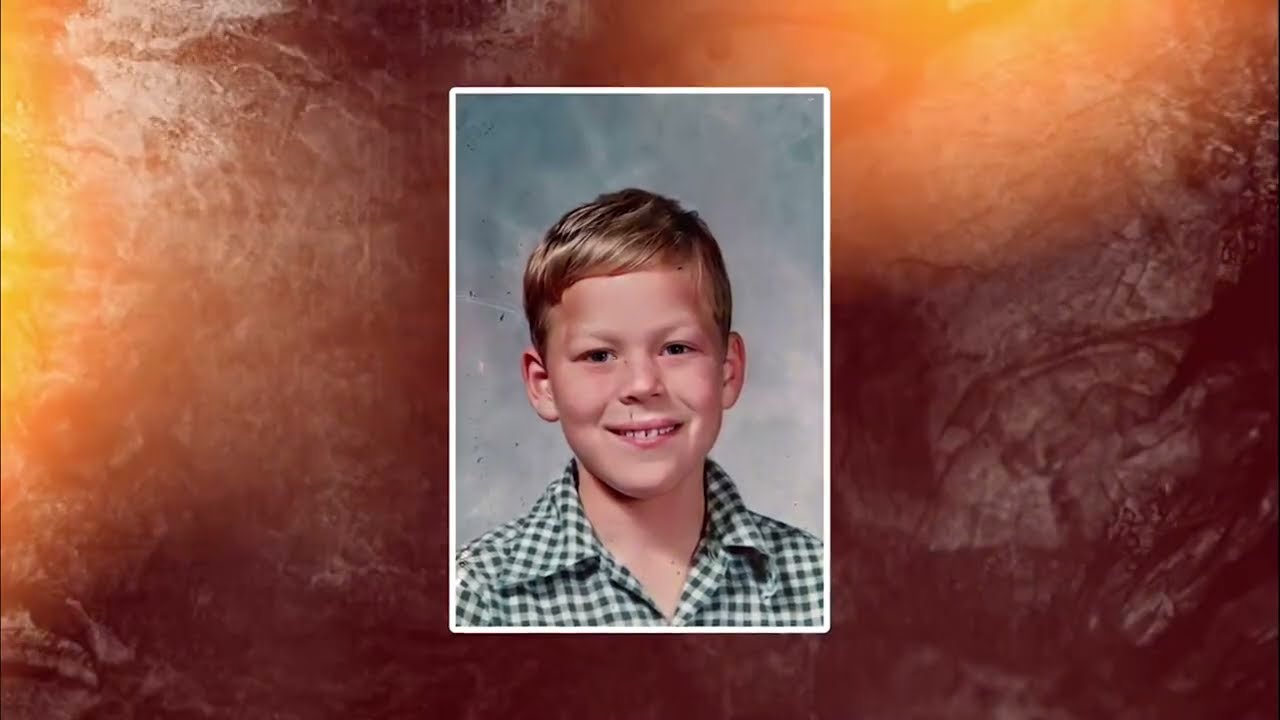
It was the warning every parent gave but none truly believed. Halloween night, Deer Park, Texas. Eight-year-old Timothy O’Bryan collapsed in his father’s arms, vomiting, convulsing, screaming.
Within minutes, he was gone.
Hours earlier, Timothy had been trick-or-treating with his little sister Elizabeth and neighborhood friends. Rain was falling, porch lights flickering, and their father, Ronald, trailed behind, watching.
They covered only a few blocks. It was late and wet. At one dark house, no one answered the door.
The kids moved on. Moments later, Ronald caught up, five oversized Pixie Stiks in hand. The man was slow to answer, he said, but generous.
At home, Timothy picked one of the sticks as his final treat. He said it tasted bitter. His father gave him Kool-Aid to wash it down.
Less than an hour later, the boy was dead. Police traced the candy to that house, but the homeowner, Courtney Melvin, had an airtight alibi. He was not even home that night.
The investigation turned inward, toward the grieving father who had been admired for his courage.
Ronald O’Bryan was not brave. He was broke.
Twenty-one jobs in ten years. Drowning in debt, facing repossession, on the verge of being fired. And weeks before Halloween, he had quietly tripled the life insurance policies on both of his children.
The morning after Timothy’s death, he called to collect.
Then came the truth. Each of the Pixie Stiks had been sliced open, filled with a mixture of sugar and cyanide, and stapled shut.
It was enough poison to 𝓀𝒾𝓁𝓁 three grown men. Timothy got one. So did Elizabeth.
Three more went to neighborhood children. By sheer luck, only Timothy ate his. One boy could not get the staple open.
Co-workers remembered Ronald asking about cyanide, how much it would take, where to find it. A chemical supplier identified him, saying O’Bryan had inquired about buying the poison.
In June 1975, a jury took just 45 minutes to convict.
Guilty of capital murder, sentenced to die. He sacrificed his son, one prosecutor said, on the altar of greed.
The execution was originally scheduled for 9:00 sharp, but O’Bryan did not arrive at the Walls Unit until 9:40.
The delay was caused by a swelling crowd outside, so large that additional officers were summoned. No chances would be taken with this prisoner. Inside the warden’s office, someone was already waiting for him.
Reverend Carroll Pickett, the famous death house chaplain, had walked nearly a hundred men to their end. But this one was different.
This was the only condemned man Pickett had ever met who had killed his own child.
The chaplain barely slept the night before. Not from nerves. He knew the routine.
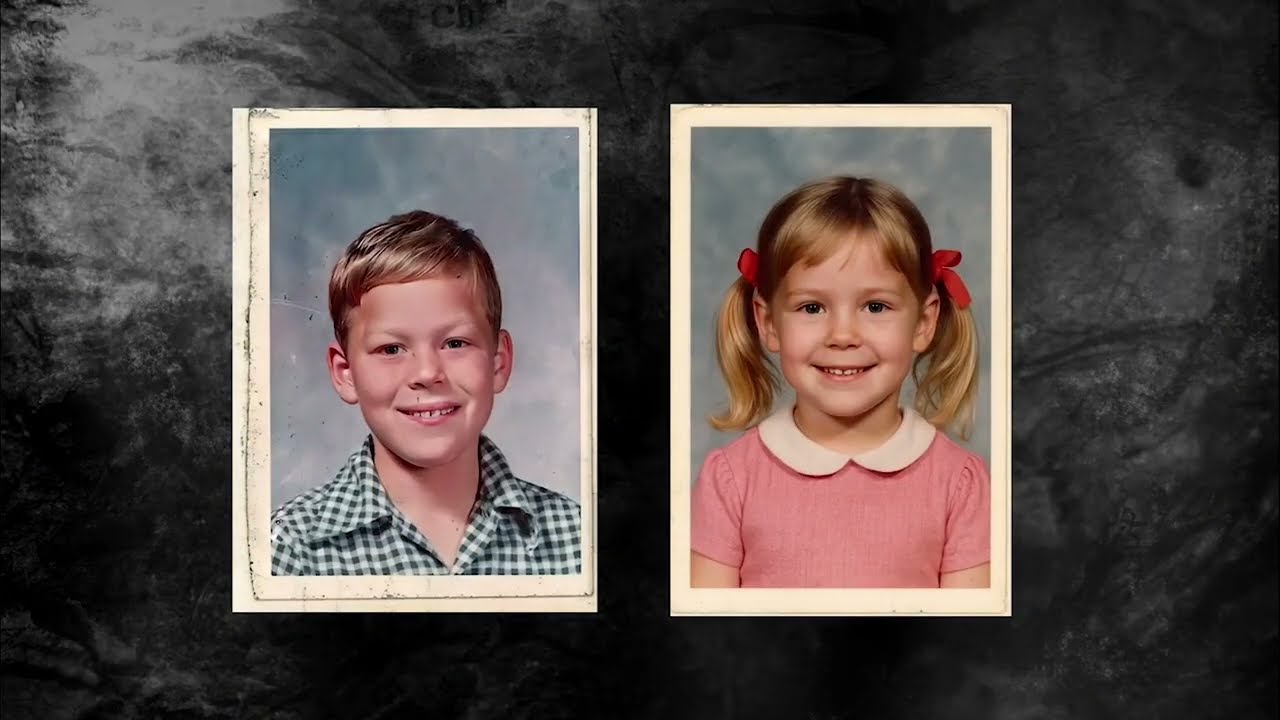 But this time, he was not sure he could do it. It was hard to summon compassion. In his book, Memoirs of a Death Row Chaplain, Pickett wrote: “I walked men guilty of unimaginable violence, but none so cold.”
On his walk to the death house, Pickett passed one of the majors who had escorted O’Bryan. “This is a scared man,” the major said. Pickett did not respond.
He was scared too, scared of spending a day with a man who sickened him. “I’d never prayed harder for strength,” he later wrote.
And when they met, the major’s words held true.
The so-called Candyman paced nervously, trying and failing to hold it together. O’Bryan always claimed he was innocent, a scapegoat for a paranoid neighborhood. He had already dodged death three times.
Twice from the electric chair. The third time, from the needle. Now, on Halloween night, 1982, eight years to the day since the murder, Judge McSpadden had even offered to drive him to the execution himself.
They waited for the US Supreme Court’s answer to a fourth bid for a stay of execution.
At noon, the answer came. Denied.
Seven to two. No stay. No fourth escape.
The road was clear. Or so they thought.
Shortly after the Supreme Court’s rejection, a new twist.
In an unexpected move, US District Judge Penn issued a temporary injunction, ordering the FDA to seize the lethal injection drugs. The reason: O’Bryan’s lawyers argued the drugs had not been approved as safe for human executions. The man who had once watched his own son die in agony was now demanding clinical precision for himself.
It was a legal Hail Mary, and for a brief moment, the execution was back in limbo.
The Reverend went to the gate to meet the only name on the visitor list, someone O’Bryan described as “the only friend I have.” But the person at that gate was not what Pickett expected.
A small, delicate-looking 18-year-old woman stood waiting. Her name was Kim. Pretty, poised, a little lost.
She clutched a Bible and a pen. A journalism student from Texas A&M, she and O’Bryan had started corresponding for a class project a year earlier. Somewhere along the way, it got personal.
They were given two hours. He talked. She sat and listened.
The Reverend watched from nearby and wondered what she was doing there, what interest she could possibly have in a 39-year-old killer. He could not help but think: a girl the same age Timmy would have been. Had she become the substitute family?
Because no family came.
Six months earlier, his daughter Elizabeth had tried. She wanted contact, a visit, but her mother, O’Bryan’s ex-wife Danine, shut it down to protect her.
And as Kim sat behind the glass, Danine spoke publicly for the first time since the trial. “He is guilty,” she said. “I don’t hate Ronald.
I just feel nothing.”
Danine remembered those early jail visits. He cried, beat the walls, swore he was innocent.
“He was so convincing. Sometimes I wondered what if he’s telling the truth, but I knew he was lying.” She remembered the appointment he made before Timmy’s death.
He wanted a life insurance policy on her, too. The meeting was cancelled. They could not afford it.
 But the intent was clear. “I think I was the original target,” she said.
Once before Halloween 1974, Ronald quoted a Bible story, Abraham and Isaac, the sacrifice of a son.
“I started putting it all together,” Danine said. “He was my husband. I wanted to believe him, but I knew what he was capable of.”
She exhaled. “I don’t think he’s insane or sick, but he is perverted.”
The judge’s order that threatened to stop everything did not last.
By 3:00 p. m. , the Court of Appeals struck it down.
The path to execution was clear again. O’Bryan’s legal team had known it was a long shot. A one-in-a-million chance, they admitted, and now it was gone.
Their last play had failed.
After Kim was escorted out just after 4 p. m.
, the chaplain stayed behind, and Ronald Clark O’Bryan kept talking. He spoke clearly, almost eloquently, about his church days, singing in the choir, repentance and forgiveness. But not once did he mention his family.
Not Timmy. Not his wife. Not his daughter.
“Unusual,” the Reverend later wrote. “Every other condemned man I’d met spoke of family, but O’Bryan didn’t.”
Instead, he complained about the noise on death row.
The boom boxes, the sports shows, the shouting. He said he had given away his radio. “I kind of wish I’d kept it and brought it with me,” he added.
“It’d be nice to hear some music.” They arranged it. Minutes later, easy listening played softly through the death house.
He lay back, eyes closed. For the first time since arriving, he looked calm.
Then he sat up.
“Chaplain,” he asked, “how many sins can God forgive?” Not waiting for an answer, he continued: “I think God’s forgiven me. I can’t undo mistakes I’ve made, but I believe I’m going to heaven.
I’ve been a Christian all my life, you know.”
After a final shower, O’Bryan sat down to his last meal. T-bone steak cooked medium well.
Fries with ketchup. Whole kernel corn. Sweet peas.
Salad with egg and French dressing. Crackers, rolls, iced tea, and Boston cream pie for dessert. He asked to eat in silence, alone.
An hour later, he called his father. He had not seen the man once in his eight years behind bars. “Dad, don’t blame yourself for anything I’ve done.
You’ve been a good father. I’m okay. I’m going to heaven.”
The rest of the evening he spent writing letters and crafting his final statement. In a strange request no inmate had made before, he asked to read his final statement from a sheet, then have copies handed to the press. The warden refused.
 “He’ll be strapped down,” he said. “I’m not holding anything, and no one else is either.” But he did allow copies to be made for the press.
For years, O’Bryan had stayed silent. Lately, he had begun speaking. “I just want people to know I’m against the death penalty,” he said.
He rehearsed for hours, reading, revising, memorizing.
Outside the Walls Unit, the crowd had swelled to 300. It rained candy.
Pixie Stiks scattered like confetti across the pavement. Some were tossed, others hurled, aimed at the protesters. The pro-execution crowd held up Halloween-themed signs, shouting “Trick or treat!
Is he dead yet?” It was a circus of rage and ritual.
Moments before the walk, O’Bryan made one last request.
The Boston cream pie saved from dinner sat chilled in the icebox down the hall. He took two small bites, then paused. “Guess I’ve lost my appetite,” he said, flushing the rest down the commode.
He looked at the chaplain. “You ready for this?” Pickett met his eyes.
“Ron,” he said quietly, “the question is, are you?” O’Bryan did not answer, just a nervous smile that said everything.
Ronald O’Bryan lay strapped to the gurney, IV lines in place.
The room was silent except for soft crying. Kim watched from the witness gallery. Around her sat reporters, the sheriff who had investigated the case, and the state attorney general, all listening to his final words.
“What is about to transpire in a few moments is wrong. But we as human beings do make mistakes. This execution is one of those wrongs.
That doesn’t mean our whole system of justice is wrong.”
He said he forgave those involved in carrying out his sentence, asked forgiveness from anyone he had hurt in his 39 years, told his friends and family he loved them, and ended with: “God bless you all, and may God’s best blessings always be yours.” In a final note, he thanked the prison staff for their kindness.
With no objection from Governor Mark White, a death penalty supporter, the injection began. Sodium thiopental. Pancuronium bromide.
Potassium chloride. At his side, the death house chaplain whispered the same words Christ spoke from the cross: “Father, into your hands I commit this spirit.” O’Bryan yawned, gasped.
His lips turned a dusky purple. Then nothing.
At 12:40 a.
m. , Ronald Clark O’Bryan was pronounced dead. No pain, no struggle, a quiet end.
Unlike his son, who left this world gasping for air, choking on poison his own father had prepared for him.
His eyes were removed for transplant. His father claimed the body.
Years earlier, Timothy’s mother had refused the insurance check, called it blood money. But O’Bryan’s father, also a beneficiary, took it. Part went to his granddaughter’s savings.
The rest paid for the funeral. The man who killed Halloween was buried under an alias, his grave purchased with the very money he killed for.