The first American soldiers to walk through the gates of Dachau concentration camp on April 28, 1945, believed they had seen the worst of war. They had stormed the beaches of Normandy, fought through the hedgerows of France, and watched comrades die in muddy fields across Europe. Nothing prepared them for what waited inside those barbed-wire fences.
The stench alone was overwhelming — a sickening mixture of death, decay, and burning flesh that clung to uniforms and lingered in throats for days. What they discovered would shatter their understanding of humanity and drive some of them to commit atrocities of their own in response.
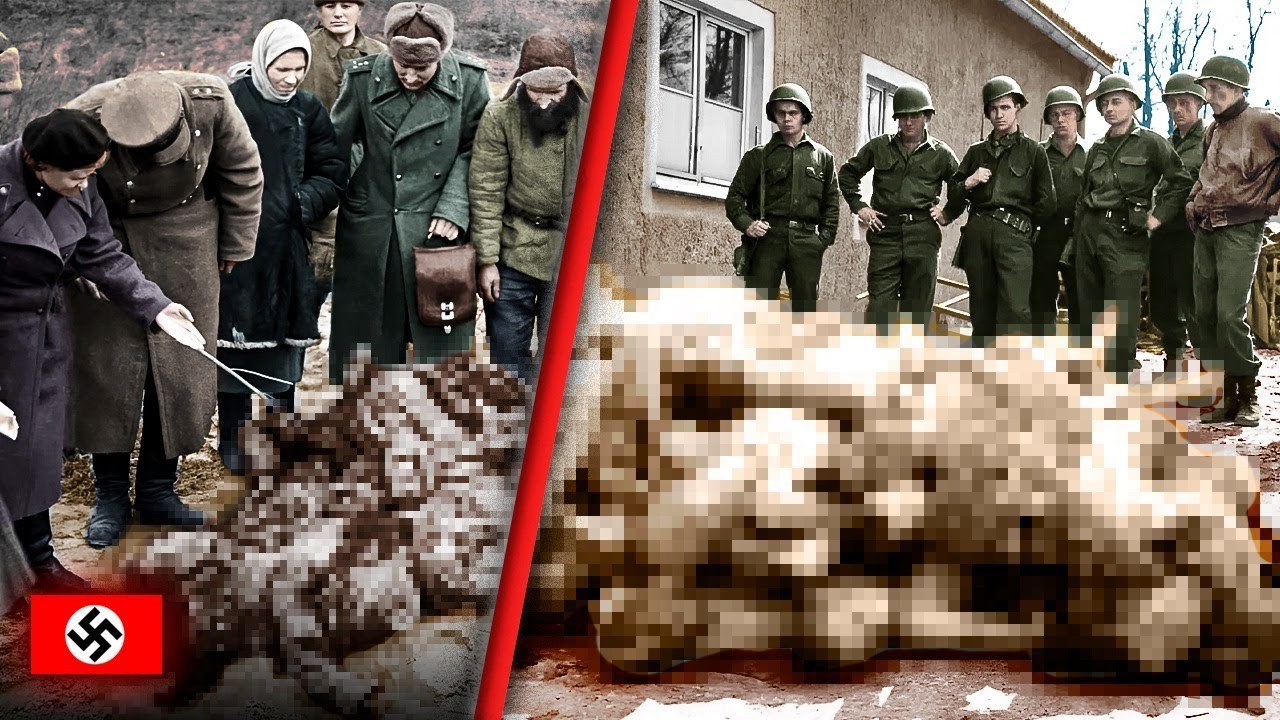 Dachau was not the largest of the Nazi extermination camps, but it was among the first to be liberated by Western forces, making it the initial glimpse into the industrialized horror that had consumed Europe. Built in 1933 as one of the first concentration camps in Nazi Germany, it had operated for twelve years, processing over 200,000 prisoners. When American troops from the 42nd and 45th Infantry Divisions arrived, they found more than 30,000 survivors in conditions beyond description — walking skeletons with hollow eyes, dressed in striped uniforms that hung off their emaciated bodies.
The 45th Infantry Division had covered sixty kilometers along the Danube River to reach the camp, pushing forward with urgency after receiving intelligence about what lay ahead. As they approached the city center of Dachau, a sight stopped them cold. A massive train sat stalled on the tracks, its engine broken, fifty boxcars stretching into the distance.
Each car was packed with corpses — thousands of bodies, all dead from starvation. The train had been abandoned during the final evacuations as the SS attempted to move prisoners away from advancing Allied forces, but the chaos of Germany’s collapse had left it stranded. This became known as the Death Train, frequently cited as the first major evidence of the Holocaust that American forces encountered.
Dr. Harold Porter, a military doctor sent to assist with the liberation, immortalized the scene in letters to his family. He described approaching the city center and finding the train with its grim cargo.
Inside the camp itself, conditions were even worse. Porter was taken to the crematorium, a six-square-meter room packed to the ceiling with corpses. He wrote of a foul and putrid chaos, faces purple with eyes bulging, bodies reduced to nothing but bones and skin.
The crematorium ovens were still operating at full capacity when the Americans arrived, the SS having worked frantically to eliminate evidence of their crimes before the fall of the camp.
The psychological impact on the liberating soldiers was profound and lasting. Many could not process what they had witnessed. In modern history, no army had faced such a magnitude of violence and disregard for human life.
Some soldiers broke down entirely, unable to function. Others suppressed their emotions, focusing mechanically on the tasks of liberation — distributing food, treating the sick, burying the dead. Captain Wilsey, an anesthetist who had served since the Normandy landings and treated thousands of wounded soldiers, thought he was prepared for anything.
When he crossed through the barbed gates of Dachau, he froze, overwhelmed by the sinister panorama. Piles of skeletal corpses lay in heaps, victims of starvation and prolonged exposure to the elements. Warehouses were filled with prisoners’ shoes and uniforms, stripped from the condemned to be reused by future arrivals.
 Not all soldiers reacted with shock and grief. Many were consumed by rage, and they decided to dispense their own form of justice. Troops from the 45th Infantry Division, enraged upon seeing the death train, took matters into their own hands.
When four SS officers surrendered, Lieutenant William Walsh marched the Germans to the train, forced them to board, and executed them on the spot. The vengeance did not end there. When Walsh and his men entered the camp and saw the enormous piles of corpses, they were driven by a thirst for retribution.
Thirty SS officers were taken to an inner courtyard, where Walsh ordered their execution by firing squad. Seventeen Germans were killed before a higher-ranking officer intervened, halting the process of vigilante justice.
Estimates of the number of German prisoners executed by American soldiers at Dachau vary widely depending on the source. Official figures accepted by the United States government range from fifty to one hundred. Other sources suggest the number could have exceeded five hundred.
The exact count may never be known. Some soldiers chose to arm the prisoners themselves, allowing the survivors to do as they wished with the Germans who had been their captors for years. Some doctors refused to provide medical assistance to wounded German officers and guards, resulting in numerous deaths.
When General Patton became the military governor of Bavaria in 1945, he blocked all investigations into American war crimes committed during the liberation of Dachau. Those who executed German officers in acts of vengeance were never reprimanded.
The massacre at Dachau unfolded in chilling detail over two days. On the morning of the second day, American forces forced approximately fifty SS soldiers to strip naked outdoors and perform the Nazi salute with their arms raised to the sun while being doused with buckets of freezing water. This practice had previously been inflicted by the guards on Jewish prisoners.
There was a condition — if they lowered their arms for any reason, they would be executed. All fifty Germans were shot by noon. Captain Wilsey, writing letters at the time, described the massacre as logical.
 He witnessed his comrades capture an SS soldier, torture him, and then coldly shoot him. He admitted watching without being moved, knowing the actions these SS beasts had carried out against their prisoners.
The situation at Auschwitz, liberated by Soviet forces, was quite similar both before and after its liberation. In the weeks leading up to its fall, SS officers attempted to erase all evidence of the crimes committed there, burning documents and mass cremating victims’ remains. When the 7,000 surviving prisoners saw the Red Army approaching, many wept with joy.
The Soviet soldiers had no idea what they had stumbled upon. Once fully liberated, the atrocities committed there began to emerge in the most horrifying ways imaginable — open graves, rooms filled with bones, bags containing the hair of thousands of executed people. Colonel Vasili Petrenko, commander of the 107th Infantry Division, later stated that despite seeing people die daily, he was shocked by the immense hatred the Nazis had for the prisoners, whom they had turned into living skeletons.
Unlike Dachau, there are no documents or records of war crimes committed by the Red Army against surrendering Germans at Auschwitz. This does not necessarily mean such crimes did not occur. There is documented evidence of brutal vengeance carried out by the Soviets as they advanced into German territory, making it logical to assume that such sentiments only grew stronger upon witnessing the atrocities of Auschwitz.
After the liberation of several other camps, the Red Army took a rather unique measure — they kept some camps operational but used them as detention centers for German officers and German citizens accused of collaborating in the Holocaust, as well as suspected opponents of the Soviet regime. Reports from that time indicate that treatment and living conditions during this period were nearly comparable to those endured by the groups exterminated under the Third Reich.
The question of justice for these crimes led to the Nuremberg trials, one of the most impactful judicial processes ever conducted. An emergency tribunal convened by the Allies investigated the actions of twenty-four key figures of German National Socialism. Half received varying sentences ranging from a few years of forced labor to life imprisonment.
The other twelve were sentenced to death by hanging. Only ten were actually executed — two of the most prominent figures on the list managed to avoid facing the noose. Martin Bormann, Hitler’s private secretary and the chief of the Nazi party chancellery, was never tried — he either died or was killed by Soviet soldiers on a bridge near Berlin Central Station on May 2, 1945.
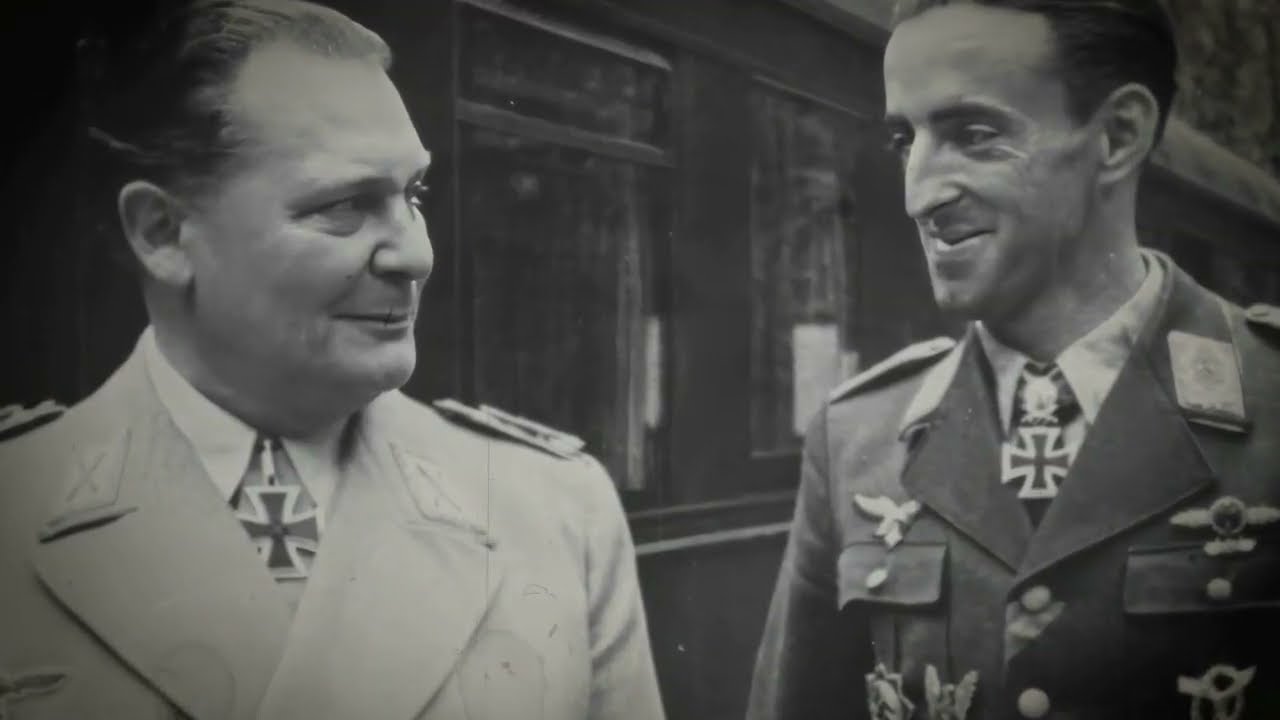
His body was discovered in 1972, and his identity was confirmed in 1998. Hermann Göring, the Reich Marshal and commander of the Luftwaffe, was sentenced to death but committed suicide by ingesting a cyanide capsule the night before his execution.
 The ten executed on October 16, 1946, included Joachim von Ribbentrop, Hitler’s foreign minister; Wilhelm Keitel, the highest-ranking strategic authority in the German Army; Ernst Kaltenbrunner, leader of the SS in Austria and head of the Reich Security Main Office; Alfred Rosenberg, one of the key ideologues of Nazism; Hans Frank, the governor general of occupied Poland responsible for the deaths of approximately four million people; Wilhelm Frick, the interior minister who drafted Hitler’s racial laws; Julius Streicher, the publisher of the virulently anti-Semitic newspaper Der Stürmer; Fritz Sauckel, who organized the exploitation of six million slaves in concentration camps; Alfred Jodl, who played a significant role in the invasions of Norway and Denmark; and Arthur Seyss-Inquart, the governor general of occupied Holland.
Yet not all Nazi perpetrators faced justice. Over six million Jews, Roma, and people of African descent were systematically murdered, and while many perpetrators received the death penalty, others found ways to evade the net cast by the Allies. Alois Brunner, an SS officer who organized the deportation of over 120,000 Jews to extermination centers, escaped capture when the Allies mistakenly arrested an SS officer named Anton Brunner instead.
He fled to Syria in 1954 under the alias Dr. Georg Fischer, where he worked as an adviser to the government, teaching torture and repression techniques. He was never found and is believed to have died in Damascus.
Josef Mengele, the SS physician at Auschwitz known for his horrific experiments on prisoners, fled to Argentina after the war under the false name Fritz Ulman. He lived in South America for decades, evading Nazi hunters for over ten years. He died in Brazil in 1979 after suffering a stroke while swimming, which caused him to drown.
The liberation of the concentration camps revealed the darkest chapter of human history. The soldiers who witnessed these horrors carried the psychological scars for the rest of their lives. Some found solace in the knowledge that they had helped end such evil.
Others were haunted by what they had seen — and what they themselves had done in response. The death camps were not just a crime against the millions who perished within their walls. They were a crime against humanity itself, a wound that would never fully heal.
The Nuremberg trials established a precedent that those who commit crimes against humanity would be held accountable, but the escape of figures like Brunner and Mengele served as a bitter reminder that justice is not always complete. The world vowed never to forget, and monuments now stand where the camps once operated, ensuring that the memory of the victims and the horror of what happened would endure for generations to come.