HUNTSVILLE, Texas — Matthew Lee Johnson was pronounced dead at 6:53 p.m. Central Daylight Time on May 20, 2025, exactly 13 years after he doused a 76-year-old grandmother in lighter fluid and set her ablaze during a brazen convenience store robbery.
The execution by lethal injection at the Huntsville State Penitentiary brought to a close a case that horrified the Dallas suburb of Garland and tested the limits of the Texas justice system. Johnson, 49, spent his final moments apologizing to the family of his victim, Nancy Harris, whose sons and granddaughter watched through the witness window as he took his last breaths.

“I ask for your forgiveness,” Johnson said, turning his head toward the glass partition. “I never meant to hurt her.” The apology came 13 years to the day after the attack that left Harris with second, third, and fourth-degree burns over much of her body.
She died five days later on May 25, 2012.
The crime unfolded on a quiet Sunday morning when Harris opened the gas station convenience store where she had worked for years. Johnson walked in carrying a water bottle filled with lighter fluid and a cigarette lighter. He doused her without warning, then demanded cash.
She complied, terrified and shaking.
But Johnson did not stop with the robbery. He yanked rings from her fingers, grabbed cigarette packs and lighters from the shelves, then flicked his lighter and engulfed her in flames. As her screams pierced the morning air, Johnson calmly walked toward the exit, pausing only to grab candy bars from the shelf.
A nearby police officer heard Harris’s desperate screams and rushed over with a fire extinguisher. He managed to put out the flames, but the damage was catastrophic. Harris was rushed to a hospital, where doctors fought for five agonizing days to save her life before she succumbed to her injuries.
Surveillance cameras captured the entire attack in crystal-clear detail. Harris herself, in an act of incredible strength, described her attacker to police before losing consciousness. Investigators found Johnson shirtless in a nearby neighborhood within an hour, carrying the stolen lighters and cash.
The evidence left no question of his guilt.
In 2013, Johnson stood trial in a Dallas County courtroom and admitted to everything. “I hurt an innocent woman,” he told the court in testimony his attorneys later acknowledged was unusually cheerful. “I took a human being’s life.
It was not my intention to 𝓀𝒾𝓁𝓁 her or to hurt her, but I did.” He called himself the lowest scum of the earth.
His defense team argued that Johnson was high on alcohol and $100 worth of crack cocaine during the robbery, claiming he used the lighter fluid only to scare Harris and never intended to actually set her on fire. But the jury saw the surveillance footage and heard the details of Harris’s brutal death. They returned a verdict of guilty of capital murder.
 The jury then deliberated the sentencing phase, weighing arguments about whether Johnson posed a future danger to society. Prosecutors pointed to his prior criminal record. Defense witnesses testified about his troubled childhood, his lifelong battle with addiction, and his role as a caring father when sober.
The jury sentenced him to death.
What followed was a 13-year appeals process that moved through the American legal system with agonizing slowness. Johnson was sent to the Polunsky Unit, Texas’s death row facility, where his attorneys filed motion after motion seeking to overturn or delay his sentence. They argued the jury’s prediction of future dangerousness had been proven wrong.
Johnson became a model prisoner during his years on death row. He immersed himself in faith-based programs, maintained close relationships with his wife and three daughters through letters and visits, and expressed remorse repeatedly. His lawyers argued this transformation proved he was no longer a threat to anyone.
But the appeals courts were not moved. One by one, every appeal was denied. The years dragged on, and Johnson’s daughters grew up visiting their father in prison, never knowing him as a free man.
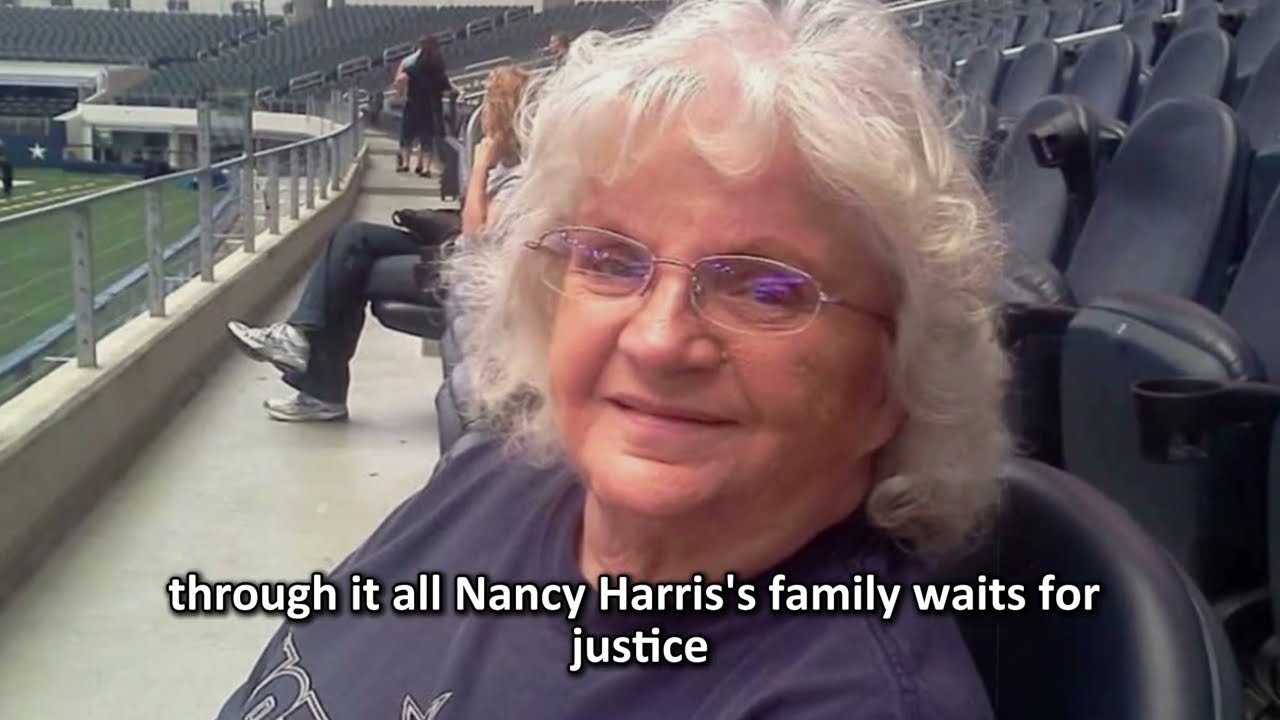
Through it all, Nancy Harris’s family waited for the justice they believed was owed to them.
By 2024, Johnson’s case reached the U. S. Supreme Court, his last real chance at review.
The court declined to hear it. In April 2025, his attorneys made a final desperate move, submitting a clemency petition to the Texas Board of Pardons and Paroles. They did not ask for freedom.
They asked for mercy.
The petition argued that Johnson had served 13 years, that he was a changed man, that execution was not necessary. It included testimonials from prison staff, family members, and religious advisers who described a man genuinely consumed by regret. On May 17, 2025, the Friday before his scheduled execution, the board voted unanimously to deny clemency.
 A last-minute lawsuit claiming procedural errors in the execution scheduling was struck down by the courts just two days before the execution date. Johnson had run out of options. Texas officials scheduled his execution for May 20, 2025, the 13th anniversary of the attack on Harris.
Whether intentional or coincidental, the timing added an eerie symmetry.
Johnson’s final days were spent in a holding cell in Huntsville, where he received visits from his spiritual advisers and prison chaplain. His wife and daughters came to say goodbye. There was no special last meal for him.
He received the standard prison meal issued to every inmate in the Texas system that day, and it is unknown whether he ate it.
At 6:00 p. m. on May 20, Johnson was moved to the execution chamber, a small clinical room with a gurney at its center.
Through the window, three of Nancy Harris’s sons, their wives, and one of her granddaughters watched. They had waited 13 years for this moment. Johnson was strapped down, and IV lines were inserted into his veins.
The warden asked if he had any last words. Johnson spoke for about two minutes, his voice calm and clear. He addressed Harris’s family directly, saying, “As I look at each one of you, I can see her on that day.
I pray that she’s the first person I see when I open my eyes and I spend eternity with her.”
He then turned to his own family, apologizing to his wife and three daughters for giving up on them. He thanked his spiritual advisers and offered words of encouragement to the men still on death row. “Continue on,” he told them.
“Jesus is the way.” He concluded: “I’ve made wrong choices, and now I pay the consequences. I’m done, warden.”
 The lethal injection of pentobarbital began immediately. Johnson let out a few guttural gasps, involuntary reflexes as the 𝒹𝓇𝓊𝑔 hit his system. Then something unsettling happened.
He began snoring loudly before the sound faded and his chest stopped rising and falling. At 6:53 p. m.
, he was pronounced dead.
Nancy Harris’s family remained stoic through the window. They made no statements to the press and showed little emotion, leaving quietly after witnessing the final chapter of a tragedy that began 13 years earlier. Outside the prison walls, a small group of protesters held vigil, some opposed to the death penalty, others believing justice had been served.
Texas Attorney General Ken Paxton released a brief statement: “Matthew Johnson has been executed and received the just punishment for the senseless, horrifying murder of Nancy Harris. He will never be able to hurt anyone again.” The execution was the fourth carried out by Texas in 2025.
One of Harris’s daughters-in-law had offered a profound reflection in an earlier interview about the family’s ongoing pain. “You don’t heal,” she said. “Days get easier, but there’s no day where it’s totally healed.”
Those words capture the enduring grief that no execution can fully address.
Johnson’s final moments were used to ask for forgiveness and express remorse. Whether that forgiveness will ever come is a question for Harris’s family alone. What is certain is that Nancy Harris’s life was taken in one of the most brutal ways imaginable, and Matthew Johnson paid the ultimate price under the law.
This case raises enduring questions about choices and consequences, addiction and violence, justice and revenge. It forces a reckoning with whether the death penalty serves any real purpose or simply perpetuates a cycle of loss. Two families were destroyed by what happened on May 20, 2012.
One more life ended in state custody on the same date 13 years later.