HUNTSVILLE, Texas — Charles Victor Thompson was pronounced dead at 6:47 p. m. Central Time on January 28, 2026, inside the execution chamber at the Huntsville Unit, closing a nearly three-decade legal saga that featured a double murder, a brazen walkout from a major county jail, and questions about justice that lingered until the final dose of pentobarbital entered his veins.
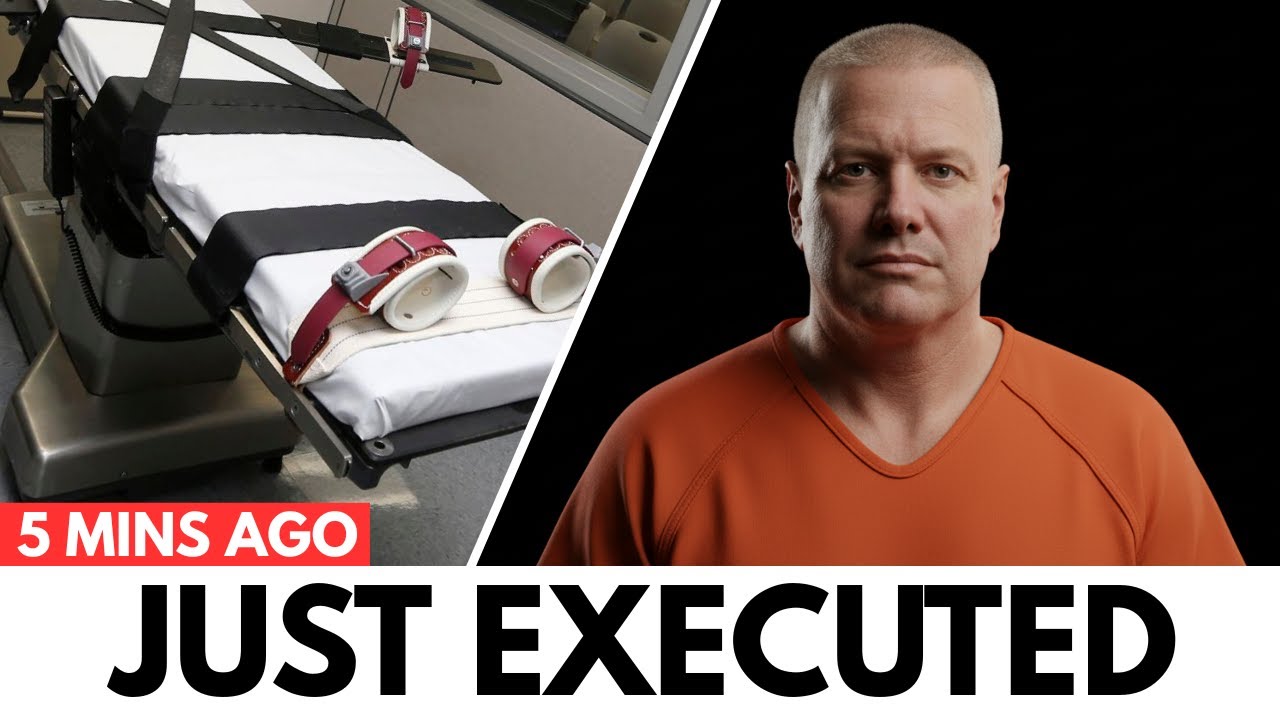
Thompson, 55, received a lethal injection for the capital murder of Glenda Denise Hazeslip, a woman prosecutors said he killed in a jealous rage on April 30, 1998, after she had ended their relationship and begun seeing another man. His execution proceeded after the U. S.
Supreme Court declined to intervene, exhausting the final appeal in a case that had wound through every level of the state and federal judiciary since his original conviction in 1999.
In his final statement, Thompson addressed the families of his victims, offering an apology and saying there were “no winners” in the long ordeal, only “more pain carried forward,” according to witnesses present in the chamber. The scene outside the prison was divided, with death penalty supporters and abolitionists gathering in the rain, their chants occasionally audible through the reinforced walls of the facility where Thompson took his last breath.
The Thompson case was never simple. The journey from that April night in 1998 to the execution chamber included an escape from the Harris County Jail that embarrassed law enforcement agencies nationwide and forced sweeping reforms in how high-profile detainees are supervised. It included disputed testimony, allegations of a murder-for-hire plot from inside a jail cell, and a legal battle over the precise cause of death that consumed the original trial.
The story began not with violence, but with the end of a relationship. By the spring of 1998, Thompson and Hazeslip had split, and she had begun seeing Darren Cain, a new partner who would become the other victim of Thompson’s rage. Friends and family members later described Thompson as intense and possessive, someone who refused to accept that the relationship was truly over.
To Thompson, the breakup appeared temporary, a hurdle he could overcome if he pushed hard enough.
On the night of April 29, 1998, police were called to Hazeslip’s apartment after a heated confrontation involving Thompson and Cain. Officers managed to de-escalate the situation and escorted Thompson away from the property. From the outside, the danger appeared to have passed.
But Thompson’s humiliation at being removed in front of his ex-girlfriend and her new boyfriend did not fade in the hours that followed. It festered. It intensified.
Just after midnight on April 30, Thompson returned to the apartment complex, this time armed. He forced his way inside and confronted both occupants in a scene that unfolded in seconds but would define the remainder of his life. Cain was struck first and died almost immediately.
Hazeslip was also shot, suffering catastrophic injuries that left her fighting for life. Emergency responders rushed her to the hospital, where medical teams worked through the night.
Thompson fled the scene, discarding the weapon and seeking refuge at the home of a trusted acquaintance, where he reportedly described his actions in chilling detail. By morning, he contacted his father, who helped arrange his surrender to authorities. At that point, the case appeared straightforward.
But the legal proceedings that followed would be consumed by a single, agonizing question: What actually caused Glenda Hazeslip’s death?
No one at trial disputed that Thompson pulled the trigger. The battle was over responsibility. Hazeslip had survived the initial injury and was transported by Life Flight helicopter to a Houston hospital, where doctors faced severe complications caused by internal trauma and swelling.
Days later, she was removed from life support and pronounced dead. The defense seized on that gap, arguing that her passing was not directly caused by the shooting.
According to that theory, medical errors and later decisions made by doctors and family members had broken the chain of responsibility. If the jury believed that argument, Thompson could not be convicted of capital murder. The prosecution pushed back forcefully, presenting medical experts who testified that the injury itself created an unavoidable crisis, one that would have been fatal even without complications.
Under Texas law, the prosecution argued, if a person’s actions set an irreversible chain in motion, that person remains responsible for the outcome. The jury sided with the prosecution. On April 14, 1999, Charles Thompson was sentenced to die.
But the state was not finished building its case. Prosecutors wanted to prove something beyond the murders themselves: that Thompson would always be dangerous, even behind bars.

While awaiting trial, Thompson was housed in the Harris County Jail, and prosecutors alleged he approached fellow inmates seeking help silencing a key witness, the very person who could connect him directly to the crime. An undercover investigator posing as a hitman met with Thompson in a monitored visiting booth, where the conversation was secretly recorded. During that conversation, Thompson allegedly offered payment and provided hand-drawn maps showing locations tied to both the witness and the discarded weapon.
The incriminating recording became a centerpiece of the sentencing phase. To the jury, it painted a picture of a man willing to eliminate obstacles from inside a jail cell. The result was clear: death row.
But years later, that evidence would be removed from the equation, and the sentence would still stand. In 2005, Thompson’s sentence was overturned due to procedural issues. He returned to court for a new punishment hearing, and this time prosecutors could not use the undercover recording.
Instead, they relied on testimony from another inmate informant who claimed Thompson had discussed a list of people he wanted silenced, either permanently or intimidated into staying away. The defense attacked the informant’s credibility, revealing he had worked dozens of cases with law enforcement and benefited repeatedly from cooperation. But the jury was not convinced.
Thompson was sentenced to death for the second time.
And this time, something happened that no one saw coming. On November 3, 2005, Thompson was still being held at the Harris County Jail, awaiting transfer to death row. That afternoon, he requested to meet with his attorney and was escorted to a visitor’s room, placed in handcuffs, and left alone.
Minutes later, Thompson slipped out of the cuffs, changed clothes, and walked toward the exit.
He was wearing khaki pants, a blue shirt, white tennis shoes, and flashing a 𝒻𝒶𝓀𝑒 identification badge that claimed he was a state investigator. One by one, guards waved him through. There were no alarms, no confrontation, no second glances.
He walked straight out the front door of one of the largest county jails in the United States. It was the only successful death row escape in the country in the 21st century.
The escape 𝓮𝔁𝓹𝓸𝓼𝓮𝓭 institutional failures that no one in the Harris County Sheriff’s Office wanted to admit. An internal investigation followed, leading to policy changes, enhanced badge verification protocols, and disciplinary actions against personnel responsible for the visitor’s room that day. The case became a national embarrassment and a training cautionary tale for corrections agencies across the country.
Thompson did not steal a car or hide in a safe house. Instead, he hopped a freight train and rode it east, sleeping in an open boxcar. Later, he described the experience as strange but liberating.
In Louisiana, he stole a bicycle and posed as a disaster evacuee, relying on the kindness of strangers for food and cash. But freedom did not last long.
On November 6, 2005, acting on a tip, police found Thompson outside a liquor store, intoxicated and using a pay phone. He was reportedly trying to arrange money for an international escape when he was taken back into custody. There was no bluff this time.
He was returned to the Texas prison system, and from that moment on, the clock slowed to a crawl as his case moved through every level of the legal system.
Over the next two decades, Thompson’s attorneys filed state appeals, federal appeals, and habeas petitions. Each one was denied. Courts consistently upheld both the conviction and the death sentence.
The legal arguments grew more procedural, more technical, and more desperate with each passing year. But the underlying facts of the case never changed, and neither did the judgment.
By 2025, there were no options left. A death warrant was issued, and the execution was scheduled for January 28, 2026. In interviews leading up to the date, Thompson acknowledged the reality of what was coming.
 He insisted, however, that his punishment only created more loss, not resolution. He said the families of his victims would not find closure in his death, that the pain would simply be carried forward by a new generation.
On the evening of January 28, 2026, Charles Victor Thompson was executed by lethal injection. He was 55 years old. His final statement included an apology to the families of Darren Cain and Glenda Denise Hazeslip.
Thompson said there were no winners in the case, only more pain carried forward. After nearly three decades, the case was officially closed. But the questions lingered.
Did time change anything? Did the escape reshape how people remember him? And does an ending like this ever truly feel like justice, or is it just the final chapter in a story that leaves everyone carrying something heavy?
Because some cases do not fade when the sentence is carried out. They echo. And the echo of Charles Victor Thompson’s crimes, his escape, and his execution will resonate in Texas legal history for decades to come.
For the families of the victims, the execution brings a formal end to a legal process that consumed their lives for 28 years. Whether it brings peace is another matter entirely. The Harris County District Attorney’s Office released a brief statement following the execution, saying justice had been served and thanking the jurors whose decisions kept Thompson on death row through two separate sentencing hearings.
The Huntsville Unit, known as the Walls Unit, has carried out more executions than any other prison in the United States. Thompson’s execution was the first in Texas in 2026. The facility has been the site of more than 500 executions since the state resumed capital punishment in 1982, and the procedure follows a strict protocol that has been tested and refined over four decades.
Advocates who opposed the execution cited Thompson’s escape and subsequent capture as evidence that the system could manage him without resorting to the death penalty. They argued that his 20 years on death row without serious incident showed he was no longer a threat to anyone. Supporters of the death penalty pointed to the brutality of the original crime and the murder-for-hire allegations as justification for carrying out the sentence.
They noted that Thompson had multiple opportunities to demonstrate remorse and instead attempted to flee justice, a decision that weighed heavily in the minds of the second jury that sentenced him. The medical examiner’s report from 1998 listed the cause of Hazeslip’s death as complications from gunshot wounds, a finding that would be revisited repeatedly in appeals but never overturned.
Thompson’s legal team had argued in their final petitions that the 2005 escape, while indefensible, was motivated by desperation rather than a continued capacity for violence. The courts were not persuaded. His final meal request was not publicly disclosed, a common practice in Texas in recent years as corrections officials have moved away from publicizing that detail of executions.
Witnesses who observed the execution said Thompson appeared calm in his final moments, speaking his last words in a steady voice before the drugs took effect. The entire procedure lasted approximately 20 minutes. The executioner administered a single dose of pentobarbital, the standard protocol in Texas.
Thompson’s breathing slowed and then stopped, and he was pronounced dead shortly afterward.
Among those who witnessed the execution were members of the victims’ families, who declined to speak to reporters afterward. A representative read a brief statement on their behalf expressing relief that the lengthy ordeal was finally over. Outside the prison, the crowd that had gathered throughout the day began to disperse as news of the execution spread.
Some embraced, others stood in silence.
 The case has been cited in legal textbooks as an example of the complexities of capital punishment, including the challenges of proving causation in cases where victims survive initial injuries but later die. It has also been studied as a case study in jail security failures. The Harris County Sheriff’s Office overhauled its procedures for high-profile detainees following Thompson’s 2005 escape.
Those reforms included increased use of restraints during attorney visits, enhanced badge verification protocols, and more rigorous checks of individuals exiting the facility through secure areas. Thompson’s escape was the subject of a segment on a national investigative journalism program, and his story has been the basis for multiple true crime podcasts and documentary features.
In interviews granted from death row in his final years, Thompson maintained a complex public persona, sometimes expressing remorse and other times deflecting responsibility for the crimes. Those conflicting narratives followed him to the execution chamber. His final statement was apologetic and reflective, a tone that some observers found at odds with the man who had once planned to have a witness murdered.
The case raises uncomfortable questions about the death penalty, including whether three decades between sentencing and execution constitutes cruel and unusual punishment, a claim repeatedly rejected by the courts. It also raises questions about closure. The legal system has concluded its work.
Charles Victor Thompson is dead. But the families, the witnesses, the guards, and all those connected to this case carry the weight of what happened.
Glenda Denise Hazeslip was 32 years old when she was killed. Darren Cain was 33. Their lives were cut short by a man who could not accept that a relationship had ended.
Nearly three decades later, the state of Texas carried out the sentence for those murders. The death warrant was satisfied. The paperwork was closed.
The cell on death row will be cleaned and assigned to another inmate.
But the echoes of April 30, 1998, remain. They are present in the memories of the families, in the legal precedents established by the appeals, and in the institutional scars left by the escape. The case of Charles Victor Thompson will continue to be studied, debated, and referenced long after the news cycle has moved on.
It is a story about obsession, rage, and the long arm of the law.
It is also a story about the limits of punishment. Did Thompson’s death achieve anything that his life in prison could not? That is a question no execution can answer.
For now, Texas has closed its file on Charles Victor Thompson. The execution chamber at Huntsville has been cleaned. The witnesses have gone home.
The story, however, is not over.
In the coming weeks, there will be retrospectives, academic analyses, and likely renewed debate about the death penalty in Texas. The Thompson case will be at the center of that conversation. His escape alone ensures his place in criminal justice history.
He was the first and only death row inmate to successfully walk out of custody in the 21st century, a fact that still haunts corrections officials.
The reforms implemented after his escape have been credited with preventing similar incidents. In that sense, Thompson’s brazen act may have inadvertently made the system safer. But that is cold comfort to those who lost loved ones in 1998.
They waited 28 years for the execution that took place tonight. It was a long wait, and the relief it brings is likely tempered by the enduring pain of their loss.
Charles Victor Thompson is gone. The questions he raised, about responsibility, about remorse, about justice, remain unanswered. And that may be the most fitting epitaph for a case that never offered simple resolution.
The final chapter has been written, but the story of what happened in that apartment complex on the last night of April 1998 will continue to be told for as long as the criminal justice system examines what it means to seek justice, and whether it can ever truly be found.