PITTSBURGH — The frozen December air hung thick with horror when police officers stepped into the bathroom of a modest Squirrel Hill home and found a young doctor’s body crumpled in the bathtub, his eyes stabbed out, his neck bound with a knot so intricate it would later chill the FBI to its core.
The murder of 26-year-old Dr. Jeffrey Farkas, a beloved pediatric intern at Children’s Hospital, remains one of the most savage and psychologically disturbing killings in Pittsburgh history. It was a crime so grotesque, so theatrical in its violence, that veteran detectives found themselves face-to-face with something they had never encountered before: a real-life Freddy Krueger stalking the wintry streets of a city that thought itself safe.
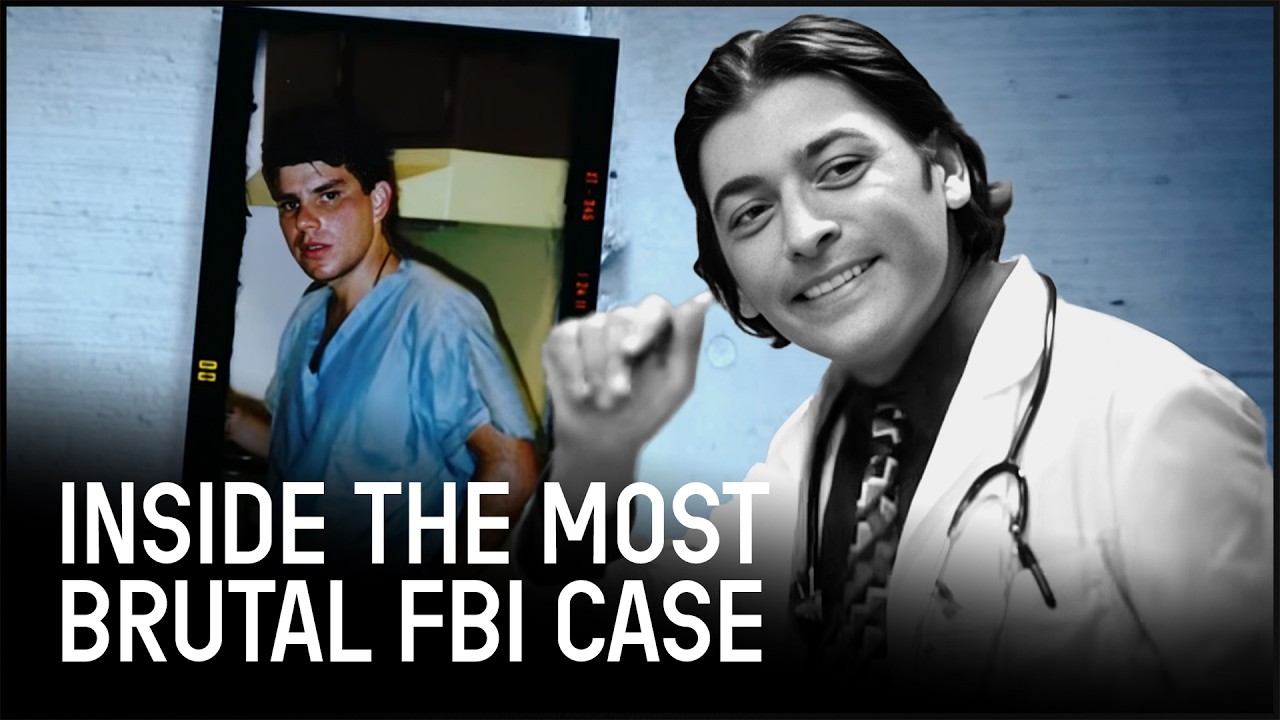 On the night of December 3, 1989, Farkas left his rented home on Beechwood Boulevard to help a friend whose car battery had died at a nearby restaurant. It was an act of kindness that would cost him his life. When he returned, a predator was waiting inside.
“He said, ‘Catch him because he’s probably done it before and he’ll do it again,'” Pittsburgh homicide detective Commander Freeman recalled of the FBI profiler’s chilling warning. “It was very chilling. It still does give me chills when I think about it.”
The scene that greeted investigators was unlike anything they had ever witnessed. Farkas had been stabbed repeatedly in the chest, neck, and head with four knives and a pair of scissors. One knife was bent.
One was broken. The killer had targeted his victim’s eyes with deliberate, almost ceremonial precision.
“It appeared to us that he had been picked up and pile-driven into the bathtub,” one detective said. “His head was cocked, his feet were leaning out of the tub. He was tied up.
He was stabbed. He appeared to be strangled with a cord.”
The toilet tank lid had been shattered into pieces and thrown into the tub. An iron from downstairs had been broken and left at the scene. The attacker, police realized, had taken time to move through the house gathering weapons, crafting a scene of chaos that spoke to a singular, terrifying mindset.
“Clearly, this person is of one mindset: I’ll do whatever it takes to 𝓀𝒾𝓁𝓁 the victim,” a detective said.
The overkill baffled even the most seasoned homicide veterans. Pittsburgh in 1988 had only 24 homicides, all of them solved. In 1989, the city was in the midst of a transformation from a rust belt has-been to a hub of education, technology, and medicine.
Children’s Hospital was the crown jewel of that renaissance, attracting top-tier medical talent from across the country.
Farkas was among the best of that new breed. He had graduated from medical school at Wayne State University in Michigan, where a rotation in a Detroit emergency room 𝓮𝔁𝓹𝓸𝓼𝓮𝓭 him to the brutal realities of violent crime. He had been mugged himself, his friend shot.
He moved to Pittsburgh specifically because he believed it was a safe city.
“That’s so typical, Jeff. He’s the kind of person that you would call. He would have said, ‘I’ll be there in 10 minutes,’ even though he was home, nice and warm,” his father, Jerry Farkas, later said through tears.
Jeff’s special gift was with children. He had a natural ability to ease a child’s fear of the medical environment. He would place his stethoscope on a young patient’s stomach and say, “Oh, good morning, Mr.
Stomach. Boy, you sound great today, much better than yesterday.” One young girl suffering from Crohn’s disease thought the world of it.
It made her hospital stay tolerable.
The irony of his death was not lost on anyone. He came to Pittsburgh seeking safety. He found a nightmare.
When Farkas’s roommate, also a doctor, returned home shortly after 4 a. m. , he noticed the lights on upstairs and Jeff’s car missing from outside.
The door was open a crack. Inside, he found Jeff’s wallet strewn across the kitchen floor with credit cards scattered about, and a bloody knife. He grabbed something to protect himself and went upstairs, into the bathroom, where he found his friend and roommate in a horrific fashion.
He didn’t stay long enough to call police. He ran out, jumped into his car, and drove to the Zone 6 police station, screaming, “My roommate’s been murdered.”
Officers rushed to the scene. The entire homicide squad was called out, along with the entire mobile crime unit. The house was ransacked, evidence of a struggle everywhere.
But there was no sign of forced entry. No broken windows. No broken door.
That detail suggested something that made the case even more troubling: the victim may have known his killer.
 But the deeper detectives dug into Jeff Farkas’s life, the less that theory held up. He didn’t have an enemy in the world. He wasn’t dealing drugs.
He wasn’t having an 𝒶𝒻𝒻𝒶𝒾𝓇. He was a kind, giving person who touched hundreds of lives in just six months at Children’s Hospital.
“This was overkill,” one investigator said. “There was a lot of violence there. They’re probably trying to send a message.
In cases like this, it’s always somebody the victim knew.”
But the random nature of the scene, the scattered wallet, the missing VCR, CD player, telephone, and camera, pointed to a different motive: a burglary gone horribly wrong.
As the sun rose on one of Pittsburgh’s most gruesome killings, an icy fear gripped the city. In a quiet, snowy neighborhood, the savage murder of a beloved pediatrician grabbed headlines. People were frightened.
They asked coworkers to walk them to their cars. The whole city was on edge.
Investigators found two three-dimensional shoe impressions in the snow outside the home, made by size 13 shoes that matched neither Jeff nor his roommates. Forensic techs carefully made snow casts, spraying the impressions with a specific chemical to prevent them from melting.
They also discovered a carved wooden Caribbean art mask near the body. It had stab marks in the eyes, matching the wounds on Jeff. The mask was a childhood present, brought back from Nassau by his parents on a business trip.
It was special to him, kept in his bedroom close by.
“You’ve got to ask yourself, what’s the significance of the mask?” a detective said. “That is really the person who’s responsible conveying a message to us and to the world: You’re not going to identify me for this.”
The FBI was called in because of the highly unusual nature of the crime. The overkill, the eyes, the mask, the unique knot tied around the victim’s neck. A criminal profiler from the behavioral sciences unit studied the evidence and delivered a dire warning: catch this man, because he has likely killed before and he will 𝓀𝒾𝓁𝓁 again.
Investigators followed lead after lead. They interviewed everyone in Jeff’s inner circle, going all the way back to high school. They even interviewed his paper girl.
They found nothing negative about him. He was, by all accounts, a genuinely good person.
A breakthrough came when neighbors recalled a tall young Black man who had knocked on their doors that night, asking for a woman named Cindy. It was a classic burglary trick: knock on a darkened house, make up a name, and if someone answers, move on. One neighbor watched him walk down her steps and head toward the next house.
Another neighbor was so suspicious he called police. A patrolman searched the area but found no one. The killer, police later realized, was already inside Jeff’s house.
Neighbors provided enough detail for a composite sketch: a tall Black man wearing an army coat with a hoodie, carrying a dark knapsack.
The APB on Jeff’s missing 1989 Acura paid off when the car was found the next morning three miles away in Homestead, across the Monongahela River. Footwear impressions in the snow near the car matched those at the murder scene. But technicians found no fingerprints, no fibers, no evidence linking anyone to the car.
Police canvassed Homestead, talking to bus drivers and cab companies. Nothing. Then they spoke to a Homestead police officer who recognized a man walking near where the car was found.
“He’s one of our bad guys. He’s a real criminal,” the officer said. The man was Lucas Hillman, a violent criminal with a long history of armed robberies, burglaries, thefts, and 𝒹𝓇𝓊𝑔 use.
But his fingerprints didn’t match the partial print found on the bathroom door, and his alibi checked out. He was cleared.
The partial thumbprint on the bathroom door had an unusual characteristic: a straight line across the bottom, suggesting the person who left it was wearing a band-aid on that finger. It was a crucial detail that would eventually crack the case.
 Rewards and the composite sketch brought in a flood of tips. One caller mentioned a man named Jamal Jackson who looked like the sketch and was seeing a girl named Cindy, a detail police had never released to the public. Jackson had a long criminal history of violence and drugs.
He habitually wore a backpack and a green army jacket. But his alibi checked out, and his shoe size didn’t match the prints. He, too, was cleared.
Then detectives returned to Homestead, retracing the killer’s steps. They stopped at the first fast-food place past the Homestead high-level bridge. The manager remembered a man who came in that night.
He was so tall, and he was wearing a backpack and an army-type jacket with the hood up. He ordered a triple cheeseburger, paid cash, and vanished.
When witnesses re-interviewed, they clarified something crucial. Detectives had assumed “tall” meant 6’3″ or 6’4″. The witnesses corrected them: they meant tall like the center on a basketball team.
6’7″. 6’8″. Something like that.
Investigators contacted the parole supervisor and asked for a list of recently released offenders from the Duquesne, Homestead, and Munhall area. They eliminated everyone 6’4″ and below. They only looked at people 6’5″ and above.
That’s when they found William Yarborough, 24 years old, 6’8″, on parole for a burglary in the same general area.
“As soon as I saw his picture, I told my partner, ‘This is him,'” one detective said. “We actually drew a hood on the picture, and it looked just like the composite.”
They compared his fingerprint card to the partial thumbprint from the bathroom door. The fingerprint technician came running into the commander’s office, shouting, “It’s him. We got him.
We got him.”
Yarborough was a cook at a fast-food restaurant not far from Jeff’s house. Police went to the restaurant, asked him to come outside, and took him into custody without incident. In his locker, they found a large pair of size 13 shoes.
The pattern on the sole matched the impressions left in Jeff’s yard and near his abandoned car. Technicians found a drop of Jeff’s blood on one of the shoes. And when Yarborough was arrested, officers observed a band-aid on one of his fingers, exactly matching the fingerprint technician’s analysis.
Investigators learned that Yarborough had been sent to a camp for troubled youth as a child, where he was taught knot-tying. The intricate knot found around Dr. Farkas’s neck was one of the knots he had learned at that camp.
They also learned of his lurid fascination with slasher films. He was obsessed with them, particularly with Freddy Krueger. The stabbing of the victim’s eyes and the eyes of the mask mirrored the over-the-top symbolism of the horror movies he idolized.
At trial, prosecutors laid out their theory: Yarborough had been going door-to-door through the neighborhood, looking for a place to break into. When anyone was home, he moved on. He went to Farkas’s house, knocked, received no response, tried the front door, and found the latch open.
Someone had simply forgotten to lock it. A small but fatal oversight.
Yarborough entered and began ransacking the house. When Jeff returned home, Yarborough acted on his sick desires.
“He had an opportunity, and he lived out his fantasy that he would see on screen,” a prosecutor said. “Dr. Farkas ran into a buzzsaw.
He was getting some kind of emotional high off of this, and that fed into him.”
On December 3, 1990, exactly one year to the day after the murder, William Yarborough was convicted of robbery, burglary, and first-degree murder. The jury deliberated for just three hours. He was sentenced to life in prison without the possibility of parole.
“I was elated,” Jerry Farkas said. “I was happy that they caught him. I’m glad that he’s off the streets, that he can’t do this again to anybody else.
 But my feeling was it’s not going to bring my son back.”
Jeff’s father never got the chance to see his son work as a doctor. He had planned to visit Pittsburgh to see Jeff at Children’s Hospital, to see him in his work environment. That opportunity was stolen on a frigid December night by a monster who had slipped into a home with an unlocked door.
The FBI’s warning had proved prescient. Investigators had no doubt that Yarborough would have killed again given the chance. “We don’t know how fast his predatory clock is ticking.
Some it will be days between killings, some it will be weeks, and some it will be months. With this person, we didn’t know how fast that clock was ticking.”
Children’s Hospital continues to honor Dr. Jeffrey Farkas with an annual award given to the top intern of the year who shows the most compassion toward patients and parents. It’s an award based on the way Jeff lived his life.
It has been kept going in his name for decades.
“I truly do believe in evil and its presence in the world,” Jerry Farkas said. “But I also believe in good, and Jeff was one of the good guys. The hardest part about him being gone is that we can talk about him and about his memory and the lives he touched, but think about what he could have accomplished if he hadn’t been taken at such a young age.”
In the dead of winter, when the bitter cold sinks into the marrow of Pittsburgh and the howling icy winds make residents wonder why they ever leave their homes, the memory of Dr. Jeffrey Farkas endures. A young man with an infectious grin and a mischievous twinkle in his eyes, who came to a city he thought safe, who wanted nothing more than to heal children, and who met his end at the hands of a real-life monster who had watched one too many horror films.
The case terrified the FBI. It haunted the detectives who worked it. It shattered a family.
But it also brought an entire city together in fear and resolve, proving even in the darkest of winters, the light of a good man’s memory can never be fully extinguished.
Farkas’s roommate Kent Driscoll, who found the body, was initially a suspect but was eventually cleared. The other roommate, Donovan Lenz, was eliminated early on with a solid alibi. Yarborough, the true killer, had been a stranger to his victim, which is exactly what made the case so difficult to solve.
The random nature of the attack meant there was no motive to trace, no relationship to uncover, only the terrifying reality that anyone could have been in Jeff’s place that night.
Today, the crime serves as a chilling reminder of the fragility of life and the randomness of evil. The case also stands as a testament to the relentless work of Pittsburgh detectives who refused to let a monster walk free, who canceled vacations and off days, who sifted through hundreds of parole records, and who followed every tip, no matter how far it led them astray.
For the FBI, the case became a textbook example of criminal profiling and the psychology of overkill. For the city of Pittsburgh, it became a scar that never fully healed. And for the family of Jeffrey Farkas, it became a lifelong mission to ensure that his compassion, his generosity of spirit, and his dedication to healing children would never be forgotten.
The annual award at Children’s Hospital ensures that his legacy lives on, that each generation of young doctors is reminded of the standard of care and compassion that Jeff Farkas embodied. It is a small but powerful tribute to a life cut tragically short, a life that touched hundreds of people in just a few short months.
As his father said, “One of the worst things that can happen is the death of a child because it’s against nature. A child is not supposed to die before you do.”
William Yarborough remains in prison, serving a life sentence without parole. He is the embodiment of the monster the FBI warned about, a man who trained at a camp for troubled youth, who learned knots, who watched slasher films, and who acted out those fantasies in the most brutal way imaginable against an innocent victim who only wanted to help a friend with a dead car battery.
The snow has long since melted from the yard on Beechwood Boulevard. The house has new occupants. Time moves forward.
But for those who were there, for those who saw the crime scene, for the family and friends who loved Jeff Farkas, the horror of that December night will never fade. It lingers like the bitter Pittsburgh cold, a reminder of the evil that exists in the world, and of the goodness that was taken from it too soon.
In the end, the capture of William Yarborough was a victory for justice, but it was a hollow one. It didn’t bring back a son, a friend, a doctor who had so much to give. It didn’t erase the images of a brutalized body in a bathtub.
It didn’t answer the question that every parent who has lost a child asks: Why?
Detectives who worked the case believe Yarborough would have killed again. The FBI profiler was certain of it. The tight knot around Farkas’s neck, the stabbing of the eyes, the placement of the mask, all pointed to a killer who enjoyed the act, who savored the violence, who was already planning his next 𝓀𝒾𝓁𝓁.
But he never got the chance. Pittsburgh’s finest stopped him. And in doing so, they likely saved countless other families from the same devastating loss that Jerry Farkas and his family endured.
The case of Dr. Jeffrey Farkas remains one of the most 𝓈𝒽𝓸𝒸𝓀𝒾𝓃𝑔 chapters in Pittsburgh’s criminal history, a real-life horror story that terrified the FBI and left an indelible mark on the city’s soul.


