The search for Ruth Wilson, a 16-year-old girl who vanished from a bridle path on Box Hill in the Surrey Hills on a November morning in 1995, has been reignited by a team of investigators who now believe she did not run away but met with foul play. For more than two decades, the official narrative has been one of a missing person case without evidence of a crime, but a retired police officer and a journalist have uncovered troubling details that challenge that version of events, painting a picture of a deeply troubled teenager who may have been planning to end her own life or was intercepted by someone she trusted.

Ruth Wilson was last seen alive standing by the side of a road near Box Hill, a beauty spot in the Surrey Hills, after ordering a taxi to take her there instead of going to school. The taxi driver reported dropping her off at a bridleway and watching her stand there, either waiting for someone or intentionally misleading him about her destination. That morning, she had sent a bouquet of flowers to her stepmother, scheduled to arrive two days later, a gesture that now appears to have been a dark farewell.
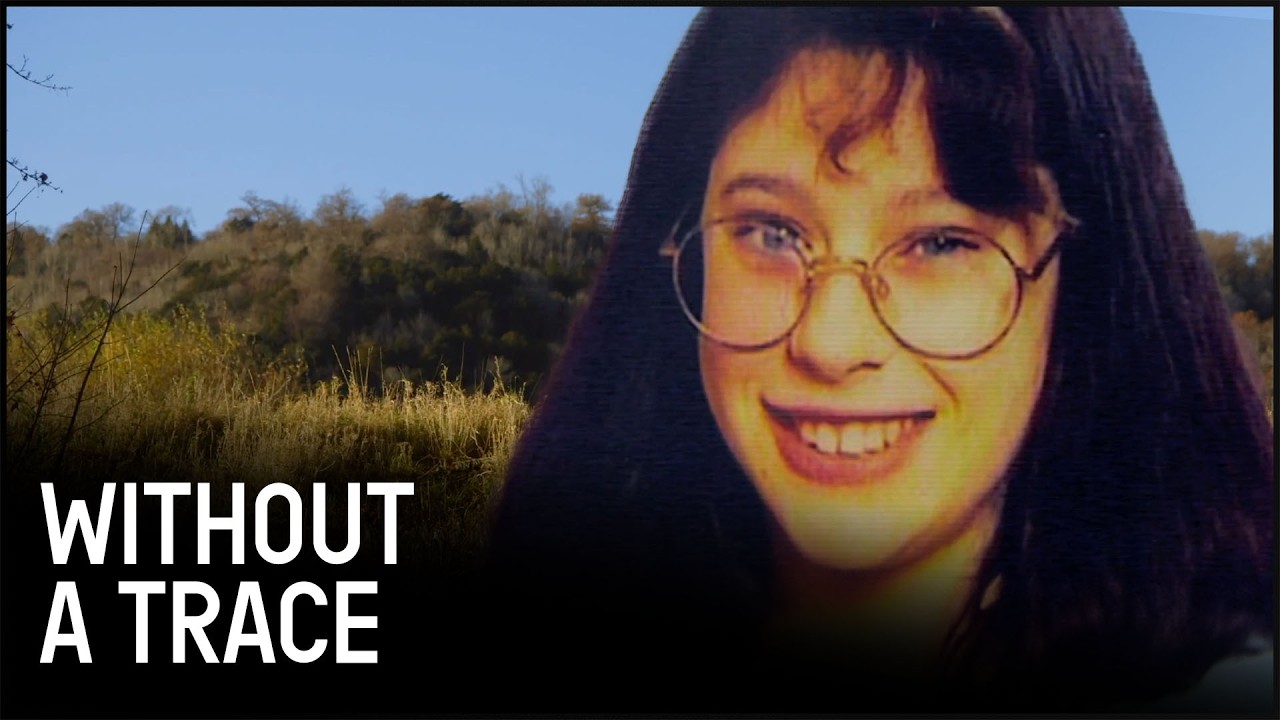 Her family, at the time, maintained she was a happy girl from a picture-perfect village, the daughter of a parish councillor, involved in church bell-ringing and choir. But the investigation by Martin Bright, an experienced journalist, and Liam, a retired police officer whose career included counterterrorism operations, has revealed a hidden world of secrecy and unhappiness.
The case had long haunted Bright, who first wrote about missing people in 2002 and was struck by the peculiar circumstances of Ruth’s disappearance. He noted that the official story never added up: a 16-year-old from a rural village, without a passport, without using her bank card, could not simply vanish and build a new identity. “Somebody that’s 16 years of age to run away, as they’re saying, and be able to give herself a brand new identity, coming from a rural village, I would say is impossible,” Bright said in a recorded interview included in the investigation.
Liam, who spent 30 years in policing and became obsessed with the case after moving to Dorking in 1994, refused to accept that Ruth could have disappeared without a trace. “You can’t just disappear. I can’t accept that,” he stated.
The breakthrough came when Bright and Liam spoke to friends of Ruth who had never come forward publicly before. Catherine, a close friend who ran away from home at the same time, revealed that Ruth was not the happy, well-adjusted girl portrayed by her family. Instead, she was deeply troubled, having recently discovered the truth about her biological mother’s death.
The family had told Ruth that her mother died after falling down stairs, but Ruth learned that her mother had actually committed suicide. This revelation devastated her, and she had spoken to friends about leaving home permanently. “She was really distressed that day.
That was the day it all kind of unraveled and fell apart,” Catherine said. Another friend, Roxy, recalled that Ruth had planned to join her in Sheffield if she could get away, but she never made it.
The investigation also uncovered that Ruth’s stepmother, Ian Wilson’s wife, had received the flowers, and that the family had not cooperated with any inquiries. Bright wrote a letter to Ian Wilson, who responded emotionally but declined to participate, stating that it was “complicated.” The police, too, were reticent, refusing to release the case file under a Freedom of Information request, citing an active investigation.
This only fueled suspicions that something was being hidden. Liam and Bright pressed on, conducting interviews with local residents, but many were loath to speak without the Wilson family’s blessing, reflecting a community that seemed determined to keep its secrets.
The official version, that Ruth Wilson is a missing person with no evidence of crime, remains the police stance. But Liam pointed out that the circumstances should have been treated as suspicious from the start. “She either didn’t want the taxi driver to see where she was going to go, or she was waiting to meet somebody who was going to pick her up in the car.
 This should have been treated as suspicious from the very beginning,” he said. Bright added that the lack of curiosity from authorities and the family’s reluctance to engage are deeply troubling. “I still all these years later am haunted by the belief that that wasn’t the whole story,” he said.
Ruth’s friends have provided a clearer picture of her state of mind. She was a studious, somewhat unconventional girl who was bullied and felt excluded. Her dress sense was quirky, and she struggled with the absence of a maternal figure after her mother’s death.
The discovery of her mother’s suicide appears to have been the breaking point. “She knew her mom had fallen down the stairs, but something obviously didn’t add up for her. She pursued it and looked for the truth.
And found it. Bit of a shocker,” Catherine said, describing the moment she saw the death certificate.
The investigation has now taken a decisive turn. Bright and Liam, along with the help of former deputy editor of a local newspaper who had successfully reopened a similar missing person case in 1968, have placed an appeal in the local press, hoping to jog memories and encourage witnesses to come forward. The hope is that someone in the community who knows what happened to Ruth will finally speak.
“It could be that there is someone there that just needs that little push and that the publicity could lead to some vital information which ultimately, of course, could lead to the solving of the case,” Bright said.
The Wilson family issued a statement in response to the new findings, acknowledging that Ruth had discovered the true cause of her mother’s death but insisting she always knew her biological mother had died, if not the exact cause. They rejected claims that her childhood was built on secrecy and lies, saying the family was “extremely hurt” by such assertions. But the friends’ testimony has cast doubt on the family’s narrative.
One friend, a mother whose daughter had a sleepover with Ruth shortly before her disappearance, recalled that Ruth desperately did not want to go home. “She didn’t say why. She just really didn’t.
 As a mother at that time, it disturbed me greatly,” she said.
Liam, who has dedicated his retirement to unraveling the mystery, now believes Ruth is dead. “It’s my belief that she met someone and something happened. The end game is, if nothing else, to make this fellow sweat.
Don’t go to sleep with a clear conscience because there’ll be more people like me out there that will take an interest in this case,” he said, his voice tinged with frustration. Bright echoed that sentiment, adding that the case has become a personal mission. “This is a story that just niggles away at you.
You can’t quite forget. The disappearance of Ruth Wilson is one of those stories.”
The investigation has highlighted the corrosive effect of secrecy, both within families and communities. “Secrecy can cause real damage. People keep secrets for all sorts of reasons, from shame to protecting loved ones.
But very often they have a corrosive effect, eating away at trust, whether it’s in a family, a community, or society itself,” Bright said. Ruth’s friends have pleaded for anyone with information to come forward, even if it seems insignificant. “If someone could come forward with new information that we’ve been looking for for the past 22 years, even if it didn’t seem like anything at the time, just get talking about it,” Roxy urged.
The search for Ruth Wilson is now a cold case that has been reignited by the determination of a retired cop and a journalist who refused to let her story be forgotten. The Surrey police have declined to comment on the ongoing investigation, but Bright and Liam have vowed to keep pressing for answers. “She is a child of Dorking.
People of Dorking have a right to know what happened to this child, even if Mr. and Mrs. Wilson want to put it behind them.
 I believe everybody else has a right to know,” Bright said.
As the investigation continues, the mystery of what happened on Box Hill that November day in 1995 remains unsolved. But the new evidence suggests that Ruth Wilson did not simply vanish into thin air. She was a young girl with a fractured past, a secret she could not bear, and a determination to escape her life.
Whether she succeeded in leaving or met a tragic fate is still unknown. What is clear is that someone knows where she is, and the passage of time has not dimmed the urgency of finding the truth. “Somebody knows where she is.
One of the important roles of a journalist is asking questions on behalf of the public that are uncomfortable to ask,” Bright said. For Liam, the case has become an obsession. “I would not rest.
Anybody that offered any genuine form of assistance, I would accept it. I wouldn’t ignore it,” he said.
The story of Ruth Wilson is a stark reminder that behind every missing person case lies a web of relationships, secrets, and unanswered questions. The investigation continues, and the hope is that the publicity will finally bring closure to a case that has haunted a community for nearly three decades. As Bright put it, “The thing about secrets is that they have a tendency to come out in the end.”
The search for Ruth Wilson is far from over.