Katy Perry is speaking out after one of her most famous songs was used in a government video she says completely goes against its meaning.
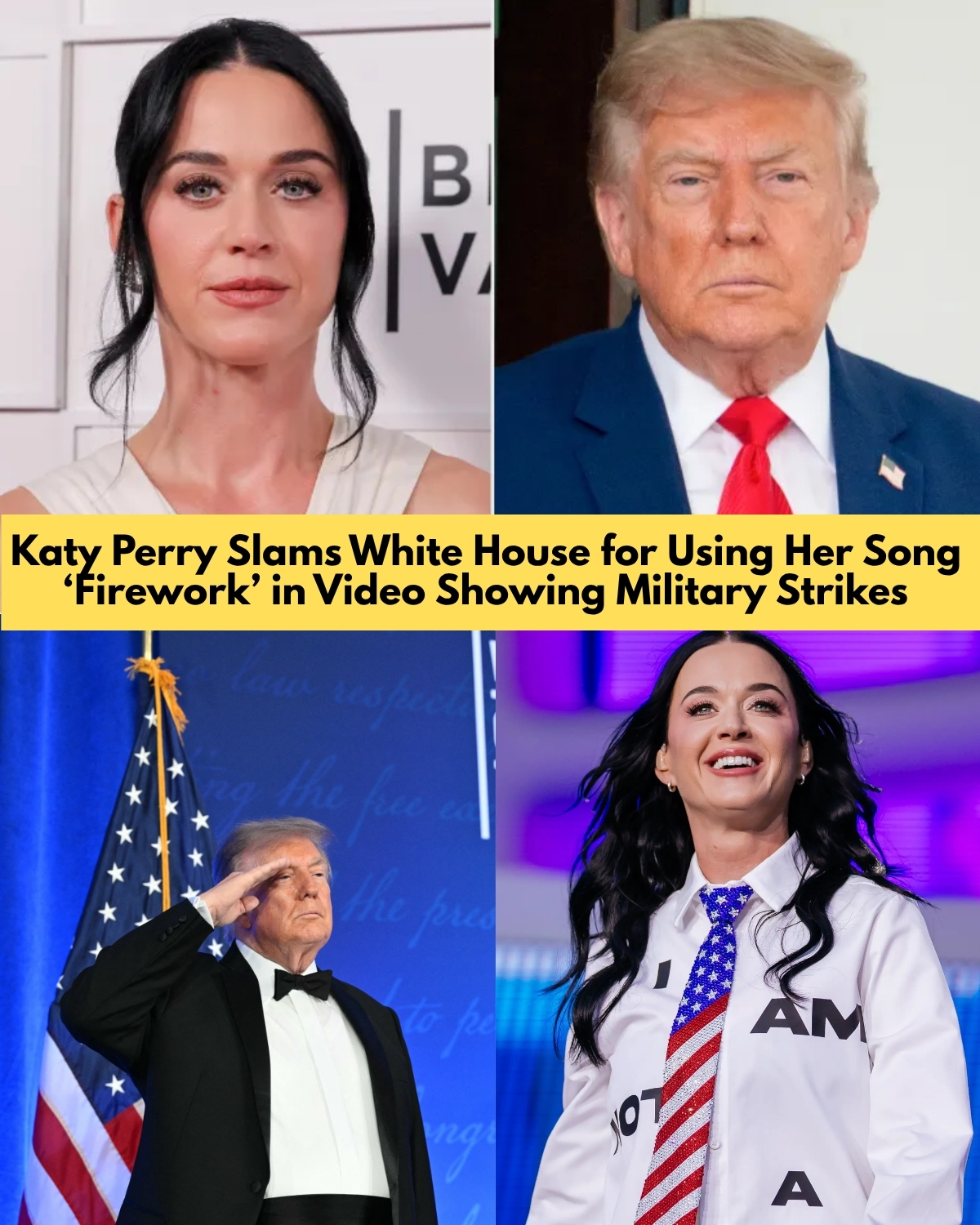
The pop star publicly criticized the White House after its official TikTok account used her 2010 hit “Firework” in a video showing U.S. military strikes in Iran. According to PEOPLE and other outlets, the video featured footage of explosions and military action while the song played in the background, with the “boom, boom, boom” lyric timed to images of strikes.
For Perry, the issue was not just that the song was used.
It was how it was used.
Katy Perry Says She Did Not Approve the Video
Perry responded on X on Saturday, July 25, making it clear that she had not given permission for “Firework” to be used in the White House post.
“I did not approve this, I was not asked, and I absolutely do not condone it,” she wrote, according to Us Weekly and Variety.
Her statement was direct and emotional.
She said she was “deeply appalled and angry” to see the song used as a backing track for video footage of military strikes.
That reaction immediately turned the post into a larger conversation about artist consent, political messaging and whether music written for hope should ever be used to frame violence.
“Firework” Was Written as an Anthem of Hope
Perry also explained why this particular song choice upset her so much.
She said “Firework” was written as an anthem of hope, healing and inner strength for people going through their darkest personal moments. To see it used alongside images of destruction, she said, was a “complete violation” of everything the song stands for.
That point matters because “Firework” has lived for years as one of Perry’s most uplifting songs.
Since its release in 2010, the track has been used at graduations, celebrations, personal milestones and moments of encouragement. It became a song about self-worth and pushing through pain.
That is why Perry’s response was so forceful.
To her, the White House did not simply borrow a recognizable hit.
It turned a message of healing into a soundtrack for warfare.
The White House Video Sparked Immediate Backlash
The video was reportedly posted to the official White House TikTok account on Thursday and included footage connected to military strikes in Iran. The post was captioned “Iran has been warned,” according to The Washington Post, Variety and TheWrap.
The most controversial detail was the timing of the song’s lyric “boom, boom, boom” with explosive military imagery.
That pairing is what made the clip feel especially jarring to many viewers.
“Firework” is not a war song.
It is not a threat song.
It is not a political attack song.
And Perry made it clear that she does not want it used that way.
The Song’s Meaning Was Turned Upside Down
Part of the outrage comes from how recognizable “Firework” is.
The chorus is built around the idea of personal light, courage and self-belief. The song invites people to see themselves as something bright and powerful, even when life feels dark.
The White House video used that same language of brightness and explosion in a literal military context.
That contrast is why so many fans supported Perry’s criticism.
The song’s imagery was meant to describe inner strength.
The video used it to accompany external destruction.
That difference is not subtle.
Katy Perry Joins a Growing List of Artists Objecting to Political Song Use
Perry is not the only artist who has recently objected to the use of music by the Trump administration or White House-linked political messaging.
The Guardian reported that several artists, including Olivia Rodrigo, Beyoncé, Kesha, Sabrina Carpenter, Ariana Grande and Jess Glynne, have criticized the use of their music in government or political social media content tied to military action, immigration arrests or deportation efforts.
The Times of India also noted that artists including Céline Dion, Bruce Springsteen and Sabrina Carpenter have objected to their music being used in political contexts without approval.
The issue is not new, but social media has made it more visible.
A song can now be dropped into a viral government video, campaign clip or political post and spread to millions of viewers within hours.
For artists, that creates a serious problem: their music can be attached to a message they never agreed to support.
Why Artist Consent Matters
Music is emotional.
That is why political campaigns, governments and public figures want to use it.
A familiar song can change the feeling of a video instantly. It can make something seem triumphant, nostalgic, funny, patriotic, threatening or inspirational.
But when the artist does not approve the use, the message can become misleading.
Fans may assume the musician supports the video, the policy or the political figure behind it.
Perry’s statement was designed to prevent exactly that.
She wanted the public to know that she did not approve the use, was not asked for permission and does not support the message created by pairing her song with military strike footage.
“Firework” Belongs to a Very Different Emotional World
There is another reason this controversy feels so sharp.
“Firework” is one of Katy Perry’s defining songs.
It is not a random album track. It is one of the records most closely tied to her public image as an artist who writes colorful, emotional pop anthems about confidence, survival and transformation.
That makes the White House use feel even more personal.
For Perry, the song has a legacy.
For fans, it has memories.
For many listeners, it may be tied to moments when they needed encouragement.
Seeing that same song used over explosions was bound to feel disturbing to the people who connect with it as a message of hope.
The White House Has Not Publicly Resolved the Dispute
As of the latest reports, the White House had not clearly confirmed whether it sought permission to use “Firework” in the TikTok post.
That unanswered question is part of what keeps the controversy alive.
If permission was not obtained, the issue may raise copyright and licensing concerns. If permission was obtained through a platform mechanism, the question of artist approval and moral association still remains.
Either way, Perry’s public message was clear:
She does not want her song used to promote violence.
A Pop Anthem Becomes a Political Flashpoint
The controversy around “Firework” shows how quickly a familiar song can become part of a much bigger debate.
For some viewers, the White House video may have been intended as a forceful message about military power.
For Perry and many fans, it was a misuse of a song meant to help people feel strong during painful personal moments.
That gap is the entire story.
One side used the sound of “Firework” as spectacle.
The artist behind the song heard it as a betrayal.
Katy Perry Is Defending the Meaning of Her Own Song
Artists cannot always control how listeners interpret their music.
But they can speak up when their work is used in a way that directly contradicts what they believe it stands for.
That is what Katy Perry did.
She reminded people that “Firework” was never meant to be a soundtrack for missiles, explosions or warnings.
It was meant for people who needed to believe they still had light inside them.
And in her eyes, that meaning was worth defending.