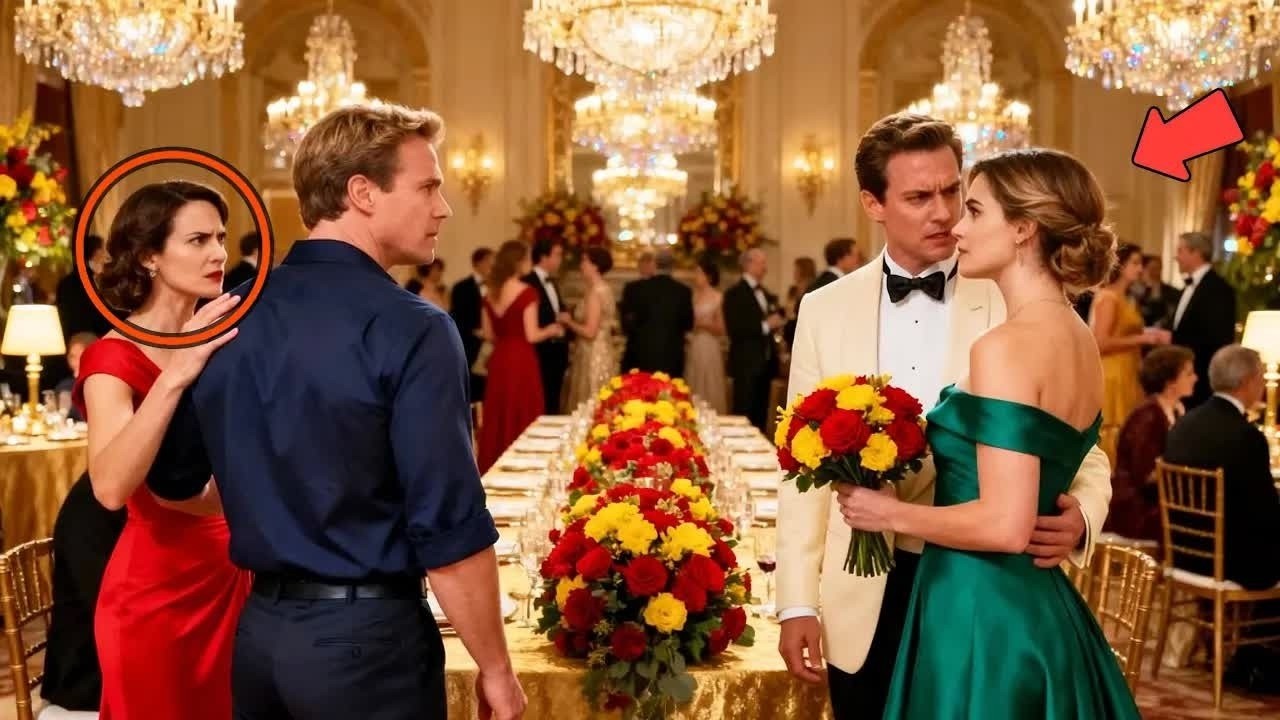
My mother-in-law poured a bucket of dirty water over my head during her grandson’s naming ceremony.
Nearly three hundred guests watched.
Bankers, judges, politicians, and members of Philadelphia’s oldest families stood beneath the chandeliers of the Sterling estate while gray water ran through my hair, down my face, and across the pale blue dress I had worn to celebrate my unborn child.
I was seven months pregnant.
My husband stood less than ten feet away.
He did nothing.
The silver bucket slipped from Victoria Sterling’s hand and struck the marble floor with a deafening clang.
Someone gasped.
A photographer lowered his camera.
Victoria looked at me as if I were the one who had disgraced the room.
“You were told to use the service entrance,” she said.
I wiped water from my eyes.
“I am your son’s wife.”
“You are the woman he married without permission.”
Her voice carried easily through the ballroom.
No microphone was necessary.
Victoria Sterling had spent sixty years learning how to make people listen without ever raising her voice.
Behind her, a ten-foot family portrait hung above the ceremonial stage. Generations of Sterling men looked down from gilded frames, all wearing the same cold expression.
At the center of the stage sat a silver cradle.
It was empty.
The ceremony was supposed to announce the name of the child inside me.
Instead, my mother-in-law had turned it into my public execution.
My husband, Adrian, finally stepped forward.
“Mother, that was unnecessary.”
Unnecessary.
Not cruel.
Not unforgivable.
Merely unnecessary.
Victoria turned toward him.
“She entered through the front doors after I explicitly told her not to.”
“I am carrying the Sterling heir,” I said.
Her eyes moved to my stomach.
“You are carrying a child whose place in this family has not yet been decided.”
The guests began whispering.
My hand instinctively covered my belly.
Adrian glanced toward the crowd.
“Can we discuss this privately?”
“No,” Victoria said. “Your wife has spent two years demanding public recognition. She will receive it now.”
She turned to the guests.
“Ladies and gentlemen, I apologize for this interruption. My son’s wife has been experiencing emotional difficulties throughout her pregnancy.”
A doctor standing near the stage nodded solemnly.
Dr. Lawrence Price.
The Sterling family physician.
The man Victoria had insisted oversee every appointment since I became pregnant.
I looked at him.
He avoided my eyes.
Victoria continued:
“Earlier this week, she threatened household staff and attempted to remove valuable family documents from the estate.”
“That is a lie.”
She smiled.
“There. You see?”
Every protest became proof of instability.
Every tear became manipulation.
Every attempt to defend myself became aggression.
Adrian reached for my arm.
“Isla, let’s go upstairs.”
I pulled away.
“Did you know she planned this?”
“No.”
“Did you know she ordered me to enter through the servants’ corridor?”
His silence answered.
Something inside me went still.
For two years, I had begged Adrian to protect me from his mother.
He always promised to speak with her.
He always asked me to be patient.
He always reminded me that Victoria had endured a difficult life and needed time to accept someone from outside their world.
I had mistaken delay for weakness.
Now I understood it was cooperation.
A woman in a black uniform approached carrying towels.
Victoria stopped her.
“Not those. They are for guests.”
The maid froze.
My mother-in-law looked at me.
“She can dry herself in the kitchen.”
A few guests lowered their eyes.
None intervened.
Wealth had trained them to recognize cruelty as long as it wore the correct jewelry.
I stepped toward the stage.
Water dripped from my sleeves onto the marble.
Victoria’s expression sharpened.
“What are you doing?”
“You invited these people to hear my child’s name.”
“That announcement has been postponed.”
“No. It has been cancelled.”
I removed the Sterling sapphire necklace from my throat.
Victoria had given it to me on my wedding day, not as a gift but as a warning.
“This necklace has belonged to obedient Sterling wives for five generations,” she had said while fastening it around my neck.
I placed it inside the empty silver cradle.
“My son will not carry the name of a family that treats his mother like a servant.”
Adrian grabbed my wrist.
“You cannot make that decision alone.”
I looked at his hand.
Then at him.
“Watch me.”
I walked out of the ballroom soaked, humiliated, and carrying the only Sterling heir beneath my heart.
No one followed me.
Not even my husband.
THE WOMAN ADRIAN MARRIED
Before I married into the Sterling family, my name was Isla Bennett.
My father repaired elevators.
My mother worked nights at a hospital laundry.
We lived in a narrow brick house where the roof leaked above the stairs and every expensive purchase required a family meeting.
I was the first person in my family to attend college.
By thirty, I had become a forensic accountant specializing in corporate fraud.
I met Adrian Sterling during an investigation involving one of his family’s charitable foundations.
He was different from the other wealthy men in the conference room.
He listened.
He remembered the names of junior employees.
When a waiter spilled wine on his jacket, Adrian helped clean the floor instead of demanding the man be fired.
I thought kindness revealed character.
I did not yet understand that some people are kind only when kindness costs them nothing.
Adrian pursued me for nearly a year.
He brought coffee to my office.
He met my parents.
He ate my mother’s overcooked pot roast and asked for seconds.
When he proposed, he said:
“I don’t want the life my family planned for me. I want something real.”
I believed him.
Victoria did not attend our civil wedding.
She sent a note instead.
A marriage performed without the family’s blessing does not create a Sterling wife.
Adrian tore the note in half.
Or so I thought.
Months later, I found the pieces carefully preserved inside his desk.
He had never truly rejected his mother.
He had only hidden how badly he still needed her approval.
THE FIRST TEST
Victoria invited us to live at the Sterling estate after Adrian’s father suffered a stroke.
She said the family needed unity.
The estate stood on thirty acres outside Philadelphia, a massive gray-stone mansion with eighty rooms, indoor gardens, private elevators, and a dining table long enough to make every meal feel like a board meeting.
On my first morning there, I entered the breakfast room and found no place set for me.
Victoria sipped tea at the head of the table.
“Where should I sit?”
She looked toward the sideboard.
“Staff eat downstairs.”
Adrian laughed nervously.
“Mother.”
Victoria’s expression remained calm.
“I was told Isla wished to be treated like an ordinary member of the household. Ordinary people do not expect formal service.”
A maid quietly added a place beside Adrian.
Victoria fired her that afternoon.
The message was clear.
Anyone who showed me kindness would pay for it.
The cruelty grew slowly enough that Adrian could call each incident a misunderstanding.
Victoria moved my clothes into a bedroom in the servants’ wing because the room beside Adrian’s “required renovation.”
She removed my name from family invitations.
At dinners, she introduced me as Adrian’s temporary companion.
When I corrected her, she smiled.
“My generation does not recognize every modern arrangement.”
She ordered the chef to serve foods that triggered my allergies, then accused me of seeking attention when I refused to eat.
She scheduled family photographs while I was away.
She donated my mother’s handmade wedding quilt without permission because it “did not suit the room.”
Each act was small enough to sound ridiculous when repeated.
That was Victoria’s greatest skill.
She never harmed me in ways that could be explained without making me appear sensitive.
When I complained, Adrian kissed my forehead.
“She is testing you.”
“For what?”
“To see whether you belong here.”
“Do you believe I do?”
“Of course.”
“Then why does she get to decide?”
His answer was always the same.
“Because everything is still in her name.”
THE PREGNANCY
Victoria’s attitude changed when I became pregnant.
For one week, she treated me like family.
Flowers appeared in my room.
A driver took me to medical appointments.
The chef prepared anything I requested.
I should have known sudden kindness from a controlling person is rarely kindness.
It is access.
Victoria chose Dr. Price as my physician.
She hired a private nurse to monitor my food, sleep, and blood pressure.
She moved me into a bedroom near her suite, claiming the servants’ wing was too far from help.
Then she began controlling every decision.
No coffee.
No visitors without approval.
No leaving the estate alone.
No calls with my parents after eight in the evening.
When I wanted to continue working, Victoria said stress could harm the heir.
When I refused to resign, Adrian asked me to compromise.
“It’s only until the baby comes.”
I looked at him.
“And after?”
“Then we’ll decide what is best.”
We had begun to mean Adrian and his mother.
One evening, I found a legal folder in Victoria’s library.
Inside was a draft custody agreement.
It described me as a gestational caregiver.
The Sterling family would receive immediate physical custody after birth.
I would be permitted supervised visits if approved by the family physician.
The document carried Adrian’s electronic initials.
I confronted him in our bedroom.
“What is this?”
He glanced at the pages.
“Mother’s lawyers prepare documents for every possibility.”
“What possibility requires taking my baby?”
“It isn’t final.”
“You initialed it.”
“She said it was an estate-planning draft.”
“Did you read it?”
He rubbed his face.
“I trust our attorneys.”
“They call me a caregiver.”
“You’re overreacting.”
That word ended something inside me.
I placed the papers on the bed.
“Would you sign a document calling yourself a sperm donor?”
His face hardened.
“That’s not the same.”
“No. Because this family considers your body valuable and mine replaceable.”
He left the room.
The next morning, my parents were denied entry to the estate.
Victoria said their presence caused emotional instability.
Adrian agreed it would be better if I waited until after delivery to see them.
That was when I stopped asking him to choose me.
I began preparing to save myself.
THE SECRET ACCOUNT
Victoria believed she knew everything about my career.
She thought forensic accounting meant reviewing expense reports and chasing careless employees.
She did not understand that my work taught me how powerful families hid their worst decisions.
The Sterling empire included banks, hospitals, real estate firms, and private investment funds.
Its charitable foundation appeared generous.
It funded maternity wards, scholarships, and domestic-abuse shelters.
But while working late one night, I noticed unusual payments from the foundation to a company called Aurelia Family Services.
Aurelia had no public office.
Its address belonged to an abandoned warehouse.
Every payment was approved by Victoria.
Over ten years, more than forty million dollars had passed through it.
I searched the estate archives.
Aurelia paid doctors, private investigators, lawyers, and residential clinics.
At first, I assumed Victoria was laundering money.
Then I found the names.
Women married to Sterling men.
Former wives.
Girlfriends who became pregnant.
Household employees who filed complaints.
Each woman received one of three outcomes.
A confidential settlement.
A psychiatric evaluation.
Or removal from the family’s life.
Victoria had not created the custody agreement only for me.
She had used the system before.
One file belonged to Adrian’s aunt, Rebecca, who supposedly abandoned her children thirty years earlier.
According to family history, Rebecca suffered a breakdown and disappeared.
The records told another story.
She accused Victoria’s husband of assaulting a household employee.
Dr. Price’s father declared her unstable.
A judge granted the Sterling family custody of her children.
Rebecca was placed in a private institution funded through Aurelia.
She remained there for eighteen years.
I copied everything.
But I made one mistake.
I accessed the files from the estate network.
Victoria’s security team saw the breach.
The next morning, she entered my bedroom while I was dressing.
“You have been exploring parts of this family that do not concern you.”
I kept my face calm.
“I couldn’t sleep.”
“You accessed confidential records.”
“I worked for Sterling Foundation before marrying Adrian. Some documents remained connected to my account.”
She stepped closer.
“You think being intelligent makes you difficult to control.”
“I don’t need to be controlled.”
“Every mother does, before birth. Hormones make women irrational.”
“My hormones discovered forty million dollars?”
Her expression changed.
Only for a second.
But I saw fear.
Then she smiled.
“You should focus on the baby.”
“I am.”
That afternoon, my laptop disappeared.
My phone was replaced with a new device.
The private nurse began watching me even when I showered.
Victoria scheduled the naming ceremony for the following week.
She said it would reassure investors that the Sterling succession remained secure.
I understood the real purpose.
She wanted hundreds of witnesses to see me behaving emotionally.
Then she would remove me.
THE SERVANT’S DRESS
On the morning of the ceremony, I found my formal dress missing.
In its place lay a plain black uniform identical to those worn by the household maids.
A note rested on top.
Since you refuse to respect your position, dress according to it.
I carried the uniform to Adrian’s room.
He was fastening his cuff links.
“Did you know?”
He read the note.
His face tightened.
“I’ll speak to her.”
“The ceremony begins in an hour.”
“I said I’ll handle it.”
“How?”
He opened the closet and removed a pale blue dress.
“I bought this for you.”
I looked at him.
He had anticipated the humiliation.
He had purchased a replacement without stopping his mother.
“You knew she would take my dress.”
“I knew she might do something.”
“And you let her.”
“I was trying to avoid a fight.”
“No. You were preparing me to survive one.”
“Isla, please. Just get through today.”
“What happens after today?”
His eyes moved to my stomach.
“The baby becomes part of the trust.”
“And me?”
He said nothing.
I wore the blue dress.
Not because Adrian saved me.
Because I wanted Victoria to believe I still intended to cooperate.
Before leaving my room, I placed a small recording device inside the necklace she had given me.
The naming ceremony began at four.
At four forty-two, Victoria poured the water over my head.
At four forty-five, I left the estate.
At four fifty, every Aurelia file began uploading to five separate attorneys, two investigative journalists, and a federal prosecutor.
The necklace in the silver cradle continued recording.
THE ESCAPE
I had arranged for a car to wait beyond the east gate.
The driver was Martha Lane, the maid Victoria fired for setting a place for me at breakfast two years earlier.
After leaving the estate, Martha had contacted me privately.
She told me Victoria kept copies of household employees’ identification documents and threatened immigration complaints against anyone who spoke about family abuse.
Martha had spent two years gathering statements from former staff.
When I entered the car soaked and shaking, she handed me a blanket.
“Did he come with you?”
I looked through the rear window.
The estate gates remained closed.
“No.”
She started driving.
My parents waited at a safe apartment arranged by my attorney.
When my mother saw me, she began crying.
She wrapped towels around my shoulders and knelt to remove my wet shoes.
My father stood near the door gripping the back of a chair.
“I’m going to that house.”
“No,” I said.
“They did this to you.”
“And they want us angry enough to make mistakes.”
He looked at my stomach.
“Did Adrian hurt you?”
“Not with his hands.”
My father understood.
Sometimes abandonment is an act of violence carried out without touching anyone.
THE COUNTERATTACK
The Sterling family moved quickly.
By midnight, news sites reported that I had suffered a pregnancy-related mental-health crisis and fled the estate after threatening Victoria.
Dr. Price issued a statement expressing concern for my safety and the unborn child.
Adrian filed an emergency petition asking the court to order medical supervision.
The petition claimed I had become paranoid, aggressive, and obsessed with family finances.
Video from the ballroom showed me walking toward Victoria after the water was poured.
The clip ended before I removed the necklace.
Edited correctly, it appeared that I had attacked her.
I expected the lies.
I did not expect Adrian to sign them.
My attorney placed the petition on the table.
His signature appeared beneath every accusation.
For several minutes, I could not speak.
My mother sat beside me.
“You don’t have to protect him anymore.”
“I’m not.”
But I had been.
Even after leaving, part of me still believed Adrian was afraid.
That he loved me beneath the cowardice.
That once he escaped his mother’s control, he might become the man I married.
His signature ended that hope.
Fear explained his choices.
It did not excuse them.
We released the full ballroom recording.
Victoria’s voice spread across every major news network:
You are carrying a child whose place in this family has not yet been decided.
Then came the private conversation captured after I left.
Adrian confronted his mother near the cradle.
“You went too far.”
Victoria replied:
“She needed to understand what happens if she resists.”
“What if she exposes the files?”
“Then Dr. Price certifies her as unstable. The court gives us the child, and no one believes another hysterical wife.”
Adrian asked:
“And Isla?”
Victoria answered:
“She becomes whatever the records say she is.”
He did not object.
That silence destroyed him.
THE WOMEN WHO CAME FORWARD
After the recording became public, women began calling.
A former Sterling daughter-in-law said Victoria took her children after she reported her husband’s violence.
A nurse said she had been paid to increase a pregnant woman’s medication until the woman appeared confused during a custody hearing.
A hotel employee described being forced to sign a settlement after a Sterling executive cornered her in a private suite.
Then Rebecca called.
She was seventy-one and living under another surname in Vermont.
She had survived the institution.
Her voice shook when she spoke to me.
“I thought no one would ever find the records.”
“Victoria said you abandoned your children.”
“She made them believe I did.”
Rebecca agreed to testify.
She had saved letters she wrote during confinement.
Every one had been returned unopened.
Across the envelopes, someone had stamped:
DELIVERY NOT AUTHORIZED BY FAMILY GUARDIAN.
The story was no longer about a cruel mother-in-law humiliating a pregnant woman.
It was about a family system built to erase women who threatened its reputation.
THE HEARING
Victoria entered family court wearing white.
The color was deliberate.
She wanted to appear maternal, calm, and innocent.
Adrian sat beside her.
I sat across the aisle with my parents, Martha, Rebecca, and my legal team.
Victoria’s attorneys argued that releasing confidential records proved I was unstable and vindictive.
They asked the judge to place me under immediate medical evaluation and grant Adrian temporary authority over pregnancy-related decisions.
My attorney played the unedited recording.
Then Rebecca testified.
She described being dragged from her bedroom while her children screamed.
She described eighteen years inside a facility where every protest became evidence of illness.
Victoria did not look at her.
Dr. Price testified that I showed symptoms of prenatal paranoia.
My attorney asked:
“When did you personally examine Mrs. Sterling?”
“Several times.”
“Did you ever meet her without Victoria Sterling present?”
He hesitated.
“No.”
“Did you diagnose her before or after receiving two million dollars from Aurelia Family Services?”
The courtroom erupted in whispers.
Dr. Price’s face changed.
Bank records appeared on the screen.
Payments to him.
Payments to his father.
Payments to the clinic that confined Rebecca.
He invoked his right not to answer further questions.
Then Adrian took the stand.
His attorney had advised against it, but Victoria wanted him presented as a concerned husband.
My lawyer asked whether he believed I was dangerous.
Adrian looked at me.
“No.”
Victoria’s head turned sharply.
His attorney stood.
“Your Honor—”
My lawyer continued.
“Did your wife threaten her unborn child?”
“No.”
“Did she attack your mother?”
“No.”
“Then why did you sign a petition claiming she did?”
Adrian’s hands tightened.
“My mother said it was necessary to bring Isla home.”
“By having her declared mentally unstable?”
“I thought once she returned, we could resolve everything privately.”
“Did you read the custody agreement describing your wife as a gestational caregiver?”
“Yes.”
The word filled the courtroom.
“Did you tell her?”
“No.”
“Why?”
“Because I knew she would leave.”
My lawyer stepped closer.
“So you concealed a plan to take her child because honesty might cost you your marriage.”
Adrian began crying.
“I loved her.”
I felt nothing.
Not because I had stopped loving him.
Because at last, his tears were no longer more important than my safety.
The judge denied the Sterling petition.
A protective order prohibited Victoria and Adrian from contacting me without legal permission.
The court referred the financial evidence to federal investigators.
Outside, reporters surrounded us.
Someone shouted:
“Isla, do you plan to keep the Sterling heir away from his family?”
I stopped.
“My child is not an heir. He is a human being.”
THE FALL OF VICTORIA STERLING
Federal agents raided the estate two weeks later.
They seized foundation records, medical files, hidden settlement agreements, and recordings of family meetings.
Victoria had documented everything.
Controlling people often do.
They trust records because they believe they will always control who is allowed to read them.
She was charged with financial fraud, witness intimidation, unlawful confinement, medical coercion, and conspiracy.
Dr. Price lost his license and accepted a plea agreement.
Several attorneys and private-clinic administrators were charged.
Adrian was not initially arrested.
His participation was more complicated.
He had signed false statements and concealed evidence, but he had not created Aurelia.
Prosecutors offered him immunity in exchange for testimony against his mother.
He accepted.
Victoria called him a traitor.
I called it the first useful decision he had made after years of cowardice.
It did not make him innocent.
THE BIRTH
My labor began during Victoria’s preliminary hearing.
I was standing outside the courthouse when pain tightened across my abdomen.
My mother caught me before I fell.
Six hours later, I gave birth to a boy.
I named him Elias Bennett.
Not Sterling.
Adrian arrived at the hospital with his attorney.
The protective order prevented him from entering.
He sent a letter through my lawyer.
I know I have no right to ask, but please let me see our son.
I read it while Elias slept against my chest.
Then I turned it over.
On the back, Adrian had written:
I thought protecting my inheritance would protect our future. I did not understand that every time I chose silence, I was choosing her over you.
He understood now because silence had finally cost him something.
That did not mean I owed him immediate forgiveness.
I allowed him to see Elias through the nursery window.
Nothing more.
He stood behind the glass with tears running down his face.
My father stood beside me.
“Do you feel sorry for him?”
“Yes.”
“Do you still love him?”
“Part of me does.”
“Will you go back?”
“No.”
Love did not require me to return to the place where it had been used against me.
THE TRIAL
Victoria’s trial lasted seven weeks.
Rebecca testified.
Former wives testified.
Household workers testified.
Doctors described the pressure to alter records.
Accountants explained the hidden payments.
I testified last.
Victoria’s attorney asked why I had secretly copied family documents.
“To protect myself.”
“Before anyone attempted to take your child?”
“I found the custody agreement.”
“An unsigned draft.”
“With my husband’s initials.”
“You hated Mrs. Sterling.”
“Yes.”
The attorney paused.
He had expected denial.
“You wanted revenge.”
“Yes.”
Victoria looked at me for the first time.
I continued:
“I wanted her to feel powerless in public because she had made women powerless in private. That desire does not make the records false.”
The jury convicted her on nearly every charge.
At sentencing, Victoria requested permission to speak.
She stood in a dark suit, without the pearls and silver brooches that once functioned like armor.
“I devoted my life to protecting the Sterling family,” she said. “Every decision I made was intended to preserve its future.”
The judge asked:
“Did that include taking children from their mothers?”
Victoria lifted her chin.
“Some women are not suited to raise heirs.”
I heard Rebecca begin crying behind me.
The judge sentenced Victoria to twenty-eight years.
As officers approached, she turned toward Adrian.
“Do you understand what she has done to us?”
Adrian looked at his mother.
“No,” he said. “I finally understand what you did.”
She slapped him.
The officers restrained her before she could strike again.
Even while being taken away, Victoria believed pain was her right to distribute.
THE DIVORCE
Adrian fought for shared custody.
Not because Victoria ordered him to.
For the first time, he acted without her.
That made the situation harder.
He attended therapy.
He resigned from the family company.
He sold his estate shares and placed most of the money into a restitution fund for the women harmed through Aurelia.
He apologized without demanding forgiveness.
But accountability did not automatically restore trust.
During mediation, he asked:
“What would I need to do for you to believe I’ve changed?”
I looked at him.
“Change even if I never believe it.”
He lowered his eyes.
“I want my family back.”
“The family you want never existed.”
“We loved each other.”
“Yes.”
“Doesn’t that matter?”
“It matters. It is not enough.”
We divorced.
He received supervised visits with Elias, later expanded after two years of consistent behavior.
I never told our son his father was evil.
Adrian was not evil.
He was weak in ways that made him dangerous.
That truth was more useful.
THE HOUSE WITHOUT SERVANTS
Five years later, I bought a small house outside Boston.
It had four bedrooms, a crooked porch, and a kitchen where everyone sat at the same table.
My parents lived nearby.
Martha managed the nonprofit we created to help women fighting coercive guardianship and custody cases.
Rebecca became an honorary board member.
She reunited with one of her daughters before her death.
The other never forgave her for “leaving.”
Victoria’s lie had lasted too long.
Truth can expose what happened.
It cannot guarantee the return of what was stolen.
Elias grew into a serious little boy who loved dinosaurs and disliked formal clothes.
Adrian visited every other weekend.
He never entered without knocking.
One afternoon, Elias asked why his grandmother had never met him.
I told him:
“She hurt people and refused to stop.”
“Does she love me?”
“She believes she does.”
“That isn’t the same?”
“No.”
He thought for a moment.
“What is love supposed to do?”
“Make room for you to be a person, not a possession.”
He nodded as if filing the answer away for later.
THE FINAL VISIT
Victoria requested to see me from prison.
I refused twice.
The third request included a handwritten note.
I am dying. Bring the boy.
I went alone.
She entered the visitation room thinner but still upright.
Her hair had turned completely white.
“Where is Elias?”
“Home.”
“He is my grandson.”
“He is not your final possession.”
Her eyes sharpened.
“You poisoned him against his own blood.”
“He knows almost nothing about you.”
“Then why deny me?”
“Because access is not a reward for sharing blood.”
She leaned closer to the glass.
“I made Adrian.”
“You controlled him.”
“I built everything he inherited.”
“And almost destroyed everything he loved.”
Her expression flickered.
“Does he still love you?”
“That is no longer your concern.”
“Do you love him?”
“Part of me always will.”
Victoria smiled faintly.
“Then I was right. You should have stayed.”
“No. Loving someone does not require surrendering to the person who controls them.”
She studied me.
“What do you want from me?”
“Nothing.”
That answer frightened her.
Powerful people understand hatred.
Hatred still centers them.
Indifference is the door they cannot reopen.
“You came all this way for nothing?”
“I came to tell you Elias will grow up knowing the truth, but he will not inherit your shame.”
“The Sterling name is not shameful.”
“He does not carry it.”
Her hand tightened against the table.
“What name does he use?”
“Bennett.”
The family name she once treated as inferior.
The name of the elevator mechanic and hospital laundry worker she would not allow through her front entrance.
Victoria closed her eyes.
That was the only moment she looked defeated.
Not when the jury convicted her.
Not when the estate was sold.
When she learned the heir she had tried to control carried the name of the servants she despised.
I stood.
“You will regret humiliating me,” she said.
I looked at her through the glass.
“No. The humiliation belonged to you. I was only the person standing beneath the water.”
THE SILVER CRADLE
After the Sterling estate was seized, its contents were auctioned to pay restitution.
The silver cradle appeared in the catalog.
Lot number 214.
I bought it.
Not because I wanted a Sterling heirloom.
Because I wanted to decide what it became.
Martha helped me melt the silver down.
A craftsman used it to create small plaques for the doors of twelve apartments owned by our nonprofit.
Each apartment provided temporary housing for women and children escaping coercive families.
The plaques carried one sentence:
YOU DO NOT HAVE TO SURRENDER YOUR DIGNITY TO STAY SAFE.
I kept the sapphire necklace locked inside my desk.
One day, I may give the stone to Elias.
Not as proof of his inheritance.
As evidence.
Evidence that beautiful objects can carry ugly histories.
Evidence that family traditions deserve to end when they require someone else’s silence.
My mother-in-law once poured dirty water over my head because she believed public humiliation would teach me my place.
She was right about one thing.
That moment taught me exactly where I belonged.
Not beneath her roof.
Not behind my husband.
Not inside a family that called control protection and cruelty tradition.
I belonged beside every woman they had tried to erase.
And when we finally stood together, the Sterling empire discovered what Victoria never understood:
A woman forced to suffer alone can be controlled.
But once she finds the others, the family that silenced her should be afraid.