A groundbreaking study released this morning by an international team of paleontologists, evolutionary biologists, and planetary scientists has unveiled the most comprehensive simulation yet of what Earth would look like today if the asteroid that ended the dinosaurs had missed our planet 66 million years ago. The research, published in the journal Nature Ecology & Evolution, paints a startling picture of a world where dinosaurs never went extinct, where they continued to dominate every terrestrial ecosystem, evolving into forms that would seem alien to modern eyes. The findings challenge long-held assumptions about mammal evolution and the inevitability of human intelligence.
The study, led by Dr. Helena Marchetti of the University of Cambridge, uses advanced climate modeling, evolutionary algorithms, and fossil data to reconstruct 66 million years of hypothetical dinosaur evolution. The simulation begins on that spring morning 66 million years ago when the Chicxulub asteroid, a 10-kilometer sphere of carbonite and iron, came within minutes of missing Earth entirely.
 In reality, it struck shallow waters off the Yucatán Peninsula with the force of 100 million nuclear weapons, vaporizing rock and sulfur, triggering a global winter that wiped out three-quarters of all species, including all non-avian dinosaurs. But the new model shows that if the asteroid had struck deep ocean instead, or had arrived just a few minutes earlier, the dinosaurs would have survived.
The implications are staggering. According to the study, the dinosaurs were not in decline at the end of the Cretaceous. They were at the peak of their diversity, occupying every ecological niche from tropical forests to polar regions.
The warm, greenhouse climate of the Mesozoic was ideal for them, with carbon dioxide levels four times higher than today and no polar ice caps. The researchers emphasize that dinosaurs had a respiratory system far superior to that of mammals. Unidirectional airflow through air sacs extending into their bones allowed them to extract oxygen far more efficiently, enabling sauropods to reach 50 tons and tyrannosaurs to dominate as apex predators.
One of the most striking findings is that mammals would have remained permanently locked in small, nocturnal, marginal niches. The study shows that other mammal groups, such as multituberculates and gondwanatheres, were already outcompeting the ancestors of modern placentals and marsupials. Without the extinction event, those competitive pressures would never have lifted.
The ancestors of elephants, whales, and humans would have remained the size of rats or badgers, scurrying in the ecological shadows of the giants.
The simulation then tracks the Earth’s gradual cooling over tens of millions of years. Around 55 million years ago, the Paleocene-Eocene Thermal Maximum spiked global temperatures by up to 8 degrees Celsius. The model shows that dinosaurs, being gigantotherms with feathered insulation, were better equipped to handle extreme heat than mammals.
The polar regions became paradise for them, with lush forests extending to the Arctic and Antarctic circles. Marine reptiles like mosasaurs and plesiosaurs continued to dominate the oceans, never yielding to whales or seals.
 The most transformative event, however, began around 23 million years ago with the spread of grasslands. Grass, with its silica phytoliths and ability to regrow from the base, forced a major evolutionary arms race. The simulation predicts that ceratopsians evolved ever-growing, hypsodont teeth to grind tough grass, becoming the ecological equivalents of wildebeest or bison.
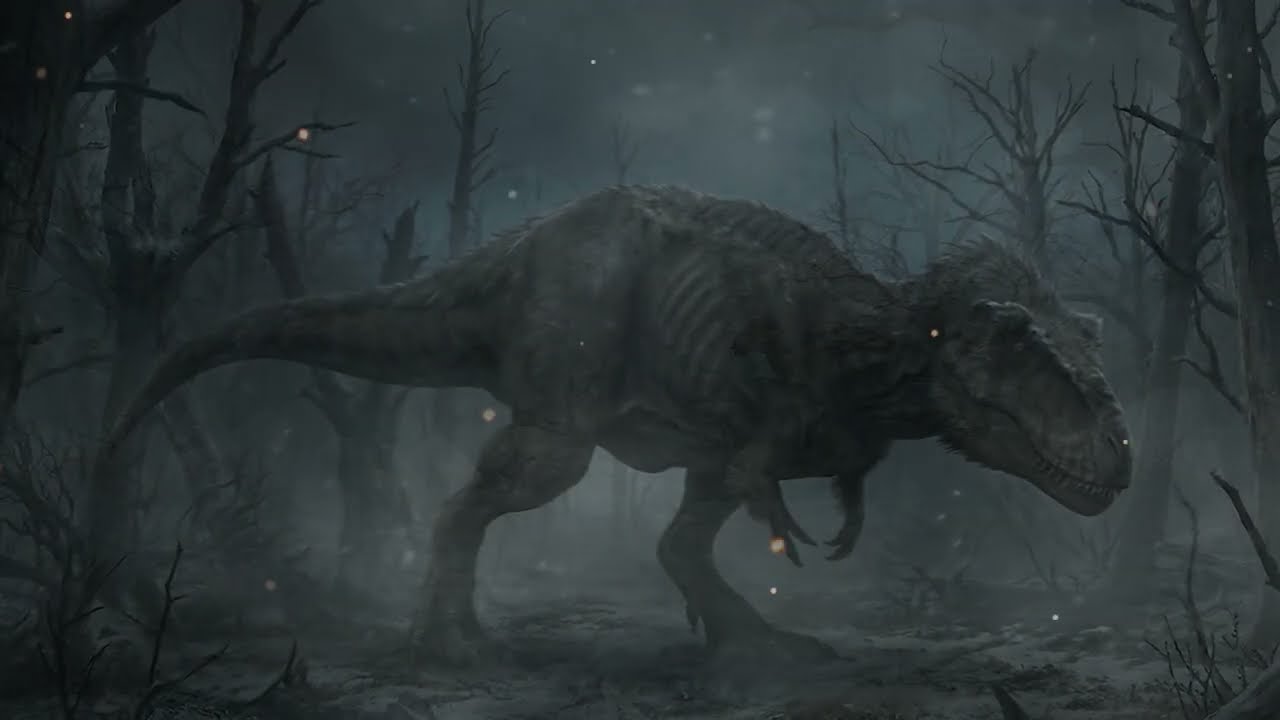
Hadrosaurs, with their complex dental batteries, also adapted, while ornithomimosaurs became fast-running grazers resembling antelopes. Predators, including tyrannosaurs and dromaeosaurids, became pack hunters, developing coordination and social structures reminiscent of modern wolves or lions.
Dr. Marchetti noted that the troodontids, already the smartest dinosaurs with the largest brain-to-body-size ratio, likely evolved tool use, complex vocal communication, and cooperative hunting strategies. Their cognitive abilities, the model suggests, could have rivaled those of modern crows or dolphins.
But the study emphasizes that human-level intelligence is unlikely to have emerged. The specific sequence of events that produced our species—primates descending from trees onto the African savanna, developing cooperation and tool use—would not have occurred. Without the ecological vacuum left by the extinction, the selective pressures that drove human brain expansion were absent.
The Pleistocene ice ages, beginning about 2. 5 million years ago, became the ultimate test. The simulation shows that dinosaurs adapted to extreme cold through thick feathery integuments, massive bodies to retain heat, and seasonal migrations.
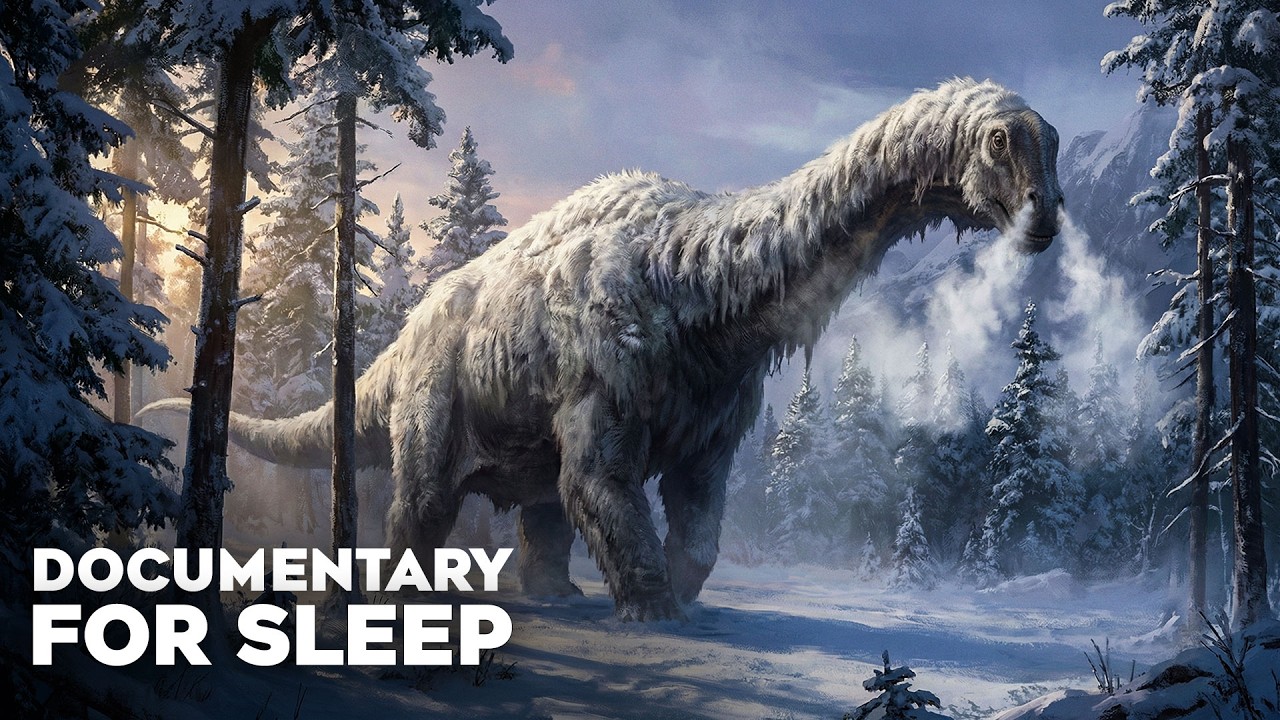
Ceratopsians and hadrosaurs grew to sizes rivaling or exceeding their Cretaceous ancestors, becoming the woolly megafauna of the frozen north. Pack-hunting tyrannosaurs, smaller but more social, took down prey many times their size. Meanwhile, tropical refugia in the Amazon, Congo, and Southeast Asia preserved ancient lineages, allowing sauropods and other archaic forms to persist.
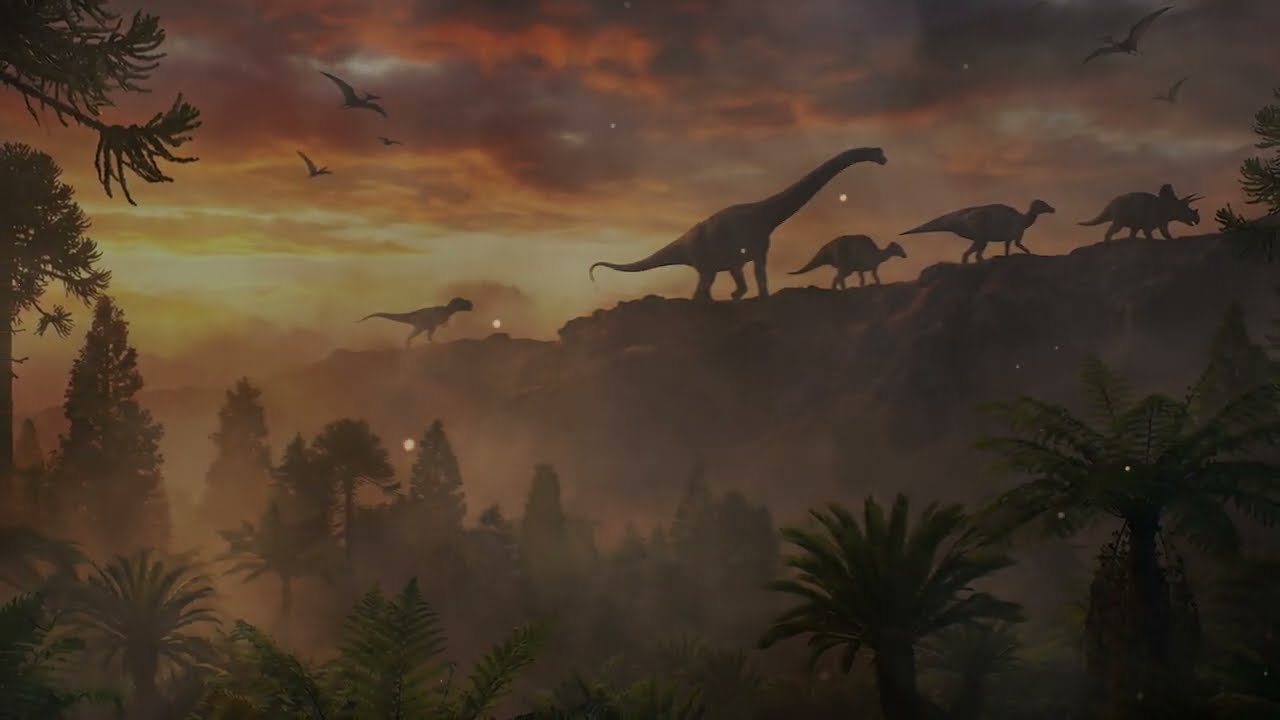 The researchers were able to reconstruct a global picture of today’s alternative Earth. Africa’s savannas would be dominated by herds of ceratopsians and hadrosaurs, with packs of theropods patrolling the edges. South America, isolated for much of the Cenozoic, would harbor unique sauropods and unknown dinosaur lineages.
Australia, separated from Antarctica 45 million years ago, would have its own bizarre endemic forms. The oceans would be filled with mosasaurs and plesiosaurs diversifying into niches ranging from coastal fish-eaters to massive filter feeders rivaling blue whales.
What would not exist are humans. No cities, no roads, no fossil fuel combustion, no global warming. The planet would still be in an ice age cycle, heading toward another glacial maximum.
The study estimates that the total biomass of large land animals would be orders of magnitude higher than in our timeline, since no human hunting or habitat fragmentation has occurred. The biodiversity would be immense, with countless species that never evolved in our world.
The research team described the alternative Earth as a “wild, beautiful, and brutal” place, utterly indifferent to meaning. Dr. Marchetti said, “In our timeline, the asteroid cleared the stage for mammals and eventually for us.
In that timeline, the show never ended. The dinosaurs just kept doing what they had done for 165 million years—dominating, adapting, surviving. They never asked why they existed.
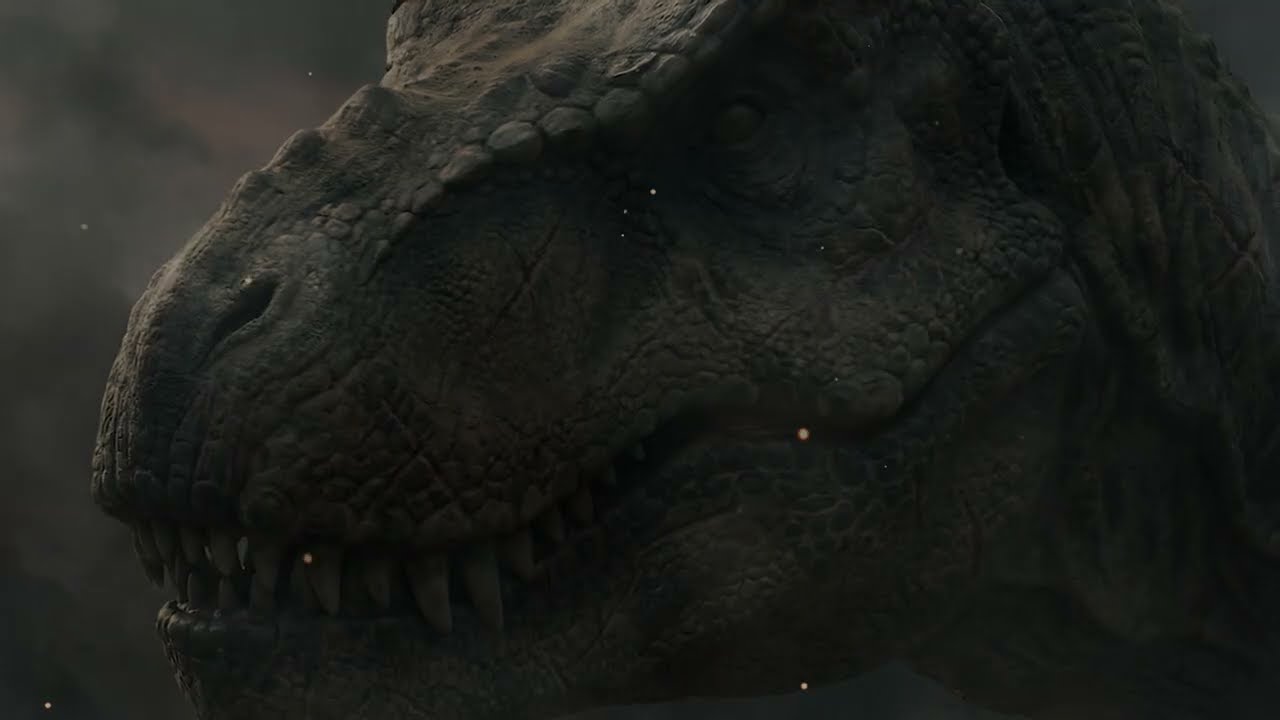 They simply did.”
The study has already sparked intense debate in the scientific community. Some paleontologists question whether the simulation’s assumptions about dinosaur physiology and behavior are accurate, while others praise its thoroughness. Regardless, the research offers a profound perspective on the role of contingency in evolution.
As Dr. Marchetti noted, “We are the product of a cosmic accident. A rock from space missed by minutes, and here we are.
If it had hit a few seconds later, we would not exist. No one would.”
The findings are expected to influence future research on dinosaur cognition, the evolution of social behavior, and the nature of intelligence itself. For now, the world can only imagine a planet where the thunder of huge reptilian feet still shakes the ground, where the sky is filled with pterosaurs, and where the night belongs to small, secretive mammals waiting patiently for a chance that never comes.