The world has long believed the Trojan War was defined by a wooden horse and a burning city, but the truth is far darker and more human than any Hollywood adaptation has dared to show. The Iliad, the ancient Greek epic that serves as the precursor to the Odyssey, tells a story that has been misremembered for centuries.
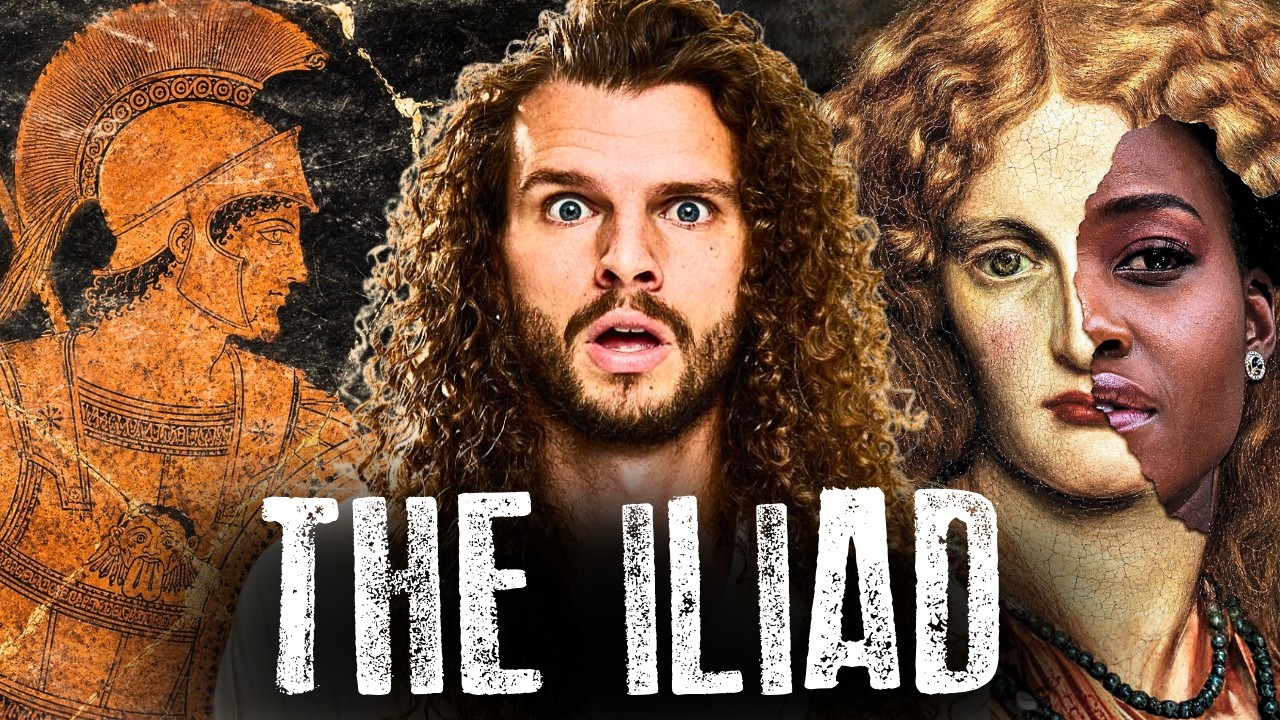 It is not a tale of the war itself but a searing, intimate portrait of rage, grief, and the cost of honor.
The poem, composed around 750 BC and attributed to Homer, zooms in on just seven weeks in the ninth year of the siege, focusing on one man: Achilles, the deadliest warrior who ever lived.
Most people picture the Trojan Horse and the sack of Troy, but those events are not in the Iliad. The poem begins with the word “rage” and ends with a funeral.
It is a story about what happens when pride and ego override reason, and when vengeance becomes the only thing left to hold onto.
The conflict starts not with a war, but with a beauty contest among goddesses. Eris, goddess of discord, rolls a golden apple into a wedding, provoking Hera, Athena, and Aphrodite to fight over who is fairest.
The mortal prince Paris chooses Aphrodite, who promises him the most beautiful woman in the world: Helen, wife of King Menelaus.
Paris’s abduction of Helen triggers a massive Greek coalition led by Agamemnon. Thousands of ships sail east to Troy, a city on the coast of modern Turkey.
The siege drags on for nine brutal years, and by the time the Iliad opens, morale is crumbling, and the two greatest Greek leaders are about to turn on each other.
Agamemnon humiliates the priest of Apollo, triggering a plague. To stop it, he must return his war prize, a woman named Chryseis.
But he demands compensation: he takes Briseis, the captive woman awarded to Achilles. This public disrespect enrages Achilles, who withdraws from the war and prays to Zeus for the Greeks to lose.
Zeus agrees.
 The Trojans, led by Prince Hector, push the Greeks back to their ships. The Greeks attempt a one-on-one duel between Menelaus and Paris, but Aphrodite intervenes, and the truce breaks. The gods themselves cheat and scheme, wounding each other on the battlefield.
The poem shows mortals and immortals locked in a never-ending cycle of violence.
Achilles, meanwhile, refuses to rejoin the fight. He is offered immense treasure by Agamemnon, but he turns it down, citing his prophecy: if he fights, he will die young.
He announces he will sail home. But his best friend, Patroclus, cannot bear to watch the Greeks burn.
Patroclus begs Achilles to let him wear his armor and drive the Trojans back.
Achilles agrees on a strict condition: push them from the ships, then stop. Patroclus does not stop. He chases the Trojans to the walls of Troy, where Apollo strikes him down, and Hector kills him.
Achilles learns of Patroclus’s death and lets out a scream that his goddess mother hears from the ocean floor. His rage against Agamemnon vanishes, replaced by a grief so profound that he decides to die by killing Hector. He knows the prophecy: Hector’s death and his own are linked.
New armor is forged by the god Hephaestus, including a shield depicting the entirety of human life: cities at peace and war, weddings, harvests, dancing. It is a picture of everything Achilles will lose. He returns to battle not as a soldier, but as a force of nature, slaughtering Trojans so brutally that the river god tries to drown him.

Hector stands alone outside the walls of Troy. His parents beg him to come inside, but shame holds him in place. When he sees Achilles charging, he runs.
Achilles chases him three times around the city walls, a nightmare of pursuit. Athena tricks Hector into stopping, and Achilles kills him.
As Hector dies, he begs for his body to be returned to his family.
Achilles refuses, wishing his rage could drive him to eat Hector’s flesh raw. He pierces Hector’s ankles, ties him to his chariot, and drags the corpse around the walls of Troy for days, in full view of his grieving family.
But the poem does not end with vengeance.
After days of desecration, the gods intervene. Apollo keeps the body unharmed. The old King Priam, Hector’s father, loads a wagon with treasure and, guided by the god Hermes, sneaks into Achilles’ tent at night.
Priam drops to his knees and kisses the hands that killed his son. “I have done what no man on earth has done before,” he says. He begs Achilles to think of his own father, an old man far away who will never see his son again.
The two men break down and weep together, enemy and enemy, sharing the same grief.
 That moment of shared humanity is the climax of the Iliad. Achilles returns Hector’s body and grants a truce for his funeral.
The poem ends not with the fall of Troy, but with the burial of its greatest defender. The war continues off-screen, but the story is complete.
For nearly 3,000 years, the Iliad has shaped civilization.
Greek children learned to read with it. Alexander the Great slept with a copy under his pillow. The Romans claimed descent from the Trojan prince Aeneas, writing themselves into the poem’s family tree.
Even the historical city of Troy was unearthed in the 1870s by a German businessman obsessed with Homer.
The Iliad’s power lies not in its gods or battles, but in its unflinching look at human emotion. Pride, rage, grief, and the yearning for mercy are as real today as they were in ancient Greece.
The story of a young warrior who chooses death over dishonor, and an old king who chooses forgiveness over revenge, resonates across millennia.
This is the dark story before the Odyssey: a war that could have been avoided, a rage that destroyed everything it touched, and a moment of grace that rises from the ashes. It is a reminder that the greatest epics are not about heroes, but about the humans who suffer, love, and sometimes, against all odds, find compassion.