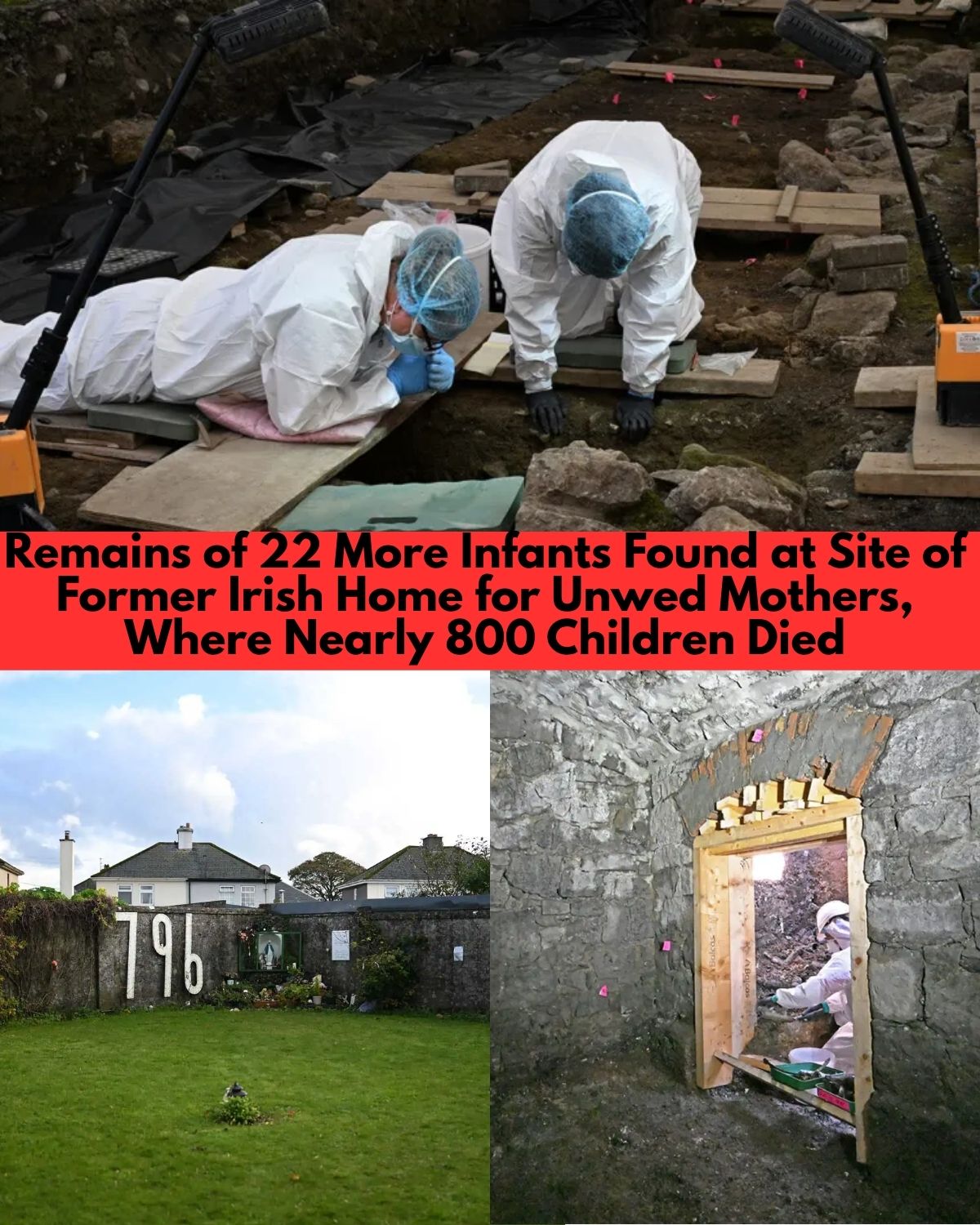
The ongoing forensic excavation at the former Mother and Baby Institution in Tuam, County Galway, Ireland, has uncovered the remains of 22 more infants, adding another painful chapter to one of Ireland’s darkest historical investigations.
Officials announced this week that the latest discovery brings the total number of infant remains recovered since excavation work began in 2025 to 99. The search is part of a government-authorized effort to identify children believed to have died at the institution between 1925 and 1961.
Discovery Adds to Ongoing Recovery Effort
The latest remains were recovered from an area of the site that had later been covered with gravel and used as a vehicle access route.
According to the Office of the Director of Authorised Intervention, Tuam (ODAIT), the infants had been buried in small coffins beneath the surface, with no visible markers identifying the graves. The remains have been transferred to a forensic laboratory where specialists will continue efforts to determine age, identity, and other biological information.
Investigation Began After Historian’s Discovery
The Tuam site first drew international attention in 2014, when local historian Catherine Corless discovered 796 death certificates for infants and young children connected to the institution but found no corresponding burial records.
Subsequent test excavations in 2017 confirmed the presence of juvenile human remains on the property, prompting the Irish government to authorize a full forensic excavation that officially began in 2025.
Institution Operated for Decades
The former Mother and Baby Institution was operated by the Bon Secours Sisters between 1925 and 1961.
Like other similar institutions that existed in Ireland during much of the twentieth century, it housed unmarried pregnant women and their children. Government investigations have since documented widespread neglect, high infant mortality rates, and harsh living conditions at several such facilities across the country.
DNA Identification Efforts Continue
Authorities say one of the primary goals of the excavation is to identify as many of the children as possible.
So far, dozens of relatives have voluntarily submitted DNA samples that may help forensic experts match recovered remains with surviving family members. Officials expect the excavation and identification process to continue well into 2027 due to the complexity of the site and the condition of the remains.
Families Hope for Long-Delayed Answers
For many families, the excavation represents an opportunity to finally learn what happened to relatives who disappeared into Ireland’s former mother-and-baby institutions decades ago.
While many questions remain unanswered, investigators say every new discovery brings them closer to documenting the full history of the site and returning the children to their families with dignity whenever identification becomes possible.