For years, Michael Jackson fans have searched for the private man behind the public legend.
They have studied his interviews, his handwritten notes, his home videos, his speeches, his songs and the stories told by the people who knew him. They have tried to understand not only Michael Jackson the performer, but Michael Jackson the father — the man who raised Prince, Paris and Blanket under one of the brightest and most unforgiving spotlights in the world.
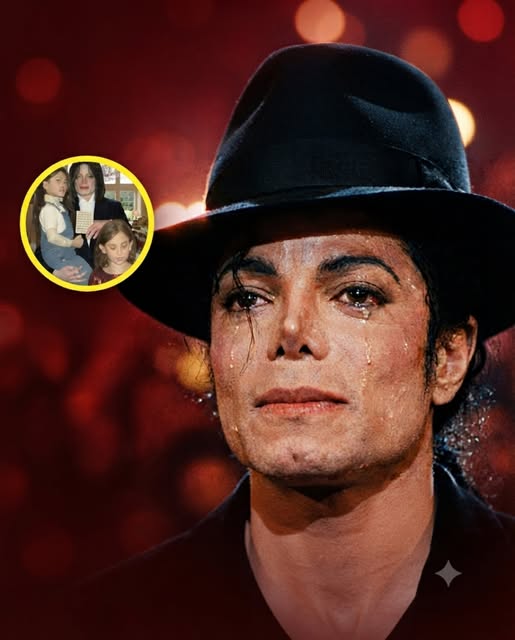
That is why a recent viral story about a supposed secret letter from Jackson to his children has captured so much attention online.
According to the story, Michael allegedly wrote an eight-page letter to Prince, Paris and Blanket before his death, beginning with the haunting line: “If you’re reading this, I failed.” The letter was said to have been locked away for 14 years before his children finally read it and realized that, in their eyes, he had not failed at all.
It is a powerful story.
It is also important to be clear: there is no reliable mainstream reporting confirming that such an eight-page letter exists. The claim appears to come from social media posts, fan discussions and entertainment-style storytelling rather than verified court records, major news outlets or statements from the Jackson family.
But the reason the story has spread is not difficult to understand.
It touches the deepest part of Michael Jackson’s legacy: his children.
Jackson died on June 25, 2009, at age 50. His death shocked the world and immediately became one of the most covered celebrity tragedies in modern history. Millions mourned the loss of the King of Pop, but inside his family, the most urgent concern quickly became the care of his three children: Prince Michael, Paris and Prince Michael II, known for years as Blanket and now often referred to as Bigi. After Jackson’s death, his mother, Katherine Jackson, was granted permanent guardianship of the children by a Los Angeles court.
That legal decision reflected something Michael had already made clear in his will: he trusted his mother to care for the children if he could not.
For fans, that detail matters because it shows how seriously Jackson thought about his children’s future. He was not simply a global superstar who happened to be a father. By many accounts, fatherhood became one of the most important parts of his private life.
Jackson often spoke about his own painful childhood. In a 2001 Oxford speech, he said he had grown up without the carefree childhood most children deserve, explaining that he began performing at a very young age and had “no respite” from professional life. He used that speech to talk about the parent-child bond and the need to protect children emotionally.
That history helps explain why stories about Jackson leaving messages for his children feel so emotionally believable to fans, even when the specific claims are not verified.
The image of Michael writing to his children before his death fits the way many people remember him: private, anxious, protective and deeply aware of how much the world could take from a child raised in fame.
In the viral version of the story, the supposed letter is not about money, fame or music rights. It is about regret. It imagines Michael worrying that he had not protected his children enough, that he had left them too soon, that the world might be too cruel to them after he was gone.
That emotional idea resonates because Prince, Paris and Bigi really did grow up inside an extraordinary public storm.
They lost their father when they were still children. They stood in front of the world at his memorial. Paris’ tearful words about her father became one of the most unforgettable moments of the entire public farewell. From that day forward, their grief became part of a global story they had never asked to enter.
Over the years, each of Jackson’s children has taken a different path. Prince has spoken publicly about his father’s lessons and has been involved in charity work. Paris has pursued music, modeling and acting while also speaking honestly about pain, identity and healing. Bigi has lived more privately, choosing a quieter public profile.
That alone may be the strongest answer to the viral letter’s opening line.
If Michael Jackson ever feared that he had failed his children, their lives suggest something more complicated and more hopeful. They grew up under pressure that few people could imagine, yet each has tried to build an identity beyond simply being “Michael Jackson’s child.”
That is why the story works so powerfully as an emotional narrative.
Whether or not the letter exists, it reflects something fans believe to be true: Michael Jackson wanted his children to survive the fame that had consumed so much of his own life.
He understood what it meant to have cameras watching too early.
He understood what it meant to be judged before being understood.
He understood what it meant to have childhood taken and turned into performance.
So the idea of him leaving behind a final message to his children carries a tragic beauty. It gives shape to the fear many fans believe he carried: that the world which misunderstood him might one day hurt them too.
But the verified story is already emotional enough.
Michael Jackson did not need a secret letter to prove that his children mattered to him. His public words about childhood, his legal plans for their guardianship, and the way his family rallied around Prince, Paris and Bigi after his death all point to the same truth.
He wanted them protected.
He wanted them loved.
He wanted them to have something closer to a real childhood than the one he had lost.
That is why the viral “eight-page letter” story continues to spread, even without mainstream confirmation. It is not only about whether every detail is factual. It is about what fans still feel when they think of Michael Jackson as a father.
A man remembered by the world for Thriller, the Moonwalk, sold-out stadiums and impossible fame.
A man remembered by his children as Dad.
And perhaps that is the real reason the story has power.
Because even if the letter was never found in a vault, the message fans imagine inside it is one they already believe Michael would have wanted his children to hear:
You were loved.
You were my greatest legacy.
And if the world ever tells you I failed, remember this — I tried to give you the childhood I never had.