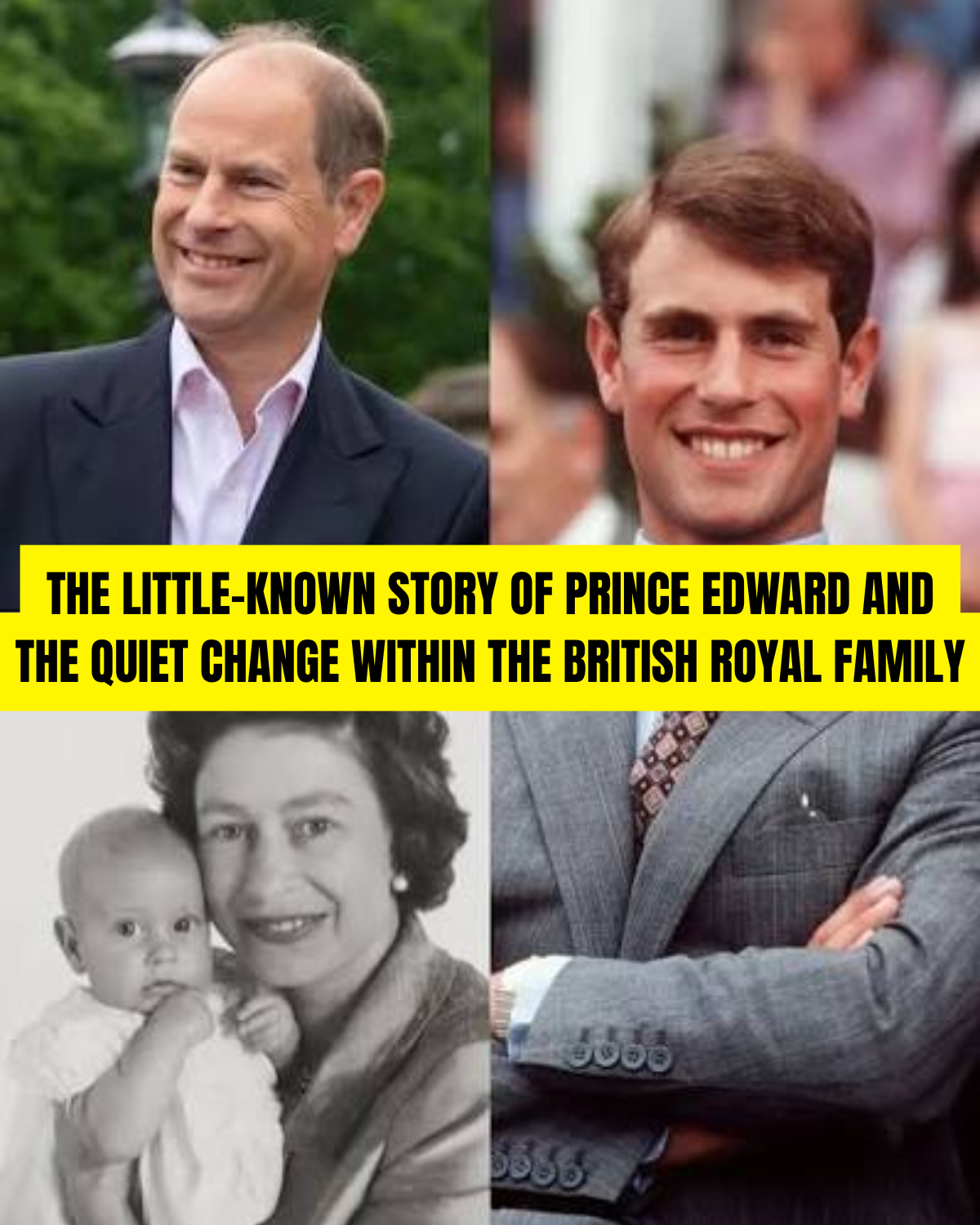
Some moments in royal history seem small at first glance.
But when viewed through the lens of time, they reveal an entire era in transition.
And the story of the birth of Prince Edward, Duke of Edinburgh, is one of those moments.
On the evening of March 10, 1964, at Buckingham Palace, the youngest child of Queen Elizabeth II and Prince Philip entered the world. It was a significant occasion not only because Edward was the Queen’s fourth and final child, but also because he became the only one of their four children whose birth was witnessed by his father.
Today, that may sound perfectly ordinary.
But in the 1960s, it was anything but.
When Charles, Anne, and Andrew were born, social conventions of the time typically kept fathers outside the delivery room. Men often waited in hallways for news, while childbirth was considered a private space reserved for doctors and mothers.
The British Royal Family, renowned for preserving tradition, followed those customs as well.
Yet by 1964, British society was beginning to change. Long-held expectations were gradually giving way to new ideas about family life and the role of fathers. Prince Philip’s presence beside his wife during Edward’s birth became a small but meaningful symbol of that shift.
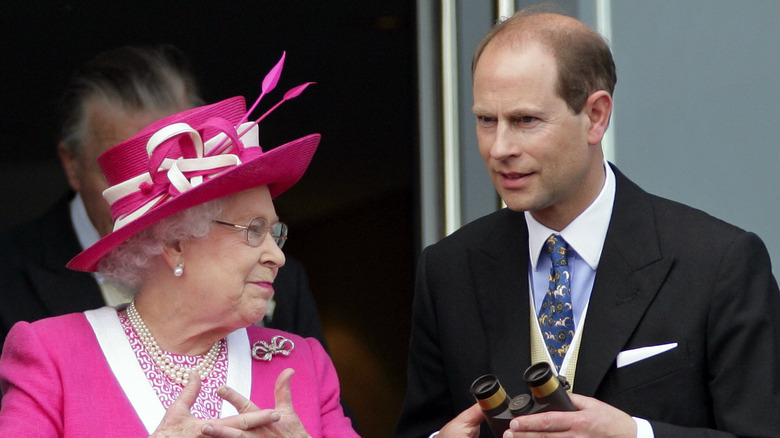
It was not a revolution.
It was not a headline-making declaration.
It was simply a husband standing beside his wife during one of the most important moments of their lives.
But sometimes, quiet changes speak louder than grand speeches.
Just two months after his birth, Prince Edward was baptized in the private chapel at Windsor Castle. His godparents included Prince Richard of Gloucester and the Earl of Snowdon, reflecting the close-knit network of the extended Royal Family into which he was born.
More than six decades have passed since that evening.
And looking back, the story of Prince Edward is about far more than the youngest child of Queen Elizabeth II.
It is also the story of a Royal Family gradually adapting to a changing world—one where cherished traditions remained intact, yet the door to more personal and human-centered changes was beginning to open.
Because sometimes history is not written through dramatic events.
Sometimes it is written through a simple, deeply human moment:
A father being there to witness the birth of his child.