
For years, the public conversation surrounding YNW Melly has focused on one question:
Will he be found guilty or innocent?
But now, a different question is beginning to dominate headlines.
What if the punishment started long before the verdict?
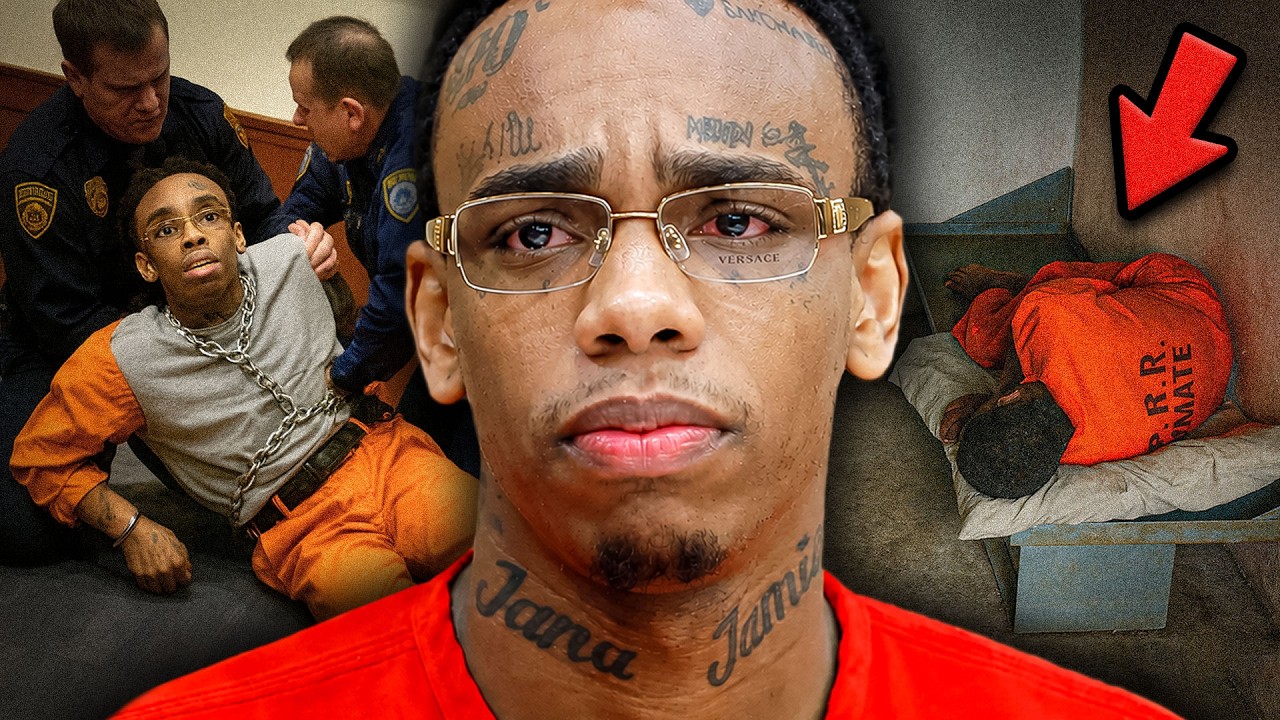
A dramatic courtroom battle has thrust the rapper’s confinement conditions into the spotlight after testimony from medical experts and emotional statements from his family painted a disturbing picture of life behind bars.
At the center of the controversy is Melly’s mother, Jamie King, who says watching her son endure years of isolation has become a nightmare no parent should ever experience.
And according to recent testimony, the situation may be even more serious than many realized.
Psychiatrist Matthew Norman reportedly told the court that Melly’s conditions resemble extreme isolation, comparing the experience to being stranded alone for years. Norman warned that prolonged confinement of this nature could have severe psychological consequences, particularly for someone whose brain was still developing when the detention began.
The claim immediately ignited fierce debate online.

Supporters argue that regardless of the charges against Melly, no person awaiting trial should be subjected to conditions that mental health experts describe as potentially damaging.
Critics, however, continue to point to the seriousness of the case itself, arguing that authorities have security concerns the public may not fully understand.
Yet one detail continues to fuel outrage.
Melly has not been convicted.
Under the law, he remains presumed innocent until proven guilty.
That reality has become a major talking point among supporters who believe his treatment appears more severe than what some convicted inmates experience.
His mother echoed those frustrations, expressing disbelief that her son allegedly has faced years of restrictions that include limited contact with loved ones and extraordinary levels of confinement.
Meanwhile, testimony from a law enforcement officer reportedly added another unexpected layer to the controversy. According to court proceedings, repeated searches of Melly’s cell allegedly failed to uncover contraband despite years of heightened scrutiny.
Those revelations have intensified calls for greater transparency regarding how high-profile inmates are treated while awaiting trial.
The debate has now expanded far beyond Melly himself.
Civil rights advocates, hip-hop fans, and legal observers are increasingly asking whether prolonged pretrial detention can create irreversible consequences regardless of the eventual outcome of a case.
Even prominent figures within hip-hop have begun weighing in, arguing that the situation raises larger questions about fairness, due process, and equal treatment within the justice system.
As bond hearings and legal motions continue, one uncomfortable question hangs over the entire case:
If YNW Melly is ultimately cleared of the charges against him, how does anyone give back seven years?
For now, the courtroom battle continues.
But outside the courthouse, a different trial is already taking place—one focused not on guilt or innocence, but on whether the system itself has crossed a line.
:max_bytes(150000):strip_icc():focal(574x227:576x229):format(webp)/Amber-Simpson-Damon-Thomason-Felix-Watson-8426-dea41c8776e54882b9582f95483e998f.jpg)