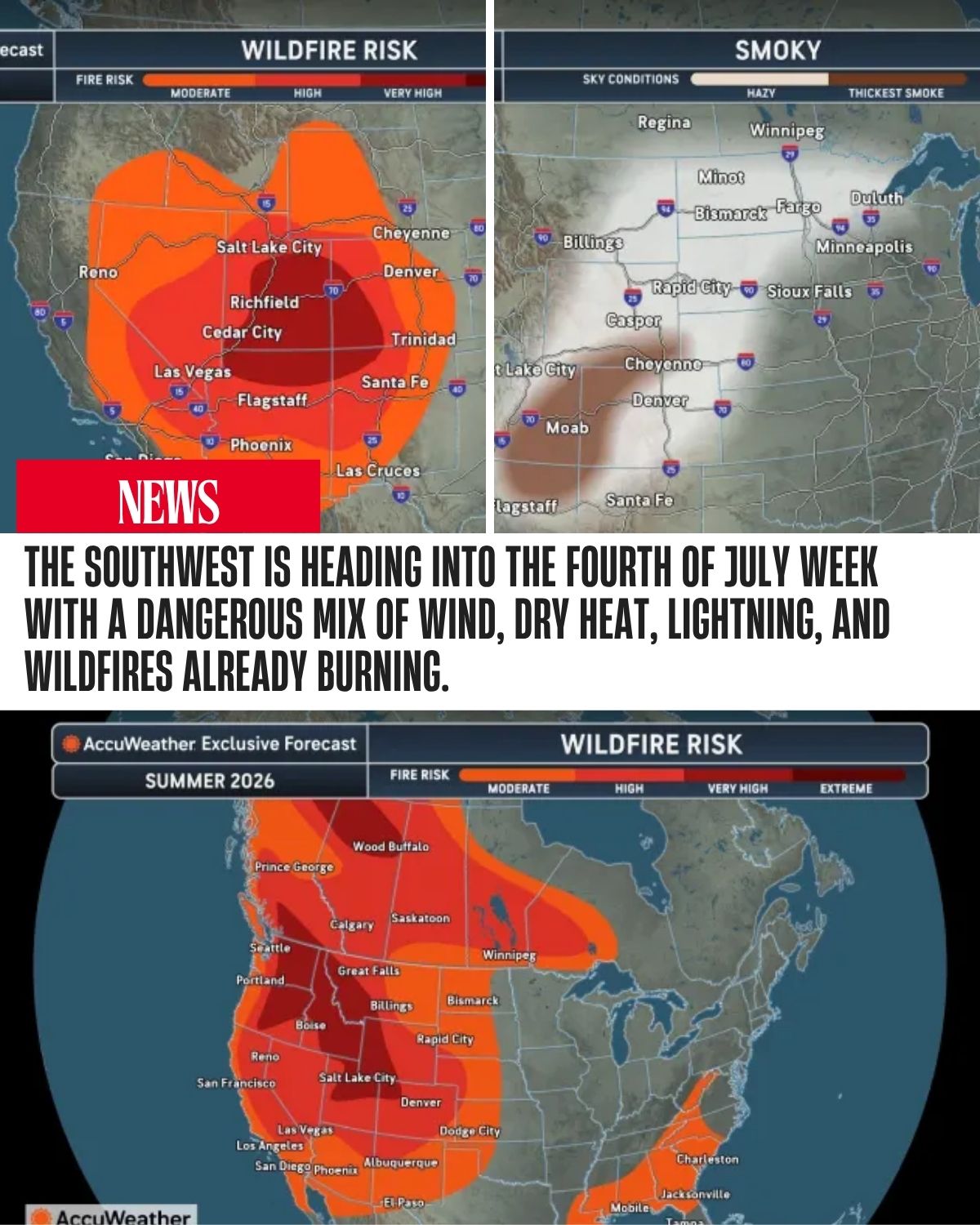
Warm, dry and breezy weather will keep wildfire danger elevated across the Southwest this week, as firefighters continue battling several large blazes and officials warn that new fires could ignite ahead of the Fourth of July holiday.
Powerful wind gusts, extremely low humidity and the threat of dry lightning have created dangerous fire conditions across the region. Forecasters say the pattern will offer little relief in the days ahead, with dry vegetation and recurring winds continuing to fuel wildfire concerns.
Several fires larger than 10,000 acres have erupted over the past week, with some of the most significant activity in Utah. The Cherry and Iron fires southwest of Provo, along with the Cottonwood Fire in south-central Utah, are among the largest active wildfires.
At times, strong winds have pushed flames rapidly across dry terrain and sent thick plumes of smoke hundreds of miles downstream.
Dry Storm Systems Bring Wind but Little Rain
The weather pattern driving the wildfire threat is expected to persist through much of the week. Moisture-starved storm systems moving inland from the Pacific Ocean into the Rockies will continue to generate gusty winds, but they are not expected to bring widespread meaningful rainfall.
Instead, some thunderstorms could produce lightning with little or no rain. That creates a serious concern for new fire starts, especially in areas where dry vegetation can ignite quickly.
“The combination of gusty winds, critically low humidity and dry thunderstorms will continue to elevate wildfire concerns across much of the Southwest,” AccuWeather Meteorologist Kai Kerkow said.
He urged anyone spending time outdoors to follow local burn restrictions and use extreme caution with any activity that could spark a fire, especially with Fourth of July celebrations approaching.

Utah Restricts Fireworks Ahead of Holiday
Utah officials have already taken action in response to the elevated fire danger.
Gov. Spencer Cox implemented temporary statewide fireworks restrictions that are expected to remain in effect through at least July 5.
Additional local restrictions are also in place in communities facing the highest wildfire risk. Residents are being urged to check with local officials before using fireworks, burning outdoors or taking part in any activity that could ignite dry grass, brush or trees.
The holiday week is a particular concern because fireworks, campfires, grills and outdoor recreation can all increase the risk of accidental fire starts during hot and dry weather.
Smoke Could Spread Across the Rockies and Plains
Beyond the immediate fire zones, wildfire smoke will continue to affect air quality across a broad area.
Communities downwind of active fires could see smoky skies and air quality ranging from poor to hazardous, especially during the morning and evening hours when smoke can settle closer to the ground.
Farther east, smoke lifted high into the atmosphere is expected to spread across portions of the Rockies and Plains, eventually reaching parts of the Midwest.
Cities such as Denver and Colorado Springs could experience hazy skies and periods of reduced air quality this week. Communities across the central Plains, including parts of Kansas, Nebraska and Iowa, may also notice colorful sunrises and sunsets as fine smoke particles filter sunlight.

Southwest Remains a Major Fire Concern
AccuWeather long-range forecasters have identified the Southwest as one of the nation’s main wildfire concern areas through the first half of summer.
Until the North American monsoon becomes firmly established and begins delivering more widespread rainfall, dry vegetation and repeated bursts of wind will continue to support an elevated fire risk.
Later in the summer, as monsoon moisture increases across parts of the Southwest, wildfire activity is expected to gradually shift north and west into the Northwest and parts of California. Seasonal drying, heat and periods of strong wind could then raise the risk of significant wildfires heading into late summer and early fall.
Residents Urged to Stay Alert
For now, the wildfire threat across the Southwest remains active and dangerous.
Residents in fire-prone areas should monitor local alerts, follow evacuation guidance if issued, avoid outdoor burning and comply with fireworks restrictions. Drivers should also avoid parking vehicles over dry grass, and campers should fully extinguish fires before leaving any site.
With the Fourth of July holiday approaching, officials are warning that one spark could be enough to start a fast-moving wildfire under the current conditions.