News compilation from: https://www.nytimes.com/
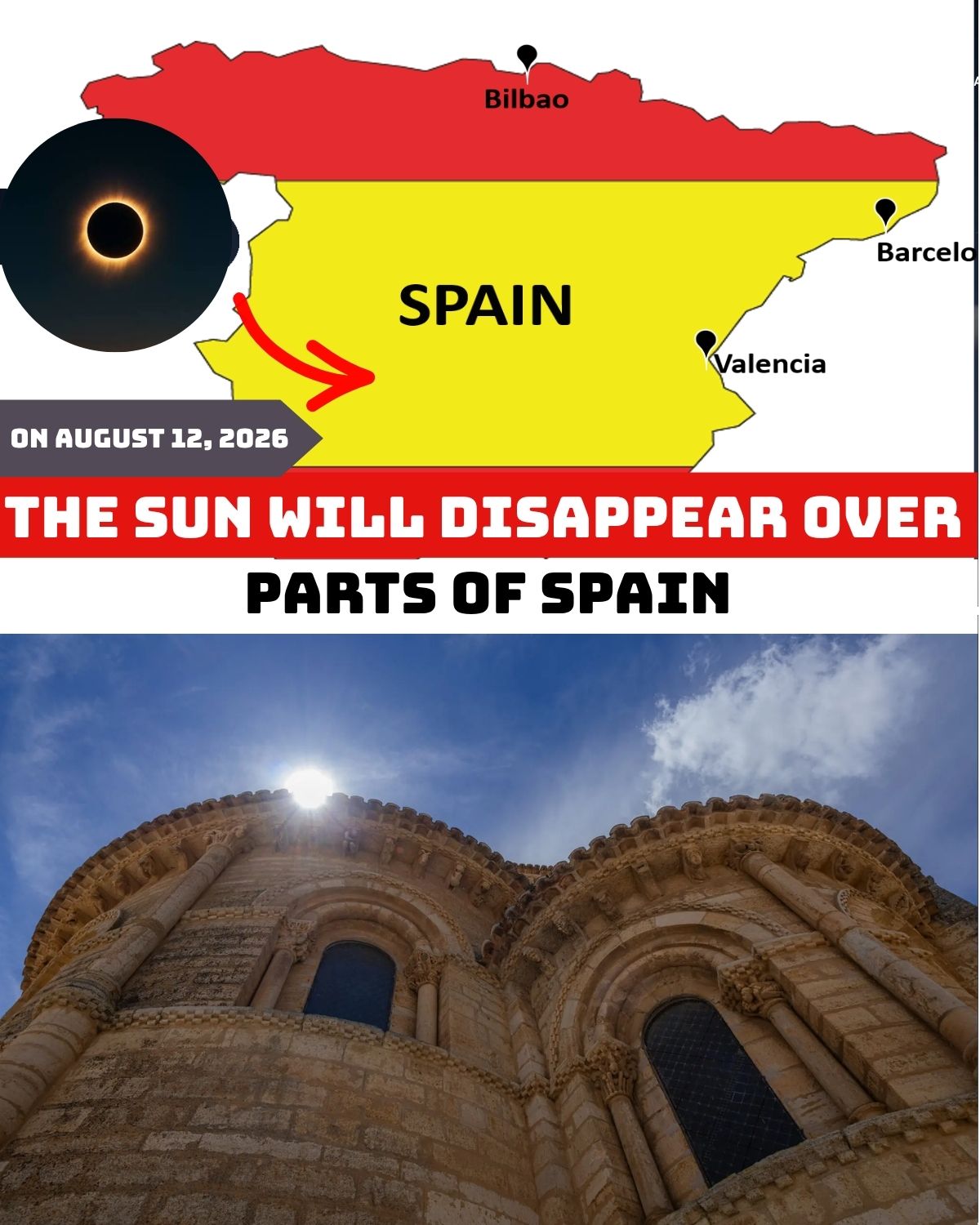
On August 12, 2026, a total solar eclipse will sweep across parts of Spain, turning the country into one of the world’s most anticipated destinations for skywatchers. While many travelers may first think of beaches, big cities, or famous landmarks, one of the most rewarding places to experience the eclipse may be Castilla y León, a vast inland region known for medieval towns, Romanesque churches, dramatic landscapes, and some of Spain’s clearest summer skies.

The eclipse path will pass through quieter rural areas often described as La España Vaciada, or “Empty Spain,” a term used for regions that have seen significant population decline as residents moved to larger cities or abroad.
But these landscapes are far from empty.
Across Castilla y León, stone villages rise from wheat fields, medieval churches dominate quiet plazas, and historic cities such as León and Burgos offer travelers a chance to witness the eclipse against a backdrop of Gothic architecture, ancient pilgrimage routes, and open horizons.
Authorities across the path of totality are preparing official viewing areas capable of handling large crowds and vehicle traffic. Spain’s central government has reportedly informed Castilla y León that the region could receive up to two million visitors for the eclipse.
For travelers looking beyond the obvious destinations, the provinces of Soria, Burgos, Palencia, and León offer not only strong viewing conditions, but also rich food, culture, history, and natural beauty.

Soria: Canyons, Oak Forests, and Wide-Open Skies
For many Spaniards, Soria represents the idea of depopulated Spain. The province, northeast of Madrid, has seen residents protest the closure of essential services such as schools and post offices.
Yet Soria is also a place of extraordinary beauty. Spanish poet Antonio Machado once described it as a place where “the stones seem to dream.”
Its landscape captures the essence of Castilla: cultivated fields, scattered oak groves, sweeping blue skies, and the occasional stork passing overhead. For eclipse travelers, this openness could be one of the province’s greatest advantages.
Soria also offers lush valleys, rugged mountains, and extensive hiking routes. One of its most impressive natural sites is the Río Lobos Canyon, a limestone valley where griffon vultures soar above dramatic cliffs. Hikers can also visit the mysterious San Bartolomé Hermitage, a site associated with the Knights Templar and hidden deep within the canyon.
Not far from the city of Soria, the Urbión Mountains offer another striking escape. Glacial lakes such as Laguna Negra, or the Black Lagoon, sit beneath dark granite cliffs and dense pine forests, rewarding visitors willing to explore on foot.
Food is another reason to linger. Soria is known for torreznos, crispy fried strips of pork belly served in local bars for just a few euros. Restaurants such as La Tablada in Navaleno and El Portalón in San Leonardo de Yagüe, both near the canyon, are noted places to try this regional specialty.

Burgos: Gothic Grandeur and a Pilgrimage Spirit
Burgos is one of the great historic stops on the Camino de Santiago, the famous pilgrimage route that stretches across northern Spain. Visitors walking through the city will see pilgrims with hiking boots and walking sticks moving beneath the refined Gothic towers of its 13th-century cathedral.
The city’s Paseo del Espolón, a tree-lined promenade beside the Arlanzón River, is one of Burgos’s most atmospheric public spaces. It offers a slower rhythm for travelers arriving before or after the eclipse, with cafés, historic streets, and views of a city shaped by centuries of movement and devotion.
Burgos also has a distinct culinary identity. Its signature dish is morcilla, a blood sausage made with spices, onions, and rice. Around Plaza Mayor, many bars serve crisp slices of morcilla with bread, while Casa Pancho is known for a version topped with a fried quail egg.
For a more memorable stay, Hotel Landa is one of the region’s best-known accommodations. Originally a roadside bar that evolved into a family-owned hotel, the property includes a 14th-century tower that was purchased from the nearby village of Albillos, dismantled, and rebuilt stone by stone as part of the hotel complex.
The hotel is also known for its shimmering indoor pool beneath a neo-Gothic vault, as well as a restaurant where travelers can sample Burgos’s regional dishes, including morcilla served with fried eggs.
Palencia: Romanesque Churches and Eclipse-Ready Horizons
Because totality will arrive in the late afternoon, when the sun is low, travelers will need a viewing spot with a clear western horizon and few obstructions. Palencia may be one of the strongest candidates for that reason.
The province offers broad open spaces, low light pollution, and a remarkable concentration of Romanesque churches, some dating back to the 11th century. These historic buildings draw both religious pilgrims and cultural travelers, especially along sections of the Camino de Santiago.
In the town of Frómista, the 11th-century church of San Martín de Tours presides over a peaceful pilgrimage stop. Outside, Camino walkers rest on benches or enjoy a drink at sidewalk tables after long days on foot.
Frómista is also home to Hostería de los Palmeros, a restaurant serving traditional specialties such as stewed baby pigeon. Its prix fixe menus make it a destination for travelers who want a deeper taste of Palencia’s rural cuisine.
Astrophysicist Eva Villaver, deputy director of the Institute of Astrophysics of the Canary Islands and a native of Palencia, has described the open areas around Frómista as ideal eclipse-viewing points. Her team is expected to be in the city teaching young people how to use telescopes.
Palencia’s rural darkness offers another advantage. After the eclipse ends and night falls, visitors may be able to stay for another celestial event: the Perseid meteor shower, which peaks in mid-August.
For eclipse chasers, that combination of totality, open fields, Romanesque heritage, and meteor-filled skies could make Palencia feel almost “chosen by nature.”
León: Gothic Light, Mountain Landscapes, and Roman Gold
Farther west, the province of León offers a more rugged side of Castilla y León. Its landscapes become more dramatic, with mountains, ancient mining sites, and one of the region’s most striking natural-historical landmarks: Las Médulas.
At first glance, the red-orange peaks of Las Médulas may look like the result of natural erosion. In reality, they are the remains of ancient Roman open-pit gold mines. The Romans used an ambitious engineering technique, tunneling into the mountains and forcing high-pressure water through them until the slopes collapsed.
Today, hiking trails wind through the scarred yet beautiful landscape, where wildflowers and shrubs grow alongside oak and chestnut trees. The area has been recovering after recent wildfires, but officials remain concerned that dry conditions and rising temperatures could increase wildfire risk as eclipse visitors arrive.
In the city of León, food lovers will find cecina, a cured beef similar in style to ham. It is served throughout the city in butcher shops, taverns, and restaurants. Los Cazurros, a traditional bar, offers cecina on its own or paired with toast, goat cheese, and pepper jam.
Like Burgos, León is anchored by a magnificent Gothic cathedral. Its nearly 19,000 square feet of stained glass make it one of Spain’s most visually stunning churches, especially when sunlight passes through its brilliant windows.
For the eclipse itself, León has designated the parking area of its convention center as an official viewing site. Although it is not as elevated as the cathedral, it is expected to provide a strong location to experience approximately one minute and 49 seconds of darkness on August 12.
Professional astronomers from the European Space Agency, along with amateur skywatchers, are expected to gather there at 7:33 p.m., using proper protective eyewear to view the event.
A Different Kind of Spanish Journey
For many visitors, Spain is associated with Barcelona, Madrid, the Mediterranean coast, or Andalusia. But the 2026 total solar eclipse offers a rare reason to look inland, toward a region where medieval cities, quiet villages, sweeping skies, and ancient landscapes remain underappreciated by many international travelers.
Castilla y León may be part of so-called “Empty Spain,” but for those willing to explore it, the region is filled with stories: Roman mines, Gothic cathedrals, pilgrimage roads, hidden canyons, traditional food, and rural skies dark enough for both an eclipse and a meteor shower.
On August 12, 2026, the sun will briefly disappear over this historic landscape. For travelers who choose the right place to stand, the moment may reveal not only a rare cosmic event, but also one of Spain’s most overlooked and unforgettable regions.