“Billie Jean” Took 91 Mixes to Get Right… But the Version That Changed Music History Was Hiding in Plain Sight
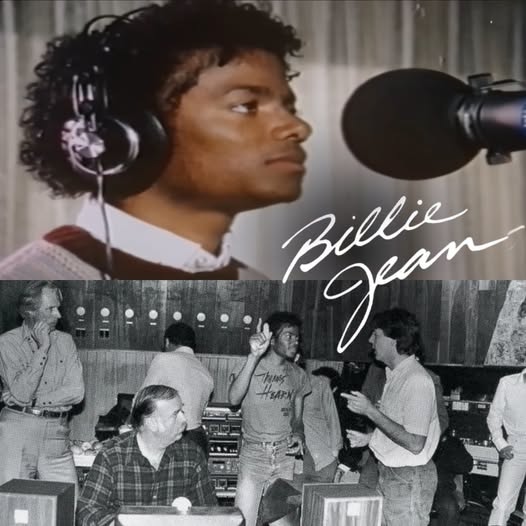
Some songs sound so perfect, people assume they were born that way.
But behind Michael Jackson’s “Billie Jean” was a level of precision, obsession, and creative control that almost feels impossible today.
The legendary bassline reportedly came to Michael while he was driving. The idea hit him so strongly that he rushed home to capture it on cassette before the moment disappeared.
From there, what began as a simple spark turned into one of the most carefully crafted recordings in pop history.
Michael and his team first built the demo using a Linn LM-1 drum machine and a Moog synth bass. But once the track reached Westlake Studio in Hollywood, Quincy Jones and engineer Bruce Swedien began reshaping it with surgical detail.
The drum machine was replaced with a real drum performance by Ndugu Chancler. Bruce Swedien even built a special platform to isolate the kick drum, creating that tight, icy, unmistakable opening sound that still grabs listeners within seconds.
The synth bass was also replaced with a real bass line. Louis Johnson tried multiple bass guitars until they found the exact tone the song demanded.
And still, they were not finished.
Michael and Bruce kept refining the track again and again, adjusting the smallest details, testing different layers, and chasing a sound that felt effortless — even though nothing about it was left to chance.
They went through dozens of versions.
Then dozens more.
Eventually, “Billie Jean” reached mix number 91.
But when Quincy Jones listened back, he asked to hear mix number 2 again.
That was the one.
After all the revisions, all the experiments, all the microscopic changes, the final choice was the second mix.
That is what makes “Billie Jean” so fascinating. It feels simple, smooth, and almost inevitable — but behind that simplicity was a team willing to chase perfection until the song had no weak point.
Every drum hit.
Every bass note.
Every pause.
Every breath in Michael’s vocal.
Nothing was accidental.

“Billie Jean” did not become a classic because of luck.
It became a classic because genius met discipline — and because Michael Jackson understood something few artists ever master:
A song can feel effortless only after someone has worked endlessly to make it that way.
And maybe that is why, decades later, “Billie Jean” still sounds like it came from the future.