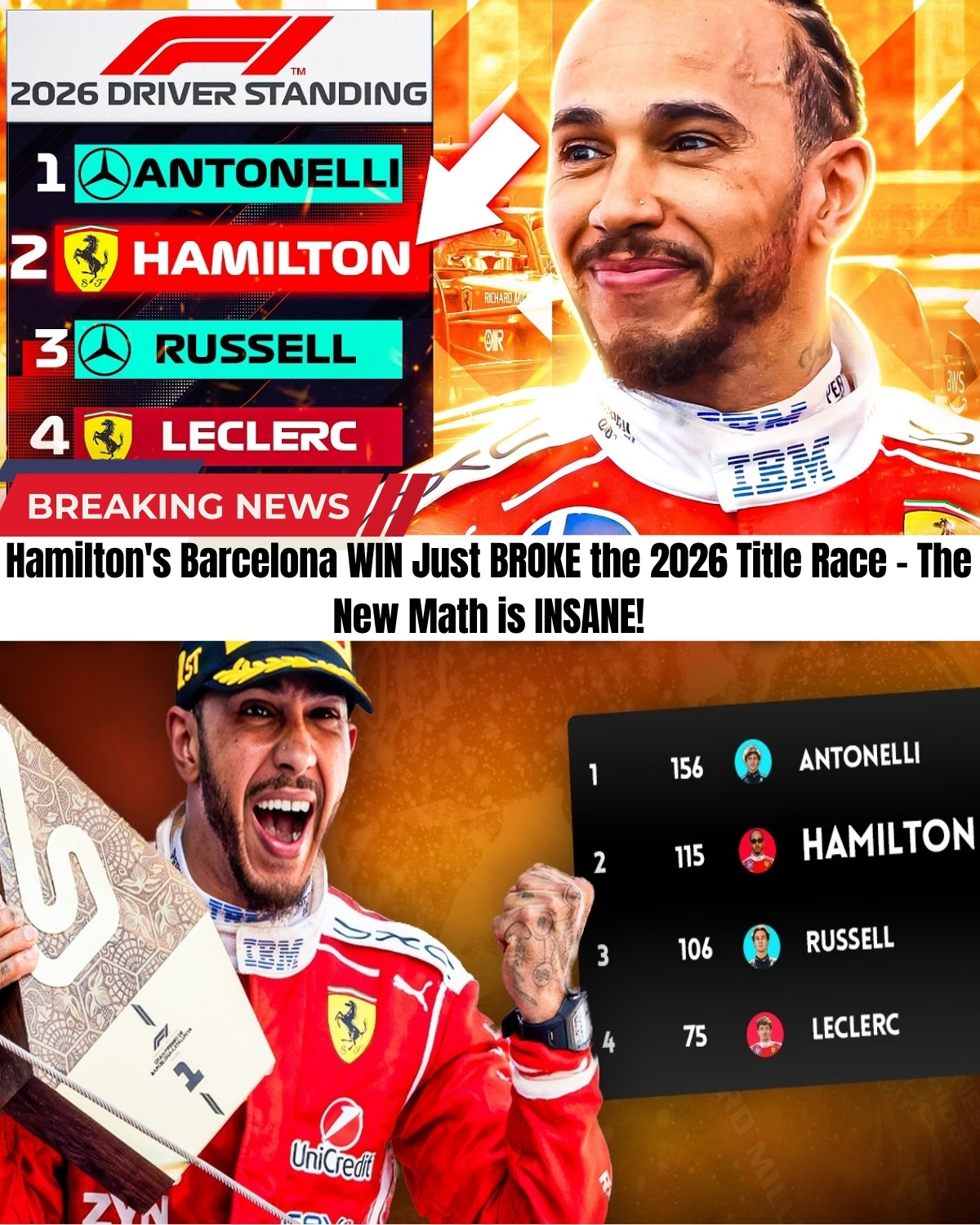
Lewis Hamilton’s victory at the Circuit de Barcelona-Catalunya has fundamentally altered the trajectory of the 2026 Formula 1 season, collapsing a 66-point championship deficit to 41 points in a single afternoon and injecting new uncertainty into a title fight that had appeared settled.
Two weeks before the race, Hamilton trailed championship leader Kimmy Antonelli by 66 points, a margin that typically allows a driver to manage a season rather than fight for it. The shift began on lap 62 of the Grand Prix. Antonelli, driving for Mercedes, was running in second place and appeared untouchable. Hamilton, on fresher tires after a three-stop strategy gamble that most teams avoided, was closing from behind. Then Antonelli’s car shut down with four laps remaining. He pulled off the track, scoring zero points. Hamilton swept through to take the win, his first since the 2024 Belgian Grand Prix and his first in the red of Ferrari. George Russell finished second for Mercedes, and Lando Norris took third for McLaren, marking the first all-British podium in Formula 1 since 1968.
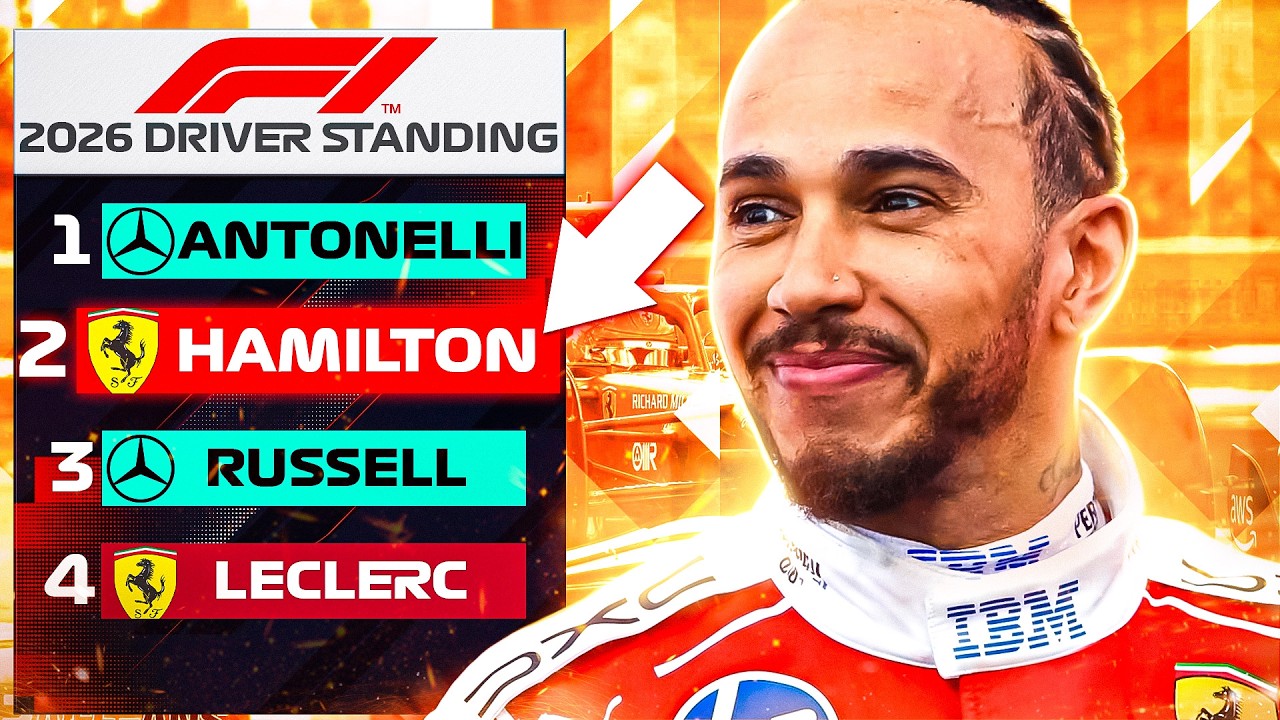
The result cut Antonelli’s lead from 66 points to 41. Hamilton now sits second in the world championship, his highest title position since 2021, ahead of his former teammate Russell. The swing of 25 points in a single race turned a gap that looked like a season already decided into one that has cracked open.
To understand the significance, one must look back to the end of March at the Japanese Grand Prix, where Antonelli, at 19 years old, took over the lead of the championship and became the youngest driver ever to top the standings in the history of the sport. By the time the season reached Monaco, he had won five consecutive Grands Prix in a row. Across the first seven rounds of 2026, Mercedes won six races: Russell took the season opener in Australia, and Antonelli claimed the next five in China, Japan, Miami, Canada, and Monaco. The new rules that arrived this year handed Mercedes the cleanest car and the strongest engine, and the team ran with it.
For most of the season, the championship argument centered on who would finish second behind the silver cars. That argument did not initially include Hamilton in the way expected. His first year at Ferrari in 2025 ended without a single podium. The 2026 season started slowly, with a fourth in Australia, a third in China, a sixth in Japan, another sixth in Miami, a second in Canada, and a second in Monaco. By the time the cars lined up in Barcelona, Hamilton had stood on the podium in four of the first seven races. He was not winning, but he was consistently collecting points.
The win in Barcelona carries weight beyond the 25 points. It is Hamilton’s 106th career victory and his first in 686 days, covering 40 races since the 2024 Belgian Grand Prix. At 41 years old, he becomes the oldest driver to win a Formula 1 race since Jack Brabham did it in 1970. The three-stop strategy was a call most teams flinched at, but Ferrari committed to it, keeping Hamilton on tires that could attack rather than nurse. When a virtual safety car fell at the right moment, the gamble paid. Antonelli’s failure opened the door, but Hamilton’s strategy put him close enough to walk through it.
The championship picture has narrowed. Behind Hamilton in second, the standings fall away. Charles Leclerc in the other Ferrari sits on 75 points, Norris on 73, Oscar Piastri on 68, and Max Verstappen, the four-time champion, is on 55 in a Red Bull that has not turned up this season. Verstappen has admitted his team is still only the fourth fastest on the grid. The 2026 championship is no longer a six-car scrap. It has narrowed to Mercedes and the one man chasing them who has just proven he can win.
Mercedes remain the fastest team in Formula 1. The constructor standings show them on 262 points, with Ferrari second on 190, a 72-point gap. McLaren is a distant third on 141, Red Bull fourth on 89, and Alpine fifth on 57. The thing holding Ferrari back is not the chassis; the Ferrari is quick through the corners and kind to its tires. The deficit is in engine power. Estimates put the gap at around 25 to 30 horsepower against the Mercedes engine. Hamilton has been blunt about it, saying after Canada that if you take away the power deficit, Ferrari are right in the fight, and that on engine alone, they are massively down.
There is evidence that Mercedes may have a reliability problem. Antonelli’s stricken car in Barcelona was the second Mercedes to stop in three races. In Canada, Russell was leading in control when his power unit failed, scoring nothing from the front of the race. Two retirements from podium positions in three races, both from a team that has otherwise been close to flawless, suggest a pattern. Russell is now third in the championship on 106 points, only nine behind Hamilton. Antonelli still leads, but his cushion is soft.
Ferrari are expected to push from the other direction. The 2026 rules allow a trailing engine manufacturer to claw back lost performance over the season, and Ferrari qualify for it. The first upgrade package could arrive as early as the Austrian Grand Prix at the end of June, with a second step penciled in for after the summer break. If those upgrades land as hoped, the power gap could shrink at the moment Hamilton has momentum. Fifteen Grands Prix and three sprint races remain on the 2026 calendar, with 399 points still on the table. Hamilton trails by 41 points, a gap worth less than two non-finishes from Antonelli or a steady run of Hamilton beating him by a handful of points a weekend. The next checkpoint comes at the Austrian Grand Prix on June 28, where Ferrari’s first engine upgrade is expected to appear.