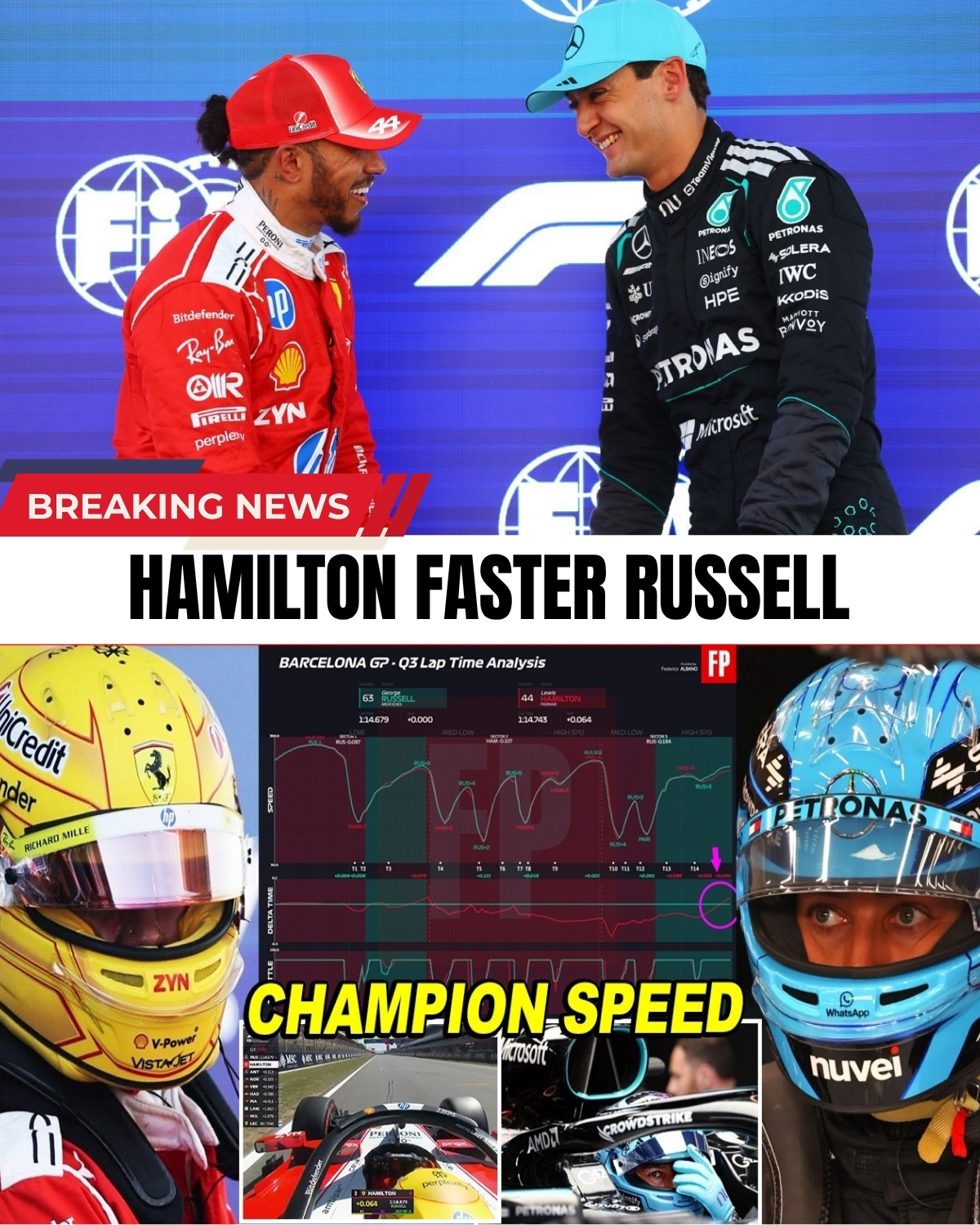
The sun-baked tarmac of the Circuit de Barcelona Catalunia has always been a ruthless judge, but for Lewis Hamilton and Ferrari, the verdict delivered during the 2026 Spanish Grand Prix qualifying was a masterpiece of technical agony. In a sport where glory is measured in the blink of an eye, the gap between a maiden Ferrari pole position and what could have been second place was exactly 0.063 seconds—a sliver of time so infinitesimal it feels like a personal insult from the gods of speed. As the checkered flag fell, the world was fixated on the final sector, but the telemetry tells a deeper, more suspenseful story of a scarlet resurrection that hit a sudden invisible wall of physics.
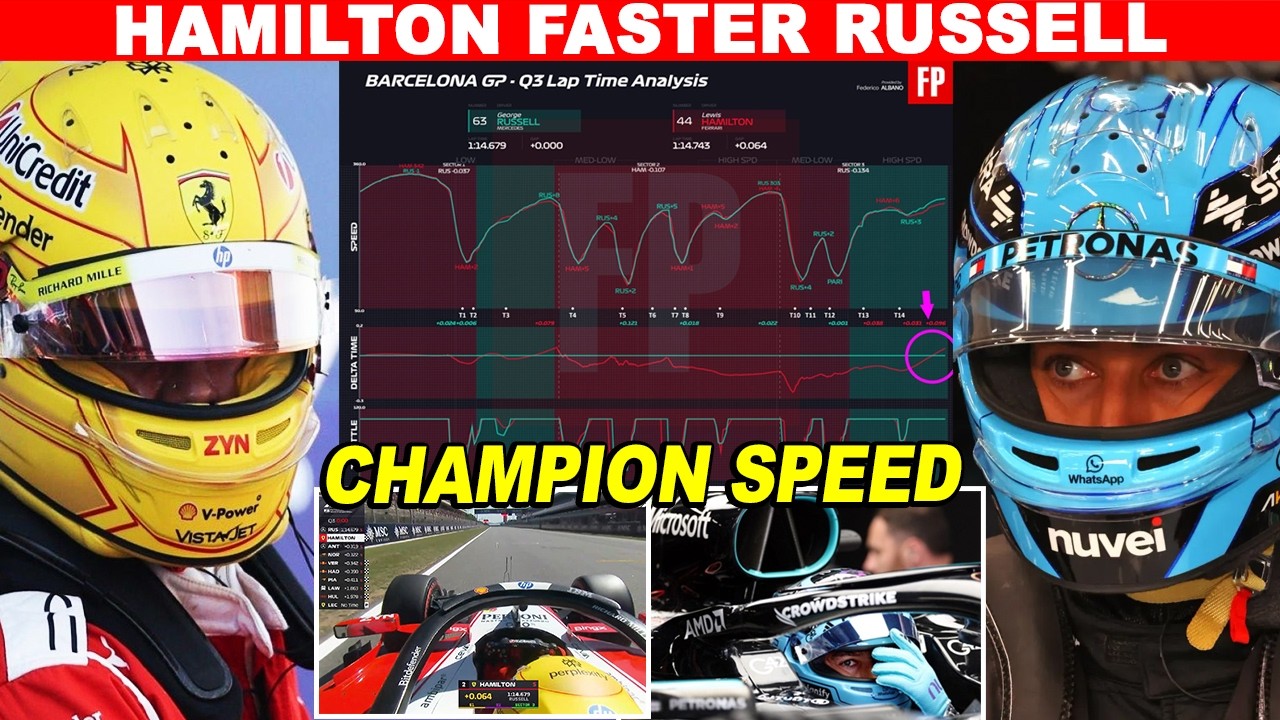
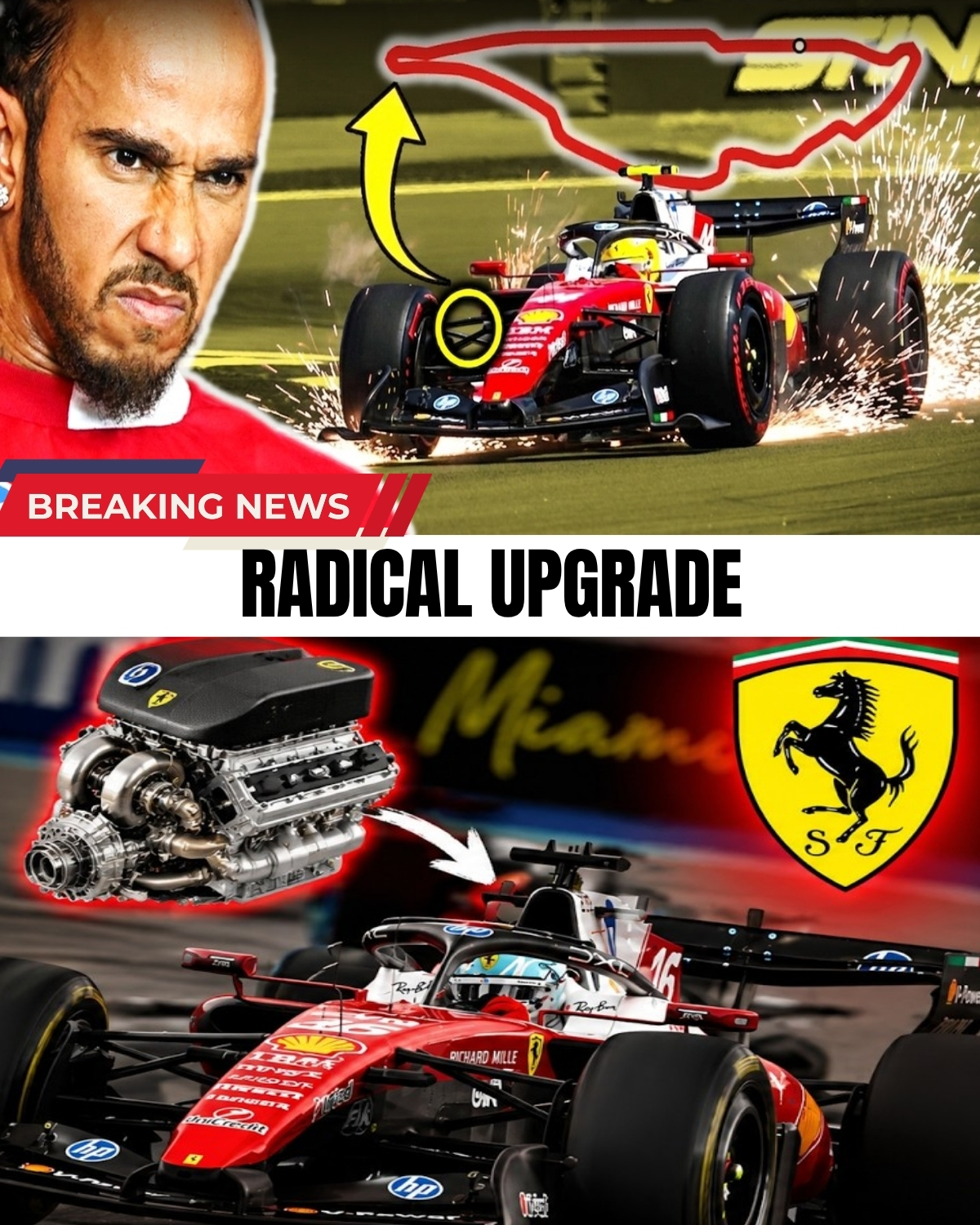
The narrative of the weekend began with a heavy offensive from Maranello. Ferrari arrived with a coordinated strike of eight new parts, an evolution Lewis Hamilton had practically begged for to fix the SF26’s aerodynamic weaknesses. The impact was immediate and staggering. The new package, featuring a reformulated nose and an aggressive floor, brought more than the expected 0.2 seconds of lap time improvement. For the majority of the high-speed dance around the Spanish circuit, Hamilton and his successor at Mercedes, George Russell, were locked in a hauntingly perfect synchronization. For 96.8% of the lap, the two drivers were inseparable, their lap times tracking each other with surgical precision.
It was in the technical heart of the track, Sector 2, where Hamilton looked like a man possessed. He didn’t just drive; he orchestrated the SF26 through the high-speed sweeps, clocking his fastest S2 of the weekend by half a second. Between Turn 13 and Turn 14, Hamilton was splendid, carrying a higher gear than Russell and arriving at the apex of Turn 14 with a 0.065-second advantage over the Mercedes. At that moment, the red resurrection felt like a certainty. Hamilton was 0.120 seconds up on Russell’s time as they entered the final stadium section.
However, the naked truth of the technical tribunal revealed that the battle was lost almost as soon as it began. In the high-pressure crucible of Q3, Hamilton’s aggression, usually his greatest weapon, became a double-edged sword. “I went too deep into T1,” Hamilton admitted with the somber clarity of a driver who knows exactly where the crown slipped from his head. This initial error forced the car to work harder to recover, setting off a chain reaction of energy consumption that would haunt him in the final meters of the lap. While he clawed back time through the middle sector with sheer brilliance, the ghost of that Turn 1 entry lingered in his battery cells.
As the two cars screamed toward the final chicane, the battle became a clinical study in energy management. While the audience held its breath, the telemetry revealed a mechanical horror story unfolding beneath Hamilton’s seat. The battle between Russell and Hamilton was incredibly close, but it was defined by what was happening inside the batteries. As they approached the final lap, the status of their energy recovery systems, or ERS, became the deciding factor. It appears that while Russell was saving his electrical deployment for the final dash, Hamilton had used his joker earlier to maintain his blistering Sector 2 pace.
At the apex of Turn 14, Hamilton was faster, but the exit told a different story. “We missed a little bit of power or deployment,” Hamilton remarked post-qualifying. As Russell exited Turn 14, his deployment was faster throughout the entire run to the finish line. Russell performed less lift and coast, allowing the Mercedes to pull away with a violent efficiency on the main straight. The numbers are as brutal as they are revealing: at the finish line, Russell’s Mercedes was clocked at 288.2 km/h, while Hamilton’s Ferrari languished at 278.4 km/h. A 10 km/h deficit at the most critical moment of the session turned a 0.065-second lead into a 0.063-second defeat.
Despite the heartbreak of missing pole, the atmosphere in Maranello is one of grim determination rather than despair. The huge offset of the Friday failure was forgotten in the wake of Hamilton’s performance, proving that the upgrades he demanded have transformed the SF26 into a legitimate Mercedes beater in everything but the final sprint. The focus now shifts from aerodynamics to raw power. This energy starvation at the end of a lap is precisely why Ferrari is pinning its hopes on the Austria power unit update. The team knows that to truly silence the silver arrows, they need a deployment strategy that doesn’t leave their drivers starved at the finish line.
Frederick Vaser’s prophetic words after Miami—that it will be a different world championship—now carry a new weight. Ferrari is no longer a spectator to Mercedes dominance; they are an insurgent force that has proven they can match their rivals for 96.8% of the lap. The delay in the ADU has impacted their ability to close the deal in Barcelona, but the red resurrection is no longer a dream. It is a technical reality waiting for its final electrified piece of the puzzle. Hamilton starts on the front row, just 0.063 seconds from where he wanted to be.
In a race that Pirelli predicts will be an entire battle of mandatory two stops, the king in red has a chance to turn his qualifying heartbreak into a Sunday masterclass. The technical tribunal has spoken, and while it denied him pole, it gave him something far more dangerous: the knowledge that the win is finally within his grasp. The hunt for the top step of the podium is no longer a distant hope. It is a desperate technical war that will be decided in the shadows of the Austrian mountains.