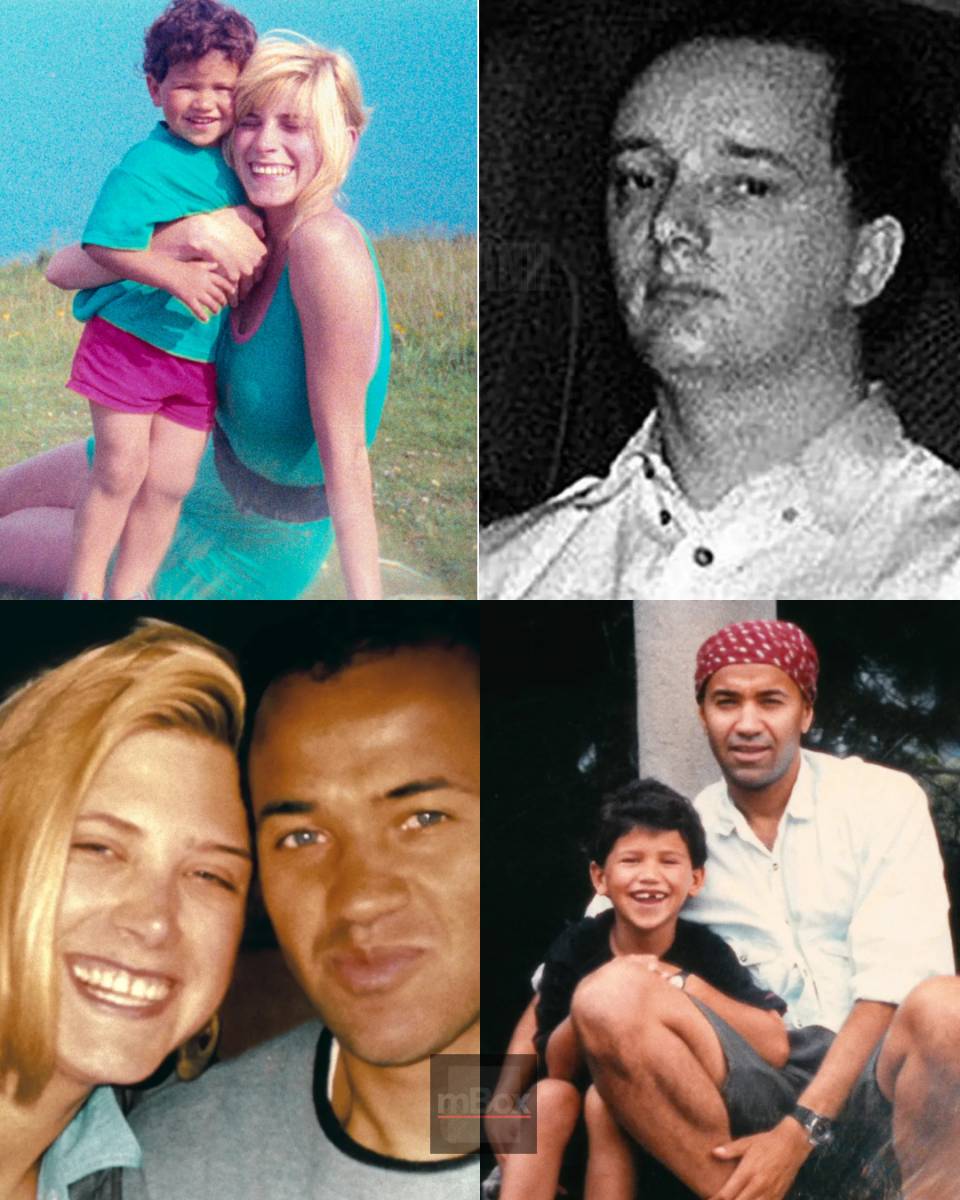
Loving mother Rachel Nickell was brutally murdered in front of her 2-year-old son in 1992.
The 23-year-old British woman was walking with her toddler, Alex Hanscombe, on a path in Wimbledon Common in southwest London when a man stabbed her nearly 50 times on July 15, 1992, and sexually assaulted her body, per The Guardian. Alex was found near his mother and unharmed physically.
 The brutal murder shocked locals and remained unsolved until around a year later when police arrested local man Colin Stagg. However, before he went to trial, Stagg was acquitted of the murder and later received a public apology from police over his wrongful arrest, according to The Guardian.
Nickell’s murder went cold for about a decade until a new team of forensic scientists was assigned to the case and they re-ran DNA evidence that connected convicted murderer Robert Napper to her killing, per The Times. At the time, Napper was already serving time for the murder of Samantha Bisset and her 4-year-old daughter, Jazmine.
Napper was officially arrested and charged with Nickell’s murder in November 2007, according to the BBC, and pleaded guilty to manslaughter the following year. Shortly after Napper’s arrest, it was revealed that he was also a suspect in a serial rapist case in the late 1980s.
Nickell’s life and her tragic death are covered in the Netflix documentary The Murder of Rachel Nickell, which includes interviews with her partner, André Hanscombe, their son Alex, Stagg and several people involved in the investigation.
Here’s everything to know about Rachel Nickell’s murder.
Rachel Nickell was a caring mother
:max_bytes(150000):strip_icc():focal(745x393:747x395):format(webp)/rachel-nickell-alex-hanscombe-060426-5eaee2bd24604976b12140b7c862a347.jpg)
Rachel Nickell and her son Alex Hanscombe.
Courtesy of Netflix
Nickell was a 23-year-old British woman who was a loving partner and mother. She fell in love with André, and by the time she was 19 and he was 25, she had become pregnant with their first child.
André described their relationship as an “instant connection” and said they were “inseparable” in the Netflix doc.
They welcomed son Alexander (Alex) Louis Hanscombe in 1989.
“Rachel was a natural mother,” André recalled. “She was breathtaking.”
She was killed when walking with her 2-year-old son
:max_bytes(150000):strip_icc():focal(705x500:707x502):format(webp)/rachel-nickell-andre-hanscombe-060426-ad231ad7f95149e2ae9ac8451dc32704.jpg)
Rachel Nickell and André Hanscombe.
Courtesy of Netflix
On the morning of July 15, 1992, Nickell and 2-year-old Alex went for a walk in Wimbledon Common — a sprawling 1,140-acre park in southwest London. Later that morning, a dog walker discovered Nickell’s body, with Alex clinging to her, and reported the gruesome findings to authorities. Nickell was 23 years old.
Police discovered that she had been brutally stabbed 49 times in the chest and neck and was sexually assaulted by the perpetrator. The attacker had not harmed Alex, but the toddler later recalled being pushed to the ground.
Upon investigating the murder, police decided that Nickell’s murder was a random, “disorganized” attack made by a local man in his 20s or 30s. However, they struggled to find DNA evidence or further eyewitnesses other than a woman elsewhere in the park and Nickell’s toddler son.
Her son was questioned by the police several times
:max_bytes(150000):strip_icc():focal(705x306:707x308):format(webp)/alex-hanscombe-andre-hanscombe-060426-6de857061de74fe68b1c92640255d937.jpg)
Alex Hanscombe and André Hanscombe.
Courtesy of Netflix
Shortly after police hit roadblocks with the lack of DNA evidence in the murder case, they focused their attention on Alex in hopes of gathering information from what he witnessed.
The police worked with child and adolescent psychologist Jean Harris-Hendriks, who held multiple sessions with Alex and André over the course of several weeks. In their meetings, Alex eventually shared information about the culprit’s clothing and how he approached them from the back.
However, after several sessions, Alex appeared upset and repeatedly said that he was done, as shown in interview tapes in the Netflix doc. Although Alex seemed traumatized by the questioning, police later decided to take him to the scene of the crime in an effort to get new information.
Alex quickly became emotional, so André took his toddler away from the scene and they later moved from London to a remote home in France.
Police arrested Colin Stagg in August 1993, but he was acquitted the following year
:max_bytes(150000):strip_icc():focal(705x450:707x452):format(webp)/colin-stagg-1992-060326-e85b0e17f6974277beda00c176eccc44.jpg)
Colin Stagg.
Rebecca Naden/PA Images via Getty
Alex described his mother’s killer as someone wearing a white shirt with a belt, which matched another woman’s description who came forward after seeing someone similar in the park that morning.
Police went public with a description of the killer — as well as a criminal profile — and received several names and leads. They quickly became focused on one of the tipsters who named Colin Stagg, a local man who frequented the park, as a possible suspect.
Although they were highly suspicious of Stagg, police didn’t have enough to charge him with the murder so they launched the undercover investigation Operation Edzell, in which they had a female police officer go undercover and write letters to Stagg, per The Guardian. Over the course of several months, the female officer pretended to be sexually interested in Stagg and extracted information about his fantasies, which police claimed matched the criminal profile of the killer.
Stagg was officially arrested in connection with Nickell’s murder in August 1993. He vehemently denied killing her and was scheduled to go to trial the following September. Before Stagg stood trial, he was acquitted when a judge determined that police arrested him based on “deceptive conduct.”
Despite being cleared of the murder, Stagg continued to face scrutiny from the public and police, as some believed he had gotten off on a “technicality.” As a result, Stagg felt “very paranoid” for around 15 years, as he said in the Netflix doc.
Stagg eventually received an apology for the “mistakes made” by the Metropolitan Police, per the BBC, after Napper was confirmed to be Nickell’s killer.
“I must offer you an unreserved apology for the proceedings instigated against you in 1994,” Assistant Commissioner John Yates said in 2008. “I acknowledge the huge and most regrettable impact this case has had on you for the last 16 years.” Stagg was also awarded nearly $1 million in compensation from the Home Office.
The case went cold for around a decade
:max_bytes(150000):strip_icc():focal(734x455:736x457):format(webp)/the-murder-of-rachel-nickell-suspect-sketch-060426-16f501c284ff40bb88714808949112be.jpg)
A sketch of the suspect in Rachel Nickell’s murder.
Courtesy of Netflix
For the following decade, Nickell’s murder went unsolved and remained cold. Police determined that they would need new “crucial” evidence to identify the killer.
In the meantime, Alex and André had “come to terms” with the feeling that Nickell’s murder “may never be resolved.”
Robert Napper was arrested for Nickell’s death after being connected to another murder
:max_bytes(150000):strip_icc():focal(746x318:748x320):format(webp)/robert-napper-060326-f84195b39dce449f83f25fffe7b82cd6.jpg)
Robert Napper.
Casey Rodgers/AP
Less than two years after Nickell’s tragic murder, Bisset and her 4-year-old daughter, Jazmine, were found murdered in their apartment in southeast London in November 1993.
Through DNA evidence from the crime scene, police identified Napper in the murders and he was sent to Broadmoor high-security psychiatric hospital. The officer on that case, Detective Sergeant Alan Jackaman, wrote in his book that he also raised Napper’s name in Nickell’s case.
In 2002 — a decade after Nickell’s murder — a cold case team with forensic scientists re-examined DNA evidence found at Nickell’s crime scene. They discovered a partial print that they ran through the criminal database, which finally identified Napper as Nickell’s killer.
Napper was arrested and charged with Nickell’s murder in November 2007. In December 2008, he pleaded guilty to the manslaughter of Nickell and has been detained indefinitely at Broadmoor.
Years later, police determined that Napper was also the perpetrator of more than 70 attacks called the “Green Chain” rapes in the mid-1980s. He admitted to a handful of these assaults, per The Guardian.


