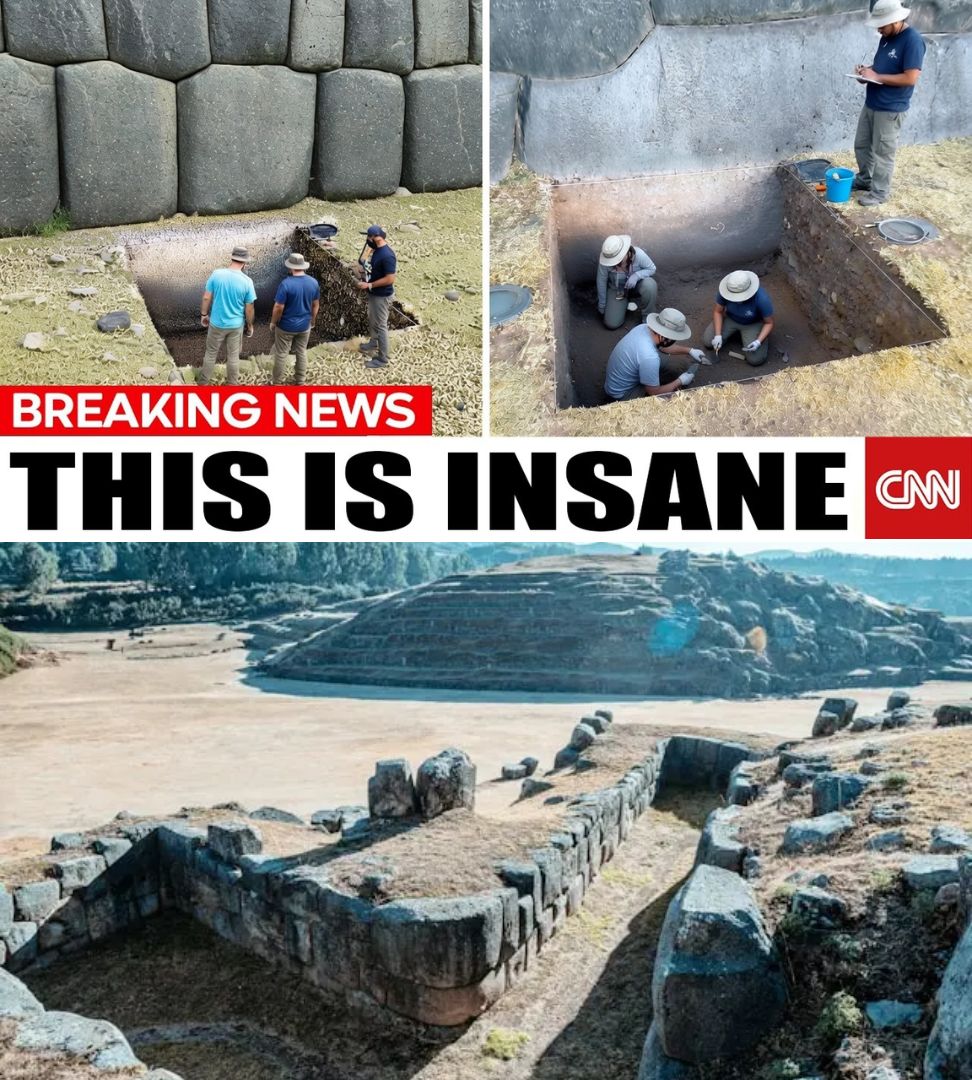
A groundbreaking discovery at Göbekli Tepe, the world’s oldest known temple, is shaking the foundations of archaeology. Recent advanced laser scans have revealed astonishing details about this ancient site, challenging everything we thought we knew about early human civilization and its capabilities.
 Located in southern Turkey, Göbekli Tepe is believed to date back to around 9600 BC, making it over 11,600 years old—far older than the pyramids of Egypt. This monumental site, which features massive T-shaped pillars and circular enclosures, was constructed by a society that lacked metal tools, the wheel, or a written language. Yet, these ancient builders managed to transport 50-ton stone blocks uphill, a feat that modern engineers say would require heavy machinery.
The recent analysis, conducted by an international team using cutting-edge 3D laser technology and artificial intelligence, has uncovered perfectly straight cut marks on the pillars that do not match any known ancient tools. These grooves, measuring just 2.5 mm wide, suggest a level of precision previously thought impossible for a society of hunter-gatherers.
 For decades, archaeologists have speculated about how Göbekli Tepe was built, but the new findings have shifted the focus from mere construction methods to the very nature of the society that created it. The discovery of an equilateral triangle formed by the oldest stone enclosures indicates that the builders possessed advanced geometric knowledge, challenging the notion that such skills emerged only with later civilizations.
As the research team delved deeper, they found evidence of a sophisticated stone-splitting technique involving thermal shock, which requires precise temperature control. This method would have allowed the builders to separate large blocks of limestone from the bedrock without the use of metal tools. Strikingly, there are no signs of failed experiments or primitive tools that typically accompany the development of new technologies—Göbekli Tepe appears fully formed, with no trace of a learning curve.

Adding to the mystery, the site was intentionally buried around 8,000 BC, shortly after its peak use. This burial involved the transportation of millions of cubic feet of soil, enough to fill the Empire State Building multiple times. Analysis of the burial layers revealed human skulls with deep grooves and smashed statues, suggesting a deliberate act of closure rather than gradual abandonment.
 The timing of this burial coincides with a period of significant climate change, leading some to wonder if the builders were trying to protect their sacred site from impending disaster. After the burial, the knowledge and techniques that once flourished at Göbekli Tepe seemingly vanished, leaving future generations to revert to simpler ways of life.
As researchers continue to uncover more details from this enigmatic site, one question looms large: what compelled these ancient people to bury their greatest achievement? The deeper we explore Göbekli Tepe, the more we realize that its story is not just about the dawn of civilization, but perhaps the end of something profound. What secrets lie beneath the surface, waiting to be uncovered?
https://www.youtube.com/embed/qgeNV1D0rC0