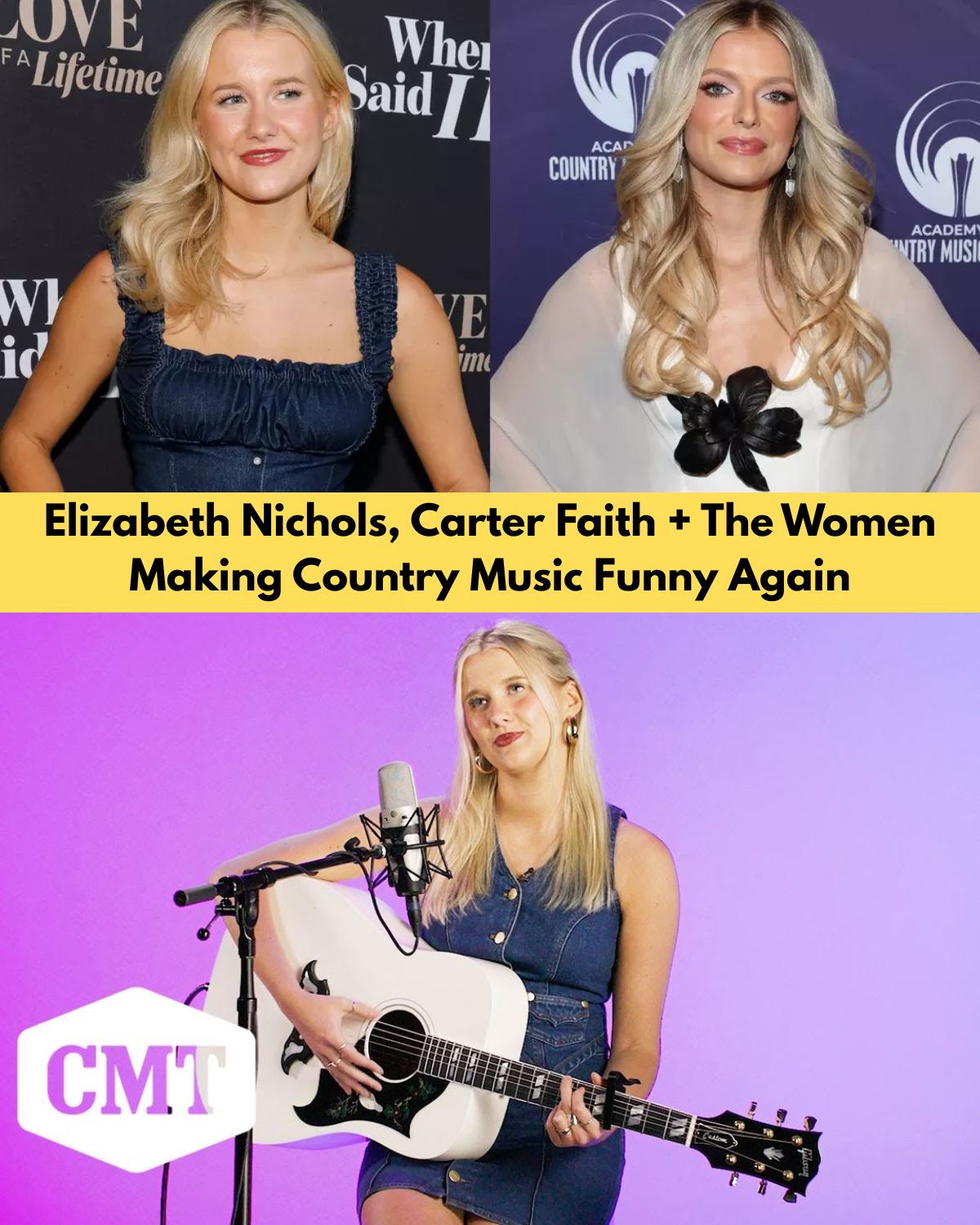
Country music has always been known for heartbreak, cheating songs, and emotional ballads. But now, a completely different type of female country artist is exploding online — and fans are saying these women are changing the genre in ways Nashville ignored for years.

Instead of singing softly about broken hearts, rising stars like Elizabeth Nichols and Carter Faith are going viral for something country music historically didn’t always allow women to do publicly: Be funny.
And honestly, the internet can’t stop talking about it.
Over the last year, country music has quietly experienced what some fans are now calling a female-led comedy revolution. Songs packed with sarcasm, dark humor, chaotic relationship stories, and brutally honest observations about men are suddenly dominating TikTok, streaming playlists, and fan conversations online.
One of the artists at the center of that shift is Elizabeth Nichols.
Nichols first built attention online through sharp, hilarious songwriting and deadpan delivery that felt completely different from the polished image Nashville traditionally pushed for women. Her breakout material often mixes humor with deeper emotional frustration, especially in songs targeting modern dating culture and relationship double standards.
Her song “Oh the Things Men Do” especially sparked reactions online after joking about the ridiculous lengths men will go to in order to impress women. But Nichols later admitted the song could have easily become much darker emotionally because underneath the humor was genuine frustration and vulnerability.
And that balance between comedy and pain may be exactly why fans connect so strongly to this new wave of female country music.
Because beneath the jokes, many listeners hear something brutally honest.
The same thing is happening with Carter Faith.
While Faith’s music often sounds dreamy and cinematic on the surface, many of her most viral lyrics are filled with dark humor, emotional chaos, and self-aware sarcasm that fans say feels painfully relatable. Her debut album Cherry Valley recently earned major industry attention, including an ACM Album of the Year nomination — a huge moment for a newer female artist making unconventional music.
Songs like “Grudge” and “If I Had Never Lost My Mind…” especially became fan favorites because of how unapologetically messy, emotional, and funny they are at the same time.
In one lyric, Faith even jokes that “even Jesus thinks that you’re a b—h,” a line that immediately exploded online because people couldn’t believe a young female country artist was willing to be that blunt publicly.
But perhaps the biggest reason fans are connecting to these artists is because they don’t feel filtered anymore.
For decades, female country stars were often expected to stay likable, polished, emotional, and safe. Even when legends like Dolly Parton, Loretta Lynn, and Tammy Wynette used humor in music, there were still invisible boundaries around how “too much” women could be publicly.
Now fans say younger artists no longer seem interested in staying inside those boundaries.
Instead, they’re openly talking about toxic relationships, mental health struggles, political tension, revenge fantasies, hookup culture, and emotional instability — often while making listeners laugh at the same time.
And surprisingly, that honesty appears to be working commercially too.
According to multiple recent reports, artists like Carter Faith are building massive fanbases online without relying heavily on traditional country radio support. Her concerts are selling out, her music is streaming millions of times, and fans are screaming lyrics back word-for-word despite her still technically being considered a “rising” artist.
That success is creating a larger conversation inside country music right now:
Are female artists finally being allowed to take up more emotional and creative space in the genre?
Or is Nashville still struggling to catch up with what fans actually want?
Either way, one thing is becoming very clear.
The new generation of female country stars isn’t trying to sound perfect anymore.
They’re trying to sound real.
And for many listeners — especially women — that may be exactly why this era feels so different.